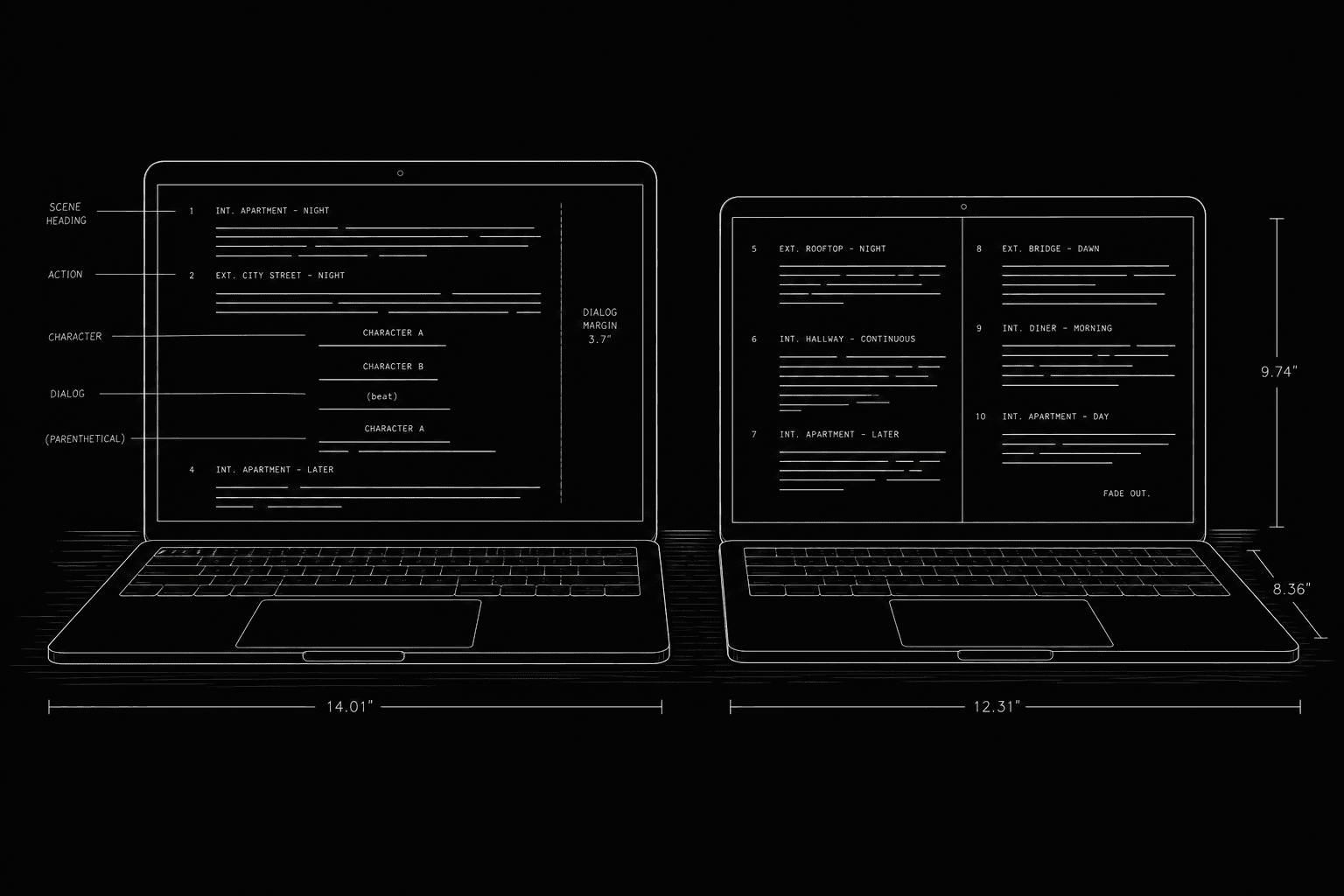

Every few years the screenwriting internet refights the same war with new release notes. Fade In people talk about speed, price, and a UI that stays out of the way. WriterDuet people talk about real-time co-writing, revision colors, and not emailing Draft_7_REAL.fdx like it is 2009. Both camps are partly right. Both camps also oversell the part that matches their last bad experience with the other app.
This comparison is only about Fade In and WriterDuet in 2026. Not a three-way shootout. Not a manifesto. If you are choosing between them for your next project, you are really choosing between solo desktop flow and browser-native collaboration, with export hygiene as the tiebreaker that actually ruins shoots when you ignore it.
The best screenwriting software is the one your partner will open without a support ticket. Everything else is preference with receipts.
How Each Tool Thinks About the Writer (Philosophy in One Breath)
Fade In behaves like a traditional application: install, write, export, back up locally. It assumes you own your files, you manage versions, and you want the computer to feel fast when you are in flow. Collaboration exists, but it is not the gravitational center of the product story.
WriterDuet behaves like a writing room in a tab: accounts, sharing, live cursors, comment threads, and revision modes that mirror how TV rooms actually pass pages. It assumes someone else will read your scene before dinner and that you will not want to merge five attachments by hand.
Neither philosophy is morally superior. A novelist adapting alone in a cabin is a Fade In-shaped problem. Two partners breaking a pilot before a lab deadline is a WriterDuet-shaped problem. Problems start when you pick for ideology instead of workflow.
How to Start a Fair Trial (So You Do Not Compare Apples to Frustration)
Step 1: Pick one pilot scene or feature sequence you already know structurally. Do not learn the tool and the story at once.
Step 2: Write the same five pages in both with standard industry formatting: Courier 12, normal margins, no custom CSS cosplay.
Step 3: Export FDX and PDF from both and open them in Preview and in a second tool if you have one. Pagination shifts are the real test.
Step 4: Run one collaboration exercise even if you are solo. Share a link or invite your own second email. Type overlapping dialogue. See what breaks.
Step 5: Price the year, not the month. Include paid tiers you will actually need, not the teaser tier you will outgrow in week three.
[YOUTUBE VIDEO: Split-screen workflow: same five-page scene written in Fade In and WriterDuet, then FDX exported and opened side by side to compare pagination and element tags]
Collaboration in 2026 (Where WriterDuet Wins on Paper)
WriterDuet built its reputation on simultaneous editing and revision visibility. Multiple writers in one document, color per writer, comments anchored to lines, and a share link that does not require everyone to own the same desktop OS. For a writing partnership, a sketch group, or a student team, that is not a nice-to-have. It is the product.
Fade In offers collaboration features, but the mental model remains file-forward. You can work together, yet teams often still behave like they are passing a canonical file. That works when one person is the "keeper of the draft." It strains when three people rewrite the same act over a weekend and nobody knows which export is sacred.
If your project has one author, collaboration differences matter less than backup discipline. If your project has two or more authors with equal standing, test WriterDuet's live room before you buy Fade In seats on faith.
Collaboration is not chat. Collaboration is one source of truth that survives a Sunday night panic rewrite.
Cost and Ownership (Where Fade In Keeps Its Fanbase)
Fade In's pricing story in 2026 remains buy the app, write scripts. You are not renting your drafts on a monthly treadmill unless you choose to. For writers who hate subscriptions, that matters emotionally and mathematically over five years.
WriterDuet's tiers are subscription-shaped with free and paid bands. The free band is real enough to finish a short or a class assignment. Professional rooms that live in comments, branches, and pro features will land on paid plans. Budget them like software, not like coffee.
Hidden cost is time: merging conflicting files, fixing pagination after import, and re-teaching a partner which icon means "export." A cheap app that eats an afternoon every week is not cheap.
| Factor | Fade In (typical) | WriterDuet (typical) |
|---|---|---|
| Payment model | One-time purchase feel | Subscription tiers |
| Offline writing | Strong default | Depends on setup; browser-first |
| Live co-writing | Possible, not central | Central |
| Revision tracking | Version files manually | Built-in colors and history |
| Best for | Solo features, budget-sensitive | Partners, rooms, remote teams |
| Risk | File sprawl if undisciplined | Plan limits if you outgrow tier |
The table is a decision aid, not a scorecard. Your region, sale pricing, and education discounts change the math. Check official pages before you buy.
Format Handoffs (The Part That Actually Breaks Production)
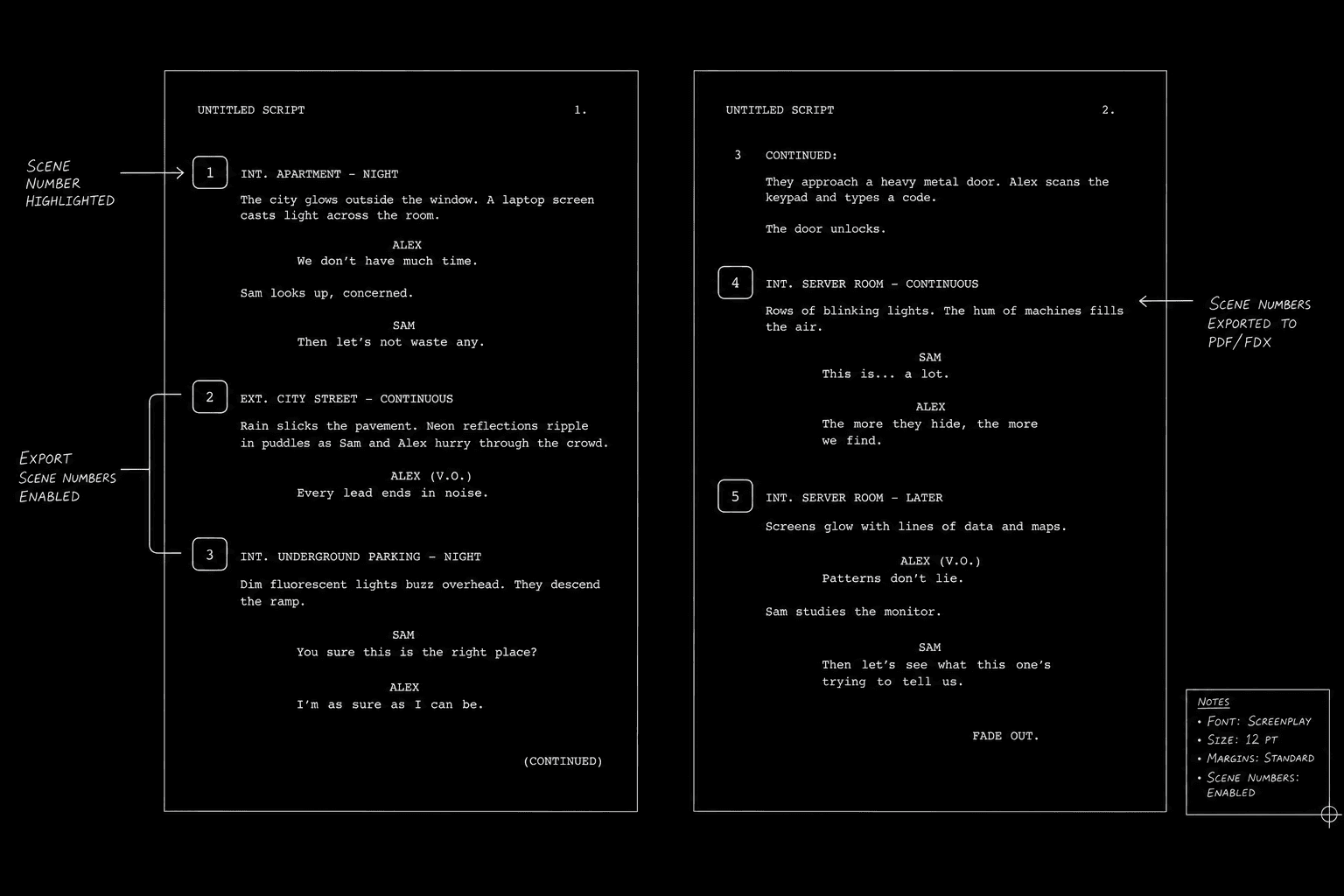
Writers romanticize features. Production romanticizes clean PDFs and valid FDX. A handoff fails when scene numbers vanish, dual dialogue collapses, or act breaks move because margins drifted.
Fade In exports industry-standard paths writers expect. WriterDuet does too, with emphasis on keeping partners on the same online draft until export. The failure mode for Fade In teams is email tennis with slightly different files. The failure mode for WriterDuet teams is assuming the cloud draft is backed up when someone exports an old snapshot by habit.
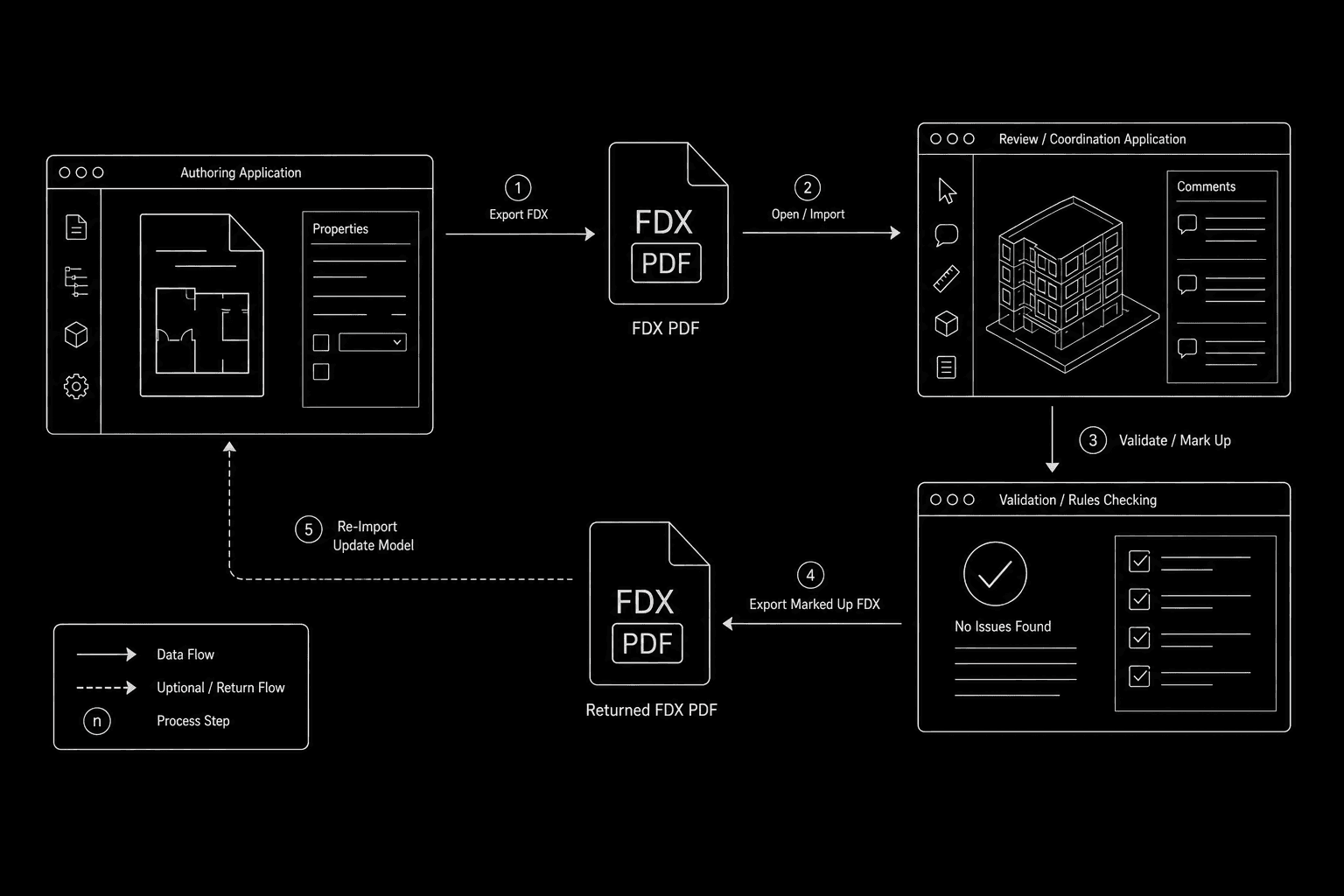
For deep export hygiene, read exporting production PDF and FDX. For Fountain and interchange when a partner refuses your primary app, read Fountain import and export formatting. Those guides matter more than any feature bullet once prep starts.
Relatable Scenario: The Partnership That Chose Fade In and Paid in Email
Sam and Riley started a contained horror feature together. Sam bought Fade In. Riley used an old license on another machine. They alternated who had the "master" file. By draft six, they had horror_v6_riley_notes_sam_accepted.fdx and a PDF with different page breaks. Their producer read the PDF. Their casting friend read the FDX. They argued about a scene that existed in one file.
The fix was not "better writers." The fix was one keeper, one export ritual, nightly naming convention. When they tested WriterDuet on act three only, live co-writing removed an entire class of merge errors. They kept Fade In for Sam's solo polishes because Sam thinks faster offline. Hybrid workflows are allowed. Chaos is not.
Relatable Scenario: The Room That Lived in WriterDuet Until Prep Panicked
A TV lab group wrote a pilot in WriterDuet with comments and revision colors. Everyone loved the transparency. When the showrunner asked for a locked production PDF with stable pagination, a junior writer exported from a branch that was not the latest merged draft. Scene numbers on the PDF did not match the room's latest table read.
The lesson: cloud truth needs a lock ritual. Someone says "exporting now," someone else stops typing, someone names the file with date and draft. WriterDuet did not fail. Ritual failed. Any tool fails without ritual.
Use-Case Sections: Who Should Lean Which Way
Solo feature writer on a budget. Fade In is the rational default if you trust yourself to back up files and you rarely co-write live. You will spend money once and practice export discipline before sending to contests.
Writing partners on a deadline. WriterDuet is the rational default if both of you will actually type in the same document. Test comment noise. Some partners hate seeing live typing. They may prefer passes. Honor that.
Showrunner plus staff writer. WriterDuet-shaped sharing matches room culture. Still define who locks pages and when comments become mandates.
Writer who also directs and edits breakdowns. Either tool works if FDX to production tools is clean. Run a test export to your breakdown software before you commit.
Writer who lives on iPad and phone between day job moments. Compare mobile experiences on your devices, not on blog screenshots. Official apps and web performance change year to year.
Try it free
Try Screenweaver for free on your script
It is free. Import your existing project, get a clearer view of your outline, and regain control of your story structure in minutes.
Start FreeOperational Section: A Handoff Checklist Both Apps Should Pass
Before you call a draft "sent," run the same checklist regardless of app:
Pagination freeze. Export PDF. Scroll to page one and last page. Confirm scene numbers and title page.
FDX round-trip. Export FDX, import into your partner's tool or a reader, confirm dual dialogue and act breaks survived.
Revision clarity. If you use revision mode, define what "white" means on this project. Unmarked revisions become production lies.
File naming. Title_DraftDate_Initials.fdx beats poetry.
Backup. Cloud is not backup if nobody exports. Local copy weekly minimum.
Official product pages for current pricing and feature lists: <a href="https://www.fadeinpro.com/" rel="nofollow">Fade In</a> and <a href="https://www.writerduet.com/" rel="nofollow">WriterDuet</a>. Verify tiers there before you budget a room.
Software does not replace a human saying "this is the draft."
Performance, UI, and the Subjective Stuff That Still Matters
Fade In fans cite speed and a writing screen that feels like a typewriter with superpowers. WriterDuet fans cite visibility of who changed what and fewer "where is the latest file" messages. UI taste is real. A tool you hate looking at will slow you down even if it exports perfectly.
Try both keyboards shortcuts for a week. Muscle memory is underrated. Switching tools mid-draft costs more than switching before draft one.
Why the Comparison Keeps Coming Back (Old Way vs Better Way)
The old way is treating software like sports teams. The better way is treating software like infrastructure: pick for collaboration shape, pick for budget shape, then obsess over exports.
Fade In vs WriterDuet is not a lifetime marriage. Many professionals use one tool for the room and one tool for the solo pass. That is fine if rituals are clear. What is not fine is assuming the tool will fix a story problem or a partnership problem.
Trench Warfare: Decision Mistakes Writers Repeat
Mistake: choosing before testing export with your partner's stack. Fix: five-page test, FDX and PDF, both directions.
Mistake: assuming live co-writing means equal creative authority. Fix: define who breaks ties.
Mistake: ignoring offline needs. Fix: if you write on planes, verify offline behavior on your machine.
Mistake: paying for pro features you will not use. Fix: start minimal, upgrade when pain is specific.
Mistake: no lock ritual in cloud tools. Fix: named exports after merge.
Mistake: blaming the app for pagination drift without checking title page and revision settings. Fix: read the export guides linked above.
For broader industry context on screenplay format standards while you compare tools, the <a href="https://www.finaldraft.com/learn/screenplay-format/" rel="nofollow">Final Draft screenplay format overview</a> remains a useful external reference even if you use neither Final Draft nor this article's two subjects as your daily driver.
Mobile, Offline, and Travel (2026 Practical Reality)
Fade In users often cite offline reliability on laptops. WriterDuet users often cite catching notes on a phone between meetings. Your real life matters more than forum arguments. Test your devices on your network, not on someone else's demo video.
If you write on trains, confirm autosave behavior when connectivity drops. If you write only at a desk, ignore mobile entirely in the decision.
Integrations and the Ecosystem You Already Have
Neither app exists alone. You may send PDFs to contests, FDX to a director who uses another brand, Fountain to a minimalist partner, and PDF watermarks to a financier who prints everything.
Run your real ecosystem in the five-page test. Import the export into whatever your collaborator actually uses. If the only person who matters refuses WriterDuet, your collaboration feature is theoretical. If the only person who matters refuses desktop installs, Fade In may be friction.
The guides on production export and Fountain exist because handoff is the product once you leave the draft.
Security, Backups, and the Paranoia That Saves Projects
Fade In users should automate backups: cloud folder, dated copies, occasional email-to-self of the canonical FDX. WriterDuet users should confirm who owns the project, what happens if someone leaves the team, and whether exports are archived when accounts lapse.
Paranoia is boring until a laptop dies the night before a pitch. Both tools can lose work if humans are careless. Software does not replace backup ritual.
Long-Term Career Arc (Switching Costs)
Writers switch tools at act breaks in life: new partner, new show, new laptop. Switching costs are muscle memory and old drafts in old formats. If you have ten years of Fade In archives, staying is rational even if WriterDuet fits one new room. If you are starting draft one today, choose for the next three years of collaboration shape, not for nostalgia.
You can keep a personal Fade In archive and a shared WriterDuet room. Many do. The tax is discipline.
Relatable Scenario: The Contest That Required PDF Pagination Stability
Elena submitted a contest PDF exported from WriterDuet. A friend submitted from Fade In. Both passed format checkers. Elena's pagination shifted when the contest reprinted because she changed title page spacing at the last minute. Her friend did not touch title page settings. Elena did not lose because of app brand. She lost margin discipline.
The repair was a pre-flight checklist borrowed from production export practice, not a app switch. Tool choice did not matter. Export ritual mattered.
Closing: Pick the Workflow, Then Pick the App
Fade In and WriterDuet both write screenplays. They diverge on how humans share pages and how money leaves your wallet over time. Solo, budget-conscious, file-owning writers often land Fade In. Collaborative, remote, comment-heavy teams often land WriterDuet. Hybrids exist when rituals exist.
Do not ask which app is "best." Ask which app makes your next handoff boring. Boring handoffs are professional. Exciting handoffs are usually missing scene numbers.
Run the five-page test. Export twice. Invite your partner. Then buy or subscribe. The story was always the hard part. Pick software that stays quiet while you fix the story, and loud only when someone else types in your act two without asking.
When prep starts, return to production PDF and FDX export discipline and Fountain interchange so your choice of writing app does not become someone else's emergency in the breakdown room.
Final Step
Build your next script with Screenweaver
Move from ideas to production-ready pages faster with timeline-native writing and AI-assisted story flow.
Try Screenweaver