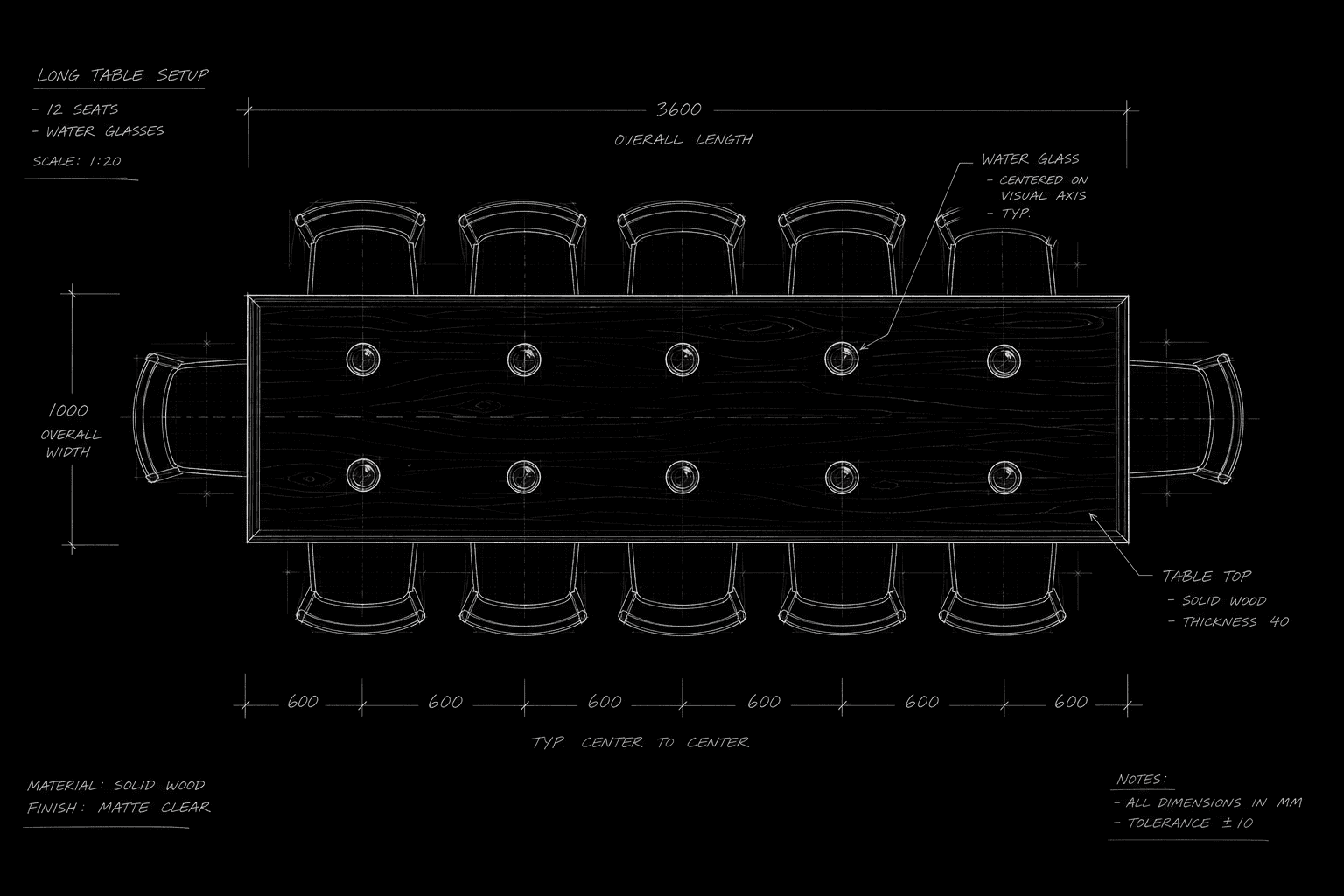

A table read is not a party where people say words. It is a stress test for rhythm, clarity, and embarrassment. Done well, it tells you where the room laughs, where the room checks phones, and where your clever stage direction dies because nobody can say "threnody" out loud. Done badly, it burns social capital and convinces you the script is fine because your friends are polite.
You do not need a studio conference room. You need a plan, a tight script slice or full read decision, roles assigned, and one person whose job is to shut up and listen. This guide is for writers running their first read in a living room and writers running their fifth read before a producer joins. The goal is the same: leave with notes you can execute, not vibes you cannot quote.
Politeness is the enemy of a useful table read. Kindness is not. You can be kind and still ban compliments until the end.
How a Table Read Works (The Physics of the Room)
Sound travels slower than ego. When twelve people read, the room times itself. Dialogue-heavy pages stretch. Action-heavy pages fly unless someone reads every slugline like a documentary narrator. That is why table reads are runtime truth serum for scripts that looked tight on the laptop.
The read has three phases: prep, performance, post. Most writers skip prep and wonder why the performance felt mushy. Most writers skip post and wonder why everyone said "great job" and never mentioned that act two repeats itself.
How to Start (Before Anyone Sits Down)
Step 1: Decide full script vs targeted sections. Full reads work for shorts, pilots, and features under ninety pages if the room has stamina. For features over one hundred pages, read act one plus the climax sequence, or read the problem act only. Respect time.
Step 2: Cast with intention. Match voices roughly to age and energy, not to Hollywood fame. The lead should not be read by someone who mumbles because they are shy unless your lead is a mumbler.
Step 3: Print or share PDFs with stable pagination. Number scenes if your software does not. Readers flip faster when they can find their place.
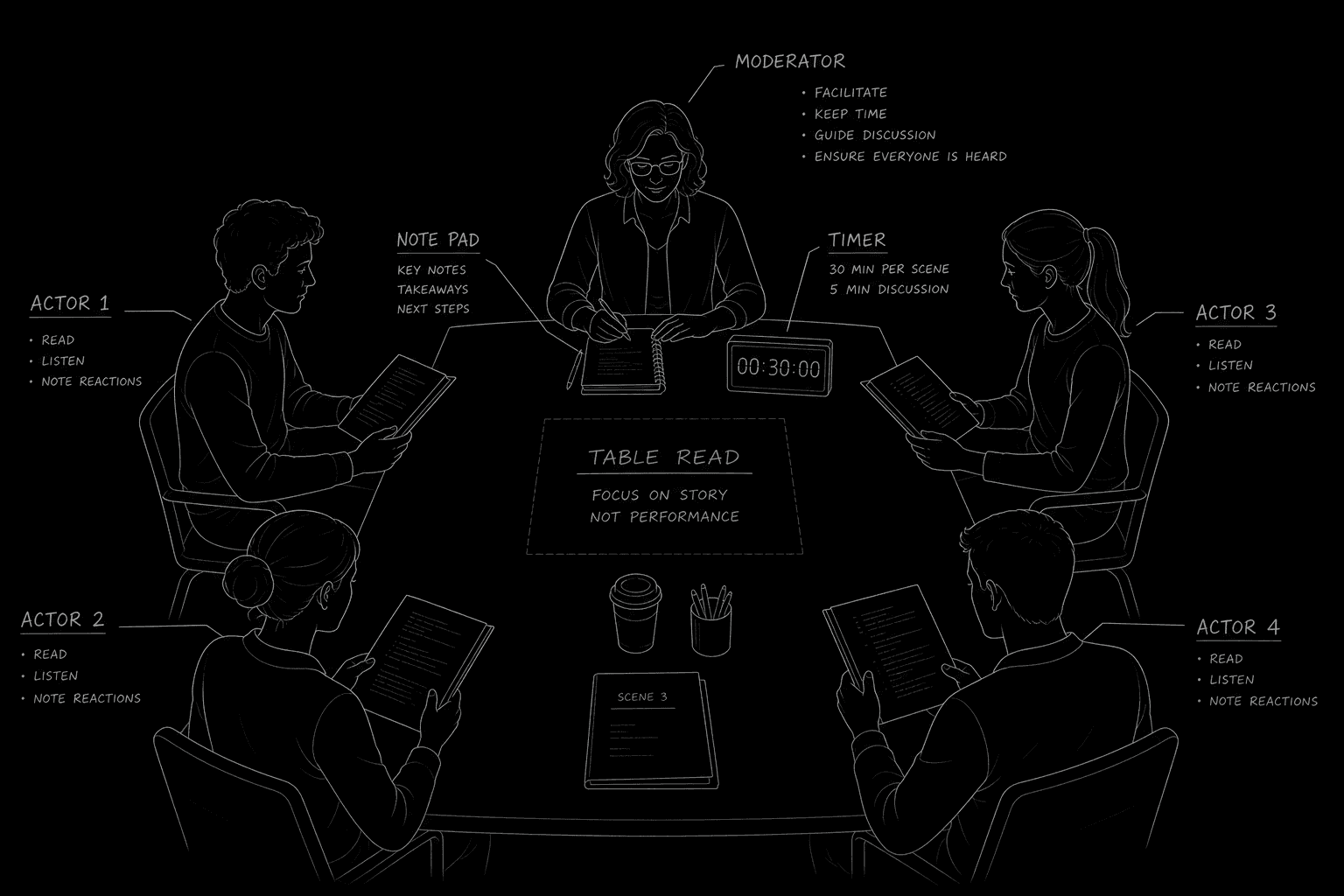
Step 4: Assign a moderator who is not the writer. The writer listens. If you must moderate your own read, announce that you will not defend choices mid-scene.
Step 5: Set ground rules out loud. No phones. No fixing other readers. No author explanations until the end. Mark the script with a pen, not with a speech.
[YOUTUBE VIDEO: Moderator runs a living-room table read: cold open rules, timed act break, and structured note capture on a whiteboard after the read]
Use-Case Sections: Living Room vs Professional Room
Living room read with friends. Best for dialogue rhythm and obvious confusion. Worst for industry bullshit detection. Tell friends you want honest notes, then give them a note template so honesty has shape.
Peer writers circle. Best for structure and comparables. Agree in advance whether the group is allowed to pitch fixes or only diagnose problems.
Actor-heavy read. Best for performance reality. Actors will tell you which lines fight the mouth. Listen when they skip a parenthetical.
Producer or financier in the room. Shorten the read. Hit set pieces. Send the full script afterward. The read is a tone and voice audition, not a substitute for coverage.
Virtual read. Works if everyone has the same PDF and one strong moderator muting chaos. Video off is fine. Audio on is mandatory. Lag kills overlap jokes. Accept that.
A Table Read Prep Table (What to Decide the Day Before)
| Decision | Full read option | Partial read option | Why it matters |
|---|---|---|---|
| Pages | Entire script | Act one + climax | Stamina vs signal |
| Duration | 2-3 hours + break | 60-90 minutes | Room energy |
| Roles | Printed name labels | Same | Less confusion |
| Note capture | One listener scribe | Same | Writer stays quiet |
| Food | Water only during | Light snack after | Chewing kills timing |
| Recording | Audio for writer only | With consent | Memory lies |
Relatable Scenario: The Read That Became a Writers' Room by Accident
Diego hosted a read of his pilot. He invited eight people. He did not assign a moderator. Every time a line landed flat, Diego explained what he meant. The read added forty minutes of commentary. The actors performed the commentary, not the script. Diego left feeling validated because everyone stayed.
Diego's second read used a friend as moderator, a stop hand rule, and a post-read form with three questions: where were you bored, where were you confused, where were you moved. The boring answer clustered in scene six through nine. Diego cut one bridge scene and combined two kitchen scenes. The third read did not need explanation. The script spoke.
Relatable Scenario: The Expensive Read That Told the Truth in Minute Twelve
Priya paid for a staged table read with professional actors. She expected magic. Minute twelve, the room laughed at a line that was not a joke. Priya's stomach dropped. That was the note. Unintentional comedy means tone fracture. She marked the scene and fixed the preceding beat so the laugh line became impossible. The read paid for itself in one misfire.
Professional reads are not mandatory. They accelerate shame detection, which is useful if you can afford it. If you cannot, a disciplined living room read still finds misfires when the moderator protects silence.
Step-by-Step Flow During the Read
Step 1: Five-minute welcome. State title, genre, approximate length, and thank people. Do not pitch the whole movie. They are about to hear it.
Step 2: Assign who reads narration. One narrator for action lines prevents ten people fighting sluglines. Narrator reads lean, not performative.
Step 3: Start at page one or at your chosen section. No "quick context" monologue longer than thirty seconds.
Step 4: Take a break at the act turn or ninety minutes, whichever comes first. Bathrooms save second acts.
Step 5: Finish the scheduled pages even if you are tempted to stop early because laughs happened. Early stops lie to you.
Step 6: Thank readers before notes. Applause is allowed. Debate is not yet.
Operational Section: Note Collection That Produces Rewrites
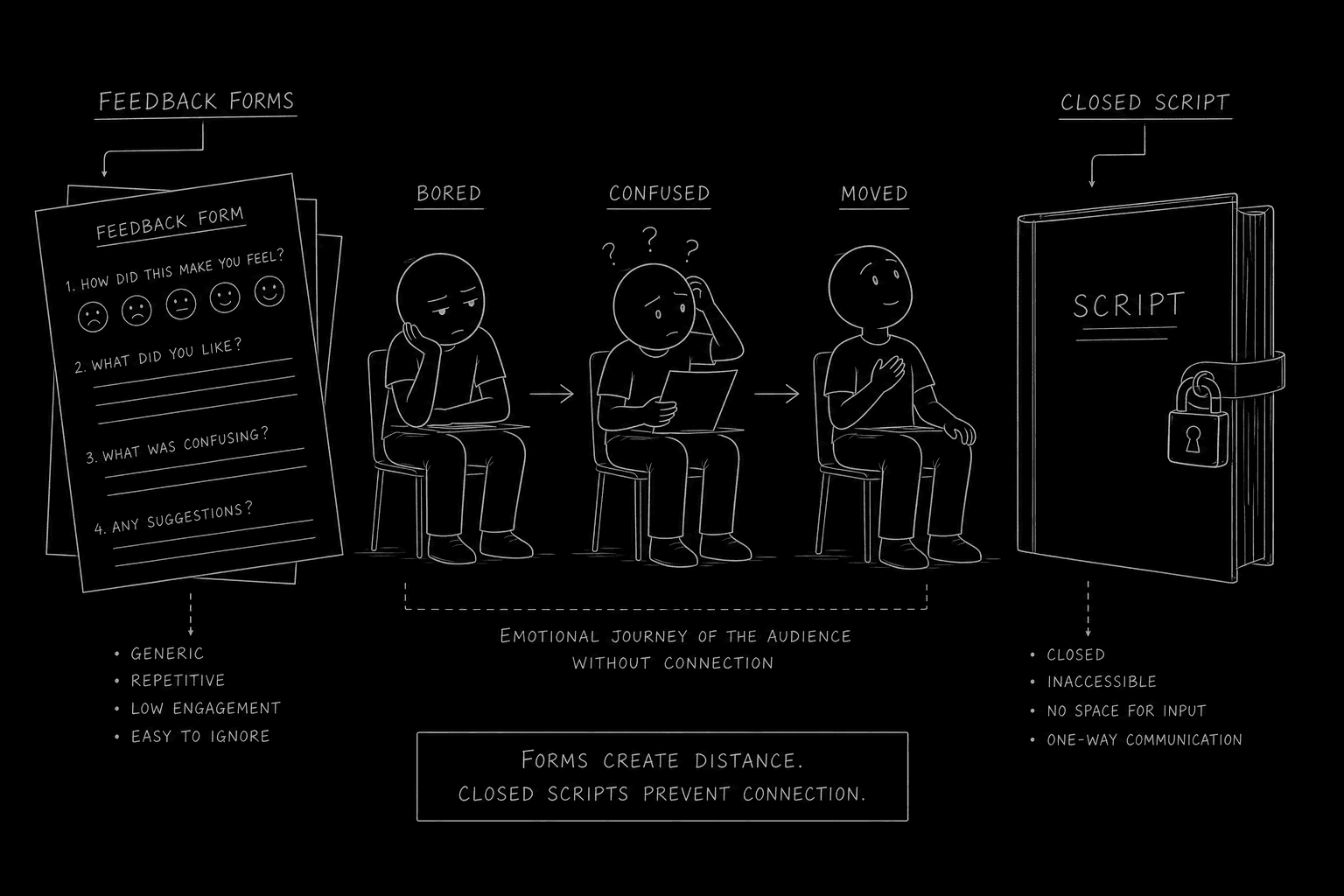
Hand out a one-page form or shared doc with three prompts: bored, confused, moved. Optional fourth: one line you still hear. Collect forms before group discussion. Group discussion without forms becomes the loudest person's opinion.
The writer writes nothing during discussion except quotes. Direct quotes are gold. "I thought she already knew about the boat" beats "act two felt off."
Ban the word "great" from feedback round one. You can celebrate after you capture notes.
If a producer is present, send a one-page summary the next day with what you changed as a result. Producers remember writers who listen.
For timing truth after the read, compare total minutes to page count. If the read ran long, your script likely runs long. Our guide on screenplay runtime and the one-page-per-minute rule helps you interpret the gap without fooling yourself.
The read is successful if you can name three specific changes by tomorrow morning.
Try it free
Try Screenweaver for free on your script
It is free. Import your existing project, get a clearer view of your outline, and regain control of your story structure in minutes.
Start FreeOutcome Section: What You Should Have in Your Hands After
You want marked scripts from at least two attentive listeners. You want forms or a scribe doc. You want a priority list of no more than five items. You want one scene you are secretly proud of that still works out loud. If nothing works out loud, you learned that before cameras.
Optional: audio recording for the writer only, with consent. Listen back at 1.25 speed the next day. Cringe is instructive.
Why Table Reads Beat Silent Notes (When Run Correctly)
Silent PDF notes favor readers who write well, not readers who listen well. Table reads force sequential experience. Jokes need timing. Reveals need breath. Arguments need overlap energy even when you do not use dual dialogue on the page.
The old way is reading alone and assuming the script is ready because you cried writing it. The better way is hearing strangers stumble on your cleverest sentence. Stumble is data.
Table reads also build community. Actors who read for you early may remember you when a role fits. Writers who hear your work become honest peers. The social graph matters in independent film. The read is networking that actually improves the script.
Trench Warfare: Ways Writers Waste the Room
Wasting: casting twelve readers for a two-hander. Fix: small cast, fewer mouths, clearer signal.
Wasting: letting the writer play the lead. Fix: hear your words in someone else's mouth.
Wasting: serving dinner during the read. Fix: feed people after. Chewing is not note-taking.
Wasting: reading stage directions as poetry. Fix: narrator reads clean. Save performance for dialogue.
Wasting: no time limit. Fix: schedule end time. Respect it.
Wasting: inviting the harshest critic without a structure. Fix: give them the form. Channel harshness into boxes.
For external context on reading culture and craft development, see the <a href="https://www.sundance.org/" rel="nofollow">Sundance Institute</a> writer resources and labs overview. Then host a read smaller than your ego wants.
Relatable Scenario: The Virtual Read That Fixed Act One in One Hour
Nadia could not gather ten people in person. She ran a Zoom read with six laptops, one narrator, and a moderator who muted side chatter. She shared screen only for the title page, then asked everyone to read from their own PDF. She thought it would be chaos. It was quieter than her last in-person read because the moderator enforced mute unless your line.
The confused notes clustered on a flashback transition. Nadia had feared the dialogue was the problem. The read proved the transition was the problem. She added two lines of orientation in the scene heading and cut six lines of redundant exposition. A second virtual read of act one only cost forty minutes and confirmed the fix.
Virtual reads fail when nobody moderates. They succeed when rules are stricter than in person, not looser.
Casting and Seating Details That Change Sound
Put the narrator at the head of the table or the center of the Zoom grid. Narrator sets pace. Put the protagonist reader where they can see the moderator's stop hand.
Do not cast the funniest friend as the villain unless the villain is funny. Cast for mouth-fit: consonants, sentence length, emotional range.
If a reader struggles with a name, change the name in the script before the read, not mid-read with jokes. Jokes eat time.
For accents and dialect, decide ethics in advance. A read is not a performance audition. It is a clarity test. If dialect is essential, brief the reader. If dialect is decorative, cut it for the read.
Post-Read Discussion Rules (So Notes Stay Usable)
Round one: each person gets two minutes uninterrupted. Writer does not reply.
Round two: writer asks clarifying questions only. No defending.
Round three: writer states intended changes in one sentence each.
No one leaves until forms are collected. Forms beat memory.
If a producer attended, send a follow-up email within twenty-four hours with three bullets: what you heard, what you will change, when they can see the next draft if applicable.
Timing the Read Against Page Count
Before the read, estimate duration with a simple formula: dialogue-heavy scripts add time, action-heavy scripts subtract if the narrator reads lean. Add fifteen minutes per act for bathroom and water.
After the read, compare actual minutes to page count. If a ninety-page script read in one hundred ten minutes with no major digressions, your runtime estimate for buyers should rise. If it read in seventy minutes, do not pitch a "slow burn" that is actually a thin middle.
Cross-reference runtime and page-per-minute thinking when you turn read timing into pitch language.
Second Read vs First Read (When to Spend Social Capital Again)
Run a second read when you changed structure, not when you changed commas. Invite at least one new listener if you can. Fresh ears detect whether the fix worked.
Do not run six reads on the same draft hoping for permission. That is polling, not craft.
Equipment and Room Setup (Small Details, Big Friction)
In person: pencils, not pens, for marks on paper scripts. Water, not crunchy snacks. Good chair count. Bad chairs make people leave mentally before act two.
Virtual: test screen share once. Send PDF the day before. Remind people to print if they read better on paper. Recording only with explicit consent.
Why It Matters for Submission Timing
A table read before contest submission or manager send is not superstition. It is risk reduction. Coverage will still hurt sometimes. It will hurt less when the confusing scene already died in a living room.
The old way is treating reads as celebration. The better way is treating reads as editorial infrastructure you schedule like a dentist appointment: uncomfortable, brief, preventive.
Closing: The Room Is a Tool, Not a Judgment
You are not asking the room to validate your identity. You are asking the room to pressure-test pages before those pages cost more money and more reputation. Run the read with rules. Protect the writer's listening time. Capture notes that name scenes. Rewrite with a pass list.
When the read ends and someone says they would watch the movie, smile, say thank you, and still read the forms. Compliments feel good. Bored, confused, moved makes the next draft better. That is the whole point of dragging chairs around a table.
Schedule the next read after you execute a structural pass, not after every comma change. The room has memory. Show them movement. Writers who run reads well look professional before they are produced. Producers can feel it in the next meeting when you say, "We table-read act two and cut two scenes." That sentence is worth more than a hundred silent submissions.
Final Step
Build your next script with Screenweaver
Move from ideas to production-ready pages faster with timeline-native writing and AI-assisted story flow.
Try Screenweaver