Beat Sheet Calculator
Narrative structure · Save the Cat page numbers
This free Save the Cat calculator answers a question every writer hits: for a given script length, which page should the catalyst, midpoint, or climax land on?
Enter your target page count (e.g. 90, 110, 120). The tool instantly generates a detailed beat sheet with exact page numbers for each turning point, based on Blake Snyder's Save the Cat structure.
Simple percentage math applied to your total page count. Runs in your browser , no data is sent to any server.
Save the Cat beat sheet
Page positions based on Blake Snyder's 15-beat structure (Save the Cat!).
- Opening Imagep. 1
- Theme Statedp. 6
- Set-Upp. 1–10
- Catalystp. 13
- Debatep. 13–25
- Break into Twop. 28
- B Storyp. 33
- Fun and Gamesp. 33–55
- Midpointp. 55
- Bad Guys Close Inp. 61–75
- All Is Lostp. 83
- Dark Night of the Soulp. 83–85
- Break into Threep. 94
- Finalep. 94–109
- Final Imagep. 110
How it works
Each Save the Cat beat has a standard position as a percentage of the script (e.g. catalyst around 10%, midpoint at 50%). The calculator multiplies these percentages by your total page count and rounds to the nearest page, so you get exact page targets for any length from 1 to 200 pages.
What is a beat sheet in screenwriting?
A beat sheet is a simple roadmap of your story: a list of key dramatic beats in the order they happen. Instead of describing every scene, it focuses on the major structural moments , opening image, catalyst, midpoint, all is lost, finale , and where they fall in your screenplay.
Many screenwriters use the Save the Cat beat sheet (15 beats) or the Hero's Journey to make sure their story turns at the right moments. A clear beat sheet helps you see if the spine of the story is working before you spend weeks polishing pages that are structurally off.
How to use this beat sheet calculator
Use this Save the Cat page calculator as a quick reference whenever you start, rewrite, or tighten a script.
- Enter your target page count , for example 90 pages for a tight feature, 110 pages for a standard studio draft, or 120 for an epic.
- Scan the generated beat sheet and note the expected page ranges for the catalyst, midpoint, all is lost, and finale.
- Compare those targets to your current outline or draft. If your catalyst is landing at page 25 in a 90-page script, you know the set-up is running long.
- Adjust your outline , compress or combine beats, move scenes, or change where acts break , then re-check against the calculator until the pacing feels right.
Why page numbers and pacing matter
In standard screenplay format, one page is roughly one minute of screen time. That means a catalyst at page 10 in a 100-page script hits around the 10-minute mark and a midpoint at page 50 lands around minute 50. Audiences feel these turns whether they know the terminology or not.
If your inciting incident arrives on page 30 of a 90-page script, the story can feel slow and unfocused. If your climax shows up on page 60 of a 120-page script, the back half may feel like an extended epilogue. A beat sheet calculator keeps you honest about pacing while still leaving room for your voice and genre conventions.
Save the Cat vs Hero's Journey
This tool uses Blake Snyder's Save the Cat beat sheet (15 beats) because it maps directly to page numbers in a feature-length screenplay. Beats like Catalyst, Break into Two, Midpoint, All Is Lost, and Finale have clear target positions as percentages of the total page count.
If you prefer the Hero's Journey, you can still use these page targets. Think of the Catalyst as your Call to Adventure, Break into Two as Crossing the Threshold, Midpoint as Ordeal or Revelation, All Is Lost as Death and Rebirth, and Finale as the Return with the Elixir. The labels change, but the underlying rhythm remains similar.
Go deeper on beat sheets
Your beats needa script attached.
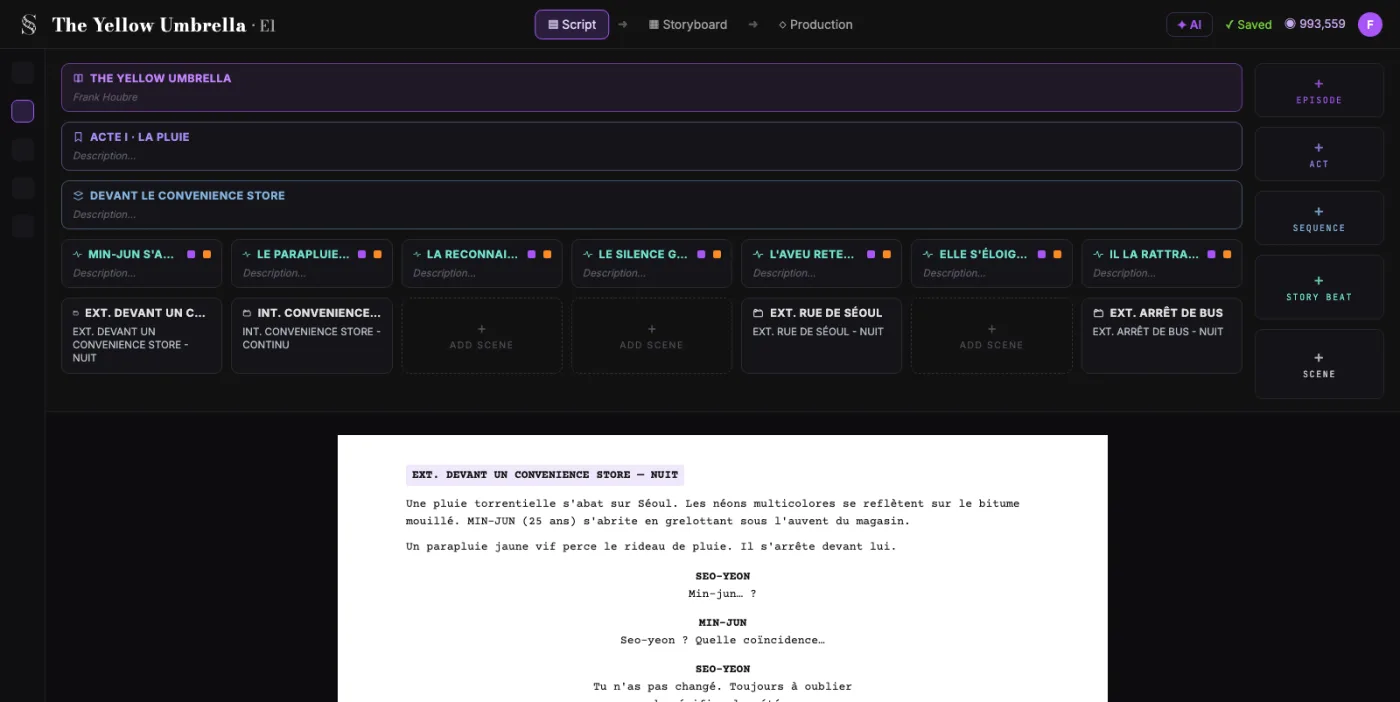
In ScreenWeaver, the outline and beats live in the same project as your screenplay. Structure and pages stay linked. Free.
- $0, does not expire
- PDF and Final Draft export
- Mac, Windows, Linux, iPad
Beat Sheet Calculator: the complete guide
It translates total page length into practical beat positions so you can spot where structure drifts from intended rhythm.
For this workflow, the central problem is clear: writers struggle to diagnose pacing drift because key turns are not anchored to measurable targets. Left unresolved, this creates downstream friction and slower decisions. The practical target is clear page targets for major dramatic beats, enabling faster structural rewrites.
Limitation to keep in mind: It cannot replace taste, genre nuance, or story-specific elasticity; beats are anchors, not hard law.
Advanced workflow: Use beat deltas across drafts to quantify structural progress after notes, then target only the sequences causing pacing lag.
Step-by-Step Workflow
- Set total length first, then review generated beat positions as structural checkpoints, not rigid commandments.
- Compare your current outline and identify any beat that lands too early, too late, or without proper setup.
- Adjust sequence load and scene order, then rerun to confirm pacing improvements after each revision cycle.
- Validate the final map against genre expectations so the script feels intentional to first-time readers.
Use Cases By Profile
- Writer: ensure catalyst and midpoint support momentum rather than stall setup.
- Story editor: identify where act turns are underprepared or late.
- Development team: compare multiple outline options against consistent pacing targets.
Common Mistakes To Avoid
- Forcing exact pages without considering story logic.
- Ignoring genre-specific elasticity around beat positions.
- Changing beats without adjusting setup/payoff scenes.
Professional Best Practices
- Use page ranges when collaborating to reduce unnecessary debate.
- Stress-test midpoint and all-is-lost clarity before polishing dialogue.
- Track structural moves separately from line edits for cleaner iteration.
Treat this tool output as a decision support layer, not a replacement for authorship. Great scripts are remembered for specific choices, emotional precision, and clarity of dramatic movement. Tools help by removing noise so your energy can go where it matters: character, conflict, escalation, and payoff. If you review outcomes after each pass and keep an explicit log of accepted changes, your workflow becomes faster and more predictable from draft to draft. That consistency is exactly what professional collaborators value: fewer surprises, clearer rationale, and a script that evolves with intent.
Extended FAQ
Do beat targets reduce originality?
No. They are diagnostic anchors, not creative cages. Originality comes from execution, character, and scene design.
How far can beats drift and still work?
Some drift is normal by genre and style. Persistent drift without narrative payoff usually signals pacing issues.
Should I adapt beats for pilots?
Yes. Use the same structural logic but adjust intensity and cadence for episode format and engine.
What beat is most often late in weak drafts?
Catalyst and Break into Two are common late points when setup is over-expanded.
How do I use this in rewrites?
Compare current beat positions to targets, fix highest-impact deviations first, then rerun after each structural pass.
Can this replace reader feedback?
No. It complements feedback by making structural discussions faster and more objective.
Beat sheet calculator FAQ
Common questions from writers searching for "Save the Cat page calculator", "inciting incident page 90 minute movie", and other structure-related queries.
In Save the Cat, the Catalyst (inciting incident) is placed around page 12 of a 110-page script , roughly 10-12% of the total length. For a 90-page feature, that means the inciting incident typically lands around pages 9-11. Use the calculator above with 90 pages to see the exact suggested range for your draft.
The midpoint is designed to hit at the 50% mark of your story. In a 110-page script, that is page 55. In a 120-page script, that is page 60. Enter your exact page count into the beat sheet calculator and it will show you the precise midpoint page so you can check if your big reversal or escalation lands there.
Yes. The math is just percentages, so it works for half-hour pilots, one-hour dramas, limited series episodes, and short films. The labels "feature" or "film" on most Save the Cat beat sheets are just conventions , what really matters is where key turning points fall relative to the total length.
No. These numbers are a guideline, not a law. Produced films often land a few pages early or late on certain beats. What matters is that your story keeps making meaningful turns and that acts and sequences do not drift too far from audience expectations for your genre.
The underlying percentages are based on Blake Snyder's Save the Cat beat sheet for feature screenplays. However, you can easily map Hero's Journey language onto the same positions , Call to Adventure, Crossing the Threshold, Ordeal, Death and Rebirth, and Return all line up with familiar beats in this calculator.