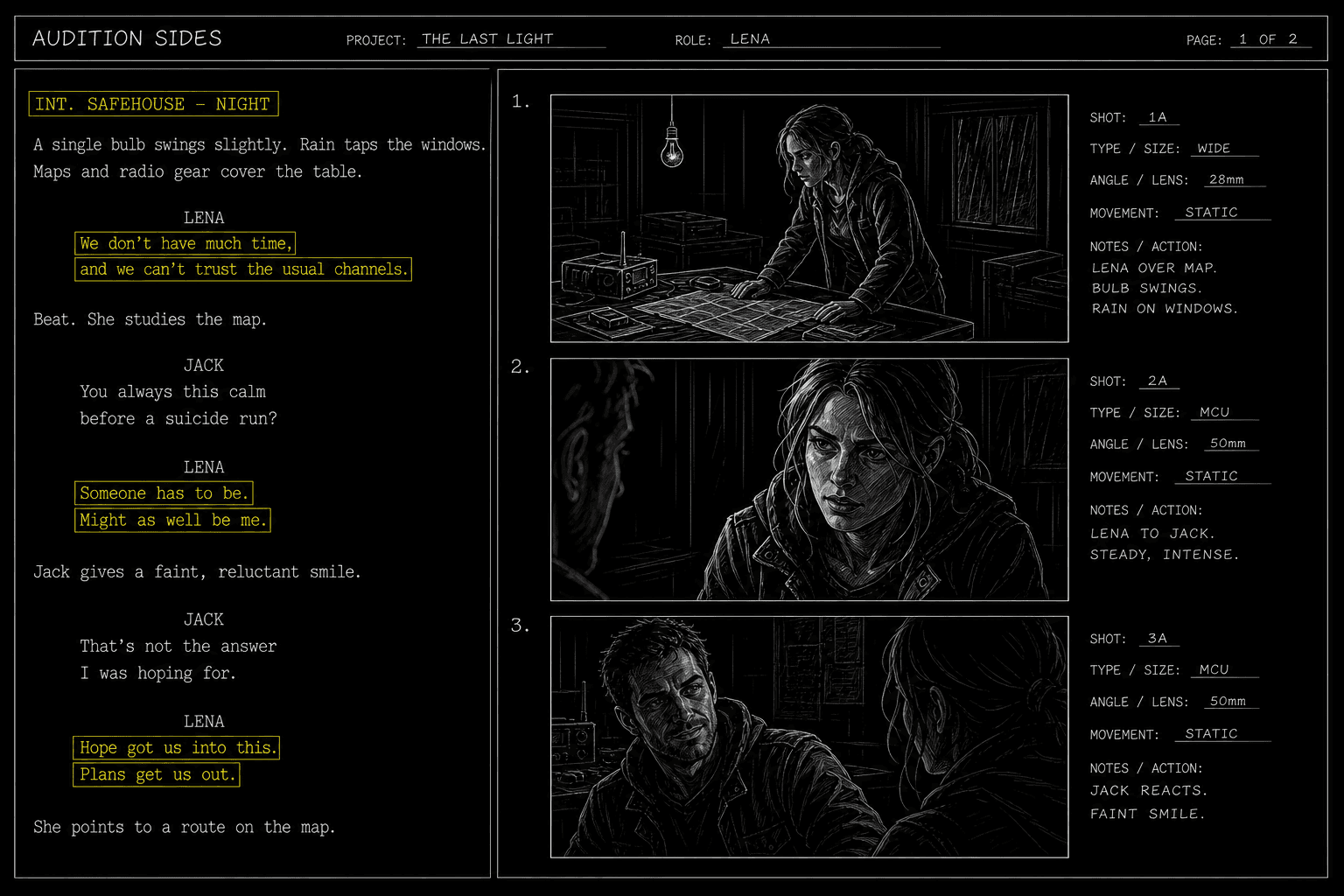

Casting directors do not audition your whole script. They audition a slice you chose in a hurry or a slice your assistant built at midnight. Casting sides format is the difference between an actor walking in ready to play and an actor walking in apologizing for missing context. Audition sides should read like a tiny movie on paper: clear who speaks, clear where we are, clear what changed emotionally by the last line.
This article is a practical cut guide. You will learn how to select scenes, format excerpts so they match industry habit, and avoid the beginner cuts that waste everyone's ten-minute slot. Three scenarios, a step workflow, and a long mistake section follow. No series references. No hand-waving about "the craft" without tools you can use tonight.
Sides are not a trailer for your script. They are a playable instrument with one part highlighted.
What Casting Sides Are (And What They Are Not)
Sides are excerpted pages from the script, sometimes with redacted names, sometimes with fake titles for secrecy. They include scene headings, action lines needed for behavior, and dialogue for the roles being read. They may include a reader part for the casting associate. They are not treatments. They are not pitch decks. They are not the full pilot PDF unless you are foolish or the role is enormous.
Actors use sides to show range, listen, take direction, and prove they can land the voice of the part. Casting uses sides to compare people fairly. If your sides omit the turn in the scene, every actor looks flat and you blame them.
Sides format should mirror professional screenplay layout even when you watermark CONFIDENTIAL. Courier 12, standard margins, correct element types. Weird fonts signal amateur hour before the actor speaks.
For baseline layout across the full script, use the screenplay formatting guide before you cut excerpts. Bad parent script format becomes bad sides format at photocopy speed.
How Casting Uses Your Cuts (Room Workflow)
A typical television hour might send sides two days before a producer session. Film might send them the morning of a chemistry read. The casting office prints or PDFs, labels with role name and session time, and sometimes merges multiple scenes into one packet.
The associate reads opposite. The actor may be on camera for a self-tape instead. Self-tapes demand even cleaner context because nobody is in the room to explain what happened two scenes ago.
Casting also tracks security. Sides leak. Watermarks, code titles, and limited page counts reduce spoil risk. Your artistic love for the third-act twist does not belong in early casting unless that twist is the role.
When episodes run long, producers still think in page bands. If you are cutting from a pilot, know whether your source script sits in the expected TV pilot page count range so you do not pull a scene that will be cut before shoot anyway.
| Sides element | Include when | Cut when |
|---|---|---|
| Scene heading | Always | Never (actors need place and time) |
| Setup action | If behavior depends on it | If scene is pure dialogue and context is obvious |
| Role dialogue | Always for audition role | N/A |
| Other roles | Reader lines or summarized | Long speeches not needed for the test |
| Action after the beat | If the turn lives there | If it spoils later story |
The table is a cutting compass, not a rulebook for every role. A silent reaction role needs action more than dialogue.
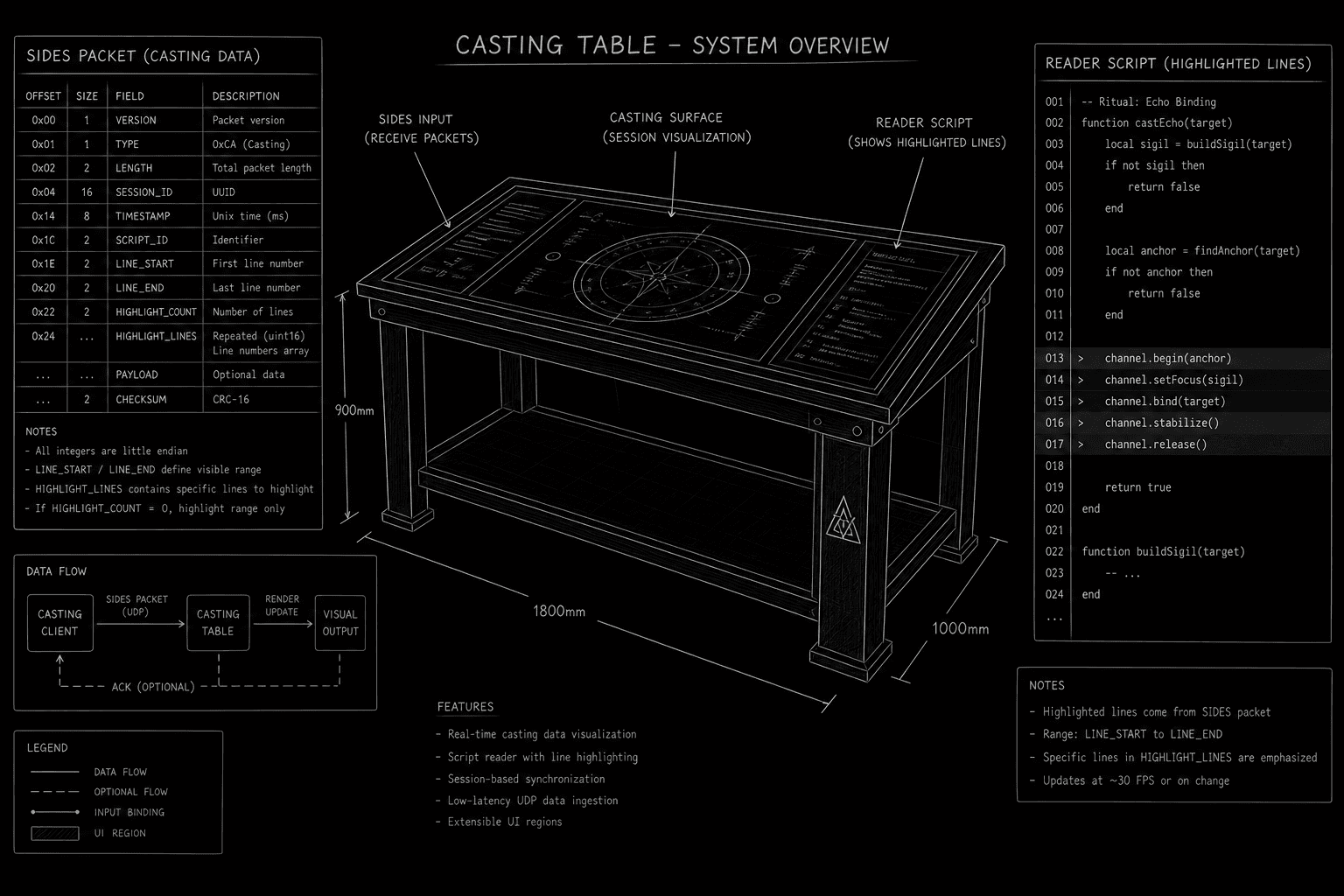
Choosing Scenes: Range Without Spoilers
Pick a scene with a clear want and a clear change. Two pages beats six. Three moments beats three acts. If the role is comic, include a button. If the role is dramatic, include the line where defense breaks.
Avoid the hardest scene in the film unless you are casting a lead who must prove stamina. Avoid the climax that requires four characters and a horse. Casting is not stunt testing unless stunt casting is the job.
For ensemble roles, a short scene with one sharp choice beats a montage of every episode appearance. For guest stars, one self-contained scene from the episode they book is ideal.
When you must combine non-contiguous moments, use a clear break line in action: END SCENE / BEGIN SCENE. Do not pretend continuity exists if it does not. Actors forgive a break. They do not forgive guessing.
[YOUTUBE VIDEO: Casting director explains picking two-minute sides versus full scenes for chemistry reads]
Granular Workflow: Build Sides in One Sitting
Step 1: List the roles you are casting this round. Lead, recurring, day player. Different rounds get different side depth.
Step 2: Mark candidate scenes in the full script. Highlight in software or print and tab. Pick three candidates per role, not one, so you have backups.
Step 3: Read each candidate aloud with a timer. If you cannot finish in two to four minutes of performance, cut lines, not margins.
Step 4: Copy into a clean document using screenplay elements. Scene heading intact. Action trimmed to verbs and behavior. Dialogue complete for the role.
Step 5: Add reader cues if needed. READER (casting associate) or other character names in full caps when they speak. Mark optional lines if the office allows trimming.
Step 6: Watermark and title. CONFIDENTIAL, project code name, role name, date. Footer with page numbers even if only two pages.
Step 7: Proof against the parent script. One wrong line number or name erodes trust.
Step 8: Export PDF and test on phone. Most actors read sides on phones in parking lots. Tiny margins fail.
Step 9: Pair with a beat sheet if producers want arc context. A beat sheet calculator helps you verify the excerpt still sits on a story beat, not in dead air.
Step 10: Send with instructions. "Please prepare Role X pages 1-2. Reader plays Y. Tone: grounded, not sitcom." One sentence of tone saves six bad takes.
Relatable Scenario: The Drama That Sent the Funeral and the Joke
Nina casts a dark family drama. She sends a two-hander from the funeral scene because it is "emotional." The role she is casting is the adult son who mostly listens at the funeral, then explodes in the kitchen two scenes later. Actors arrive doing grief face for a role that needs suppressed rage. Nina wonders why everyone feels same-y.
Nina recut kitchen sides with one line of funeral context in action: "He has not spoken at the burial." Actors arrive with playable energy. Callbacks improve.
Relatable Scenario: The Comedy That Cut All the Buttons
Leo's half-hour pilot audition sides remove the last joke of each scene because he thought buttons made pages long. Actors land lines flat. Casting says nobody feels funny. Leo adds the buttons back. Two pages become two and a half. Laughs return.
Leo learned that audition sides format is not about minimizing words. It is about preserving the turn the role proves.
Relatable Scenario: The Self-Tape With No Heading
Remote casting for a thriller sends a dialogue chunk starting mid-sentence. No INT/EXT. No time. Actors play generic urgency. The director hates every tape.
The fix is one slugline and one action line at the top. INT. MOTEL ROOM - NIGHT. Rain on the window. Cost: two lines. Benefit: everyone plays the same movie.
Try it free
Try Screenweaver for free on your script
It is free. Import your existing project, get a clearer view of your outline, and regain control of your story structure in minutes.
Start FreeOperational Section: Security, Names, and Reader Scripts
Use code titles on covers when production requires. Redact character names that spoil if your security team asks. Do not redact the actor's own role name. They need to know who they are.
Reader scripts can be a second PDF with full lines for the associate, or a combined PDF with both parts marked. Never assume the actor will read the other part well enough to be your reader in a self-tape unless you cast that way on purpose.
For timing, sides that run long blow session schedules. If your excerpt is dialogue-heavy, estimate with the same honesty you would use in the runtime and page count guide. A four-page sides packet is not four minutes on camera when the actor builds a performance.
External casting craft resources from established teachers can supplement your process; the <a href="https://www.backstage.com/magazine/article/how-to-prepare-sides-159/" rel="nofollow">Backstage guide to preparing sides</a> is a useful actor-facing mirror so you see what lands on their side of the table.
Outcomes: What Good Sides Produce in the Room
Good sides produce takes you can compare. Casting hears the same scene shape ten times and knows who listened, who pushed, who took direction. Producers see whether the writer's voice survives performance.
Good sides also protect story. You reveal less while showing more about the role. Actors leave wanting the part because the excerpt felt like a real scene, not a homework fragment.
Fair sides make fair comparisons. Sloppy sides make sloppy casting decisions.
Why It Matters: Random Cuts vs Designed Auditions
The old habit grabs the first loud scene in the script. The improved habit chooses the scene that tests the job. The old habit strips sluglines to save space. The improved habit keeps sluglines so actors play place and time. The old habit sends the whole pilot because you are proud. The improved habit sends a instrument with one part written large.
Casting is expensive. Rooms are tired. Your sides respect time. That respect returns as better performances.
The Trench Warfare Section: Casting Sides Mistakes Beginners Make
Mistake: no scene heading. Fix: always include INT/EXT, place, time.
Mistake: starting mid-scene without context. Fix: one action line of setup or a labeled prior beat.
Mistake: sides too long. Fix: cut to two to four minutes unless lead stamina is the test.
Mistake: sides too short to show range. Fix: include a turn, not only a greeting.
Mistake: wrong role highlighted. Fix: bold or mark only the audition character's dialogue in instructions, not with weird fonts in the body.
Mistake: spoiling the project. Fix: code title, limit pages, avoid late-episode twists for early rounds.
Mistake: inconsistent character names. Fix: match parent script spelling exactly.
Mistake: broken format from paste. Fix: rebuild in screenplay software, export PDF.
Mistake: missing reader lines. Fix: include associate part or note "reader ad libs."
Mistake: telling actors to "just be yourself." Fix: one line of tone guidance.
Mistake: sending different sides to actors without telling casting. Fix: one packet per role per round.
Mistake: using non-standard margins to fit more lines. Fix: cut lines, not standards.
Mistake: forgetting gender and pronoun clarity in action. Fix: clear he/she/they references once.
Mistake: acronyms and jargon without setup. Fix: one plain action line defines the world term.
Mistake: no page numbers on sides. Fix: footer numbers even for two pages.
Mistake: watermarks that obscure text. Fix: light diagonal, not black bars over dialogue.
Mistake: choosing only shouting scenes for quiet roles. Fix: match energy profile of the part.
Mistake: choosing only exposition. Fix: pick behavior, not explanation.
Mistake: ignoring self-tape framing notes. Fix: add slate instructions separately, keep sides clean.
Mistake: failing to update sides when script color changes. If pink replaced white on your scene, actors need pink lines. Fix: pull excerpts from current revision color per your production office rules.
Sides are the first performance of your production discipline. Actors feel sloppy pages before producers admit it.
Closing: Cut Once, Cut Right, Then Watch the Room
Casting sides format is screenplay format with a narrower job. Choose the scene that proves the role. Keep headings. Trim action to behavior. Protect story. Watermark. Time the read. Send tone in one sentence.
You are not dumbing the script down. You are building a fair test. When the right actor walks in, good sides disappear and the character appears. That is the whole point of the cut.
Build your packet tonight. Read it aloud once. If you feel the turn, send it. If you do not, pick a different scene before tomorrow's sessions start without you.
Callbacks, Chemistry Reads, and Second-Round Cuts
First-round sides test fit. Callback sides test range and collaboration. Send a different scene, not the same scene with one line changed unless the callback brief says otherwise. Chemistry reads pair actors who must argue, flirt, or stall in the same space. Pull a two-hander where both roles have playable wants, not a monologue with a silent partner.
Label callback packets clearly: CALLBACK, ROLE, DATE. Actors talk to each other in waiting rooms. Confusing labels waste emotional prep.
For chemistry, include one line of staging note if the room expects a block. "Actors may stand, no required touch." Clarity prevents awkward surprises without directing the performance to death.
Holding Sides Against the Locked Script
When the parent script shifts after casting started, diff the sides against the current draft color. A line change on pink does not automatically reach actors unless casting resends. Build a simple log: role, scene, pages, date sent, script color referenced. Your future self on episode eight will thank a spreadsheet more than memory.
If a role books, send full script under production rules, not early sides. Early sides were a test. The job is the job. Transition paperwork belongs to legal and production, but writers should know the emotional handoff: actors stop prepping the excerpt and start prepping the world.
Callback sides are a second audition, not a rerun. Give the room a new question to answer.
Understudies, Replacements, and Emergency Sessions
When a role recasts mid-season, the new performer often gets sides from the episode shooting next week, not from the actor's favorite scene from episode two. Prioritize what cameras need soon. Include one line of series tone if the show is half-hour single-camera versus multi-camera, because rhythm changes how lines land.
Emergency replacements on film sometimes receive sides built from dailies dialogue that never matched the written page. Writers should reconcile the excerpt with the script color on set before sending, or the new performer learns lines that will be cut in post. Speed matters. Accuracy matters more.
Final Step
Build your next script with Screenweaver
Move from ideas to production-ready pages faster with timeline-native writing and AI-assisted story flow.
Try Screenweaver