
Hero image prompt: Dark mode technical sketch. Solid black background, thin white hand-drawn lines. Two figures, one slightly in front (protagonist), one beside (best friend). The best friend has their own direction, their own gesture, not just facing the protagonist. Minimalist, high-contrast.
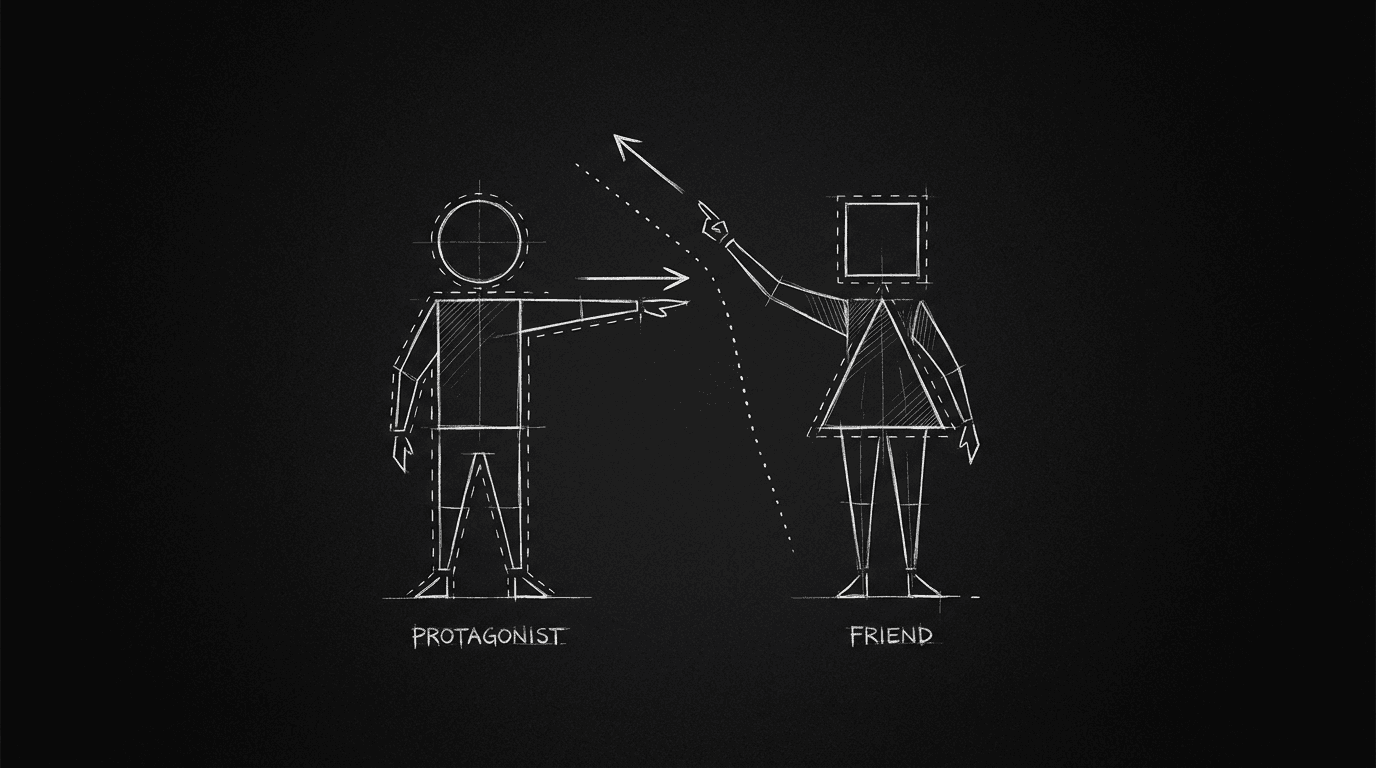
She’s the one who gives advice. She’s the one who says “go get him.” She’s the one who has no life of her own until the script needs a pep talk. The rom-com best friend is one of the most thankless roles in the genre, unless you give them agency. Agency doesn’t mean they need their own love story. It means they have wants, limits, and a point of view that isn’t just “support the protagonist.” Here’s how to write the best friend so they feel like a person, not a function.
The best friend who only exists to cheerlead is a prop. The best friend who has their own stakes, and who sometimes disagrees, gets tired, or needs something, is a character. The romance is still the A-plot. The best friend just gets to be real inside it.
Think about My Best Friend’s Wedding. The best friend (Rupert Everett) isn’t there to say “yes, go for it.” He has his own life, his own wit, his own relationship to the protagonist that’s complicated. He’s gay, he’s not a love interest, and he’s not a stereotype, he’s the one who tells her the truth. That’s agency. He has a perspective. He has a limit. He’s not on the page only to serve her plot. Our guide on the modern rom-com structure puts the best friend in the margins of the seven beats, but the margins are where a lot of the texture lives. When the best friend is real, the protagonist’s choices feel more real too. For more on designing support characters with purpose, see designing character foils and support cast.
Why the Stereotype Exists (And Why to Break It)
The rom-com has a contract: we’re here for the couple. So every character who isn’t the couple can feel like they’re there to help or hinder the couple. The best friend is the helper. They listen. They advise. They show up for the crying scene. The problem is that when the best friend has no other function, they don’t feel like a person. The audience stops believing in them. They become a device. So the fix isn’t to give the best friend a full B-plot romance (though you can). The fix is to give them a want, a limit, and a point of view. They want something, even if it’s small. They have a limit, they won’t do X, or they’re tired of Y. They have a perspective, they don’t just agree. When those three things are there, the best friend becomes a character. The romance stays the A-plot. The best friend just gets to be real. For more on giving secondary characters something to do, see structuring the B-plot, the best friend can carry a small B-plot that ties into the theme without taking over.
Giving the Best Friend a Want and a Limit
A want. What does the best friend want? It doesn’t have to be a romance. It can be a job, a move, a boundary, a night off. The want gives them a reason to be in the world when they’re not with the protagonist. So when we cut to them, they’re doing something. They’re not just waiting to be needed. One scene where we see them wanting something, or failing to get it, is enough. The audience will remember they’re a person.
A limit. What won’t they do? What are they tired of? The best friend who always drops everything for the protagonist is a saint, and boring. The best friend who says “not this time” or “I can’t keep doing this” has a limit. That limit creates tension. The protagonist might have to face something without them. Or the protagonist might have to consider the cost of their drama. The limit doesn’t make the best friend unlikable. It makes them real. For more on friendship dynamics that feel true, see friendship dynamics and the platonic soulmate.
A point of view. The best friend shouldn’t always agree. They can think the love interest is wrong. They can think the protagonist is making a mistake. They can be wrong themselves. The point is that they have a perspective. When they give advice, it’s their advice, filtered through their experience, their bias. When they disagree, we get conflict that’s not about the plot. It’s about two people who care about each other and don’t always see the same thing. That’s relationship. For more on dialogue that carries distinct perspective, see distinct voices and the blind read test.
| Element | What It Does |
|---|---|
| Want | Gives them a life outside the protagonist; we see them wanting something |
| Limit | They won’t do everything; creates tension and reality |
| Point of view | They don’t just agree; their advice is theirs, sometimes wrong |
Relatable Scenario: The Script Where the Best Friend Is a Cheerleader
You’ve written the best friend. Every time the protagonist has a problem, the best friend says “you can do it” or “go get them.” The reader can’t tell the best friend apart from a motivational poster. So you add one want. What do they want? A promotion? To be taken seriously? To not have to cancel their plans again? One scene where we see that want. Then you add one limit. There’s a moment when they say no. “I can’t drive you to the airport at 4 a.m. again.” Or “I think you’re wrong about him.” Now the best friend has friction. They’re still on the protagonist’s side. They’re just not a robot. Our piece on chemistry on the page applies to the protagonist and love interest, but the best friend’s relationship to the protagonist also needs to feel specific. The way they talk, the way they push back, the way they show up.
Try it free
Try Screenweaver for free on your script
It is free. Import your existing project, get a clearer view of your outline, and regain control of your story structure in minutes.
Start FreeRelatable Scenario: The Script Where the Best Friend Takes Over
You love the best friend. So you give them a full subplot. Now the script is split. The audience came for the romance and they’re spending a lot of time with someone else. Fix: the best friend’s want or limit should tie into the protagonist’s story. They want something that affects the protagonist, or their limit creates a beat that the protagonist has to face. The best friend doesn’t need a separate movie. They need to be real inside the protagonist’s movie. One or two scenes that are “theirs” is enough. The rest of the time they’re in the protagonist’s orbit, but they’re a person in that orbit, not a prop. For more on balancing multiple threads, see ensemble comedy and juggling arcs, the same principle of “everyone has a function and a beat” applies.
The Trench Warfare Section: What Beginners Get Wrong
Making the best friend a clone of the protagonist. They have the same sense of humor, the same values, the same reactions. The scenes feel like the protagonist talking to themselves. Fix: give the best friend a different background, a different fear, or a different way of seeing love. The difference creates dialogue. They can still be close. They shouldn’t be the same.
Using the best friend only for exposition. “So you’re saying you’re in love with him?” The best friend is there to let the protagonist explain. Fix: the best friend can have their own take. They can interrupt. They can change the subject. They can be wrong. The scene should feel like two people, not one person talking and one person listening.
No cost to the friendship. The protagonist is a mess. The best friend is always there. We never see what it costs the best friend. Fix: one moment where we see the cost. They canceled something. They’re tired. They’re worried about their own life. The friendship has weight when we see that it’s not free. For more on relationship cost, see writing toxic relationships with nuance, even healthy friendships have cost; the best friend isn’t a bottomless resource.
The gay best friend (or other stereotype). If the best friend is there to be sassy, fashionable, and single with no interior life, you’ve got a stereotype. Fix: give them the same thing you’d give any character. A want. A limit. A point of view. Let them be a person first. The rest can follow.
[YOUTUBE VIDEO: Comparison of a stereotypical best friend scene vs a scene where the best friend has a want, a limit, and a point of view, with commentary on what changes.]
Step-by-Step: Building the Best Friend
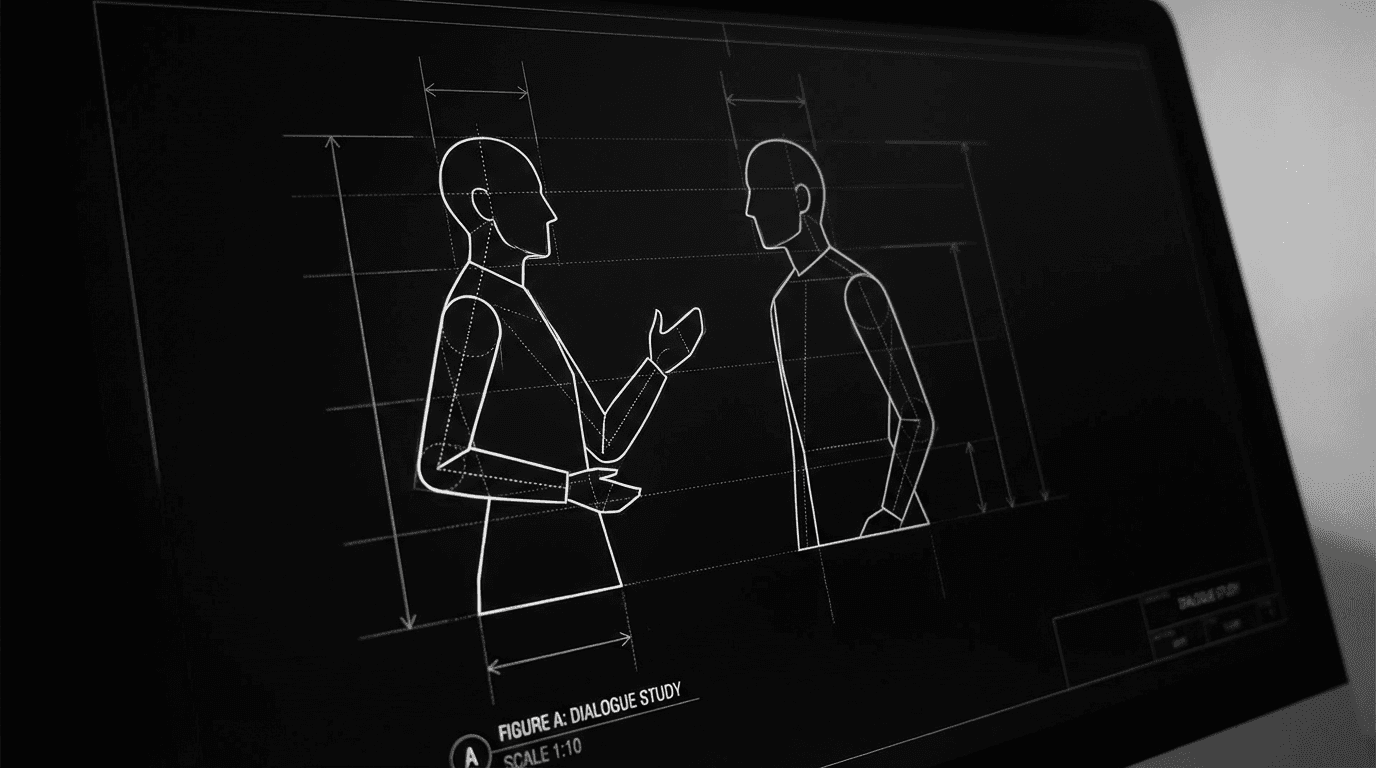
Before you write (or when you’re rewriting), answer three questions. What does the best friend want? (One thing. Can be small.) What’s their limit? (What won’t they do? What are they tired of?) What’s their point of view on the protagonist’s romance? (Do they like the love interest? Do they think the protagonist is making a mistake? Are they wrong?) Then give them one scene that’s theirs, where we see the want or the limit. Give them one moment where they disagree or push back. The rest of the time they can support. But those two beats will make them real. For the full rom-com structure they’re supporting, see the modern rom-com and seven beats.
One External Resource
For a short overview of the “gay best friend” trope and its critique, see Gay best friend on Wikipedia. Reference only; not affiliated.
The Perspective
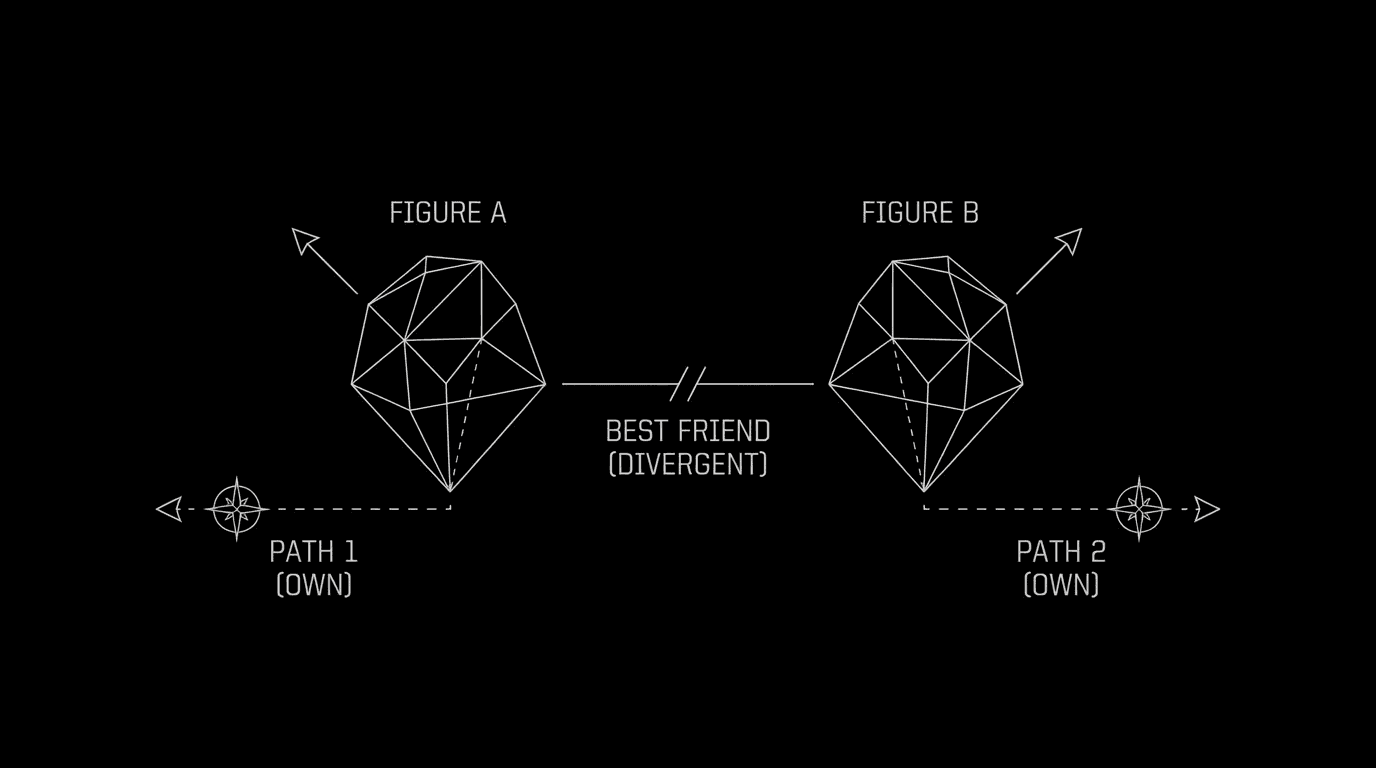
The rom-com best friend doesn’t need a subplot. They need to be a person. A want. A limit. A point of view. When they have those, they stop being a function and start being a character. The romance is still the story. The best friend just gets to be real in the margins, and that makes the whole thing feel more real.
Final Step
Build your next script with Screenweaver
Move from ideas to production-ready pages faster with timeline-native writing and AI-assisted story flow.
Try Screenweaver