
The "Training Montage" in 2026: Cliché or Classic?
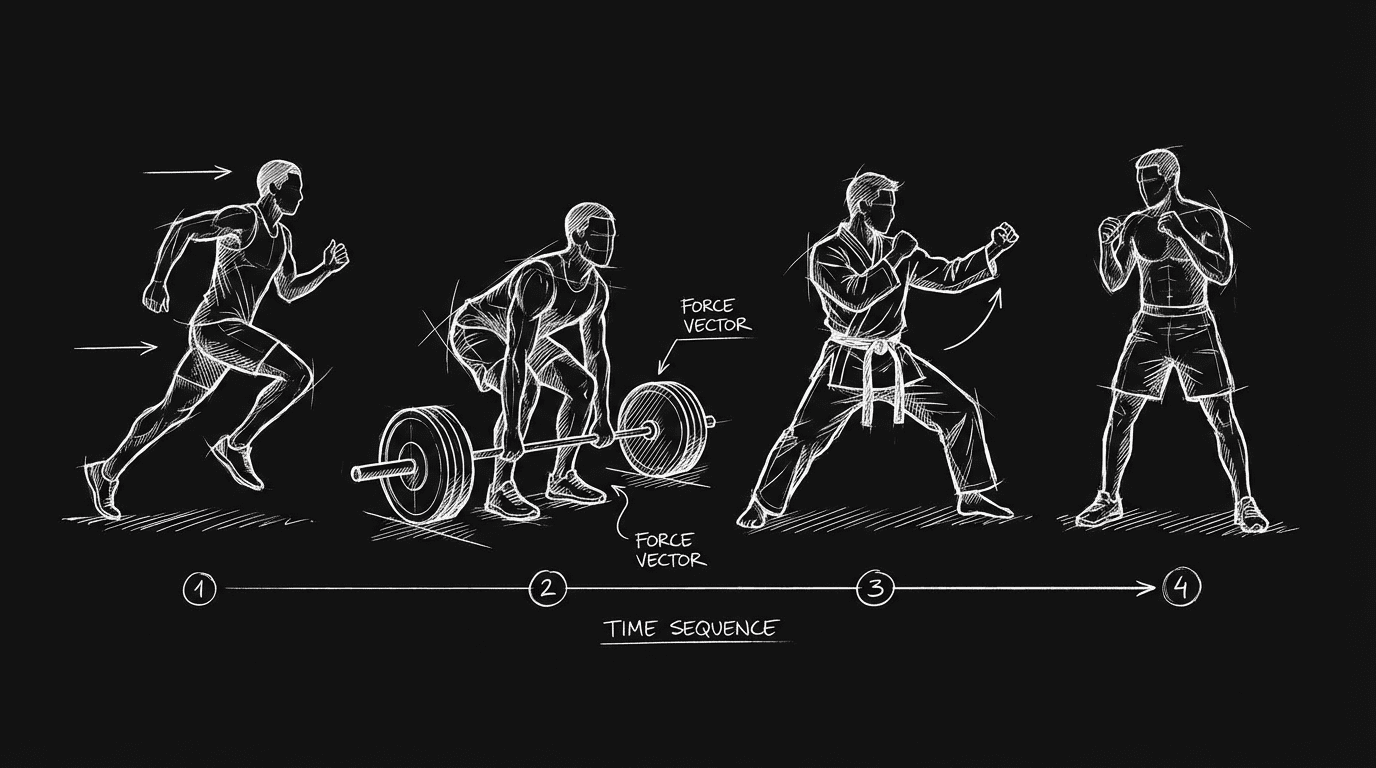
The music kicks in. The hero runs at dawn. They lift. They spar. They fall. They get up. Cut to a calendar flipping pages. Cut to a stopwatch. Cut to the same person, weeks later, standing at the edge of the thing they were training for, stronger, harder, ready.
You know the beat. So does everyone in the audience.
That’s the problem. And also the opportunity.
The training montage has been parodied so often that writers sometimes avoid it altogether, or they drop it in without thinking, hoping the editor and the needle drop will do the work. Neither approach is right. The montage isn’t dead. It’s loaded, with expectation, with history, with the risk of eye-rolls. If you use it with intention, it still does something no other sequence can: compress a character’s change into a few minutes of pure rhythm and image.
Here’s how to make it land in 2026.
Why the Montage Still Exists
Before we defend or attack it, ask what it’s for.
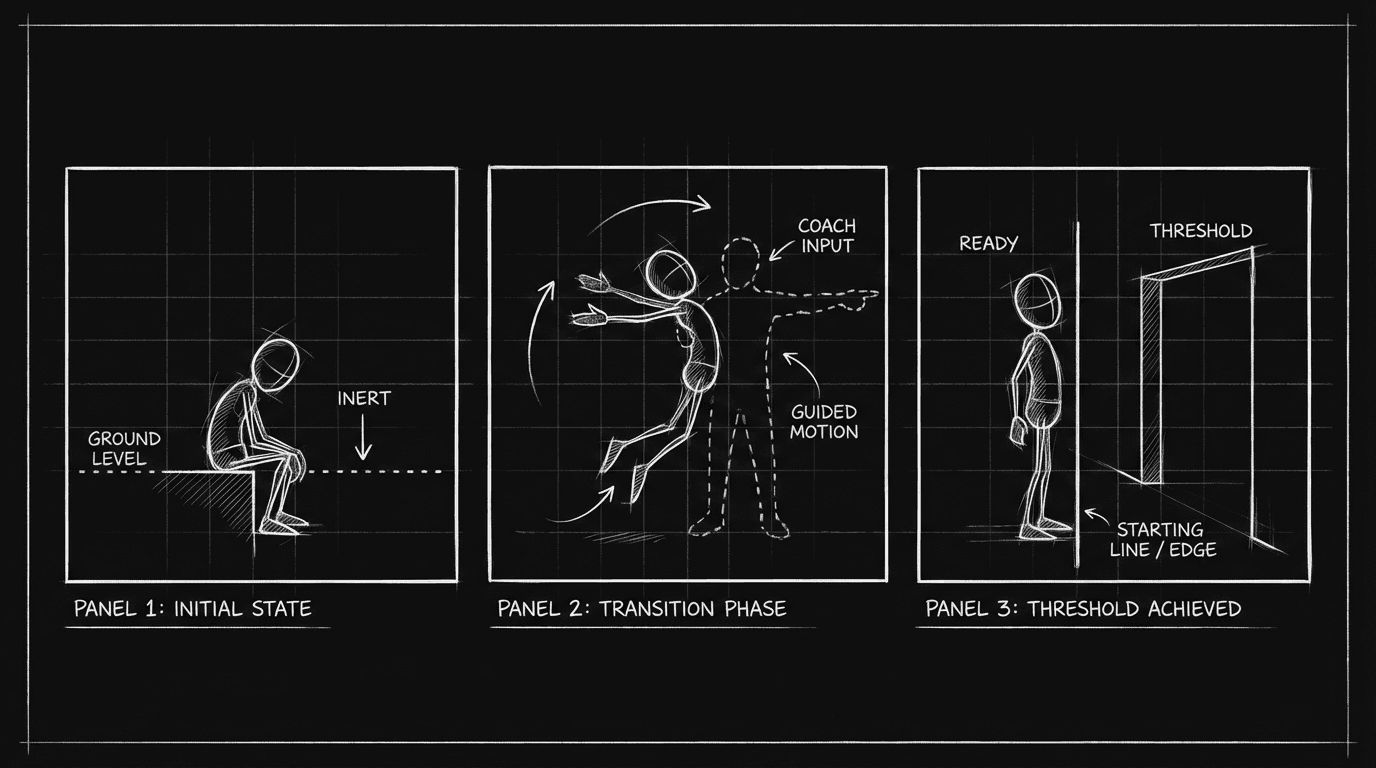
A training montage solves a structural problem. Your protagonist has to get from “not ready” to “ready.” That journey could take months. You don’t have months of screen time. So you compress. You skip the boring parts. You keep the milestones: first failure, first breakthrough, the grind, the moment they cross a threshold.
That compression is valuable. Without it, you’re either stretching a thin premise across half the movie or you’re doing a time jump with no texture, “Six months later, she was ready.” The montage gives you texture. It lets the audience feel time passing and effort accumulating. It’s a bridge between the decision to change and the moment that change gets tested.
The reason it feels like a cliché isn’t that the device is bad. It’s that we’ve seen it done the same way a thousand times: same song type, same progression (bad → better → best), same visual grammar (sweat, sunsets, slow-mo). The cliché is the template, not the idea.
A training montage earns its place when it’s the only efficient way to show transformation. It becomes a cliché when it could be replaced by a single title card and nobody would miss it.
So the bar is clear: either make the montage do work that nothing else can, or cut it.
What the Montage Actually Has to Accomplish
If you strip it down, a training montage has a few jobs.
Show change. By the end, we need to believe the character is different, stronger, smarter, more skilled, or at least more committed. That change has to be visible or felt. Not just stated in dialogue later.
Earn the payoff. The montage is setup. Whatever comes after, the fight, the game, the heist, the audition, has to feel like a test of what we just saw. If the montage is generic (running, punching, montage stuff) and the climax is specific (a chess match, a dance-off, a court case), the link is weak. The montage should train for that.
Carry emotional weight. The best montages aren’t just physical. They’re tied to a character’s inner shift, grief, rage, hope, doubt, loyalty. We’re not just watching reps. We’re watching someone become someone else. That means you need a throughline: one emotional question or relationship that the montage answers or complicates.
Respect the audience’s intelligence. We’ve seen Rocky. We’ve seen every sports movie. We know the grammar. You can lean into it (and subvert it) or you can do something else with the same space, but you can’t pretend we’re seeing it for the first time. A wink, a twist, or a genuine reinvention is better than playing it straight with nothing new to say.
| Job | What it means on the page | What kills it |
|---|---|---|
| Show change | Clear before/after; milestones we can see or feel | Vague “they got better” with no specifics |
| Earn the payoff | Skills and beats that match the climax | Generic fitness; climax needs something the montage never showed |
| Emotional weight | One clear emotional arc (e.g., grief → focus, doubt → resolve) | Pure physical grind with no inner life |
| Respect intelligence | Fresh angle, subversion, or honest embrace of the form | Copy-paste of the same montage we’ve seen before |
Scenario 1: The Writer Who Skips the Montage Entirely
Jordan is writing an underdog sports script. They’re sick of clichés. So they skip the training. We see the hero decide to compete. We jump to the day of the event. “Six months later” does the work.
The script reads clean. The problem shows up in the room.
A producer says: “I don’t believe they’re ready.” A director says: “We need to feel the cost.” The audience never got to live the change. They’re told it happened. The climax has less weight because we didn’t watch the character earn it, we just trusted the title card.
Jordan’s instinct, to avoid cheese, was right. Their solution, to delete the bridge, was wrong.
The fix isn’t to add a montage back in by rote. It’s to ask: what is the minimum we need to see so that the climax feels earned? Sometimes that’s a montage. Sometimes it’s two or three sharp scenes. Sometimes it’s a single sequence that does montage-like work (e.g., one long take of a brutal practice). But “we don’t need to see it” only works if the rest of the script has already made us feel the passage of time and effort. If it hasn’t, you need a sequence that does.
Scenario 2: The Montage That Could Be Any Movie
Maya has a heist script. The crew needs to get in shape, drills, tech, teamwork. She writes a training montage. They run. They lift. They do parkour. They high-five. The music would swell. Cut to the night of the job.
It’s competent. It’s also interchangeable. You could drop it into a military movie, a sports movie, or a superhero origin. Nothing in the montage is specific to the heist. We don’t see them practicing the actual vault, the actual alarms, the actual roles. We see generic “getting better.”
The climax requires them to crack a specific safe, disable a specific system, and work in a specific formation. The montage didn’t train for any of that. So when they succeed, we’re taking the movie’s word for it.
The fix is to tie every beat of the montage to the climax. If the heist needs a driver who can handle a narrow alley at speed, we need to see that skill being built. If it needs a hacker under time pressure, we need to see that drill. The montage should feel like a compressed version of the same movie. Same world, same stakes, same logic. Not generic “training” but this crew getting ready for this job.
Scenario 3: The Montage That Forgets the Cost
In a lot of drafts, training looks fun. Hard, but fun. Sweaty high fives. Grins. A mentor who’s tough but fair. The hero gets stronger and we’re happy for them.
But the best training sequences hurt. They cost something. Time. Relationships. Health. Sanity. The character is choosing the goal over something else, sleep, family, safety, their old self. If the montage doesn’t show that cost, the transformation feels cheap.
So when you outline the montage, ask: what is the character giving up during this period? Who are they neglecting? What are they pushing through that a sane person might not? One or two beats of cost, a missed birthday, a injury they ignore, a relationship cracking, make the rest of the montage matter. We’re not just watching them get strong. We’re watching them choose.
Granular Workflow: Building a Montage That Earns Its Place
Step 1: State the purpose in one sentence.
“By the end of this montage, the audience must believe that [character] can [specific thing they couldn’t do before].” If you can’t fill that in, the montage has no job.
Step 2: List the skills or changes the climax requires.
Not “get fit.” Specifics. Crack a safe. Run a 4-minute mile. Nail the choreography. Persuade a jury. List them. The montage should touch each one, or explicitly skip one (e.g., they never master X, and that’s the flaw that matters in Act Three).
Step 3: Choose an emotional throughline.
What is the character feeling at the start? What are they feeling at the end? Grief → focus. Rage → control. Doubt → belief. One line. Every beat in the montage should move that line a little.
Step 4: Design three to five distinct phases.
Don’t just repeat “they train.” Phase 1: failure, humiliation, or despair. Phase 2: the grind, repetition, small wins. Phase 3: a breakthrough or a setback that changes the stakes. Phase 4: integration, they’re different now. Phase 5 (optional): a beat that undercuts or complicates (e.g., they’re ready but they’ve lost something). You can compress or expand, but having phases keeps the montage from feeling like a loop.
Step 5: Write it on the page.
Montages in scripts are often abbreviated. You don’t have to write every cut. You do have to write the beats: what we see, in what order, and what changes. Use a MONTAGE or SERIES OF SHOTS heading, then list the key moments with brief action lines. Include one or two lines that will stick, a mentor’s line, a character’s realization, a visual that pays off later. The rest is rhythm; the director and editor will find it. Your job is to make the logic clear.
Step 6: Check the link to the climax.
Read the montage, then read the scene where the training gets tested. Does the climax use what we saw? If you cut the montage, would the climax feel unearned? If yes, you’ve done your job. If no, either add the missing beats to the montage or cut it and find another way to earn the climax.
Try it free
Try Screenweaver for free on your script
It is free. Import your existing project, get a clearer view of your outline, and regain control of your story structure in minutes.
Start FreeThe Trench Warfare Section: What Beginners Get Wrong
Mistake 1: Montage as filler.
They need to get from A to B. They drop in “training montage” and move on. No specific skills, no emotional arc, no cost. It’s placeholder. Fix: give the montage a purpose and at least one beat that only this story could have. If you could paste it into another script, rewrite it.
Mistake 2: No failure in the montage.
Everything gets better. Every beat is progress. That’s boring, and fake. Training includes plateaus, setbacks, injuries, quitting and coming back. One moment of “they can’t do it” or “they walk away” makes the eventual breakthrough matter.
Mistake 3: The mentor does all the work.
A wise coach gives a speech and the hero is suddenly ready. The montage becomes about the mentor, not the protagonist. The change has to happen in the character, their choice, their effort, their breaking point. The mentor can guide; they can’t substitute.
Mistake 4: No time pressure or structure.
“Weeks of training” with no marker of time feels vague. A countdown (the fight is in six weeks), a calendar, a number of sessions, or a clear “phase two” moment helps. We need to feel that time is passing and that the climax is coming.
Mistake 5: Sound and music doing all the work.
On the page you might write “Music builds” or “Needle drop: [song].” That’s fine for tone, but the story of the montage has to work without sound. If the only reason it’s moving is the track, the script isn’t doing its job. Write images and beats that land even in silence.
Mistake 6: Montage as replacement for relationship.
Sometimes the “training” is really about a relationship, mentor and student, rivals becoming allies, a team forming. If that’s the case, the montage has to show that. Conversations. Conflicts. Loyalty. Betrayal. Don’t hide the relationship beat inside a blur of push-ups.
Subverting the Montage (When and How)
Because the form is so familiar, you can play with it.
Underdog never gets good. The montage shows effort, but when the test comes, they still lose, or win by luck, teamwork, or a choice that has nothing to do with skill. The montage sets up the expectation; the climax subverts it. That can be powerful if the theme is “trying matters more than winning” or “readiness isn’t what we thought.”
Montage is the whole movie. Some films are nothing but training, the journey is the point. The “climax” might be a small moment: they show up, they try, they don’t win but they’re different. No big game, no final fight. The montage structure is the film.
Montage is interrupted or denied. We start a classic montage, music, montage grammar, and something breaks it. An injury. A death. A betrayal. The character never gets the full “transformation” we expect. The rest of the film deals with that rupture.
Montage is someone else’s POV. We see the training through the eyes of a rival, a lover, or a critic. The tone shifts. It’s not triumphant; it’s obsessive, or sad, or frightening. Same beats, different meaning.
If you subvert, do it clearly. The audience should know you’re playing with the form, not just fumbling it.
How This Fits the Rest of Your Script
A training montage usually sits in the second act, after the protagonist has committed to the goal, before the final test. It’s part of the “rising action”: they’re getting stronger, but the real obstacles are still ahead. So the montage shouldn’t resolve the main conflict. It should prepare the character (and the audience) for that resolution.
If you’re using a structural model, three acts, Save the Cat vs. The Hero's Journey beat sheet, or sequence approach, the montage often lands in the “fun and games” or “B story” zone: the stretch where we explore the world of the goal and the cost of pursuing it. For more on keeping the middle act from sagging, our guide on [Mastering the Midpoint: How to Raise Stakes Without Breaking Your Plot] applies: the montage can contain or lead to a midpoint turn (e.g., a setback, a revelation, or a new commitment).
One External Reference
Real athletes, performers, and specialists often describe training in phases, base building, intensity, taper, peak. A quick dip into sport psychology or performance literature (e.g., the Association for Applied Sport Psychology’s public resources{rel="nofollow"} on mental skills and preparation) can give you language and structure that feel more grounded than “they trained hard for a while.” You’re not writing a documentary, but a little research makes the montage feel less generic.
The Takeaway: Cliché or Classic Is a Choice
The training montage isn’t inherently cliché. It becomes cliché when it’s used as a shortcut, when the writer hasn’t thought about what must change, what it costs, and how it connects to the climax. It becomes classic when it’s specific, when it carries emotional weight, and when the story would be weaker without it.
Use it when compression is the right tool. Make it earn its place by tying every beat to the story you’re telling. Give the character a cost, a failure, and a throughline. Then let the editor and the music do the rest, but only after the script has done the work.
Do that, and the montage stops being a punchline and becomes the bridge your third act stands on.
[YOUTUBE VIDEO: An editor and a screenwriter break down a training montage from a recent film, beat by beat, showing how each phase was scripted, shot, and cut, and how the music and pacing support (or undermine) the character’s arc.]
Article complete. Should I proceed to the next topic: Writing Intimacy: Working with Intimacy Coordinators in Mind?
Final Step
Build your next script with Screenweaver
Move from ideas to production-ready pages faster with timeline-native writing and AI-assisted story flow.
Try Screenweaver