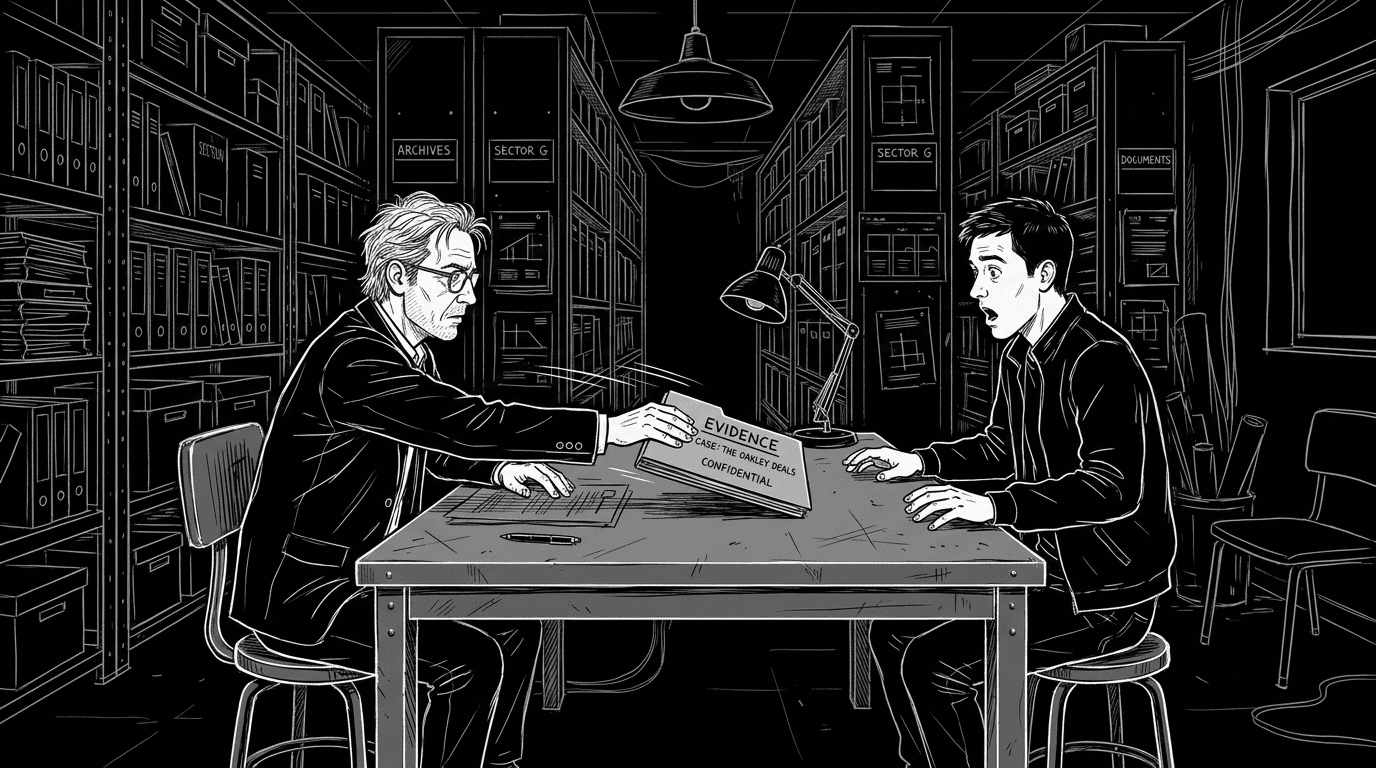

The audience should feel the floor drop.
Not because someone says, "I betrayed you." That is the obvious version. The cheap version.
The floor drops when the audience realizes they were standing on false certainty for half the story, and now every previous scene rearranges itself in their mind in real time.
That is what a betrayal reveal scene is supposed to do. It is not just a surprise. It is a structural detonation.
Writers often miss this and treat betrayal as a twist accessory. They hide information, reveal it with dramatic dialogue, then move on. The moment gets a reaction, maybe even a gasp, but the script loses power because the reveal has no deep narrative aftershock.
A real betrayal reveal changes trust, mission, identity, and strategy all at once. It does not just shock the protagonist. It forces the story to mutate.
Here is why that matters: if the plot can continue mostly unchanged after your betrayal reveal, your reveal is decorative.
Decorative reveals are forgettable.
Why Betrayal Reveals Feel Flat or Cliche
Most weak betrayal reveals fail for one of three reasons.
First, the betrayal comes from nowhere. The script hides all groundwork, thinking mystery equals quality. But mystery without architecture feels arbitrary. Readers feel manipulated, not impressed.
Second, the betrayer's motive is generic: greed, jealousy, fear. Motives are fine. Generic motive expression is not. If the motive is not specific to this character's values and past wounds, the reveal reads like template writing.
Third, the reveal beat has no tactical consequence in-scene. Characters argue, cry, maybe slap someone, then cut to next location. No immediate strategic shift. No active decision. No cost paid under pressure.
Think about it this way: betrayal scenes are trust-economy crashes. If the market collapses and nothing operational changes, the crash was fake.
A betrayal reveal is not "new information." It is a forced rewrite of who can be trusted, what can be believed, and what action is still possible.
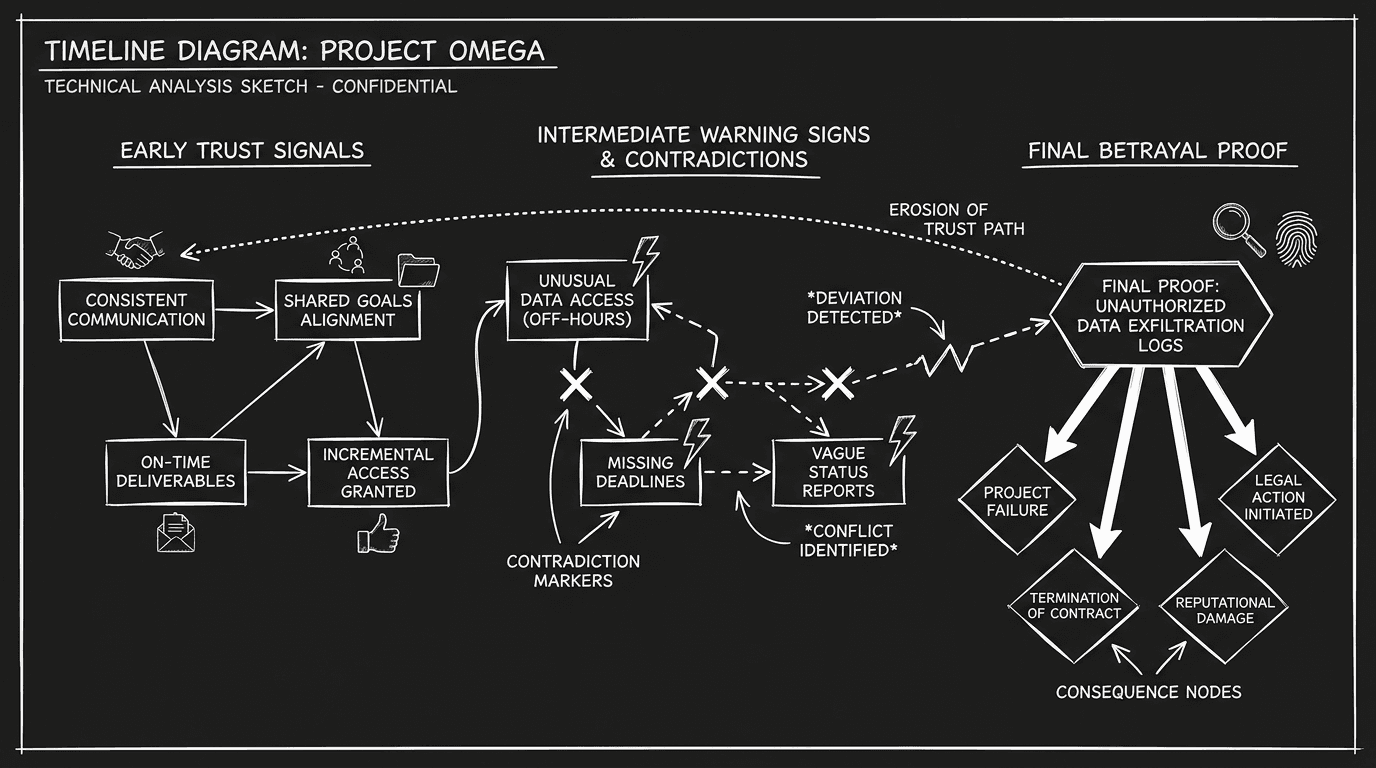
The Core Engine: Setup, Fracture, Reframe, Cost
Powerful betrayal reveals follow four linked phases.
Setup creates credible trust. The betrayer must earn proximity and authority, not just occupy screen time.
Fracture introduces undeniable contradiction. The reveal beat should collapse a prior assumption with specific evidence or action.
Reframe makes old scenes mean something new. The audience should mentally re-index earlier behavior.
Cost turns revelation into consequence. Someone loses protection, position, access, relationship, or mission viability immediately.
If you skip any phase, the reveal weakens.
Without setup, it feels random.
Without fracture, it feels vague.
Without reframe, it feels shallow.
Without cost, it feels temporary.
Scenario One: The Trusted Partner in a Heist Story
Beginner version: during the final plan, we learn the partner was working for the opposition all along. Characters yell. Guns come out. End scene.
Functional, but thin.
A stronger version designs betrayal as process, not announcement.
Maybe the partner has repeatedly "saved" the protagonist from small errors in prior scenes, creating dependency and gratitude. Later we discover those "saves" were controlled corrections to steer the team toward a compromised route. The reveal then lands as intellectual and emotional injury: what looked like loyalty was guidance toward failure.
Now the audience experiences double pain. They lose trust in the partner and in their own reading of earlier scenes.
That is gold.
Scenario Two: The Family Betrayal in a Drama
In many family dramas, betrayal reveals become speech-heavy confession scenes at dinner. Everyone says exactly what they feel. It can work, but it often turns theatrical in the wrong way.
Try operational betrayal instead.
A sibling does not confess first. The protagonist discovers legal paperwork already filed, guardianship already transferred, property already sold. The family dinner becomes collision with irreversible administrative action, not just emotional accusation.
The scene suddenly has material stakes. Betrayal is no longer abstract hurt. It is concrete displacement.
Scenario Three: The Mentor Betrayal in a Thriller
Classic issue: the mentor reveals evil intent with a villain monologue. That can feel dated unless deliberately stylized.
A sharper approach lets the reveal emerge through procedural contradiction.
The mentor gives one instruction. External evidence proves that instruction could only come from someone connected to the hostile network. The protagonist tests a final loyalty cue. Mentor fails it by one phrase, one timing error, one reference only the traitor would know.
No speech required.
The audience does the math. The protagonist does the math. Then comes decision pressure.
The scene becomes active, not explanatory.
Workflow: Writing Betrayal Reveals with Structural Force
Step 1: Define the Trust Contract
Before outlining the reveal, write the exact trust contract between protagonist and betrayer. What did the protagonist believe this person would never do?
Examples:
Never lie about mission-critical intel.
Never expose family members.
Never exploit confidential trauma disclosures.
Your betrayal reveal should violate this specific contract, not a generic expectation.
Step 2: Plant Visible but Misread Signals
Create three early signals that are readable in hindsight but defensible in first pass.
Signal type can vary: odd timing, strategic omission, selective protection, offhand language mismatch, access anomaly.
The key is fairness. The audience should be able to revisit and see the signs were present. This builds trust with viewers even as characters lose trust with each other.
Step 3: Choose Reveal Vector: Evidence, Action, or Inconsistency
Do not default to confession dialogue.
Pick one dominant reveal vector:
evidence reveal (documents, recordings, logs, money flow),
action reveal (betrayer actively prevents rescue, deletes route, redirects team),
inconsistency reveal (betrayer knows impossible detail, timeline does not align).
Then write dialogue around that vector instead of replacing it.
Step 4: Write the Scene as a Decision Funnel
A betrayal reveal scene should force immediate choices.
Who gets restrained?
Who gets informed?
Does mission continue, abort, split?
Does protagonist conceal knowledge temporarily for tactical reasons?
If no decisions occur inside the reveal scene, you are postponing drama that should be happening now.
Step 5: Assign Asymmetrical Emotional States
The betrayer and betrayed should not process at the same speed.
One may go cold and strategic while the other becomes emotionally volatile.
One may deny for ten seconds then switch to rationalization.
One may seek moral explanation while the other seeks tactical survival.
Asymmetry keeps the scene from becoming repetitive shouting.
Step 6: Add Immediate Cost Beat
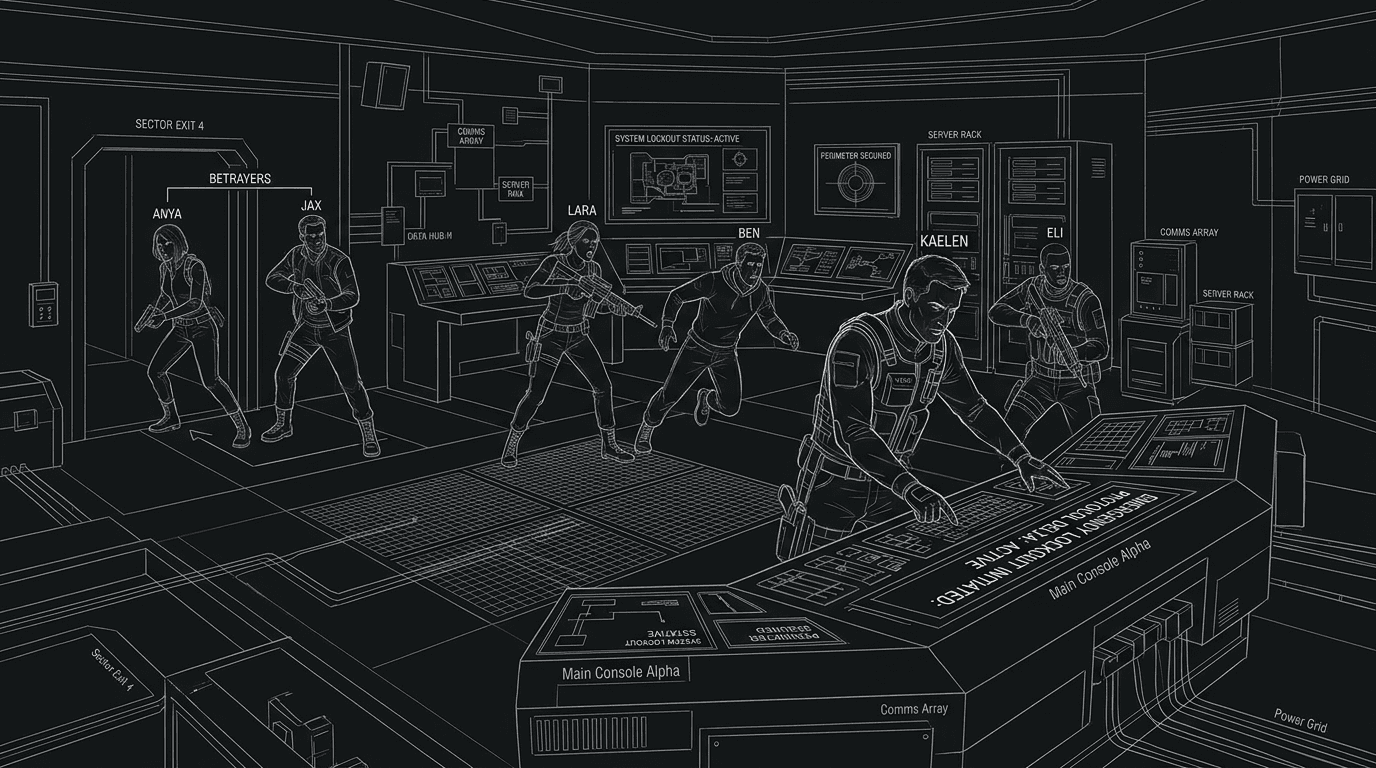
Choose one immediate cost and stage it in the scene:
lost access code,
dead extraction route,
public exposure,
arrest risk,
relationship rupture with witness present.
This cost proves the betrayal is story-altering, not decorative.
Step 7: Rewrite Prior Scenes Lightly, Not Loudly
After drafting the reveal, revisit earlier scenes and adjust subtle cues so payoff feels earned. Do not over-telegraph. You are tuning resonance, not spoiling the twist.
A single altered word in an earlier exchange can be enough.
Try it free
Try Screenweaver for free on your script
It is free. Import your existing project, get a clearer view of your outline, and regain control of your story structure in minutes.
Start FreeTable: Betrayal Reveal Design Choices and Trade-Offs
| Design Choice | Strength | Risk if Mishandled |
|---|---|---|
| Confession-led reveal | Fast emotional clarity | Feels expository and theatrical |
| Evidence-led reveal | High credibility and logic | Can feel dry without character reaction |
| Action-led reveal | Immediate urgency and stakes | Can confuse if setup is thin |
| Slow dawning realization | Rich psychological impact | Pace drag if too delayed |
| Public reveal with witnesses | Social fallout and pressure | Can become melodramatic chaos |
| Private reveal in controlled space | Intimate intensity and precision | May feel small without material consequence |
The Trench Warfare Section: What Beginners Get Wrong (and Exact Repairs)
This is where most betrayal scenes are won or lost.
Failure one: betrayal equals evil turn.
Writers flip a character from ally to cartoon villain in one beat. That destroys complexity. Repair by preserving continuity of worldview. The betrayer should still sound like themselves, just from a newly visible moral position.
Failure two: motive monologue overload.
The betrayer explains childhood, ethics, politics, and pain in a single speech. Readers disengage. Repair by fragmenting motive revelation across action and short lines under pressure.
Failure three: no fair-play setup.
Twist appears with no prior signals. Audience feels tricked. Repair by adding three hindsight-visible cues, each small, each defensible.
Failure four: protagonist instantly understands everything.
Real cognition under shock is messy. Repair by staging deduction in phases: denial, test, proof, recalibration.
Failure five: repetition loop dialogue.
"How could you?" repeated six times in six forms. Repair with tactic rotation: accusation, evidence demand, strategic questioning, containment, choice.
Failure six: betrayal has no tactical impact.
Characters process feelings but mission unchanged. Repair by forcing immediate operational loss: access compromised, timeline accelerated, alliance fractured.
Failure seven: supporting characters vanish.
Reveal plays as two-hander even when team exists. Repair by writing witness reactions that alter trust network. Betrayal is social, not only personal.
Failure eight: no value collision.
Betrayer acts for money with no deeper value logic. Repair by defining conflicting moral frameworks, not just incentives.
Failure nine: timing too early or too late.
Early reveal kills suspense, late reveal feels rushed. Repair by locating reveal where protagonist has maximum to lose and minimum margin for recovery.
Failure ten: every clue is hidden, none are visible.
Mystery mistaken for opacity. Repair by giving audience data, just misframed data.
Failure eleven: reveal scene ends on speech, not action.
No one does anything irreversible. Repair by ending on decision executed now: arrest call made, trigger pulled, protocol changed, partnership terminated.
Failure twelve: emotional logic ignored.
Betrayed protagonist forgives too fast or explodes without strategic reason. Repair by aligning reaction with established coping patterns and stakes.
Failure thirteen: betrayer's competence disappears.
Character who outplayed everyone suddenly becomes sloppy for convenience. Repair by letting betrayer remain dangerous after exposure.
Failure fourteen: worldview never updates.
Post-reveal scenes continue with old trust assumptions. Repair by rewriting dialogue behavior, planning process, and risk thresholds in subsequent scenes.
Failure fifteen: no second-order damage.
Only primary relationship breaks. Repair by showing collateral fallout: team paranoia, institutional scrutiny, family division, mission drift.
Failure sixteen: confusion between secret and betrayal.
Not every hidden truth is betrayal. Repair by testing contract violation: did this act break a trust promise central to relationship?
Failure seventeen: cheap fake-out betrayals.
Script teases betrayal repeatedly without payoff. Repair by limiting fake-outs and making real reveal proportionate to setup weight.
Failure eighteen: tonal mismatch.
Betrayal reveal in grounded drama written like camp thriller, or vice versa. Repair by calibrating line intensity and pacing to genre contract.
Failure nineteen: overuse of "all along."
Characters keep saying "you planned this all along." It flattens nuance. Repair by specifying timeline: what was planned, what was improvised, where regret entered.
Failure twenty: forgetting audience empathy for betrayer.
Complex betrayals often hurt more when the betrayer remains partly understandable. Repair by preserving one human thread without absolution.
Betrayal scenes are strongest when both people can defend themselves morally, and both defenses are incomplete.
Body Image: Betrayal Signal and Proof Map
Practical 55-Minute Rewrite Drill
Take your betrayal reveal scene and run this sequence.
First ten minutes: delete every line where characters explain what the audience can already infer from action.
Next ten minutes: insert one hard proof beat that cannot be rationalized away.
Next ten minutes: add one tactical decision under time pressure inside the same scene.
Next ten minutes: assign one immediate cost and stage it physically.
Next ten minutes: trim duplicate emotional lines and keep only highest-impact voice-accurate versions.
Final five minutes: write one bridge line that changes next-scene objective because trust has collapsed.
This drill usually increases clarity and urgency without requiring larger plot rewrites.
Betrayal Reveal Placement by Genre
In spy or conspiracy thrillers, betrayal reveals often work best near a mission pivot where logistics and ideology collide.
In family drama, reveals land hardest during ritual spaces: funerals, weddings, legal meetings, hospital decisions, care transitions.
In crime stories, betrayal often links to evidence chain and jurisdiction risk; timing should coincide with point-of-no-return operations.
In romance, betrayal reveals should test the relationship's foundational promise, not just create temporary misunderstanding.
Genre shifts texture, but one rule remains: the reveal must alter strategy, not just emotion.
For produced-script references and comparative study, the Writers Guild Foundation Library is a useful external resource and should be handled as nofollow in publication.
As discussed in our guide on [how to write a confession scene in a thriller], reveal timing is less about surprise volume and more about pressure context.
If your betrayal detonates during a social event, the tactics in [how to write a dinner party scene with hidden conflict] can help stage public masks and private collapse.
And when the reveal triggers a final showdown, our framework in [how to write a final confrontation scene that feels earned] helps convert emotional rupture into strategic climax.
Body Image: Immediate Cost Execution Beat
YouTube Placeholder
[YOUTUBE VIDEO: A live script-doctor session rebuilding a weak betrayal reveal into a high-impact scene using fair-play clues, proof vectors, and immediate consequence beats.]
Ending Perspective: Betrayal Is a System Failure, Not a Plot Decoration
If your betrayal reveal feels cliche, the fix is not adding louder dialogue.
It is rebuilding trust architecture.
Make trust specific. Make violation specific. Make proof undeniable. Make cost immediate.
Then let characters react according to who they are, not according to what twist scenes are "supposed" to sound like.
When written well, betrayal reveals do something rare in storytelling: they wound the present and rewrite the past at the same time.
That is why they linger.
The audience does not just remember the line. They remember the feeling that every previous scene just shifted under their feet.
Write for that feeling.
Write for the collapse and the recalculation.
Write the moment where belief dies and strategy is born.
And then write the next move immediately, because betrayal is only half the scene; the other half is who adapts fastest when trust is gone and survival suddenly has new rules.
Final Step
Build your next script with Screenweaver
Move from ideas to production-ready pages faster with timeline-native writing and AI-assisted story flow.
Try Screenweaver