

They're not in love. They're family. The best friend who knows everything. The partner in crime. The person who'd show up at 3 a.m. Screen often treats non-romantic love as a sidekick or a B-plot. Done right, the platonic soulmate is the emotional center of the story, the relationship that survives, that costs, and that pays off without a kiss. Here's how to write friendship that matters as much as romance.
The platonic soulmate isn't the character who supports the love story. They're the one whose loss or loyalty would break the audience.
Think about it this way. In life, the person who matters most isn't always a partner. It's the friend who's been there. The one you'd choose. On the page, that relationship needs stakes: something they do for each other, something they fight about, something they'd sacrifice. It needs history (or the feeling of history) and specificity, inside jokes, rituals, the thing only they know. Our guide on chemistry on the page applies to any strong bond; romance is one kind, friendship another. This piece is about making the friendship the relationship that carries weight. For will they/won't they when the bond is romantic, see will they/won't they.
Why Platonic Love Gets Shortchanged
Stories default to romance as the big relationship. The friend is the one who gives advice, holds the hair back, or dies to motivate the hero. When the friendship is written as support for something else, it doesn't land as its own thing. The fix is to give the friendship its own arc: a conflict, a betrayal, a choice, or a cost. When the friend's loyalty (or loss) is the emotional climax, the audience feels it. For character foils, see character foils, the best friend often foils the hero; make sure they're a full character.
Relatable Scenario: The Partner in Crime
They do the thing together. The heist. The quest. The rebellion. The bond is action, they've been through it. To write it: show the trust (they rely on each other in a pinch). Show the conflict (they disagree; one might betray or hesitate). And show the cost (one of them pays a price for the other). When the friendship is tested and survives (or doesn't), we care. For rivalry that could turn into respect, see rivalry.
Relatable Scenario: The Old Friend Who Knows Everything
They've known each other for years. They have shorthand. They fight and make up. The bond is history. To write it: give them specific references, a place, a story, a line only they use. Give them a disagreement that matters, not just "we're mad for one scene." And give the friendship a stake in the plot, one of them needs the other, or the other's choice hurts the first. For trauma and backstory that might bind them, see trauma backstory.
Relatable Scenario: The Friendship That Replaces Family
They're not related. They're chosen family. The story might be about loyalty when blood family fails, or about what happens when the chosen family is tested. To write it: show why they chose each other. Show what they do for each other that family didn't. And put the bond at risk, someone leaves, someone betrays, someone has to choose. For family secrets that might affect the friend, see family secrets.
The Trench Warfare Section: What Beginners Get Wrong
Making the friend a function. They exist to advise, to comic relief, or to die. Fix: Give the friend a want and a flaw. They're in the story for themselves. When they support the hero, it costs them something. For character design, see fatal flaw.
No conflict between them. They're always on the same page. Fix: Give the friendship friction. They disagree. One keeps a secret. One makes a choice the other can't forgive. When the bond is tested, it matters more. For subtext in conflict, see subtext.
Resolving everything with romance. The friend was always in love with the hero, so the friendship was really romance in disguise. Fix: Let some friendships stay platonic. The love is real; it's not romantic. When the story doesn't default to couple-up, the friendship can be the emotional core. For chemistry that isn't romantic, see chemistry.
No specificity. They're "best friends" but we don't know why or how. Fix: Add details, rituals, inside jokes, the thing only they know. When the friendship has texture, we believe it. For distinct voices, see distinct voices, the friend should sound like themselves.
Killing the friend only to motivate the hero. The friend dies so the hero can be sad and then win. Fix: If the friend dies, let it cost the hero in an ongoing way. And give the friend a life before death, they had a want, an arc. For trauma as backstory, see trauma backstory.
Try it free
Try Screenweaver for free on your script
It is free. Import your existing project, get a clearer view of your outline, and regain control of your story structure in minutes.
Start FreeFriendship vs. Sidekick
| Platonic soulmate | Sidekick |
|---|---|
| Own want and arc | Exists to support the hero |
| Conflict with hero possible | Usually aligned |
| Bond has its own stakes | Bond is functional |
| Loss would break the audience | Loss would motivate the hero |
Step-by-Step: Writing a Friendship That Carries Weight
First: Give both characters a want and a flaw. The friend isn't just "there for" the hero. Second: Give the friendship specificity, rituals, references, the thing only they share. Third: Create conflict between them, a secret, a disagreement, a choice that hurts the other. Fourth: Put the friendship at stake in the plot, one of them has to choose, or the bond is tested. Fifth: Let the payoff be the friendship, loyalty, forgiveness, or loss, not a romance. For more on relationship dynamics, see will they/won't they and chemistry.
[YOUTUBE VIDEO: Same story with friend as sidekick vs. friend as platonic soulmate, emotional beat comparison.]
The Perspective
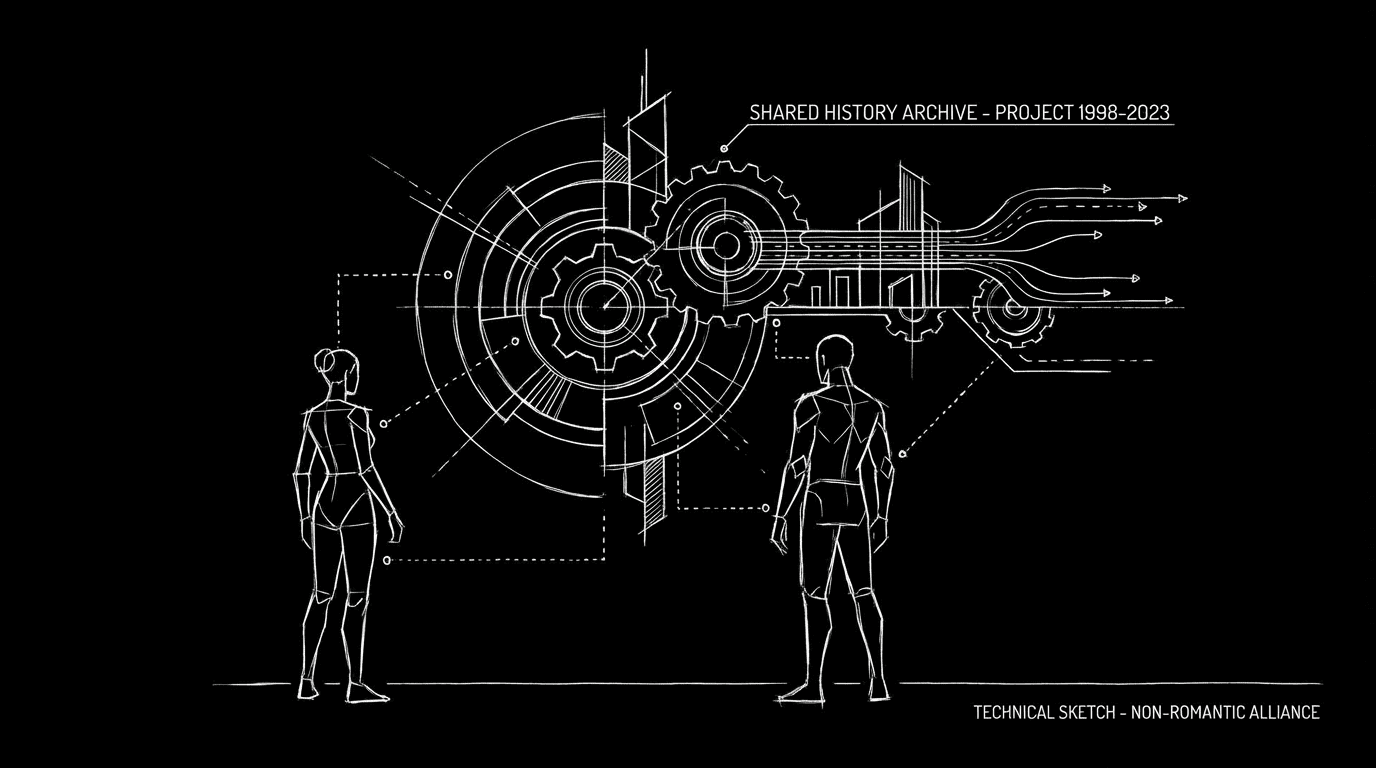
Write the platonic soulmate as a relationship with its own stakes: give both characters dimension, add specificity and conflict, and let the friendship be the emotional center when it matters. Don't reduce the friend to a function. Don't resolve the bond by turning it into romance. When the audience would be broken by the loss of that friend, you've written a friendship that counts. So give them a bond. Test it. And pay it off.
Final Step
Build your next script with Screenweaver
Move from ideas to production-ready pages faster with timeline-native writing and AI-assisted story flow.
Try Screenweaver