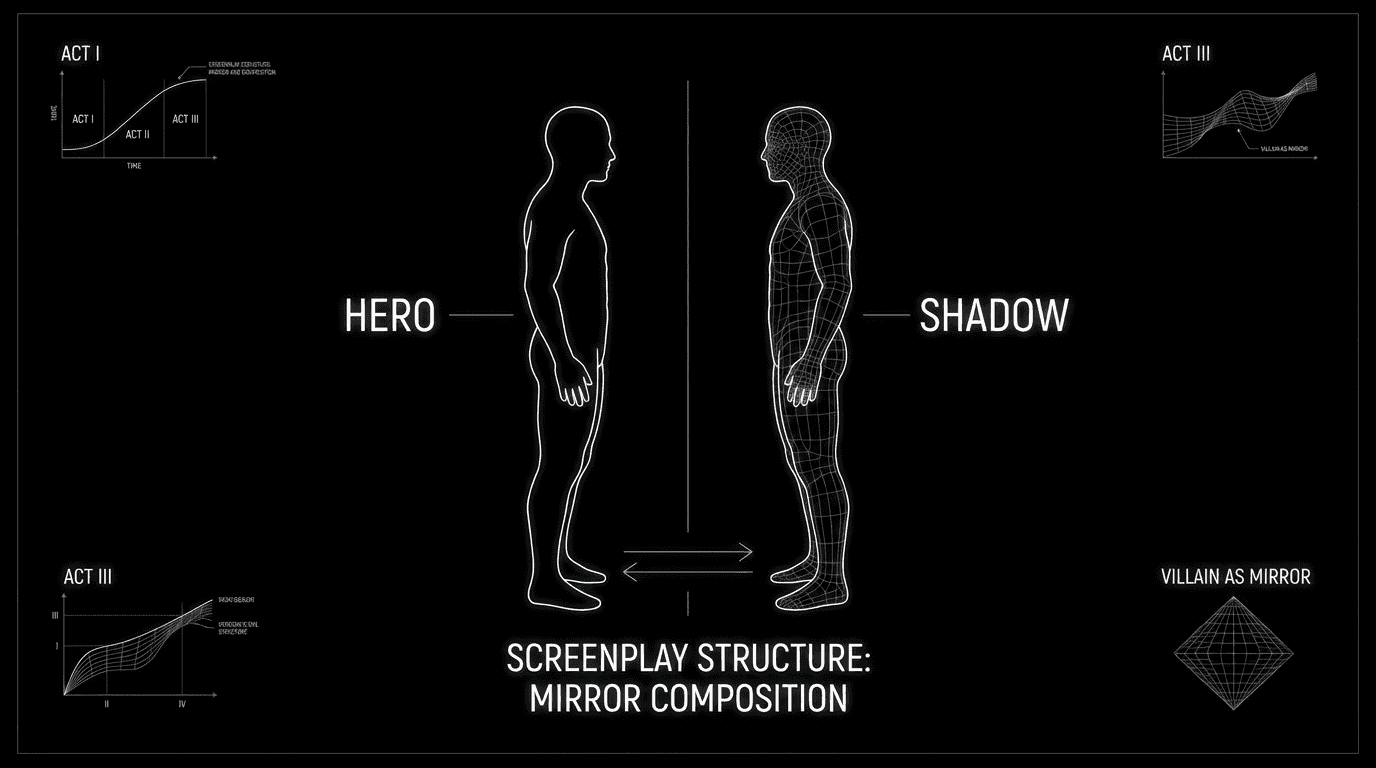

The best villains aren’t the ones who want the opposite of the hero. They’re the ones who want the same thing, and are willing to do what the hero won’t. That’s the Shadow in the Jungian sense: the part of the self that’s rejected, repressed, or denied. When you design an antagonist as the hero’s Shadow, you’re not just creating a bad guy. You’re creating a mirror. The villain embodies what the hero fears in themselves, or what they’ve had to suppress to function. The conflict becomes internal as well as external. The audience feels it. They’ve seen that dynamic in the stories that stick.
The Shadow isn’t “the dark side.” It’s the part of the hero that didn’t get to live, and the villain is living it.
Think about it this way. Your hero has a value system. They’ve made choices, to be good, to be loyal, to be in control, and those choices required saying no to something else. The Shadow is what they said no to. The villain is the character who said yes. So when the hero and villain clash, they’re not just fighting over the MacGuffin. They’re fighting over a way of being. “You’re like me,” the villain might say, and the hero hates it because it’s true. Not literally. Thematically. The villain is the road not taken. The hero’s job is to confront that road, reject it again (or integrate a piece of it), and win. When you build the villain from that principle, every scene between them carries extra weight. Our guide on building complex villains covers want, wound, and belief; the Shadow is the lens that ties the villain’s psychology to the hero’s.
What the Shadow Is (and Isn’t)
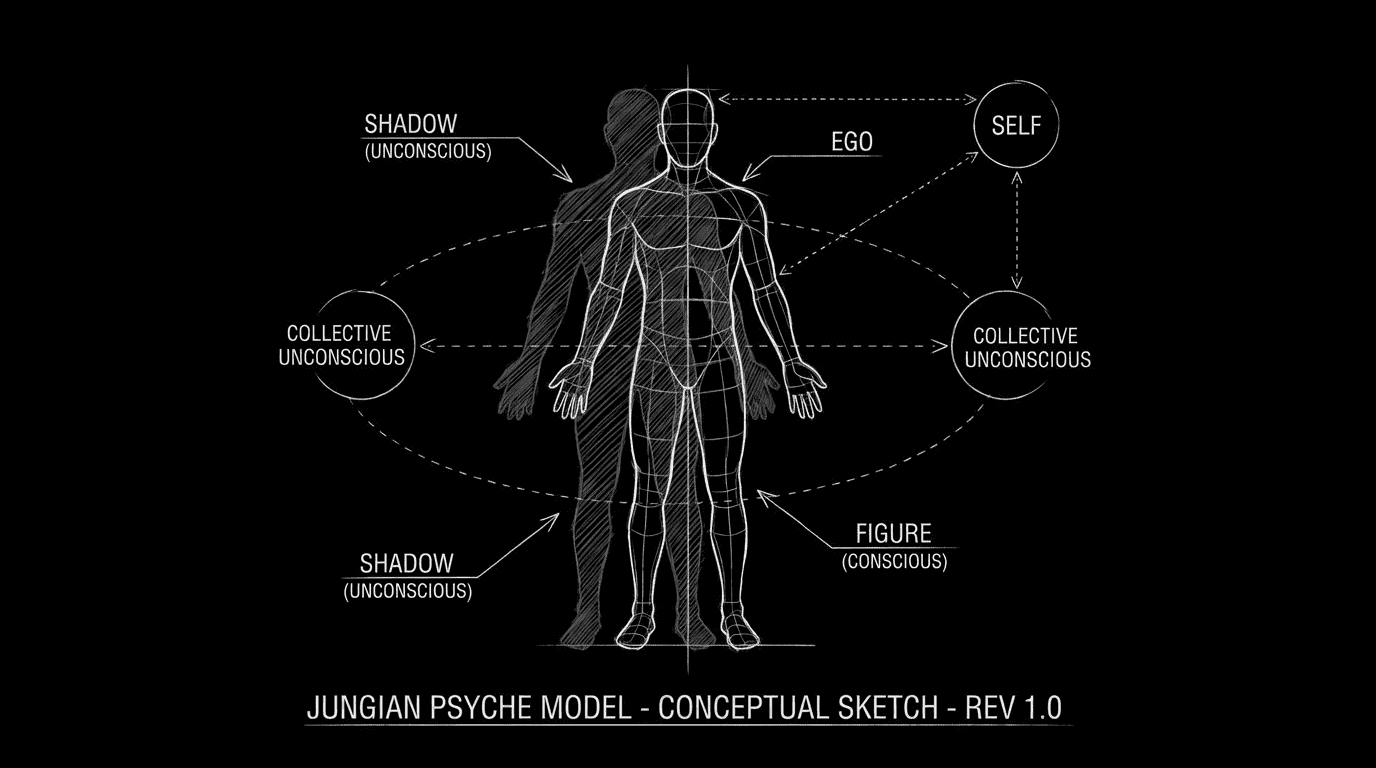
In Jung’s framework, the Shadow is the unconscious part of the personality that contains everything the ego has rejected: impulses, desires, fears, traits that don’t fit the self-image. We project it onto others, we see in them what we can’t accept in ourselves. In story terms, the villain can be that projection. They do the thing the hero would never do. They want what the hero wants but are willing to cheat, kill, or sacrifice others to get it. The hero is forced to face that version of possibility. Not so they become the villain. So they understand the choice they’re making. The Shadow villain doesn’t exist to be evil. They exist to show the hero (and the audience) what’s at stake when we choose who we are.
The Shadow is not a clone. The villain shouldn’t be the hero with a goatee. They should be a thematic mirror: same wound, different response. Same desire, different method. Same fear, different defense. The hero might want justice; the villain wants justice too but through revenge. The hero might want to protect their family; the villain protects their family by destroying anyone who threatens it. The overlap is in the want. The divergence is in the line they’re willing to cross. That’s where the conflict lives. And that’s where the theme lands: we are defined by what we refuse to do as much as by what we do.
Relatable Scenario: The Thriller That Feels Generic
You have a detective. She’s obsessed with the case. The killer is smart, brutal, one step ahead. The script has chases and reveals, but when the two finally meet, the scene falls flat. They’re just good guy and bad guy. Here’s the fix. Make the killer her Shadow. What did she give up to become the detective? Maybe she gave up revenge, she could have killed the person who hurt her family, but she chose the law. The killer is someone who chose revenge. So the killer isn’t “random evil.” He’s the version of her that didn’t turn the other cheek. When they meet, the line isn’t “you’re a monster.” It’s “you and I are the same. You just hide behind a badge.” She has to reject that, and prove it by how she ends the story. Not by killing him in cold blood. By choosing the law again when it would be easy to do otherwise. The villain’s job was to put that choice in front of her. That’s Shadow work.
Relatable Scenario: The Drama Where the Antagonist Feels Unconnected
Your drama is about a woman rebuilding her life after loss. The antagonist is her ex-business partner who’s blocking her comeback. On the page he’s just “the obstacle.” Give him a Shadow function. What did she suppress to survive her loss? Maybe she suppressed ambition, she had to be small to get through the grief. The ex-partner is pure ambition. He’s what she used to be, or what she’s afraid she still is. So every scene with him isn’t just “he’s in my way.” It’s “he’s the part of me I’m not sure I want back.” The conflict is internal. When she finally beats him (or makes peace with him), it’s also a decision about who she is now. The villain served the theme. He was the mirror.
The Trench Warfare Section: What Beginners Get Wrong
Making the Shadow a literal twin or double. Sometimes the villain is the hero’s brother, or a clone, or “the same person from another dimension.” That can work. But the Shadow doesn’t require a literal connection. Thematic mirroring is enough. If you lean on “they look alike” or “they’re related,” you risk making the audience think the link is genetic, not psychological. Fix: You can have a Shadow villain who has no backstory connection to the hero. What links them is desire, wound, or fear. The hero sees themselves in the villain because of choices, not DNA. That’s often stronger.
Letting the villain explain the theme. “We’re not so different, you and I.” The line is famous because it’s overused. When the villain spells out the Shadow connection in dialogue, it feels like a thesis statement. Fix: Show the mirror in action. Put the hero and villain in parallel situations. The hero chooses one way; the villain chooses the other. The audience draws the comparison. If the villain says it at all, make it short and loaded. Let the hero’s reaction, silence, rage, denial, do the work.
Making the hero and villain want different things. If the hero wants to save the world and the villain wants to destroy it, you have opposition but not Shadow. The Shadow is the same want, different path. Fix: Ask what the hero wants. Then ask: What character could want that same thing and be willing to do something the hero would never do? That character is your Shadow villain. They want love, power, safety, justice, but they’ll lie, kill, or sacrifice others. The hero wants it too. The hero just won’t cross that line. Now the conflict is about the line.
Forgetting to let the hero reject (or integrate) the Shadow. The point of the Shadow is confrontation. The hero has to face the mirror. If the story ends with the villain dead and the hero unchanged, the Shadow was just an obstacle. Fix: The climax should include a moment, even a beat, where the hero consciously rejects the villain’s path (or, in a darker story, fails to and pays the price). “I’m not like you.” “I could have done what you did. I didn’t.” That’s the thematic payoff. The villain existed to make that choice possible.
Using Shadow for every antagonist. Not every story needs a Jungian mirror. Some villains are forces of nature, or obstacles, or representatives of a system. Shadow is a tool. Use it when the theme is identity, choice, or the cost of who we are. Fix: If your story is about something else (survival, love, justice as a system), a different villain design might fit better. Save the Shadow for when the central question is “Who am I?” or “What line won’t I cross?”
Try it free
Try Screenweaver for free on your script
It is free. Import your existing project, get a clearer view of your outline, and regain control of your story structure in minutes.
Start FreeShadow vs. Non-Shadow: A Quick Comparison
| Element | Generic antagonist | Shadow antagonist |
|---|---|---|
| Want | Opposite of hero (e.g., chaos vs. order) | Same as hero (e.g., both want order, hero by law, villain by force) |
| Thematic role | Obstacle to hero’s goal | Mirror of hero’s repressed possibility |
| Hero’s arc | Defeat the villain | Face what the villain represents and choose again |
| Climax | Hero wins the fight | Hero wins the fight and reaffirms (or loses) their identity |
When the villain is the Shadow, the climax is never just physical. It’s moral. The hero proves who they are by how they win.
Step-by-Step: Building a Shadow Villain
Write one sentence for your hero: what they want, and what they refuse to do to get it. Example: “She wants justice but refuses to take it into her own hands.” Now create a character who wants the same thing (justice) but will take it into their own hands. That’s your Shadow. Name them. Give them a face. Next: Give the villain a parallel to the hero’s wound. If the hero was hurt by the system, maybe the villain was too, and chose revenge instead of reform. They’re not the same person. They’re the same wound, different response. Then: List the key scenes where the hero and villain meet or affect each other. In each scene, what does the villain do that the hero could do but won’t? Make that visible. Finally: In the climax, how does the hero reject the villain’s path? One line, one action, one choice. That’s the thematic beat. If it’s missing, add it. The Shadow villain’s job is to make that choice matter. For more on how the hero’s own passivity or reactivity can be fixed, see our guide on the passive protagonist trap, because sometimes the hero’s Shadow is their own inaction, and the villain is the one who acts.
[YOUTUBE VIDEO: Breakdown of a famous film’s hero and villain as Shadow: shared want, different line, and how the climax resolves the thematic conflict.]
When the Shadow Wins (Tragedy and Dark Endings)
In some stories, the hero doesn’t reject the Shadow. They’re tempted. They cross the line. Or they defeat the villain but at the cost of becoming what they fought. That’s tragedy. The Shadow wasn’t there to be defeated. It was there to be integrated or to consume. If you’re writing that story, the villain’s function is still the same: they’re the mirror. The difference is that the hero fails the test. They become the villain, or they lose the part of themselves that mattered. The audience feels the weight because the Shadow was set up from the start. The villain was always the possibility of that ending. Use it sparingly. When it lands, it lands hard.
The Perspective
Jungian Shadow work in screenwriting isn’t about psychology homework. It’s about making the villain matter. When the antagonist is the hero’s mirror, same desire, different path, every confrontation is about who the hero is and who they refuse to be. The audience doesn’t need to know Jung. They need to feel that the villain is about something. That something is the hero. Design the villain from the hero’s wound, want, and line. Then let them clash. The best villains don’t just oppose the hero. They reveal them.
Final Step
Build your next script with Screenweaver
Move from ideas to production-ready pages faster with timeline-native writing and AI-assisted story flow.
Try Screenweaver