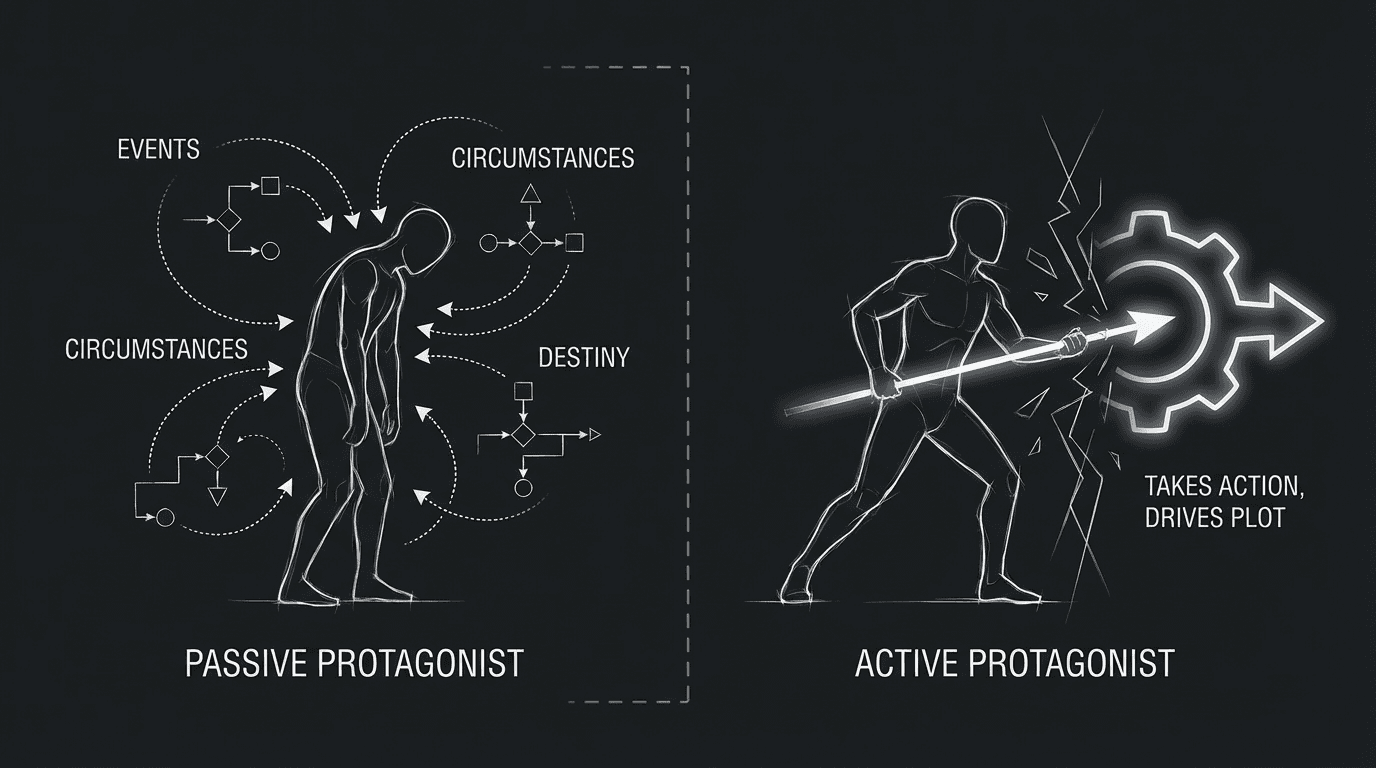

The reader hits page 30 and can’t say what your protagonist wants. By page 60 they’re still waiting for them to do something. By the climax, the hero is there, but the story happened to them. They didn’t drive it. That’s the passive protagonist trap. The character who reacts to every beat instead of initiating. The one who’s pulled by the plot instead of pushing it. It’s one of the most common reasons scripts get a pass. Here’s how to diagnose it and fix it without turning your character into a different person.
A reactive hero can still be reluctant, scared, or wrong. They just have to do something. Action isn’t confidence. It’s choice.
Think about it this way. In life, things happen to us. In story, the audience needs to feel that the protagonist is making the story happen, even when they’re resisting. The inciting incident can happen to them. But after that, they have to make choices that have consequences. If every scene is “someone else does something, and the hero responds,” the hero is a passenger. If every scene has at least one moment where the hero chooses, acts, or takes a risk, the hero is driving. The fix isn’t to make them loud or aggressive. It’s to give them a want, put that want in conflict with the world, and make sure they pursue it, even when they fail. Our guide on the midpoint shift goes deep on the pivot where the protagonist stops reacting and starts acting; that’s often the structural key. This piece is about diagnosing the problem and fixing it at the scene level.
How to Tell If Your Hero Is Passive
You’ve got a passive protagonist when the reader can’t answer these questions: What do they want? What are they doing to get it? What happens if they don’t get it? If the answers are vague (“they want to be happy,” “they’re just trying to survive,” “I’m not sure”), the character is floating. Another test: List the major story beats. For each beat, ask: Did the protagonist cause this, or did it happen to them? If more than half of the beats are “it happened to them,” the protagonist is reactive. They’re in the story. They’re not driving it. One more: Could you replace your protagonist with a different character and the plot would unfold the same way? If yes, the plot is driving the character. The character should be driving the plot. When the protagonist’s choices create the next beat, when their mistake, their refusal, their gamble sets up the next scene, you’re out of the trap.
Passive doesn’t mean quiet. A character can be introverted, reluctant, or traumatized and still be active. Active means they do something. They say no when everyone expects yes. They go to the place they’re not supposed to go. They ask the question that breaks the silence. They might do it badly. They might change their mind. But they act. The passive protagonist is the one who only ever responds. Who waits for the next thing to happen. Who is present for the story but not responsible for it. That’s what we’re fixing.
Relatable Scenario: The Mystery Where the Detective Just Follows Clues
You’ve got a detective. The killer leaves clues. The detective finds them. The killer strikes again. The detective finds more clues. The script has tension, someone’s dying, but the detective feels like a camera. They’re not making the story happen. The killer is. Fix: Give the detective a hypothesis. A wrong one. They act on it, they arrest the wrong person, they confront the wrong suspect, they expose a secret that wasn’t meant to be exposed. Now the detective has caused something. The killer’s next move is a response to the detective’s move. The detective is driving. Or: The detective has a personal stake. They’re not just solving the case; they’re protecting someone, or proving something, or running from something. So when they choose to go to the wrong place, or to trust the wrong person, the choice is theirs. The consequence is theirs. The story is no longer something that happens to them. It’s something they’re making worse (or better) by what they do. For more on making the middle of the script hold, see our guide on the midpoint shift.
Relatable Scenario: The Drama Where the Lead Is “Just Trying to Get By”
Your protagonist is a single parent. Bills are due. The ex is difficult. The job is falling apart. The script is a slice of life, and it feels like nothing happens. That’s because the character is only enduring. They’re not pursuing anything. Fix: Give them a want. One clear thing. Maybe they want to keep the house. Maybe they want the kid to get into the school. Maybe they want one honest conversation with the ex. Now every scene can be a choice: Do they swallow their pride and ask for help? Do they take the second job and miss the recital? Do they lie to the kid to protect them? The character is still under pressure. But now they’re making choices under pressure. The story isn’t “life is hard.” It’s “they want X, and every choice they make gets them closer or farther.” That’s an active protagonist. They might lose. They might make the wrong call. But they’re in the driver’s seat.
The Trench Warfare Section: What Beginners Get Wrong
Confusing “active” with “loud” or “violent.” An active protagonist doesn’t have to yell, fight, or take charge. They have to choose. The quiet character who finally says “no” is active. The character who walks away from the job, the relationship, or the deal is active. The character who asks the one question everyone’s avoiding is active. Fix: Look for the moment of decision. If the protagonist is only ever agreeing, following, or waiting, add a beat where they refuse, go somewhere, or say the thing. One choice per major scene is enough to shift the balance from reactive to active.
Giving the protagonist a want that doesn’t drive the plot. “She wants to find love.” Fine. But if the plot is about a heist, her want has to connect. Maybe she’s doing the heist to impress someone. Maybe the heist forces her to choose between the job and the person. The want has to be in conflict with something in the story. Fix: State the protagonist’s want in one sentence. Then state the story’s central conflict. If the want isn’t at the center of that conflict, either change the want or change the conflict. The protagonist should be pursuing their want through the plot. When they get blocked, they should make a choice that has consequences. That’s active.
Letting the midpoint come and go without a shift. Many passive scripts have a protagonist who stays reactive through the midpoint. The midpoint is the ideal place to turn them. Something happens that forces them to stop waiting and start acting. They’ve been responding; now they initiate. Fix: Check your midpoint. Does the protagonist do something there that they couldn’t or wouldn’t have done before? If not, consider building the midpoint around a choice they make, a risk, a confession, a refusal. That choice should ripple into the second half. Our guide on the midpoint shift walks through this in detail.
Filling the script with “stuff happening” and no protagonist choice. Car chases, attacks, reveals, all of that can happen to the protagonist. If they’re only surviving, reacting, and following, they’re still passive. Fix: After every major event, ask: What does the protagonist do next? Not what happens to them. What do they decide? Do they go to the police? Do they hide? Do they confront the person they suspect? The next beat should be a consequence of their choice. If the next beat would happen anyway no matter what they did, the protagonist isn’t driving. Rewrite so their choice matters.
Making the protagonist active only in the climax. Some scripts have a hero who’s passive for two acts and then “steps up” at the end. It feels unearned. The audience has spent the whole movie watching someone who doesn’t drive the story; suddenly they’re the hero. Fix: Spread the agency. The protagonist doesn’t have to be right. They have to act. Give them at least one significant choice in Act 1 (after the inciting incident) and one in the first half of Act 2. By the time they reach the climax, we should be used to them making choices, even bad ones. Then the climax choice lands. For structure that supports this, see our guide on the 3-act structure.
Try it free
Try Screenweaver for free on your script
It is free. Import your existing project, get a clearer view of your outline, and regain control of your story structure in minutes.
Start FreePassive vs. Active: A Diagnostic Table
| Sign | Passive protagonist | Active protagonist |
|---|---|---|
| Want | Unclear or generic (“get through this”) | Clear and specific (“keep the house,” “find the truth”) |
| Beats | Things happen to them; they respond | They make choices; consequences follow |
| Midpoint | They’re still reacting | They initiate something they couldn’t/wouldn’t before |
| Stakes | External (will they survive?) | Internal + external (what will they sacrifice? what line will they cross?) |
| Climax | They’re there when the climax happens | Their choice (or refusal) triggers or resolves the climax |
Use this as a checklist. If your protagonist fits the left column, you’re in the trap. Move them toward the right. You don’t have to change the premise. You have to change who’s making the story happen.
Step-by-Step: Making a Reactive Hero Active
First: State your protagonist’s want in one sentence. Not “they want to be happy.” Something concrete. “They want to prove they can run the company.” “They want to find out who killed their brother.” “They want to get the kid back.” If you can’t state it, invent one that fits the story. Second: Look at the inciting incident. After it, what does the protagonist do? Do they seek help? Run? Investigate? Confront someone? If the answer is “they wait for the next thing,” add a scene where they take an action. That action should have a consequence, it should make the next beat possible or worse. Third: Check the midpoint. Does the protagonist make a choice there that changes the direction of the story? If not, build one. They commit. They refuse. They go somewhere they’ve been avoiding. Fourth: For every major scene in the second half, ask: What does the protagonist want in this scene? What do they do to get it? If the scene is only other people talking and the protagonist listening, give the protagonist a move. A question. A refusal. A decision. Fifth: Read the climax. Does the protagonist’s choice (or their refusal to choose) resolve it? If the climax would happen the same way without the protagonist’s specific choice, rewrite so that their choice is the thing that ends the story. When the protagonist is the one who pulls the trigger (literally or thematically), they’re active. When they’re just there when it goes off, they’re not.
[YOUTUBE VIDEO: Same story beat written two ways, protagonist reactive vs. protagonist active, with commentary on what changes in reader experience.]
The Reluctant Hero Is Still Active
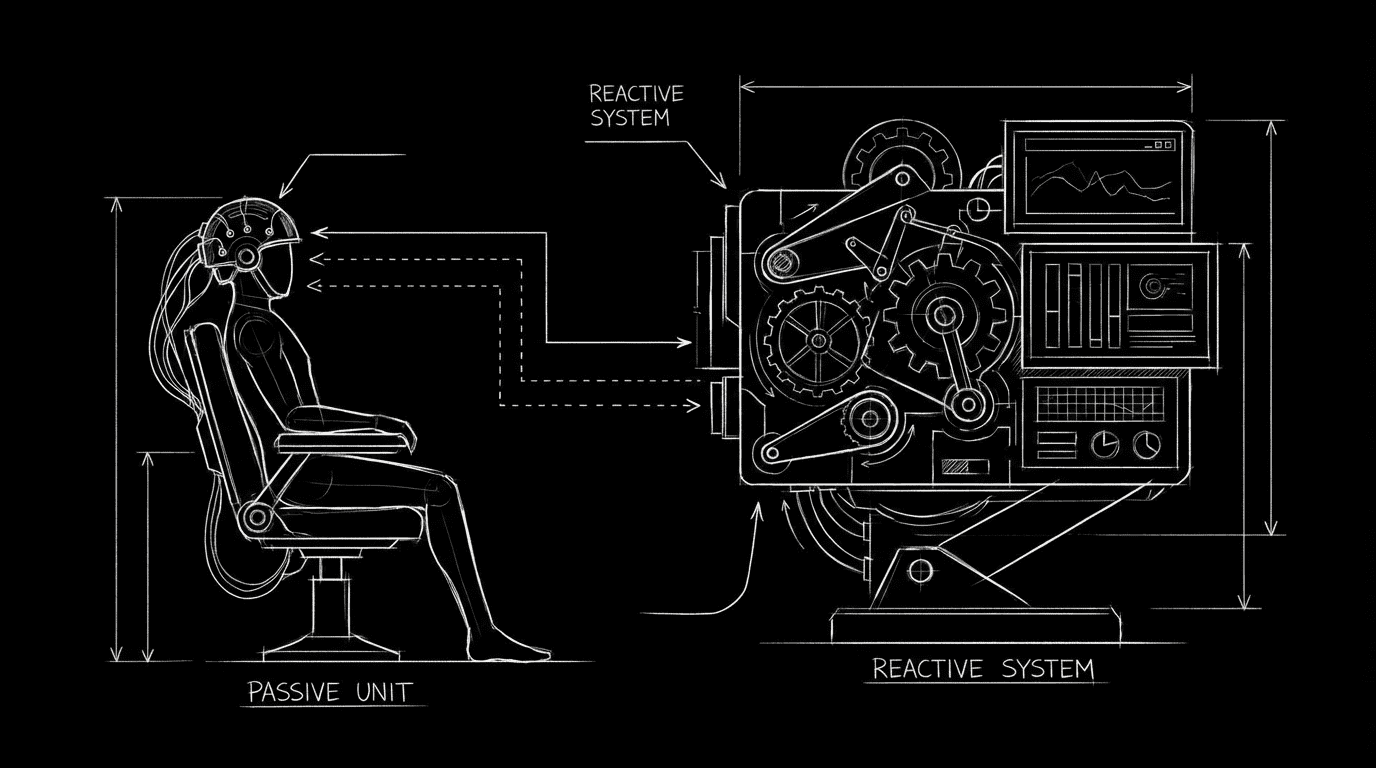
Some of the best protagonists don’t want to be in the story. They’re dragged in. They resist. But at some point they choose to stay. They choose to help. They choose to fight. That choice is the moment they become active. Before that, they can be reactive, the story is happening to them. After that, they’re in. They might still be scared. They might still want out. But they’re making choices. The reluctant hero isn’t passive as long as their reluctance is a choice they’re making (to refuse, to run, to resist) and not just a mood. When they finally say “I’ll do it,” that’s the shift. Make sure that shift happens. And make sure they have at least one more big choice after it. Reluctance is a state. Action is a verb. Our guide on refusal of the call fits here: the refusal is active. So is the moment they stop refusing.
The Perspective
The passive protagonist trap is fixable. You don’t need a new idea. You need to put the protagonist in the driver’s seat. Give them a want. Make their choices cause the next beat. Use the midpoint to turn them from reactive to active. And make sure the climax doesn’t happen without them, their choice should be what resolves it. The audience doesn’t need a hero who’s never scared or never wrong. They need a hero who does something. So do your protagonist.
Final Step
Build your next script with Screenweaver
Move from ideas to production-ready pages faster with timeline-native writing and AI-assisted story flow.
Try Screenweaver