
Hero image prompt: Dark mode technical sketch. Solid black background, thin white hand-drawn lines. Two zones: one with equations or technical notation (hard), one with a ship and stars (opera). A line between them. Minimalist, high-contrast.
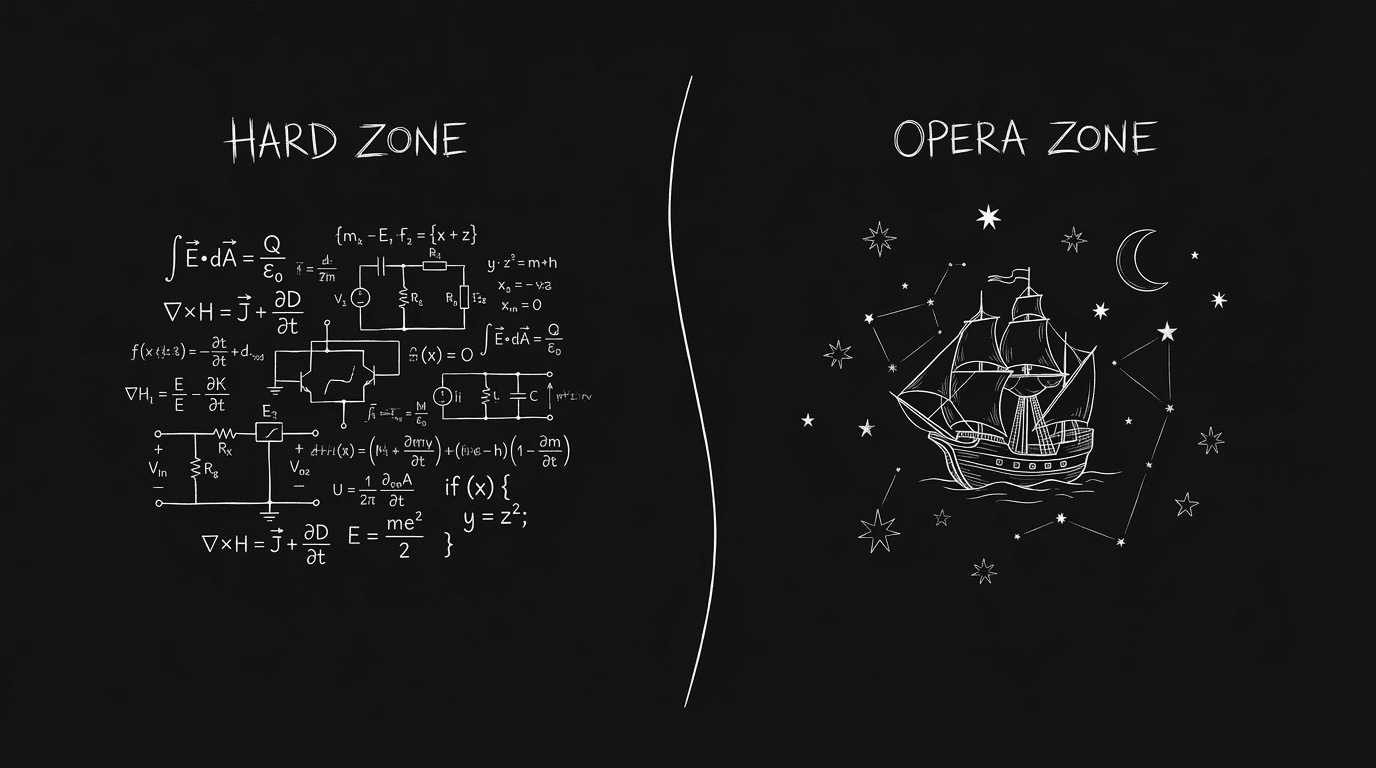
In one kind of sci-fi, the physics matter. The writer (or a consultant) checks the math. Travel takes time. Communication has delay. The audience is invited to believe that this could happen. In another kind, the physics are a backdrop. The story is about empire, war, family, or myth, in space. The audience is invited to feel, not to verify. Both are valid. The problem is when you mix them without knowing which you’re in. The audience that came for rigor will feel cheated when you handwave. The audience that came for drama will get bored when you pause to explain the drive. Here’s how to choose, and how to stick to it.
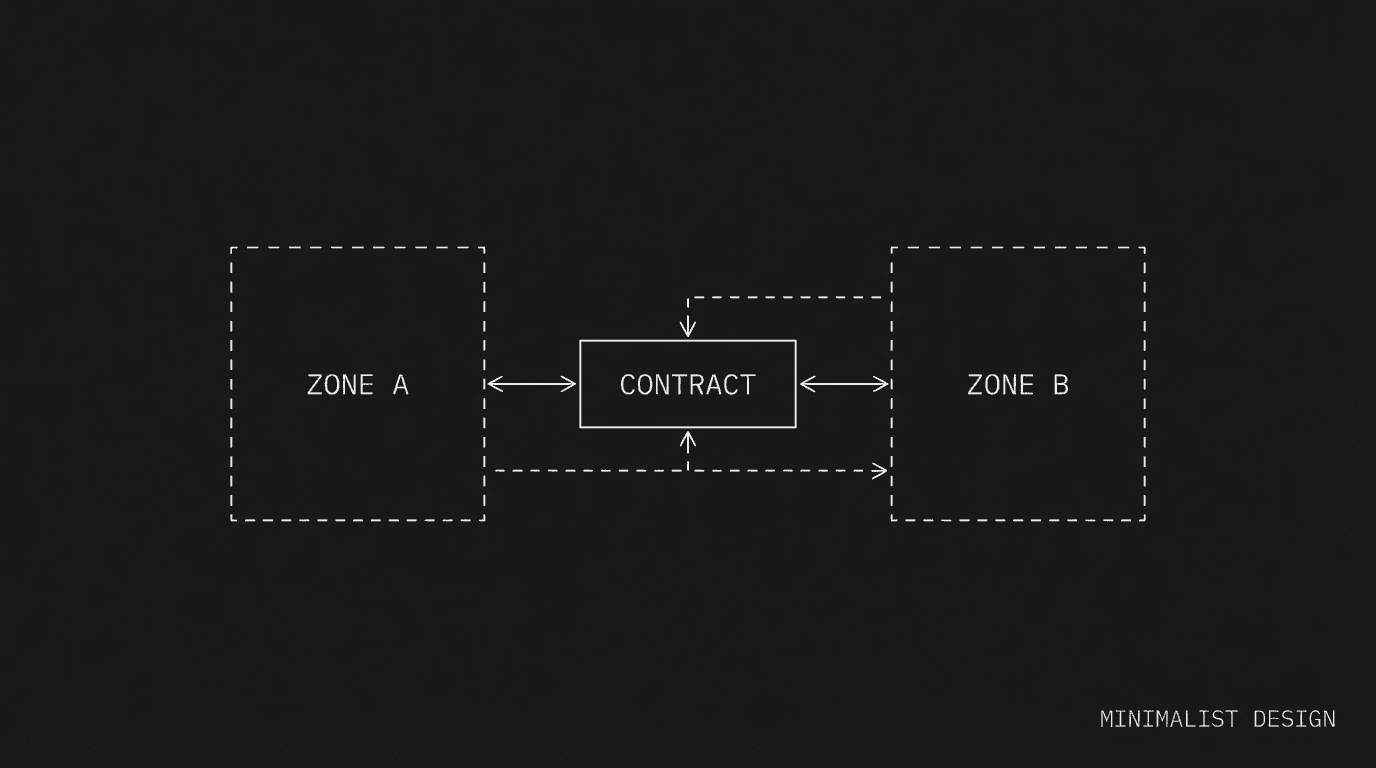
Set the rules in the first act. Hard sci-fi establishes what’s possible and obeys it. Space opera establishes a tone and a scale; the rules serve the story. The audience signs the contract early. Don’t switch mid-script.
Think about The Martian. We believe the science (or we’re willing to). The story depends on it. Now think about Star Wars. We don’t ask how the Force works. We accept that it does. The story is about family, power, and choice. Both are sci-fi. They’re different contracts. When you’re writing, you have to know which contract you’re offering. Our guide on worldbuilding and the bible is where you write down the rules you’ve chosen; the choice of hard vs opera affects what goes in the bible. For more on delivering the rules without lecturing, see exposition in fantasy and avoiding “as you know, Bob”, the same principle applies to sci-fi.
Hard Sci-Fi: The Rules Are the Frame
Hard sci-fi (or “hard SF”) cares about plausibility. The technology, the physics, the biology, they’re meant to be consistent with what we know or what we could extrapolate. That doesn’t mean every script needs a physicist on staff. It means the writer has thought about the rules and doesn’t break them for convenience. When a character travels between stars, we know how long it takes. When they communicate, we know the delay. The constraints create the drama. The story works because they can’t just call for help. So when you’re writing hard sci-fi, the rules are part of the premise. You establish them early. You don’t break them later. If you need to break a rule, it should be a big deal, a discovery, a cost, a one-time exception that the story earns. For more on how limitations create conflict, see writing magic systems, in hard sci-fi, the “magic” is the tech, and its limits are what you play with.
Space Opera: The Scale Is the Frame
Space opera is sci-fi that’s more about scope and feeling than about technical accuracy. Epic stakes. Big ships. Wars. Dynasties. The science is in the background. The audience isn’t there to fact-check. They’re there for the sweep. So the rules can be looser, but they should still be consistent. You don’t have to explain how the hyperdrive works. You have to not contradict yourself. If ships need time to travel in act one, they shouldn’t zip across the galaxy in act two unless you’ve established a reason. Space opera isn’t “anything goes.” It’s “the rules serve the story, and we don’t pause to prove them.” For more on building a world that feels big without getting lost, see worldbuilding 101, the bible for a space opera might have more politics and factions than equations.
The Hybrid (And the Trap)
Some stories mix both. The Expanse has a lot of hard sci-fi, the physics of the Belt, the travel times, but it’s also a political thriller and a space opera in scope. The mix works because the show establishes the hard rules early and then tells the story within them. The trap is starting hard and going soft (the audience feels cheated) or starting soft and suddenly getting technical (the audience gets bored). So if you’re mixing, be clear about what’s hard and what’s not. “We’re rigorous about travel and communication. We’re not rigorous about the protomolecule.” Fine. Just don’t switch without signaling. For more on consistency, see time travel logic and consistent rules, the same principle of “set the rules and keep them” applies across subgenres.
| Subgenre | Contract with Audience | What to Establish Early |
|---|---|---|
| Hard sci-fi | We’ll be plausible; the constraints are part of the story | Tech limits, travel time, communication delay |
| Space opera | We’re here for scale and drama; the science is backdrop | Tone, factions, stakes; rules can be loose but consistent |
| Hybrid | We’re rigorous about X, not about Y | Be clear which is which; don’t switch mid-script |
Relatable Scenario: The Script That Starts Hard and Goes Soft
You’ve established that there’s no FTL. Travel between planets takes months. Then in act two the hero needs to get somewhere fast. So you have them find a “secret drive.” The audience feels the cheat. You set a rule and broke it for plot. Fix: either don’t set the rule (if you want flexibility, establish it as space opera from the start), or find a solution that works within the rule. Maybe they can’t get there in time, and the story is about what they do instead. The constraint is the story. For more on earning twists and new tech, see the twist ending and constructing a revelation, new tech that breaks the rules can work if it’s set up and paid off.
Try it free
Try Screenweaver for free on your script
It is free. Import your existing project, get a clearer view of your outline, and regain control of your story structure in minutes.
Start FreeRelatable Scenario: The Script That Stops for a Science Lesson
You’re writing hard sci-fi. You want the audience to understand the drive. So you have a character explain it for a page. The pace dies. Fix: we don’t need to understand the science. We need to understand the consequence. What can they do? What can’t they do? What does it cost? Show that. The character can say one line. “It takes six months. No way around it.” The rest is in the bible. The script shows the result. For more on delivering info without dumping, see exposition in fantasy.
The Trench Warfare Section: What Beginners Get Wrong
Choosing hard sci-fi and then handwaving. You’ve said the science matters. Then you skip the travel, the delay, the cost. The audience notices. Fix: if you’re going hard, commit. Put the constraints in the bible. Use them in every scene that touches tech or travel. If you don’t want to be rigorous, don’t promise it. Call it space opera and keep the rules consistent but simple.
Choosing space opera and then over-explaining. You’re writing a space epic. You stop every few scenes to explain how something works. The audience came for the sweep. Fix: in space opera, the rule is “it works.” Establish the tone and the stakes. Don’t pause to prove the science. For more on what the audience needs to know, see the fish out of water and audience surrogates, the surrogate can ask one question; they don’t need a lecture.
Inconsistent rules within either. Hard or soft, the rules have to hold. If in act one the ship can’t jump when the reactor is damaged, don’t have it jump when the reactor is damaged in act three unless you’ve set up a reason. Fix: keep a bible. Check it. When you add a rule, make sure the rest of the script obeys it. For more on the bible, see worldbuilding 101.
Audience mismatch. You’ve written hard sci-fi and you’re pitching it as a space opera (or the reverse). The reader expects one thing and gets another. Fix: know what you’ve written. Pitch it accordingly. The first act should signal the contract. If it does, the right audience will stay. The wrong one will leave, and that’s okay. For more on genre and structure, see theme vs plot, the subgenre choice affects what the audience is here for.
[YOUTUBE VIDEO: Comparison of two openings, one that establishes hard sci-fi (constraints, consequence), one that establishes space opera (scale, tone), with commentary on the contract each makes.]
Step-by-Step: Choosing and Holding the Subgenre
Before you write, answer: do I want the audience to believe the science, or do I want them to feel the scale? If the former, you’re in hard sci-fi territory. List the rules. Travel. Communication. What’s possible? Put them in the bible. Use them. If the latter, you’re in space opera. Establish the tone and the stakes. Keep the rules consistent but don’t pause to prove them. Then, in the first act, signal the contract. One scene that shows how the world works. After that, don’t switch. For more on building the world that supports your choice, see worldbuilding 101 and writing non-human characters, both apply to hard and opera, but the level of detail differs.
One External Resource
For a short overview of hard science fiction and space opera, see Hard science fiction on Wikipedia and Space opera on Wikipedia. Reference only; not affiliated.
The Perspective
Hard sci-fi and space opera are different contracts. One says: we’ll be rigorous. One says: we’ll be big. Choose the contract in the first act. Hold it. When you do, the right audience will stay and the world will feel true. When you don’t, everyone feels the shift. Know your subgenre. Serve it.
Final Step
Build your next script with Screenweaver
Move from ideas to production-ready pages faster with timeline-native writing and AI-assisted story flow.
Try Screenweaver