
Hero image prompt: Dark mode technical sketch. Solid black background, thin white hand-drawn lines. Two figures in conversation, one “telling” the other something the other would already know. A red X or crack through it. Minimalist, high-contrast.
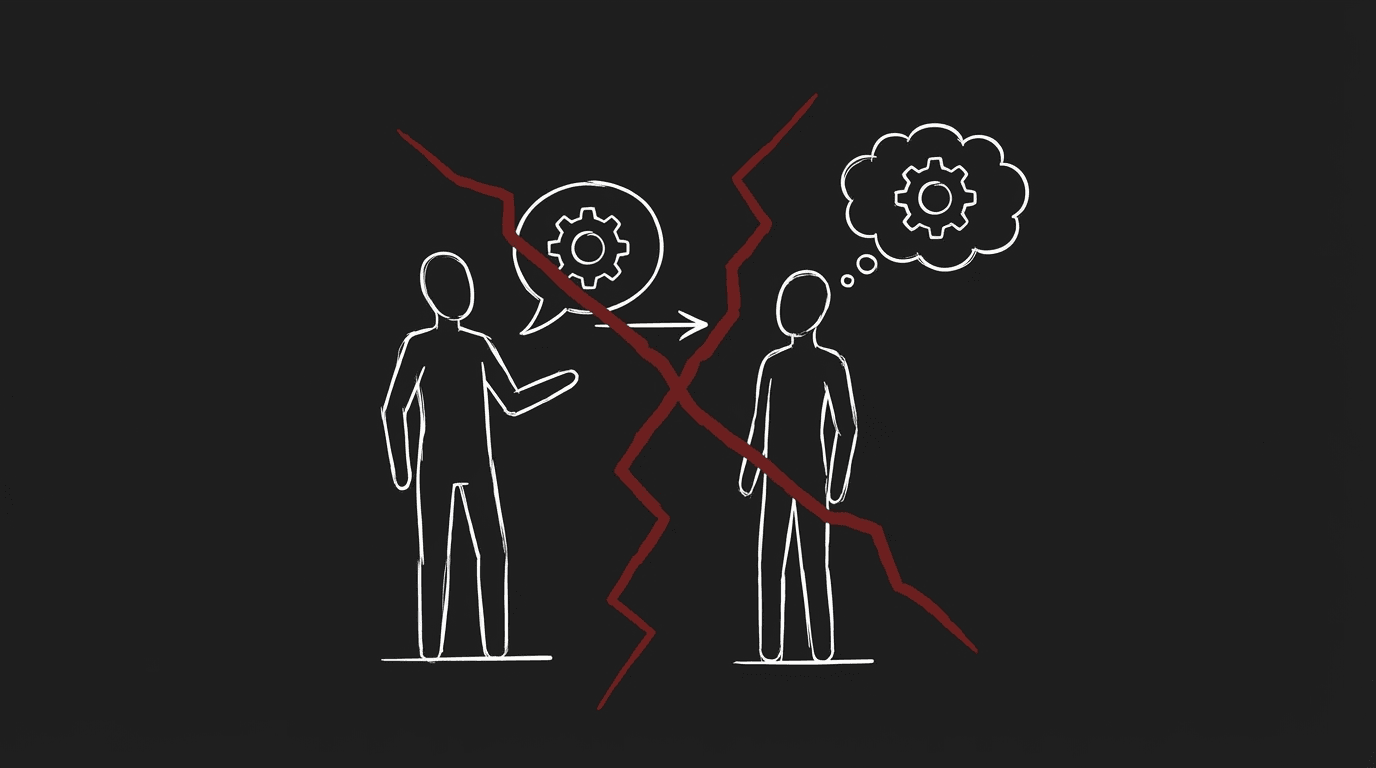
“As you know, Bob, the war has been going on for a hundred years.” Bob was there. Bob knows. So why is someone telling him? Because the writer needed the audience to hear it. The audience feels the hand. Exposition that’s delivered to someone who already knows is the fastest way to break trust. In fantasy and sci-fi, you have a lot to explain. The world. The rules. The history. Here’s how to deliver it so the audience gets what they need without feeling like they’re in a lecture.
Deliver the lore through action and conflict. Someone needs the information. Someone doesn’t want to give it. Or the information is discovered. Or it’s the stake of the scene. When the exposition is part of what’s happening, it doesn’t feel like exposition.
Think about Game of Thrones. We learn the world through people who are fighting over it, lying about it, or discovering it. No one sits down to explain the seven kingdoms to someone who grew up there. We learn because a character is learning, or because a character is using the information in a conflict. The same in Dune: we learn about the spice through Paul’s training, through the stakes of the story, through the cost. The exposition is baked into the plot. Our guide on the fish out of water and audience surrogates is the main way to make “someone needs to know” feel natural: the character who doesn’t know gives you a recipient. For more on hiding info in conflict, see exposition dump and the Pope in the pool.
Why “As You Know, Bob” Fails
The audience is smart. They know that the character wouldn’t say this to this person. So they know the writer is talking to them. The fourth wall doesn’t break, but the trust does. We’re no longer in the story. We’re in a lesson. So the rule is: never have a character tell another character something that character would already know. If Bob knows about the war, don’t have Alice tell Bob about the war. Have Bob tell someone who doesn’t know. Or have the information come out in a conflict, Bob accuses Alice of forgetting the war, Alice throws it back. Or have the information be discovered, they find a document, a witness, a clue. The exposition has to have a reason to be in the scene that isn’t “the audience needed to know.” For more on dialogue that carries real purpose, see subtext and the art of dialogue, sometimes the exposition is what’s not said, and we infer.
Ways to Deliver Exposition Without the Trope
Through the surrogate. A character who doesn’t know asks, or is told, or discovers. The fish out of water. Now the exposition has a recipient. We learn with them. For more on building the surrogate, see fish out of water.
Through conflict. Two characters disagree. One says “the treaty says X.” The other says “the treaty is broken.” We get the information in the course of the fight. We’re not getting a lesson. We’re getting a weapon. For more on conflict that carries info, see exposition dump and hiding info in conflict.
Through discovery. The character finds something. A letter. A map. A body. The information is in the world. We learn because they learn. No one has to explain to someone who already knows. For more on revelation and structure, see the twist ending and revelation list.
Through action. We see the consequence before we hear the rule. The character does something. It goes wrong. Now someone says “you can’t do that because…” The exposition explains what we just saw. We’re primed for it. For more on showing then explaining, see show don’t tell in scene work.
Through the “Pope in the pool.” The character is doing something else, something visual, something active, while the information is delivered. The audience is distracted by the action. The exposition slips in. It’s a technique, not a fix for bad exposition, but when the info is short and the action is strong, it works. For more, see exposition dump.
| Method | What It Does |
|---|---|
| Surrogate | Someone doesn’t know; we learn with them |
| Conflict | Info is weapon or stake in an argument |
| Discovery | Character finds it; no one explains to an expert |
| Action | We see the consequence; then the rule is stated |
| Pope in the pool | Action distracts; short exposition slips in |
Try it free
Try Screenweaver for free on your script
It is free. Import your existing project, get a clearer view of your outline, and regain control of your story structure in minutes.
Start FreeRelatable Scenario: The Script Where Two Experts Explain to Each Other
You need the audience to know about the rebellion. So you have the general and the spy meet. They both know about the rebellion. But one of them says “as you know, the rebellion has been active in the north…” The reader checks out. Fix: give the scene a real reason for the conversation. What do they want from each other? What are they hiding? Let the information come out as part of that. Or add a third character who doesn’t know, a junior officer, a prisoner. Now one of them is explaining to someone who needs to hear it. The exposition has a recipient. Our piece on worldbuilding and the bible is where you store the info; the script is where you deliver it in a way that feels earned.
Relatable Scenario: The Script Where the Exposition Is a Block
A character delivers a paragraph of history. No one interrupts. No conflict. No action. The page is a block of explanation. Fix: break it up. One or two lines at a time. Or put the information in a conflict, one character says one thing, another corrects or contradicts. Or tie the information to a discovery, they’re reading a scroll, and we get the info as they react. The exposition should be scattered and earned, not dumped. For more on pacing and white space, see micro-pacing and white space.
The Trench Warfare Section: What Beginners Get Wrong
Explaining everything. The audience doesn’t need the full history. They need enough to follow the story. Fix: cut. What’s the minimum we need to know for this scene to work? Give that. The rest can stay in the bible. For more on what the audience needs, see the fish out of water.
Explaining too late. We’re in act two. Something happens that depends on a rule we never heard. The audience is confused. Fix: plant the rule earlier. One line. One image. We don’t need the full lecture. We need enough to recognize the pay-off. For more on planting, see the twist ending and revelation list.
Making the exposition elegant but empty. The dialogue is sharp. No one would say it. Fix: even clever exposition is exposition if it’s there only to inform. Find a reason for the line. Conflict. Need. Discovery. When the reason is there, the line earns its place. For more on dialogue that does work, see subtext and dialogue.
Forgetting that action can explain. We don’t always need a line. We can see the magic fail. We can see the character avoid the forbidden place. Show the rule once, and the audience will remember. For more on visual storytelling, see writing the silent scene.
[YOUTUBE VIDEO: Side-by-side: one scene that uses “as you know, Bob” vs the same information delivered through a surrogate, conflict, or discovery.]
Step-by-Step: Checking the Exposition
Go through the script. Mark every place where information is delivered. For each, ask: who is the recipient? Would that character already know this? If yes, cut or rewrite. Find a recipient who doesn’t know. Or find a conflict where the information is the weapon. Or find a discovery. Then ask: how much do we need? Cut to the minimum. The audience can infer the rest. For more on the world the exposition describes, see worldbuilding 101 and writing magic systems.
One External Resource
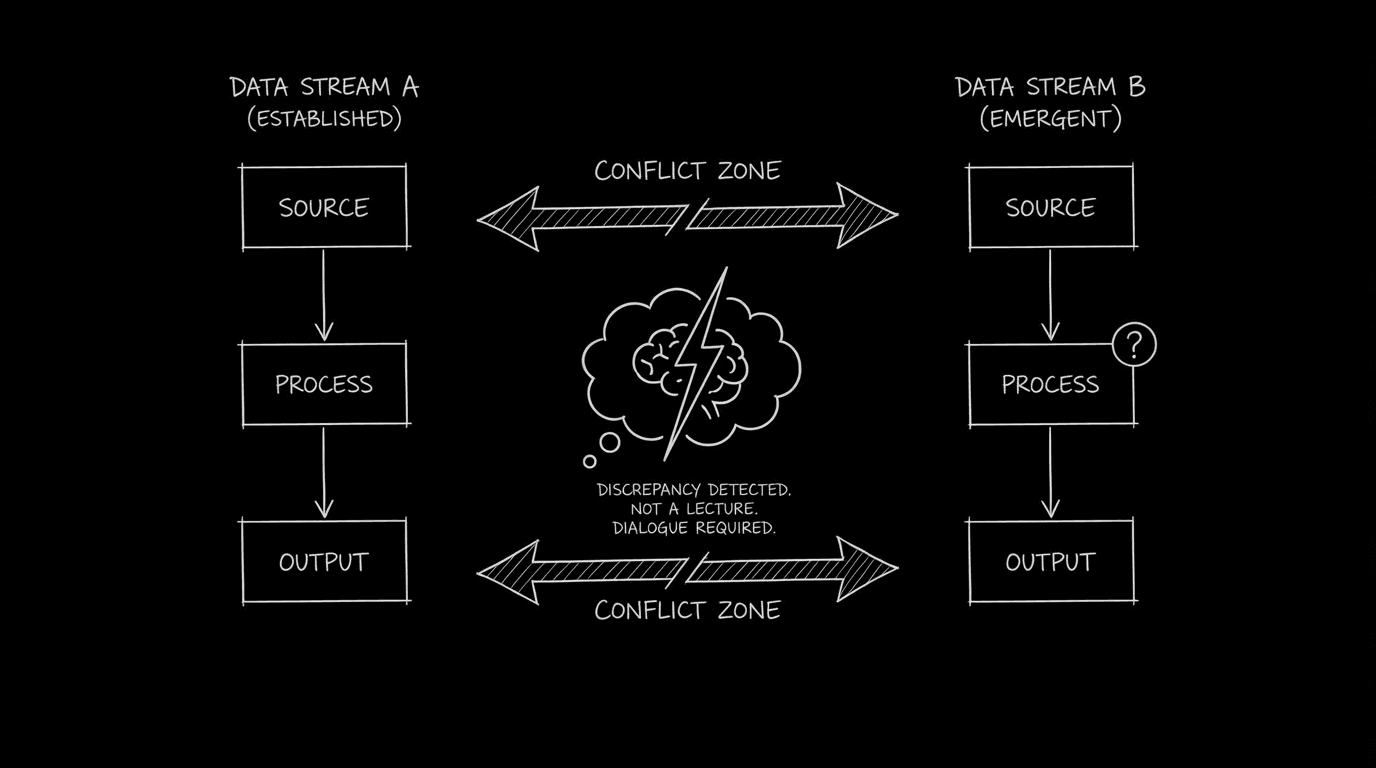
For a short overview of the “as you know” trope and how to avoid it, see As you know on Wikipedia. Reference only; not affiliated.
The Perspective
Exposition is necessary. The audience has to learn the world. The trick is to deliver it so they don’t feel the delivery. Use a surrogate. Use conflict. Use discovery. Use action. Never have one character tell another what they both already know. When the exposition is part of what’s happening, the audience stays in the story.
Final Step
Build your next script with Screenweaver
Move from ideas to production-ready pages faster with timeline-native writing and AI-assisted story flow.
Try Screenweaver