
Hero image prompt: Dark mode technical sketch. Solid black background, thin white hand-drawn lines. A simple map: land, water, one mountain range, one road. The road has to go around the mountain. Minimalist, high-contrast. The sense that the land dictates the journey.
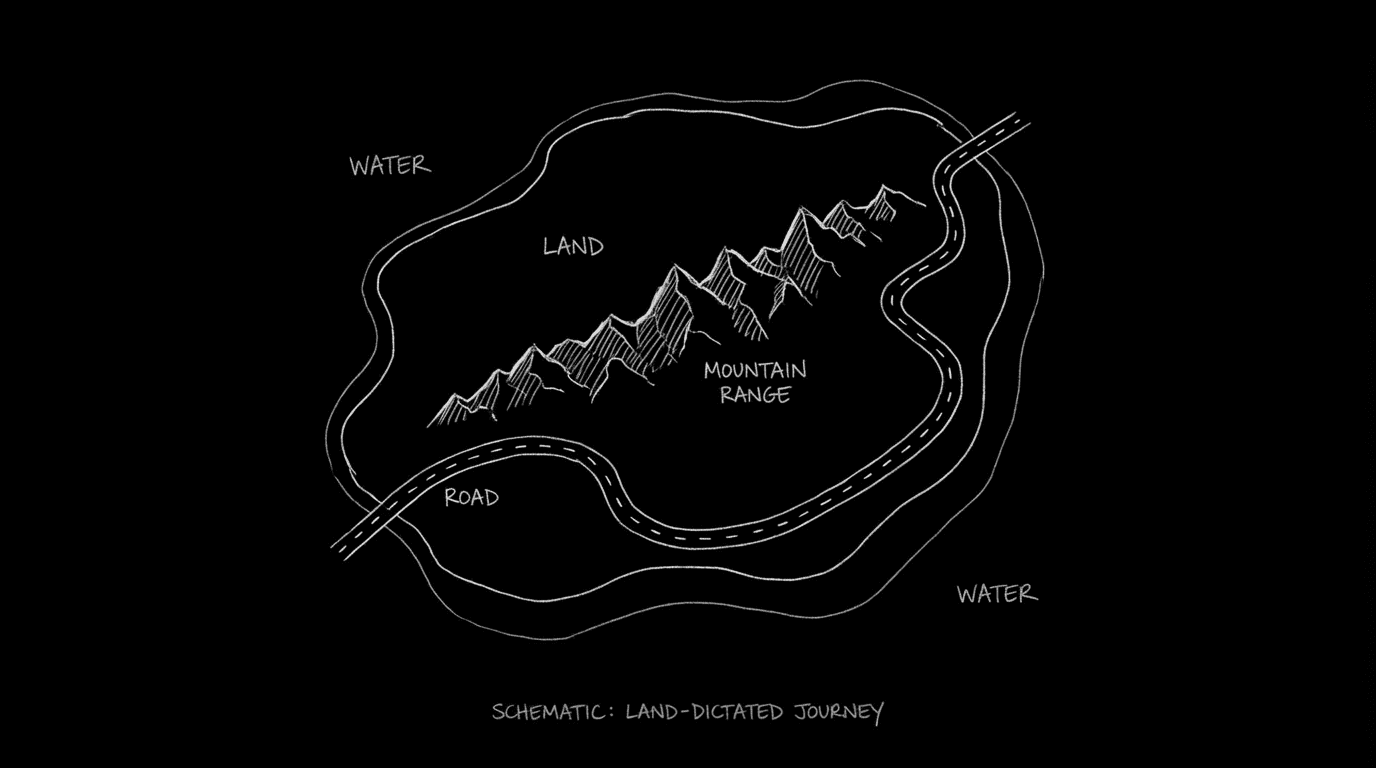
They need to get from here to there. The mountain is in the way. The river has one bridge. The desert takes ten days. Geography isn’t backdrop. It’s obstacle, deadline, and opportunity. When the map drives the plot, when the journey has to go through the world, not over it, the story feels grounded. Here’s how to make geography matter.
The audience doesn’t need to see the map. They need to feel that the world has shape. That shape creates limits. Limits create choices. Choices create story.
Think about The Lord of the Rings. The fellowship can’t go over the mountain (snow, storm). They go under (Moria). The geography forces the choice. The choice has consequence. Or Game of Thrones: the Wall, the Narrow Sea, the deserts and the snow. Who can get where, and how long it takes, drives politics and war. The map isn’t decoration. It’s part of the engine. Our guide on worldbuilding and the bible is where you keep the map, and the rules that flow from it. For more on how limits create conflict, see writing magic systems, geography is another form of limit.
Why Geography Creates Plot
Obstacles. The mountain. The sea. The swamp. The character can’t go in a straight line. They have to go around, through, or over. Each option has cost. Time. Danger. The wrong choice can kill them. So geography creates decisions. Decisions create tension. For more on stakes and consequence, see the “all is lost” moment.
Time. How long does it take to get there? If the journey is ten days, the enemy has ten days to prepare. If the journey is two months, the character has two months to change. Geography sets the clock. When the clock is real, the audience feels the pressure. For more on pacing and deadlines, see slow burn pacing, geography can stretch or compress the journey.
Resources. Where is the water? The pass? The port? Who controls them? Geography creates chokepoints. Control the bridge, you control the trade. Control the mountain pass, you control the army. So geography creates power. Power creates conflict. For more on factions and conflict, see worldbuilding 101.
Discovery. The map has blank spaces. The character goes there. What’s in the blank space? Geography can hide the next beat. The lost city. The enemy. The ally. When the journey has to go through the unknown, the story has room for surprise. For more on revelation and structure, see the twist ending and revelation list.
| Element | What It Does |
|---|---|
| Obstacles | Mountain, sea, swamp; character must go around, through, or over; each has cost |
| Time | How long to get there; sets the clock; enemy has time, or character has time to change |
| Resources | Water, pass, port; who controls them; chokepoints create power and conflict |
| Discovery | Blank spaces on the map; what’s there drives the next beat |
Relatable Scenario: The Script Where the Journey Is a Cut
You need them in the next kingdom. So you cut. “Three weeks later, they arrive.” The audience doesn’t feel the journey. The world doesn’t have weight. Fix: let the geography bite once. One obstacle. One delay. One choice about the route. They have to cross the river. There’s one bridge. It’s guarded. Now the journey is a scene. The world has shape. Our piece on isolated settings and the environment as character applies: the road, the pass, the sea can be a “character” that pushes back. For more on making the environment matter, see that guide.
Try it free
Try Screenweaver for free on your script
It is free. Import your existing project, get a clearer view of your outline, and regain control of your story structure in minutes.
Start FreeRelatable Scenario: The Script Where the Map Is Generic
The world has “a mountain” and “a sea.” The journey could be anywhere. Fix: get specific. One mountain range with one pass. One sea with one port. One desert that takes X days. When the geography is specific, the choices are specific. The character can’t just “go.” They have to go this way, and that way has cost. For more on building a world that holds together, see worldbuilding 101.
The Trench Warfare Section: What Beginners Get Wrong
Ignoring the map when it’s inconvenient. The character needs to be somewhere. The map says it’s far. So you have them get there fast. The audience feels the cheat. Fix: if the map says it’s far, it’s far. Use the distance. The time. The obstacle. Let the geography drive the plot instead of being overridden by it. For more on consistency, see time travel logic and consistent rules, geography is a set of rules too.
No obstacles. The character walks from A to B. Nothing gets in the way. The journey is a line. Fix: add one obstacle. A river. A border. A storm. One thing that forces a choice. The choice creates the scene. For more on conflict and choice, see want vs need.
The map is only for the reader. You’ve drawn a map. The reader never feels it in the script. Fix: put the geography in the story. The character mentions the pass. They argue about the route. They run out of water. When the geography affects the characters, the audience feels the map. For more on showing the world through action, see exposition in fantasy.
Forgetting that geography is power. Who controls the port? The pass? The river? When you know who controls what, you know who has leverage. Geography creates politics. For more on factions and conflict, see worldbuilding 101 and rivalry and professional conflict.
[YOUTUBE VIDEO: Walkthrough of one fantasy or historical map, how the land creates obstacles, time, and chokepoints, and how that could drive a single journey in a script.]
Step-by-Step: Making Geography Matter
Before you write (or when you’re outlining), sketch the journey. Where do they start? Where do they need to go? What’s in the way? One mountain. One river. One stretch of desert or sea. How long does each leg take? Who controls the chokepoints? Then, in the script, use at least one of those elements. One scene where the geography forces a choice. One scene where the distance or the obstacle costs something. When the geography is in the story, the world feels real. For more on the world that contains the map, see worldbuilding 101 and the fish out of water, the journey can be the place where the surrogate learns the world.
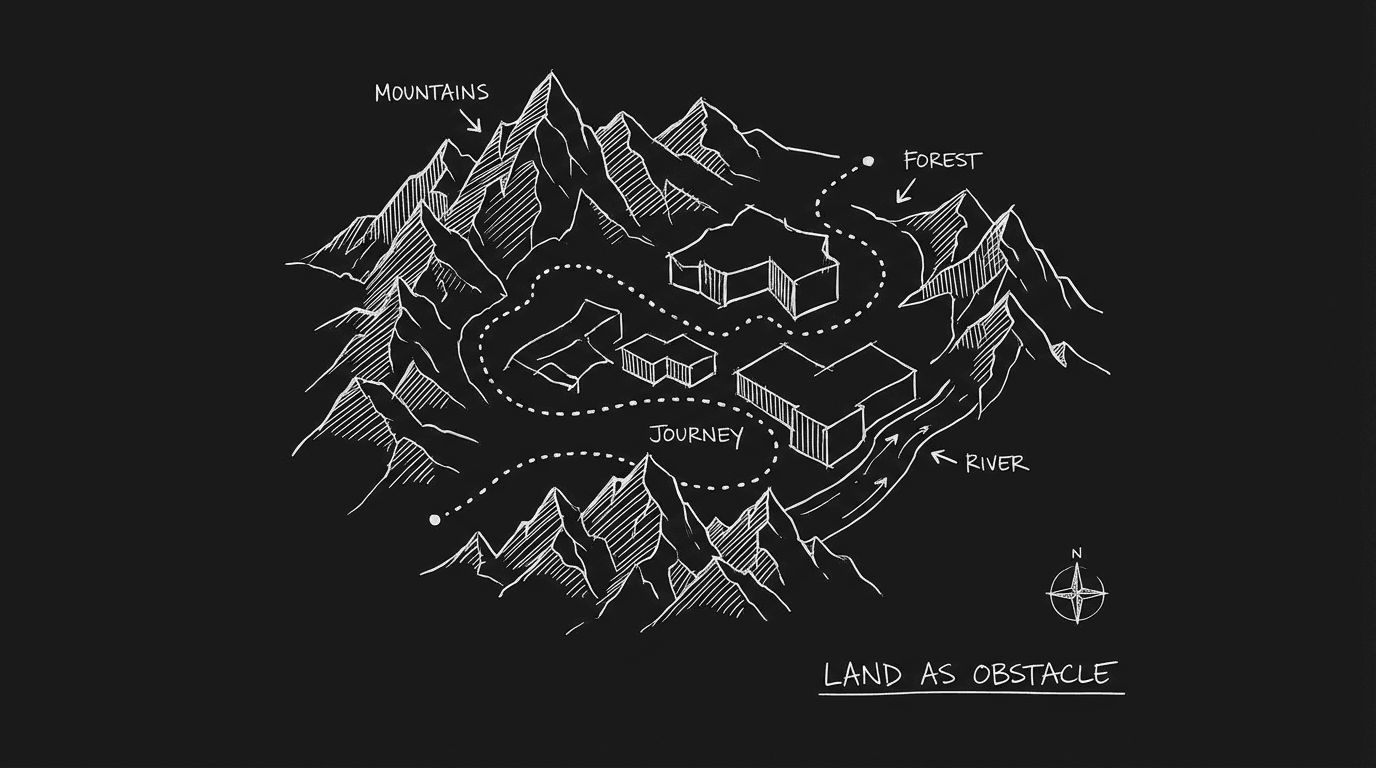
One External Resource
For a short overview of how maps and geography function in fantasy and worldbuilding, see Fantasy map on Wikipedia. Reference only; not affiliated.
The Perspective
Geography isn’t decoration. It’s obstacle, clock, and power. When the journey has to go through the world, when the mountain and the river and the desert have weight, the story feels grounded. Draw the map. Put it in the bible. Then let the map drive the plot. The audience will feel the world even if they never see the drawing.
Final Step
Build your next script with Screenweaver
Move from ideas to production-ready pages faster with timeline-native writing and AI-assisted story flow.
Try Screenweaver