
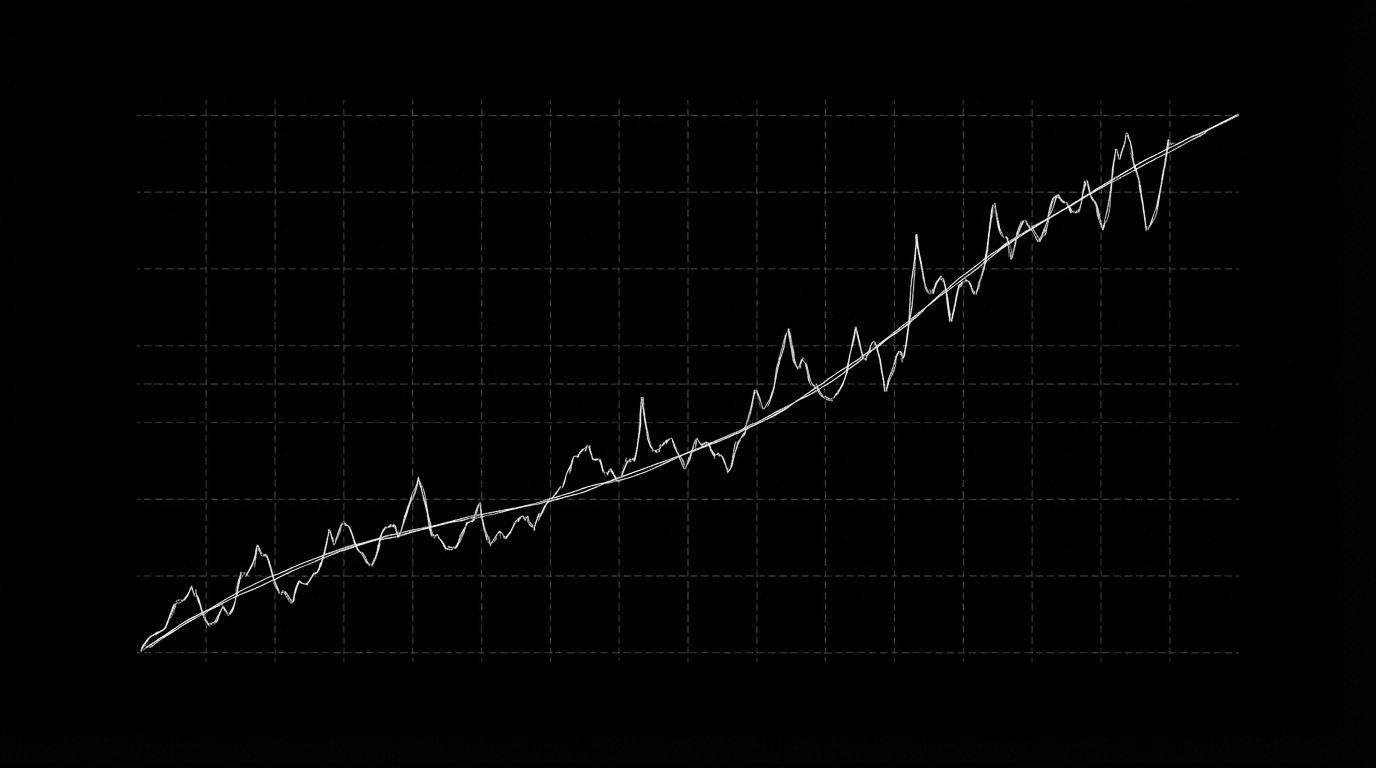
Hero image prompt: Dark mode technical sketch. Solid black background, thin white hand-drawn lines. A single rising curve, tension over time, with small spikes along the way, never dropping to zero. Label-free. Minimalist. The sense of a long climb with no release until the end.
The first kill doesn’t happen until page 47. The monster doesn’t show its face until the third act. The audience is sitting in the dark, waiting. If you’ve done your job, they’re not bored. They’re wound so tight that when the release finally comes, it’s almost unbearable. If you haven’t, they’re on their phones. The slow burn is a gamble. It trades the quick hit of the jump scare for something heavier: dread. Here’s how to earn it.
Boredom is the slow burn’s only real enemy. Not lack of action, lack of promise. The audience has to believe something is coming.
Think about The Shining. We spend a long time in that hotel before anything overtly supernatural happens. What we get instead is atmosphere. The layout that doesn’t make sense. The performance that’s a little off. The sense that the place is wrong. Kubrick isn’t filling time. He’s building a world that can’t hold. When the horror finally breaks through, we’re not surprised. We’ve been waiting for the floor to give. That’s the slow burn: the floor giving, delayed. The craft is making the delay feel intentional, not padded.
Why Slow Burn Works (When the Burn Is Real)
Not every horror story wants to be a slow burn. Slashers, creature features, and high-concept thrillers often need body count and set pieces. The slow burn belongs to horror that’s interested in dread, the feeling that something is wrong and getting wronger. The threat might not be visible. It might be the house. The relationship. The town. The genre’s best slow burns, The Witch, Hereditary, The Lighthouse, It Follows in its first half, don’t substitute “nothing happens” for “something is always wrong.” Something is always wrong. We just don’t see the monster yet. Or we see it and don’t understand it. Or we understand it and can’t escape it. The tension isn’t absent. It’s cumulative.
The risk is obvious. If the audience doesn’t feel that accumulation, they check out. They need a reason to stay. That reason is usually one of three things: character, mystery, or atmosphere. We care about the people. We want to know what’s going on. Or we’re so deep in the mood that we don’t want to leave. The slow burn has to deliver at least one of those, consistently. Scenes that “just” build atmosphere only work if the atmosphere is thick enough to breathe. Scenes that develop character only work if we’re invested in what happens to them. The slow burn isn’t “less happens.” It’s “what happens is always pointing at the same wrongness.”
The Anatomy of a Slow Burn
The hook that promises consequence. You don’t have to open with a kill. But you have to open with something that promises that stakes exist. A loss. A warning. A decision that we know will matter. The Witch opens with the family being cast out. We don’t know what’s in the woods yet. We know they’re vulnerable. Hereditary opens with a funeral and a relationship that’s already cracked. We know the family is carrying weight. The hook doesn’t have to be loud. It has to be loaded. The audience has to feel that this moment will matter. If the first ten minutes feel like setup with no cost, they’ll assume the rest is setup too.
Small violations before the big one. The horror doesn’t have to wait until act three to show up. It has to escalate. So give us small wrongnesses. A sound. A missing object. A look that lasts too long. Something that doesn’t fit. Each one raises the temperature. The audience learns that this world can break. When the big break comes, it’s not the first break, it’s the one we’ve been waiting for. Our guide on writing the jump scare applies in reverse here: you’re not delivering a sudden strike. You’re delivering a series of small strikes that never quite release the tension. The jump scare is a spike. The slow burn is a slope with thorns.
Character work that pays off in the horror. In a fast horror movie, we might not need to know much about the protagonists. In a slow burn, we have time. Use it. The family in Hereditary isn’t generic. We know their grief, their guilt, their inability to talk. When the horror hits them, it hits them, their specific wounds. The slow burn gives you room to make the horror personal. If you don’t use that room, the audience wonders why we’re waiting. So the character work isn’t separate from the horror. It’s the reason the horror will land. When the monster finally comes, it should feel like it was always coming for these people.
The delayed payoff. You’ve promised something. You’ve raised the temperature. At some point you have to deliver. The slow burn that never burns is just slow. The third act has to pay off the dread. That doesn’t mean every slow burn needs a bloodbath. It means the thing we’ve been afraid of, the thing we’ve felt in the air, has to become real. The release can be quiet. It can be a look. A line. A door closing. But it has to be a release. The audience has been holding their breath. You have to let them exhale, or scream.
| Element | Purpose | Mistake to Avoid |
|---|---|---|
| Hook that promises consequence | Gives audience a reason to stay; establishes that stakes exist | Opening with flat setup, no cost or tension |
| Small violations | Keeps tension rising; teaches that the world can break | Long stretches with no wrongness, feels like filler |
| Character work | Makes the horror personal; gives the wait meaning | Character scenes that don’t tie into the coming horror |
| Delayed payoff | Delivers on the promise; releases the dread | Never delivering, or delivering something unrelated to what was built |
Relatable Scenario: The First Draft That Drags
You’ve written 50 pages. The monster hasn’t appeared. The reader says it’s slow. So you add a jump scare on page 20. Now the script has one spike and then a long flat stretch. The problem wasn’t that nothing happened. The problem was that nothing threatened. So instead of adding a single scare, add small threats. A character finds something that shouldn’t be there. Another character says something that doesn’t fit. The environment shifts, a door that was closed is open. You don’t need a kill. You need the audience to feel that the world is unstable. Every 10–15 pages, something should remind them that the wrongness is real. The slow burn isn’t no fire. It’s a low flame that keeps climbing.
Try it free
Try Screenweaver for free on your script
It is free. Import your existing project, get a clearer view of your outline, and regain control of your story structure in minutes.
Start FreeRelatable Scenario: The Third Act That Doesn’t Land
You’ve built dread for 80 minutes. The audience is ready. Then the monster appears and it’s… fine. Or the twist is unrelated to what we’ve been dreading. Or the ending is vague. The slow burn has made a promise: something is coming. When it comes, it has to be worth the wait. That doesn’t mean bigger or bloodier. It means connected. The horror in the third act should feel like the logical end of the wrongness we’ve been feeling. If the monster is a random creature with no tie to the family’s grief, the slow burn was for nothing. If the reveal doesn’t recontextualize what we’ve seen, we feel cheated. So when you outline, know your ending first. Then make sure every act-one and act-two beat is pointing at it. The false ending and double climax can add a final twist, but the main payoff has to land first.
The Trench Warfare Section: What Beginners Get Wrong
Confusing slow with empty. Long scenes of people talking about nothing. Walks through corridors. Establishing shots. None of that is slow burn. Slow burn is escalating tension. Every scene should add to the sense that something is wrong. If a scene could be cut and the script would feel the same, cut it. The slow burn rewards patience. It doesn’t reward padding.
Withholding the wrongness entirely. Some writers think “slow burn” means “we don’t show the monster until the end.” So we get 80 minutes of normal life and then a creature. The audience wasn’t in a slow burn. They were in a drama that suddenly turned into horror. The wrongness has to be present from the start. We might not see the monster. We might not understand it. But we have to feel that the world is off. Otherwise the horror, when it comes, feels tacked on.
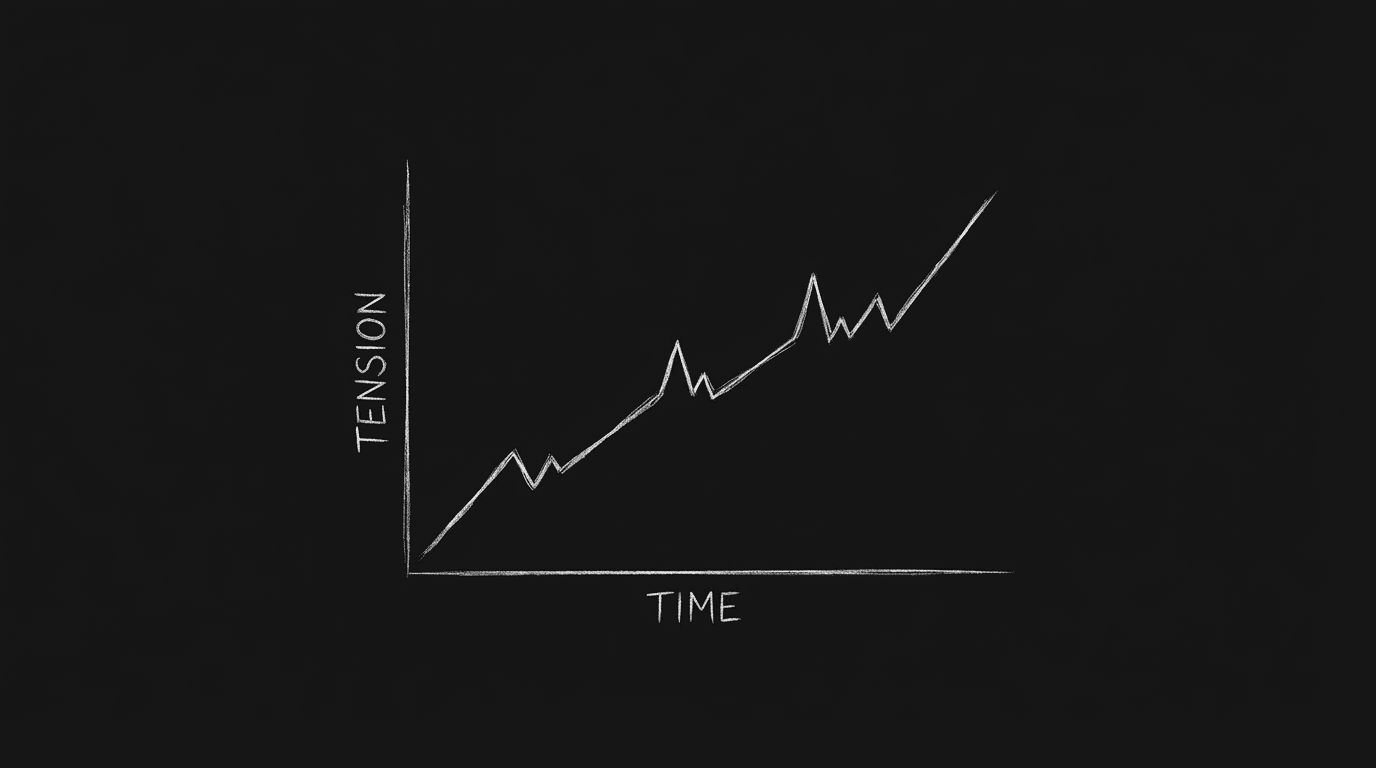
Pacing every scene the same. If every scene is the same rhythm, same length, same energy, the script feels monotonous. The slow burn needs variation. A scene that’s almost peaceful, then one line that cracks it. A scene that’s tense, then a moment of false safety. Short scenes that cut fast. Long scenes that hold. The overall trend is rising tension. But the path isn’t a straight line. It’s a curve with small dips and sharper climbs. For more on how to control rhythm on the page, see micro-pacing and white space in action lines.
Ending on ambiguity when the audience wanted release. Some slow burns end on a question. That can work, if the question is the point. But if the audience has been holding their breath for 90 minutes and you leave them with “maybe it was real, maybe it wasn’t,” they might feel like you didn’t deliver. Ambiguity is a choice. Make it deliberately. If you want a clear payoff, give one. If you want to leave the door open, make sure the journey was worth the lack of closure.
[YOUTUBE VIDEO: Side-by-side comparison of two horror sequences, one that drags (flat tension, no small violations) and one that burns (same runtime, but with escalating wrongness), with commentary on beat placement and audience expectation.]
Step-by-Step: Checking Your Burn
After your first draft, map the tension. Page by page (or scene by scene), ask: does something here raise the stakes, add wrongness, or pay off something we’ve been waiting for? If you have a long stretch where the answer is no, you have a flat spot. Either add a small violation, a detail that doesn’t fit, a line that unsettles, or cut. Then check the payoff. When the horror finally arrives, does it connect to everything you’ve built? If the monster or the twist could belong to a different script, you’ve built the wrong thing. The slow burn is a promise. The third act is the delivery. Make sure they match. Structure tools like beat boards and outlines can help you see the curve before you write it.
One External Resource
For a concise overview of pacing and tension in suspense, the Suspense entry on Wikipedia summarizes how delay and promise work in narrative. Reference only; we are not affiliated.
The Perspective
The slow burn isn’t about doing less. It’s about making every beat count toward the same dread. The audience should feel, from the first scene, that something is wrong. They might not know what. They might not see it. But they should feel it. When the horror finally breaks through, it shouldn’t feel like a surprise. It should feel like the thing we’ve been waiting for. That’s the difference between slow and slow burn. One tests patience. The other rewards it.
Final Step
Build your next script with Screenweaver
Move from ideas to production-ready pages faster with timeline-native writing and AI-assisted story flow.
Try Screenweaver