

You don't live in Los Angeles. Maybe you're in another city, another country. You've heard that breaking in means being in the room, cocktail parties, generals, handshakes at a premiere. So you wonder: can you break in from nowhere? The answer is yes, but "nowhere" is relative. Writers have broken in from Austin, London, Toronto, and small towns with a good internet connection. The path is different. It's not impossible. This guide looks at what LA networking actually gives you, what you can do remotely, and real-world strategies for building a career when you're not in the ZIP code. We'll also touch on how rep fits in, managers and agents who work with writers everywhere, and when a trip to LA might still be worth it.
LA is still the center of the industry. But the center is not the only place. Your work can travel. Your relationships can be built on Zoom, email, and the occasional trip. The writers who break in from elsewhere are the ones who make their material undeniable and their presence felt without living there.
For getting rep from afar, see How to Get a Literary Manager in 2026 and Agent vs. Manager. For protecting your work before you send it everywhere, Copyright and Registration. For when deals land remotely, Entertainment Lawyers and WGA Minimums.
What LA Networking Actually Is
In LA, networking often means: being in the same room as development execs, producers, and other writers; getting introduced by someone who's already in the system; taking generals in person; and being available for last-minute meetings or staffing when a show is hiring. The advantage is proximity. People run into each other. Referrals happen over coffee. The disadvantage is cost, living in LA is expensive, and competition. Everyone there is trying to break in. So being in LA doesn't guarantee anything. It just increases the number of random encounters and the speed of "let's meet tomorrow."
What You Can Do Remotely
Query and submit. You can query managers and agents from anywhere. You can enter contests, apply to labs, and submit to fellowships. Your script is a PDF. It doesn't care where you live. See our query letter and literary manager guides. Make your submission strong. Target reps who are open to remote clients, many are.
Zoom and phone. Generals, notes calls, and even staffing meetings happen on Zoom. The industry got used to it. You can build relationships and take meetings from home. Be professional: good connection, quiet room, on time. You're not at a disadvantage if you're good on camera and prepared.
Online community. Writers' groups, Twitter/X, Discord servers, and industry newsletters connect writers and sometimes execs. You can meet other writers, swap scripts, and get referrals. You can also learn who's looking for what. It's not the same as a room in Burbank, but it's real.
Targeted trips. Some writers fly to LA for a week or two a year. They line up meetings in advance, through their manager, through a contest, or through cold outreach. They do five or ten generals in a few days. Then they go home. That's a hybrid strategy: you're not living there, but you're not invisible either.
Success Stories: Breaking In from Elsewhere
Writers have broken in from outside LA by: winning or placing in major contests (Nicholl, Austin, etc.) and getting manager/agent interest; getting into a lab or fellowship that brings them to LA for a short period and introduces them to the industry; building a relationship with a manager remotely and having that manager send their work; writing a script that went viral or got recommended by someone inside the system; and moving to LA only after they had heat, so they arrived with a script and sometimes rep, not with nothing. The common thread: strong material and some form of validation or access, contest, lab, referral, or rep. Geography didn't create the break. The work and the connection did. Geography was one way to get the connection; it's not the only way.
Try it free
Try Screenweaver for free on your script
It is free. Import your existing project, get a clearer view of your outline, and regain control of your story structure in minutes.
Start FreeWhen a Trip to LA Is Worth It
If you have a manager or agent who can set up meetings, a trip can be useful. You can do a batch of generals, meet producers and execs in person, and show that you're serious and professional. If you've placed in a contest and have requests, a trip can turn those into in-person meetings. If you have no leads, flying in and hoping to "network" is usually a waste of money. So: trip when you have something to do, meetings on the calendar, a lab, or a conference that's actually industry-focused. Don't trip just to be in the ZIP code.
What Beginners Get Wrong
Assuming you have to move to LA to make it. You don't. You have to have material that's ready and a way to get it read. That can happen remotely. Move if you want to, or if your career has reached a point where being there helps (e.g. staffing, constant meetings). Not before.
Underestimating the importance of a strong sample. Where you live matters less than what you've written. A great script from Nebraska will get read. A mediocre script from LA will get passed. Put the work first.
Not using remote tools well. Bad Zoom setup, flaky connection, or unprofessional background can hurt you. Treat every remote meeting like an in-person one. Test your tech. Be on time. Be prepared.
Giving up after a few no's. Breaking in from anywhere is a numbers game. Query more. Submit more. Get better. Persistence plus material is the formula. Geography is a variable, not the only variable.
The Perspective
You can break in from nowhere, if by "nowhere" you mean not LA. You need a script that's ready, a strategy to get it read (query, contest, referral, rep), and the discipline to treat remote meetings and relationships as real. LA is an advantage, not a requirement. Use the tools you have: PDFs, Zoom, targeted trips, and managers who work with writers everywhere. Then make the work so good that where you live is the last thing that matters.
[YOUTUBE VIDEO: Two writers who broke in from outside LA, one from the Midwest, one from Europe, talking about how they got their first manager, their first meetings, and whether they ever moved.]

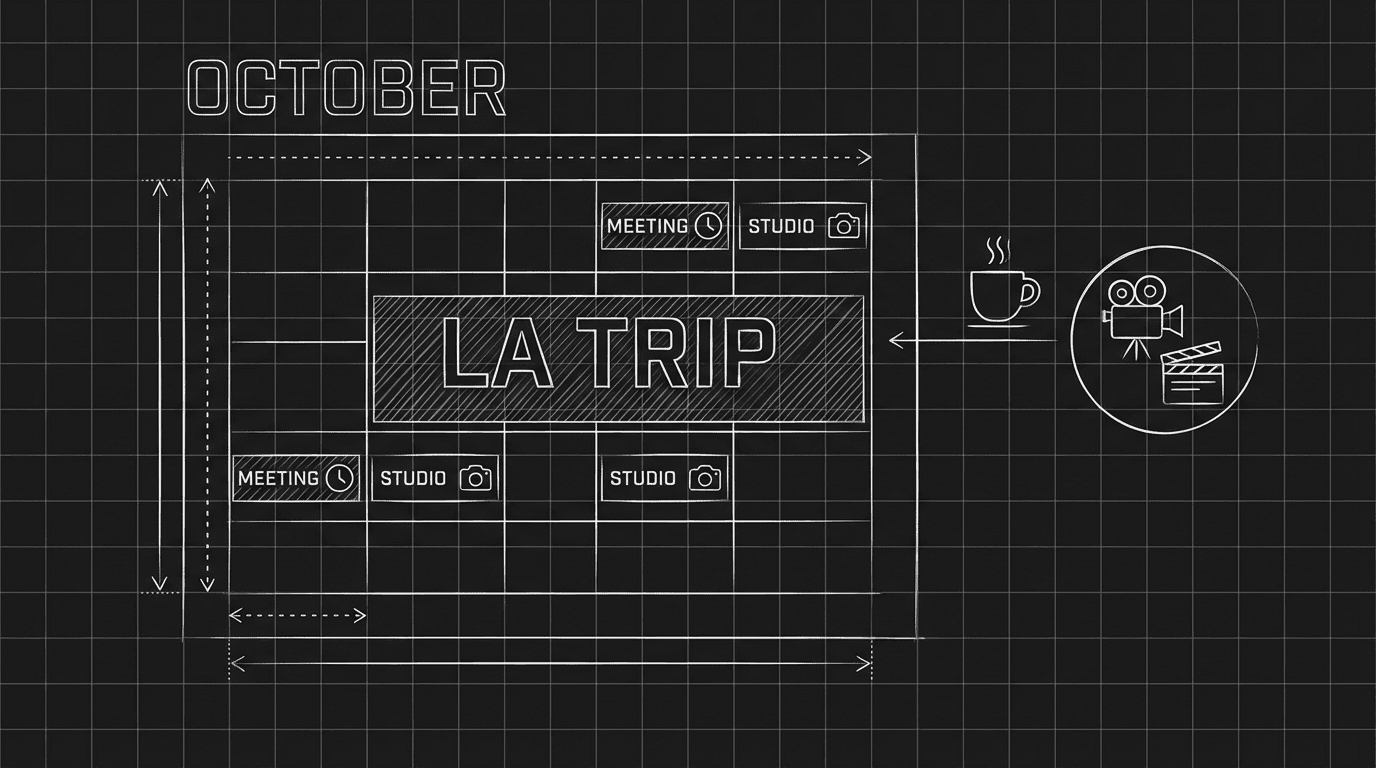
These two visuals work as a pair: the first shows Laptop with Zoom call and script; dark mode technical sketch, and the second shifts to Calendar with "LA trip" block and meetings; dark mode technical sketch—compare them briefly, then move on.
Final Step
Build your next script with Screenweaver
Move from ideas to production-ready pages faster with timeline-native writing and AI-assisted story flow.
Try Screenweaver