
A producer wants to option your script. A network wants to staff you. Someone is offering money, or a contract that might lead to money. You don't have an agent. Maybe you have a manager who isn't a lawyer. So the question hits: do I need an entertainment lawyer? Short answer: when real money or important rights are on the table, yes. A lawyer reads the fine print, negotiates terms, and protects you from signing away more than you intended. This guide covers when to hire one, what they do, how they get paid, and how to find one. You're not being difficult by wanting a pro in your corner. You're being smart.
When the deal is real, option, purchase, staffing, rewrite, get a lawyer. When it's a handshake or a free shopping deal with no money, you might not need one yet. But the moment there's a contract and dollars, don't sign without someone who does this for a living.
For context on what you're protecting, see Copyright and Registration and Option Agreement. For what you're worth in a deal, WGA Minimums. For working with a partner before any deal, Collaboration Agreements.
When You Need a Lawyer
Option or purchase deal. A producer wants to option your script or buy it. The agreement will have an option period, purchase price, reversion, credit, and often sequel and other rights. You need someone who can read it, flag bad terms, and negotiate. Even if you have an agent, the agent may work with a lawyer on the long-form contract. If you don't have an agent, the lawyer is your first line of defense. See our Option Agreement and Shopping vs. Option guides so you know the vocabulary, then let the lawyer do the negotiating.
Staffing deal. You're being hired to write on a show. The deal memo or long-form will cover salary, script fees, credit, and exclusivity. Mistakes here can cost you money or lock you into terms you didn't understand. A lawyer reviews and negotiates.
Rewrite or polish for hire. A studio or producer is paying you to rewrite someone else's script. The contract will define the step, the fee, credit, and what rights they're getting. Get a lawyer.
Collaboration or partnership. You're writing with a partner and want a collaboration agreement. You can use a template, but having a lawyer draft or review it ensures ownership, credit, and exit provisions are clear. Worth it when the project has real potential.
Dispute or breach. Someone hasn't paid you. Someone is claiming they own your script. Someone has breached an option or a rep agreement. That's litigation or at least a demand letter. You need a lawyer.
When You Might Skip One (For Now)
Casual reads. A producer asks to read your script. No contract. No money. You're just sending a PDF. You don't need a lawyer for that. You do need copyright registration so you're protected.
Free shopping agreement with a short term and clear reversion. If you've agreed to a 6-month shopping deal with a one-page letter that says "rights revert to writer on [date]," you might not need a full negotiation. But if anything is vague, term, reversion, or what happens if they set it up, get a lawyer to review the letter before you sign.
Early general meetings. You're taking meetings. No offer yet. No lawyer needed. When an offer comes, that's when you call one.
What an Entertainment Lawyer Does
They review the contract. They spot clauses that are bad for you, vague reversion, broad grant of rights, no reversion if not produced, credit issues, or payment terms that are below WGA minimum when the project is guild. They negotiate with the producer's lawyer or business affairs. They draft or revise language so your rights and payments are clear. They don't write your script. They protect your interests so you can keep writing.
How They Get Paid
Hourly. Some lawyers bill by the hour. You get an estimate for the deal. You pay for time spent. Contingency. Some take a percentage of the deal (e.g. 5%) instead of upfront fees. That can work when the deal is big enough that 5% is meaningful. Flat fee. Some charge a flat fee for a certain type of deal (e.g. one option agreement). Ask before you engage. Many emerging writers use a mix: a reduced hourly rate or a flat fee for the first deal, with the understanding that if the writer's career grows, the lawyer gets more work. Whatever the arrangement, get it in writing.
Try it free
Try Screenweaver for free on your script
It is free. Import your existing project, get a clearer view of your outline, and regain control of your story structure in minutes.
Start FreeHow to Find One
Referrals. Ask other writers, your manager if you have one, or your agent. "Who do you use for deal work?" WGA. The guild has a list of lawyers who work with writers. Entertainment law firms. Many firms have a film/TV practice. Look for ones that represent writers and do deal work, not just litigation. Writers' organizations. Some groups maintain referral lists. Once you have a name or two, do a short call. Ask about their experience with options, staffing, and how they charge. Pick someone you trust and who is responsive. When the deal lands, you want them on speed dial.
Relatable Scenario: The Producer Says "We Don't Use Lawyers"
Some producers prefer to work without lawyers, they send a short deal memo or a one-pager and say "we keep it simple." You can still have a lawyer review it. The producer doesn't have to talk to your lawyer. Your lawyer talks to you; you can then push back yourself or have your lawyer send a short email with requested changes. If a producer refuses to let you have your lawyer look at the deal, that's a red flag. Legitimate deals can be reviewed. You're not being difficult. You're being professional.
Relatable Scenario: The Deal Is Small
The option fee is $2,000. The purchase price is $15,000 if they exercise. Is it worth paying a lawyer $1,500 to review? It depends. If the contract has bad reversion language or broad rights, $1,500 could save you from losing the script forever or from signing away sequel rights for nothing. Many lawyers will do a short review for a reduced fee or a flat fee for small deals. Ask. Sometimes the answer is yes, it's worth it. Sometimes you can get a one-hour review and a short memo of concerns for a few hundred dollars. Weigh the cost against the risk.
What Beginners Get Wrong
Signing without reading. You're excited. They're offering money. You sign. Later you discover you've given away reversion or agreed to a purchase price that's a fraction of WGA minimum. Read the contract. Better: have a lawyer read it.
Assuming the agent does everything. Agents negotiate. But the long-form contract is often reviewed or negotiated by a lawyer. If you don't have an agent, the lawyer is your negotiator. If you do have an agent, the agent may still recommend a lawyer for the long-form. Don't assume the agent has caught every clause.
Waiting until the last minute. The producer wants to close by Friday. You call a lawyer on Thursday. Good lawyers are busy. Give them time. When you get the first draft of the deal, send it to your lawyer immediately.
Picking a lawyer who doesn't do entertainment. A family lawyer or a generalist can't spot an option vs. shopping issue or a reversion-if-not-produced clause. Use someone who does film/TV writer deals.
The Perspective
Entertainment lawyers are there when the deal is real. Option, purchase, staffing, rewrite, collaboration agreement, or dispute, get a lawyer. They read the fine print, negotiate terms, and help you keep what's yours. Find one through referral, WGA, or a firm that represents writers. Agree on fees upfront. Then when the producer sends the contract, send it to your lawyer before you sign. It's not paranoia. It's the job.
[YOUTUBE VIDEO: An entertainment lawyer walks through a redacted option agreement, what they look for, what they change, and what they tell the client.]
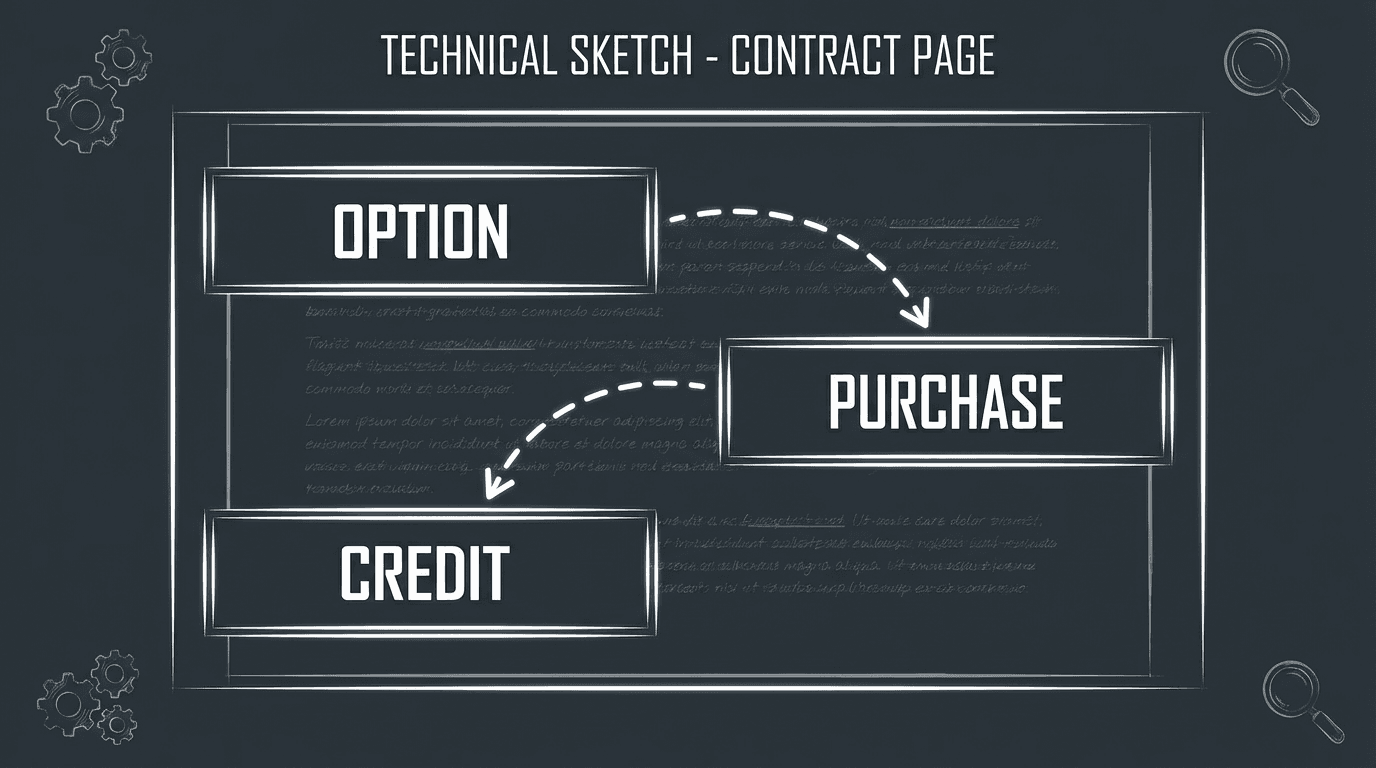
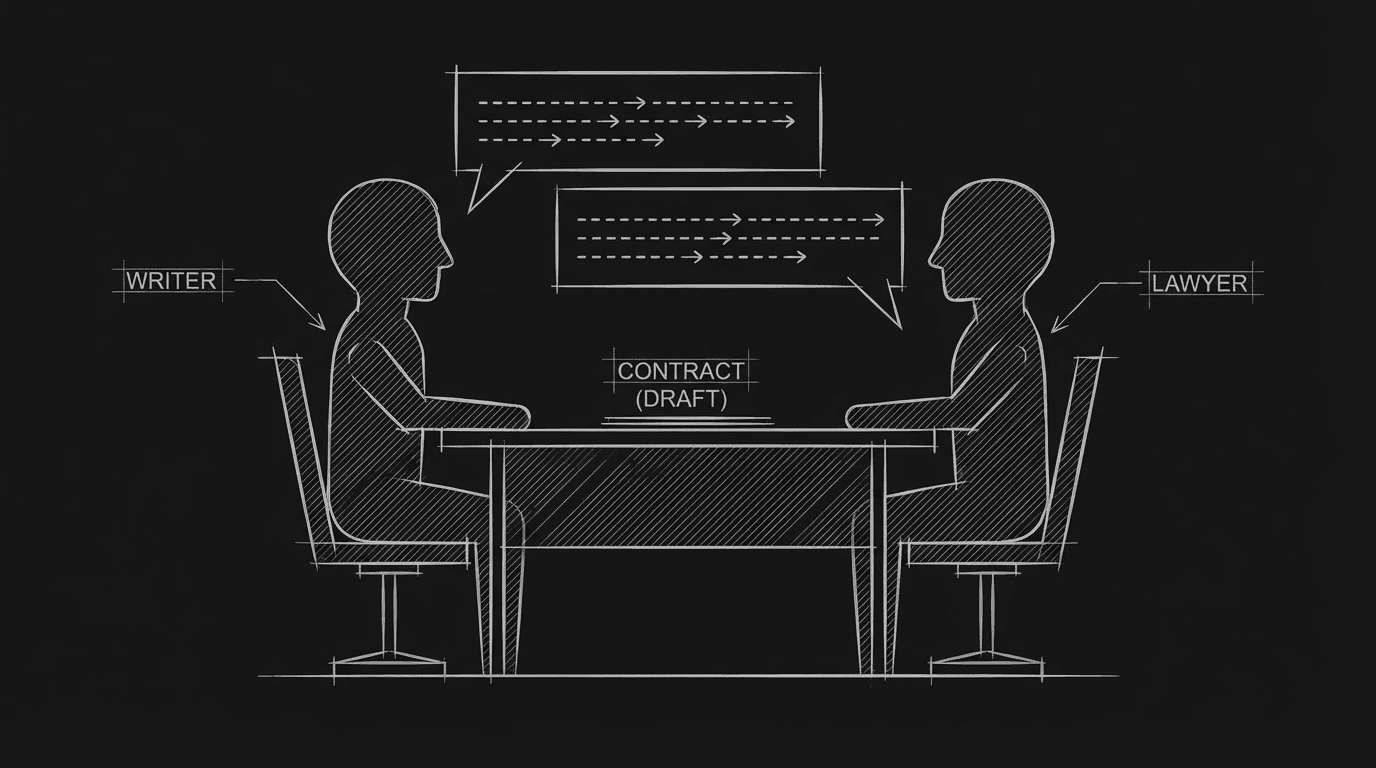
These two visuals work as a pair: the first shows Contract with highlighted clauses; dark mode technical sketch, and the second shifts to Writer and lawyer on a call; dark mode technical sketch—compare them briefly, then move on.
Final Step
Build your next script with Screenweaver
Move from ideas to production-ready pages faster with timeline-native writing and AI-assisted story flow.
Try Screenweaver