

You've got the script. Maybe two. You've done the rewrites. Now you want someone in your corner, someone who'll read the next draft, help you pick the next idea, and eventually help you get in the room. That someone is usually a literary manager before it's an agent. But how do you actually get one in 2026? Cold queries still work for a sliver of writers. So do referrals, contests, and fellowships. The writers who land managers aren't always the most talented in the room. They're often the ones who target the right managers, young, hungry, building their list, and show up with material that's ready to be developed, not just "promising." This guide is a strategy playbook: who to target, how to reach them, and what to have in place before you hit send.
The best first manager for an emerging writer is often not the big name. It's the one who has room for you, reads everything, and is still building their roster. They're the ones who will actually give you notes and pick up the phone.
We'll cover targeting, materials, outreach, and the mistakes that get you passed over. For context on why you want a manager before an agent, see Agent vs. Manager: Who Do You Need First?. For when you're ready to protect your work in a deal, Copyright and Registration and Entertainment Lawyers round out the picture.
Why Target "Young" or Hungry Managers?
Established managers with full lists and A-list clients don't need to discover you. They're servicing existing clients and taking referrals. The managers who are still building, a few years in, a solid client or two, room for more, are the ones who still read cold material. They're incentivized to find the next breakout writer. They have time to give notes. They're not too big to return an email. So your goal isn't to land the biggest name. It's to land someone who will work with you. That's usually a manager who's hungry for new talent.
How do you find them? Look at the credits of writers you admire who are a few years ahead of you, not superstars, but working writers. Check who represents them. Look at the managers at those companies. Then look at who else those managers represent. If you see a mix of established and newer writers, that's a good sign. Also: industry databases, agency/management company websites, and interviews or podcasts where managers talk about what they're looking for. Note the ones who say they're open to queries or love discovering new voices.
What You Need Before You Reach Out
At least one strong sample. Not "I'm still working on it." A script that's been through multiple drafts and that you'd be willing to send to a showrunner tomorrow. Managers don't sign potential. They sign material they can work with and send out. If your best script isn't ready, don't query yet. Finish the pass. Get feedback from trusted readers. Then go.
A clear lane. Know what you write. Thriller, comedy, character drama, genre. Managers think in lanes. "I write everything" is not a lane. "I write grounded thrillers with a moral dilemma" is. Your logline and your sample should match. If you have a logline that sells the script in one sentence, use it. It helps them remember you.
A short, professional pitch. When you query, you need a hook, a logline, a sentence about you, and a clear ask. Not a novel. One page. Same discipline as a query letter: subject line, greeting, logline, credentials (contest, short film, job), ask to send the script. Make it easy for them to say yes.
How to Reach Them: Query, Referral, Contest
Cold query. Many management companies list submission policies. Some say "query only" or "no unsolicited." Respect the policy. When they accept queries, send a short email. One script per query. Personalize the greeting and, if possible, one line (e.g. "I'm reaching out because you represent [Writer X] and I thought my project might fit your list"). Attach the script only if their guidelines allow; otherwise offer to send on request. Track who you've queried and when. Follow up once after 4–6 weeks if you haven't heard back, one line: "I'm following up on my query for [Title]. Happy to send the script if you're still considering new material." Don't nag.
Referral. If you know someone who can introduce you, a writer, a producer, a development exec, a warm intro is worth more than a hundred cold emails. The referral doesn't have to be a close friend. It can be someone who read your script in a lab or contest and liked it. Ask politely: "Would you be open to introducing me to your manager, or passing my script along?" Not everyone will say yes. Some will. Referrals get read first.
Contest and fellowship. Placing in a reputable contest (Nicholl, Austin, etc.) or getting into a lab or fellowship often leads to manager requests. They read the winners. They reach out. So one strategy is to finish the script, submit to a handful of real competitions, and use that as both validation and a path to rep. It's not instant, but it works for a lot of writers.
The Meeting: What They're Looking For
When you get the meeting, Zoom or in person, they're sizing you up. Can they work with you? Are you coachable? Do you have more than one idea? Do you understand the business enough to be a partner? So: be on time. Be prepared to talk about your script, your influences, and what you want to write next. Have a second project in mind. Don't badmouth other reps or bash the industry. Show that you're serious, collaborative, and in it for the long run. If they give you notes, don't get defensive. Take them in. You're auditioning for a working relationship.
Try it free
Try Screenweaver for free on your script
It is free. Import your existing project, get a clearer view of your outline, and regain control of your story structure in minutes.
Start FreeWhat Beginners Get Wrong
Querying with a first draft. Your first draft is not your calling card. Managers see hundreds of scripts. Yours needs to be as tight as you can make it. One more pass could be the difference between "pass" and "send me the rest."
Targeting only the biggest names. The biggest managers don't need to find you. Target the ones who are still building and who say they're looking for new voices.
Sending a novel in the body of the email. Long pitches get skimmed or skipped. Logline, one paragraph on you, ask. That's it.
Giving up after 20 queries. Cold query is a numbers game. Send to 50, 100, the right people. Improve the letter and the script between batches. Persistence pays when the material is ready.
Being vague about what you write. "I have a drama" could be anything. Give them a logline and a genre. Make it easy to slot you.
Relatable Scenario: The Request for a Rewrite
A manager reads your script and says: "I like the premise. I'd want to see a rewrite on the second act before I can consider signing you." That's not a rejection. It's a test. They're asking: can you execute notes? Do you want it enough to do the work? Say yes. Do the rewrite. Send it back by the deadline they suggest. That's how a lot of signings happen, after one round of notes. If you push back or disappear, you've lost them.
Relatable Scenario: You're Outside LA
You don't live in Los Angeles. Can you still get a manager? Yes. Many managers work with writers remotely. They read PDFs, get on Zoom, and build relationships online. Your work has to travel. Your pitch has to be clear. Your sample has to be strong. Geography is less of a barrier than it used to be. We go deeper on Networking in LA vs. Remote. For now: target managers who work with writers everywhere, and make your submission so strong that location doesn't matter.
The Perspective
Getting a literary manager in 2026 is still about the same things: a strong sample, a clear lane, and reaching the right people. The right people are often young or hungry managers who still read and still build. Use cold query, referral, and contest paths. Be professional, persistent, and ready to do a rewrite when they ask. Once you have a manager, the next step is often an agent, and that conversation is easier when your manager is already in your corner.
[YOUTUBE VIDEO: A manager reads 2–3 query emails (anonymized) and explains which they'd request and why; what makes them ask for the script.]
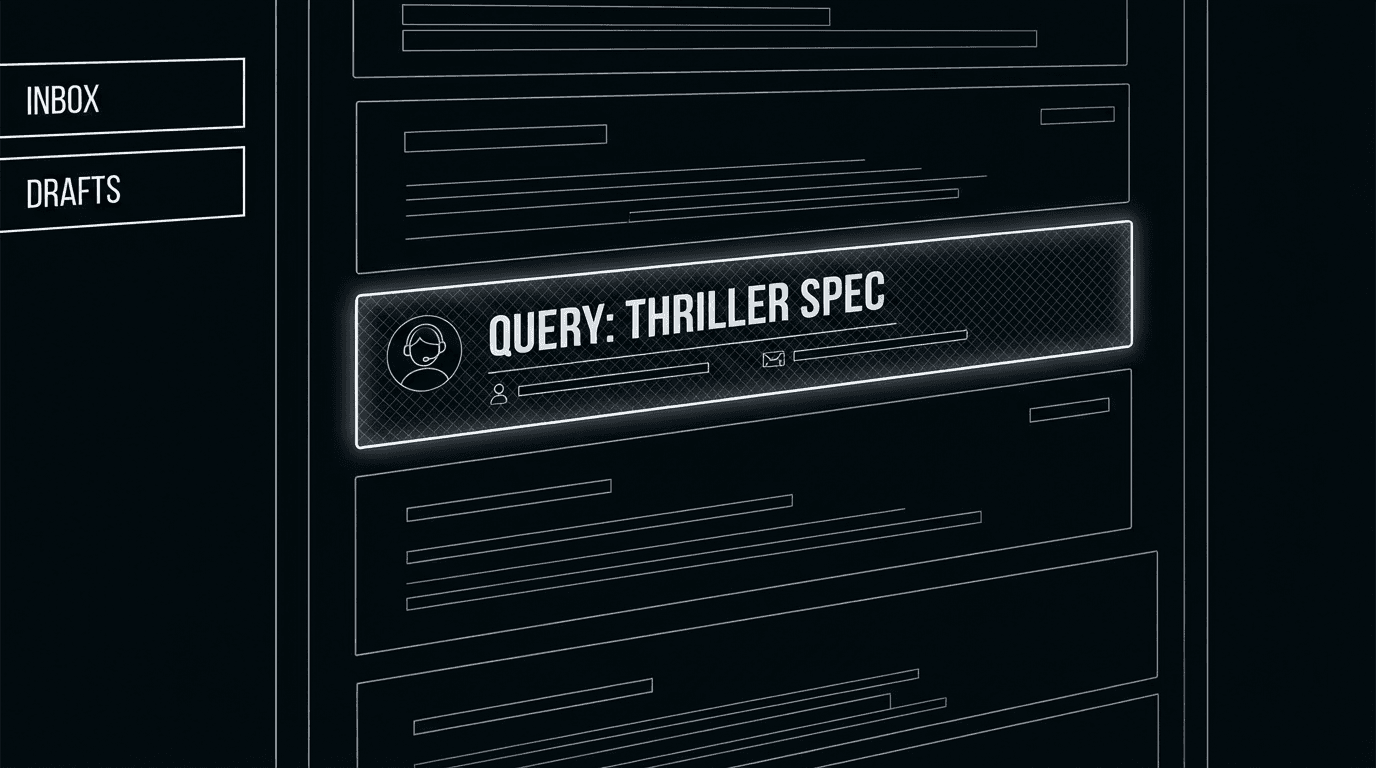
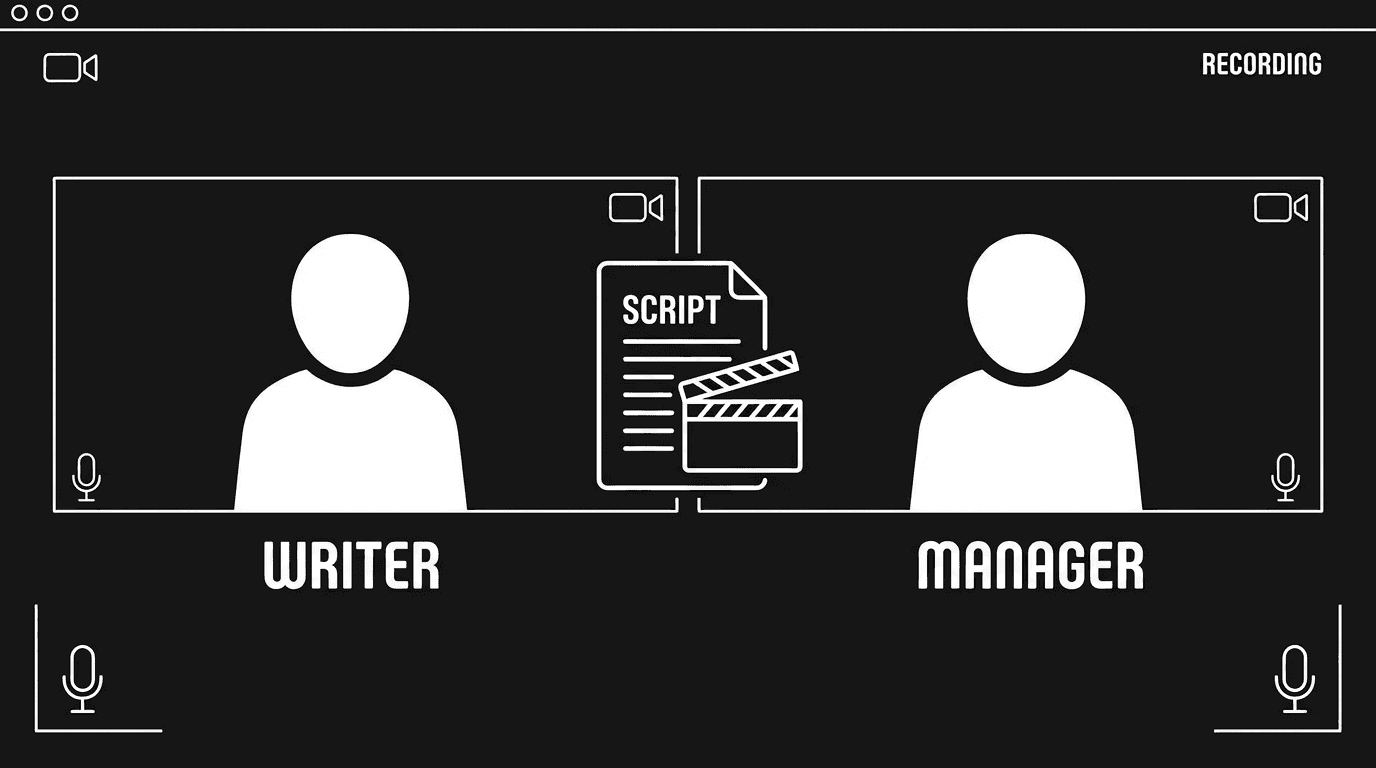
These two visuals work as a pair: the first shows Inbox: subject line and first line that get opened; dark mode technical sketch, and the second shifts to Meeting: writer and manager on Zoom; dark mode technical sketch—compare them briefly, then move on.
Final Step
Build your next script with Screenweaver
Move from ideas to production-ready pages faster with timeline-native writing and AI-assisted story flow.
Try Screenweaver