
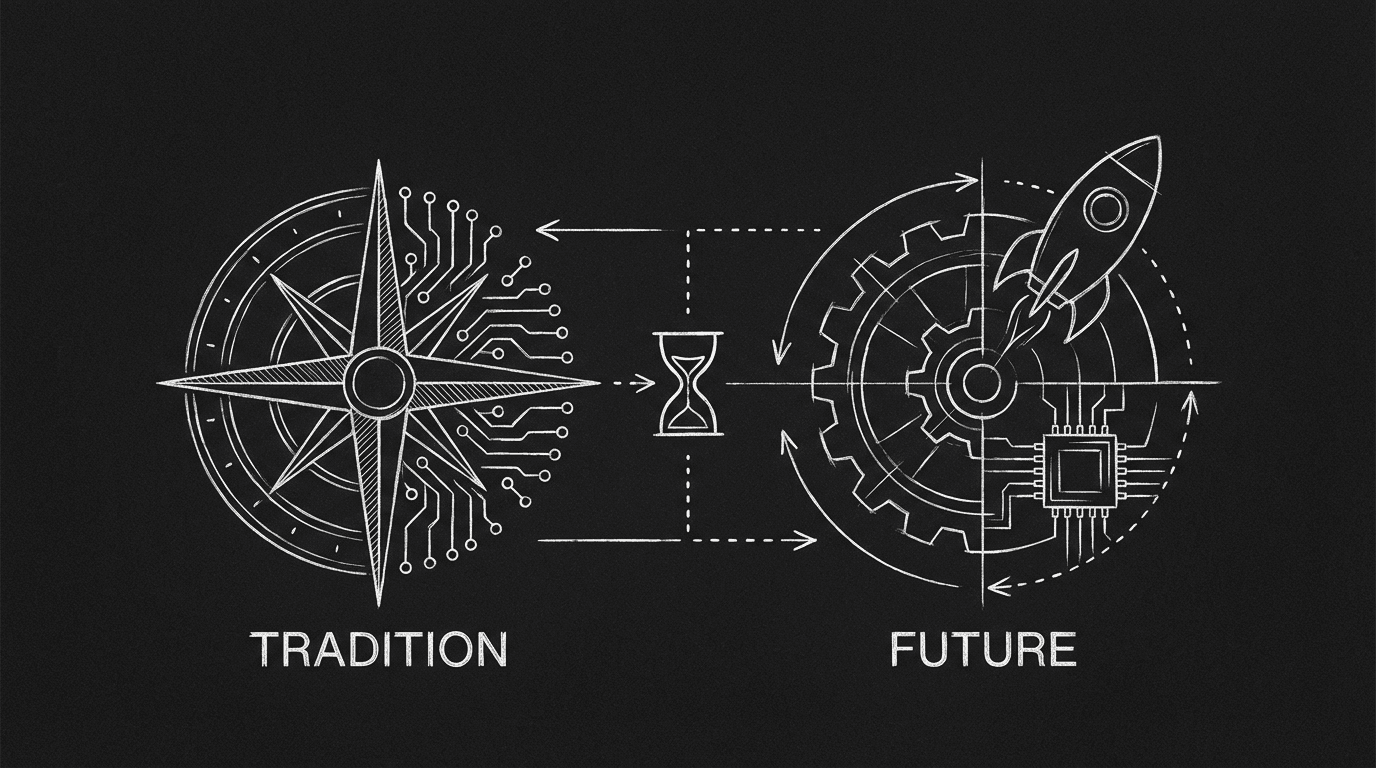
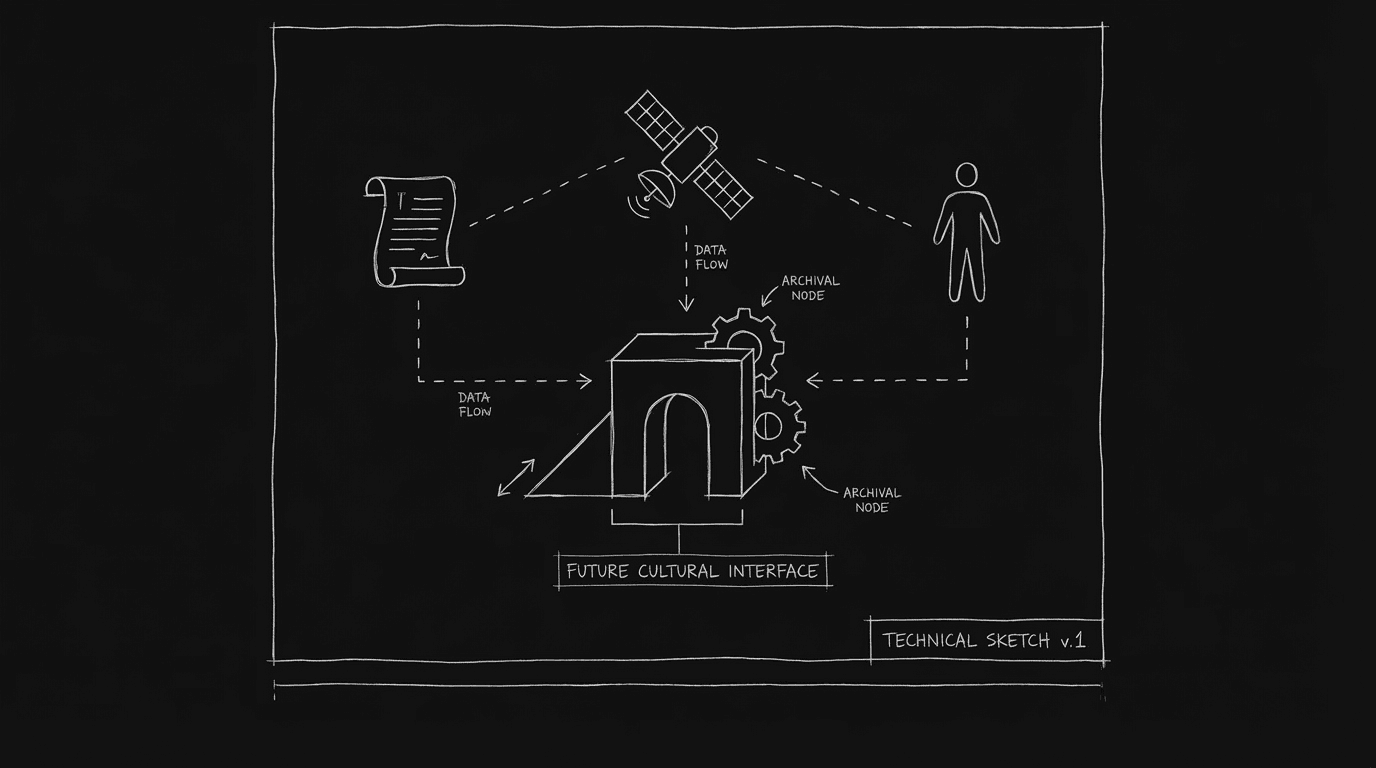
Hero image prompt: Dark mode technical sketch. Solid black background, thin white hand-drawn lines. A single figure or vessel that blends traditional and future, ancestral shape and tech, or land and sky in one image. Minimalist, high-contrast. No neon.

Speculative fiction has often defaulted to one kind of future: the one that looks like the colonizer’s dream. Afrofuturism and Indigenous futurism are not “diversity add-ons.” They’re ways of imagining that start from different pasts and different questions. Technology, space, and the future get reimagined through Black and Indigenous perspectives, culture, history, resistance, and continuity. Here’s how to approach these traditions with respect and craft.
These are living traditions with history and depth. They’re not a single aesthetic or a single story. They’re lenses: who imagines the future, from where, and toward what? When you write within or alongside them, you’re engaging with that, not with a trend.
Think about Black Panther. Afrofuturism: a future (and a present) that wasn’t defined by colonialism. Technology, power, and identity are reimagined through a Black lens. Or Reservation Dogs in a speculative key, or works like Elatsoe or Walking the Clouds, Indigenous futurism centers Indigenous presence, knowledge, and possibility in the future and in the fantastic. The “future” or the “other world” isn’t generic. It’s rooted. It carries culture forward. Our guide on worldbuilding and the bible applies: when the world is rooted in a specific cultural perspective, the bible holds the rules, the history, and the values. For more on building worlds that feel specific, see the fantasy map and geography, place and culture are tied together.
What These Traditions Are (And Aren’t)
Afrofuturism uses speculative fiction, sci-fi, fantasy, horror, to explore Black experience, history, and possibility. It often reimagines technology, space, and time through a Black cultural lens. It can center resistance, innovation, and futures that weren’t erased by slavery and colonialism. It’s not “Black people in space.” It’s a way of asking: whose future? Whose technology? Whose story? For more on building a world that carries theme, see theme vs plot, Afrofuturism often carries themes of identity, memory, and liberation.
Indigenous futurism centers Indigenous peoples, knowledges, and lands in speculative fiction. The future and the fantastic aren’t places where Indigenous people are absent or only in the past. They’re present, they’re ongoing, and they’re reimagined. It can blend traditional knowledge with sci-fi, fantasy, or horror. It’s not “Indigenous people in a generic future.” It’s a way of asking: what continues? What is restored? Whose land, whose story? For more on place and story, see the fantasy map, Indigenous futurism often ties geography, history, and identity tightly.
Neither is a single look or a single plot. They’re families of thought and practice. Writers work within them, alongside them, or in conversation with them. The craft point: when you draw on these traditions, do the work. Read. Listen. Understand that you’re engaging with living cultures and histories, not a decoration. For more on building non-generic worlds, see worldbuilding 101.
Writing Within or Alongside These Traditions
Do the research. If you’re not from the culture you’re writing about, research isn’t optional. Read work by writers in the tradition. Read criticism and history. Understand the conversations that are already happening. Don’t reduce a tradition to a few symbols. For more on building a world that feels true, see writing non-human characters, the same care for logic and respect applies when culture is central.
Center the perspective. The story should be from the inside of the culture, not from the outside looking in. Whose point of view? Whose want? Whose future? When the perspective is centered, the world feels specific. When it’s an outsider’s tour, it feels borrowed. For more on point of view and character, see the fish out of water, in these traditions, the “fish out of water” might be used carefully; the default shouldn’t be the white or non-Indigenous viewer.
Let culture drive the world. The technology, the magic, the social structure, they can grow from the culture. Not “our world plus Black people” or “our world plus Indigenous people.” A world that was built from different premises. For more on building systems that create conflict, see writing magic systems, the “magic” or tech can have rules that come from the culture.
Avoid extraction. Using a culture’s symbols or stories without depth or permission can cause harm. If you’re an outsider, consider collaboration, consultation, or choosing to support and amplify rather than appropriate. For more on doing right by character and culture, see writing non-human characters, respect for the “other” applies to real cultures too.
| Principle | What It Does |
|---|---|
| Research | Read and listen; understand the tradition and the conversations |
| Center the perspective | The story is from inside the culture; whose future, whose story |
| Culture drives the world | Tech, magic, structure grow from the culture, not generic template |
| Avoid extraction | Don’t reduce culture to symbols; consider collaboration or amplification |
Try it free
Try Screenweaver for free on your script
It is free. Import your existing project, get a clearer view of your outline, and regain control of your story structure in minutes.
Start FreeRelatable Scenario: The Script That Uses the Aesthetic Without the Depth
You want the look of Afrofuturism or Indigenous futurism, the visuals, the vibe, but the story is a standard hero’s journey with the cast swapped. The audience from the tradition may feel it’s surface. Fix: let the culture and the history drive the story. What questions does this tradition ask? What would this world look like if it had never been colonized, or if it had healed? What does “future” or “power” mean here? When the story grows from the tradition, the aesthetic follows. Our piece on elevated horror and metaphor applies when the speculative element carries cultural or political meaning, the “monster” or the tech can be doing double work.
Relatable Scenario: The Script That’s One Person’s Story
You’re writing “the” Afrofuturist or “the” Indigenous futurist story. No tradition is a monolith. Fix: be specific. Which community? Which moment? Which questions? The more specific you are, the more you avoid stereotype and the more the world feels real. For more on specificity in worldbuilding, see worldbuilding 101.
The Trench Warfare Section: What Beginners Get Wrong
Treating it as a trend. “Afrofuturism is in.” So you add a few elements. The story doesn’t grow from the tradition. Fix: engage with the tradition as a set of questions and a history. Let the story grow from that. For more on theme and depth, see theme vs plot.
Defaulting to the outsider. The main character is the one who doesn’t know, so the audience gets explained to. The culture is the backdrop. Fix: center the character who’s inside the culture. We can learn through them without making them a tour guide. For more on the fish out of water, see fish out of water, use with care when the culture is the focus.
Taking without giving. Using Indigenous or Black cultural elements without credit, consultation, or support for the community. Fix: research, cite, consider consultation, and consider how your work can support rather than extract. For more on doing right by character and culture, see writing non-human characters.
One story per tradition. “I’ve done my Afrofuturism script.” These traditions hold many stories. Fix: think in terms of ongoing engagement, not one project that “covers” a tradition. For more on building a body of work, see worldbuilding 101, the same world can hold many stories.
[YOUTUBE VIDEO: Short overview of Afrofuturism and Indigenous futurism in film and TV, key works, key questions, with a note on how to approach these traditions as a writer.]
Step-by-Step: Approaching the Work
If you’re writing within or alongside these traditions: read widely in the tradition. Identify the questions and the history. Decide whose perspective you’re centering. Build the world so that culture drives the rules, the tech, and the stakes. Put it in the bible. When you write, check: am I centering the right perspective? Am I drawing on the tradition with depth, not just surface? If you’re an outsider, consider research, consultation, and how to support the community. For more on building the world, see worldbuilding 101 and the fantasy map.
One External Resource
For a short overview of Afrofuturism and Indigenous futurism, see Afrofuturism on Wikipedia and Indigenous futurism (e.g. search “Indigenous futurism”). Reference only; not affiliated. Seek out books and essays by writers and scholars in these traditions for depth.
The Perspective
Afrofuturism and Indigenous futurism are not a single look or a box to tick. They’re ways of imagining whose future, from where, and toward what. When you write within or alongside them, do the work: research, center the right perspective, let culture drive the world, and avoid extraction. When you do, the story can be both speculative and rooted, and that’s when it stays with people.
Final Step
Build your next script with Screenweaver
Move from ideas to production-ready pages faster with timeline-native writing and AI-assisted story flow.
Try Screenweaver