
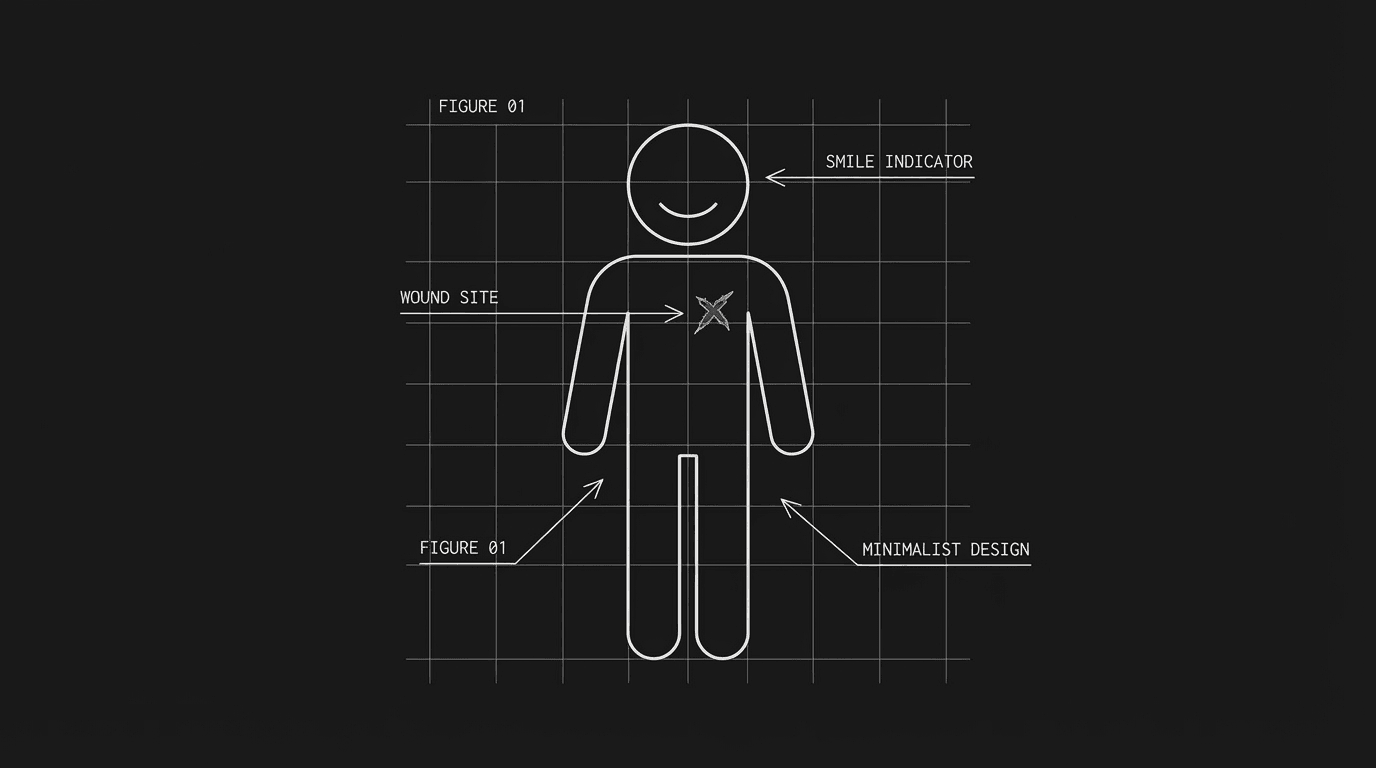
Hero image prompt: Dark mode technical sketch. Solid black background, thin white hand-drawn lines. A single figure, suggested by a few lines, with a crack or a wound, and a small curve (a smile or a laugh) nearby. The two coexist. Minimalist, high-contrast. No neon.
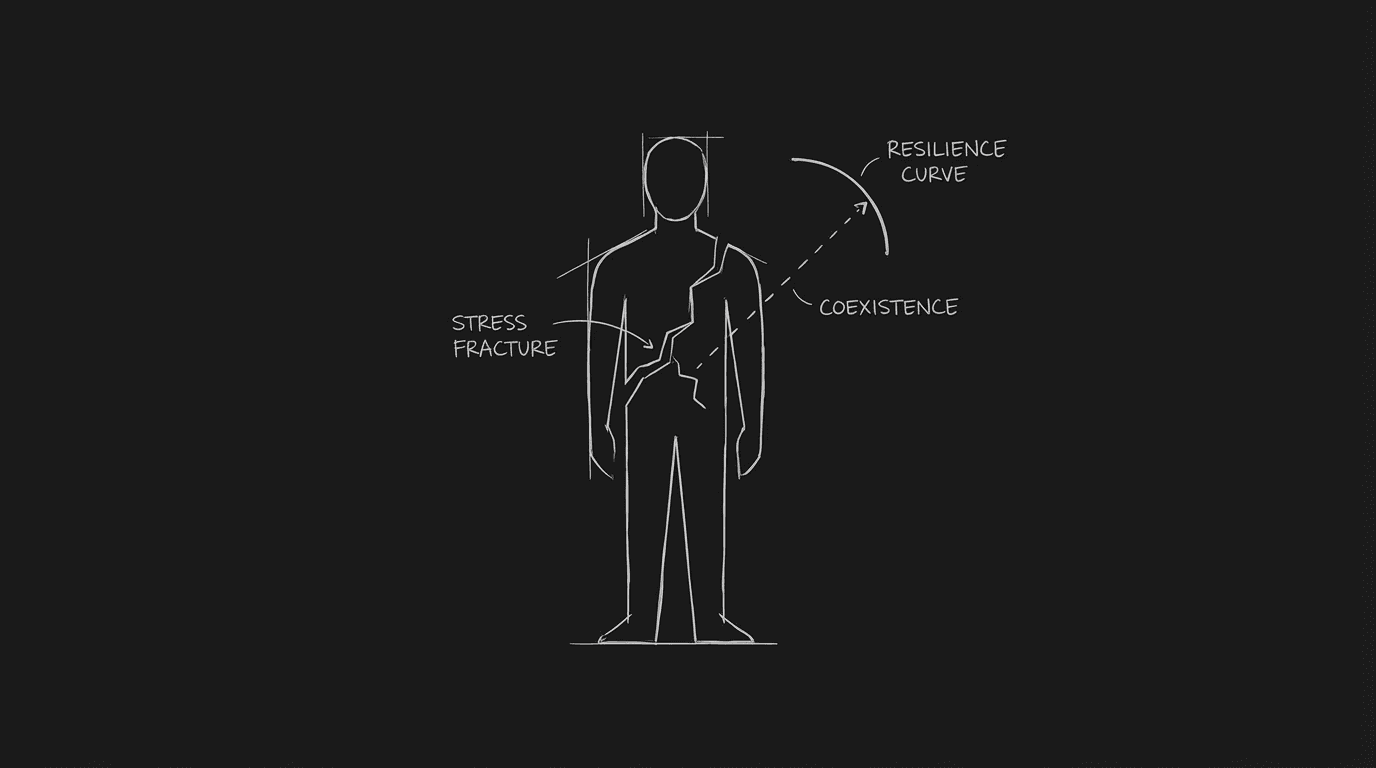
Fleabag and Baby Reindeer make us laugh at the same time we want to look away. The humor doesn’t erase the trauma. It sits next to it. That’s the contract of dark comedy: we’re allowed to laugh because the show has taken the pain seriously first. If the trauma is a punchline, we feel gross. If the trauma is so heavy that there’s no release, we’re not in comedy anymore. The line is thin. Here’s how to walk it.
The audience has to believe that the writer sees the trauma as real. The laugh comes from the character’s way of coping, the deflection, the wrong joke, the absurdity of surviving, not from the trauma itself being funny.
Think about Fleabag. She’s grieving. She’s self-destructive. She’s funny. The humor is her voice. It’s how she gets through the day. We’re not laughing at her pain. We’re laughing at the way she talks about it, the honesty, the wrong observation, the refusal to perform “okay.” The show has established that her pain is real. So when she makes a joke, we’re laughing with her, at the absurdity of life, not at her. That’s the difference. When the writer uses trauma as a set-up for a gag without taking the trauma seriously, the audience feels the writer is cruel. When the writer takes the trauma seriously and lets the character find humor in the wreckage, the audience can go there with them. Our guide on trauma and backstory without clichés applies: the trauma has to be specific and earned. The comedy then grows from how the character lives with it.
Why Tone Is Everything
Dark comedy lives or dies on tone. Too light, and the trauma feels trivialized. Too heavy, and the comedy doesn’t land. The tone is set early. The first episode or the first act has to show the audience how to watch. We see the wound. We see the character. We see that the show isn’t going to look away. Then we get the first joke. If the joke comes from the character, their defense mechanism, their way of seeing the world, we accept it. If the joke feels like the show making light of the wound, we reject it. So the writer’s job is to establish: this is real, and this character finds a way through it that sometimes looks like laughter. The tone is “we’re not pretending it didn’t happen; we’re not pretending it’s all that happened.” For more on sustaining a difficult tone, see writing toxic relationships with nuance, dark comedy often touches similar territory, where we’re asked to sit with discomfort.
Letting the Character Own the Humor
The humor in dark comedy should feel like it belongs to the character. They’re the one making the joke, in dialogue, in voiceover, in the way they behave. The writer isn’t standing outside and making fun of them. The writer is inside their head, letting us hear how they talk to themselves. So the jokes are in character. The character who deflects with sarcasm. The character who uses inappropriate humor to test who can handle them. The character who’s so honest it’s funny. When the joke could belong to any character, it might be the writer commenting. When the joke could only come from this character in this situation, we’re in their world. For more on voice, see distinct voices and the blind read test, in dark comedy, the character’s voice is the vehicle for both the pain and the humor.
Relatable Scenario: The Script That Makes Trauma the Punchline
You’ve written a scene. Something bad happened to the character. Then another character makes a joke about it. The audience is supposed to laugh. They don’t. They’re uncomfortable. Fix: the joke has to come from the character who was hurt. They’re the one who gets to make light of it, because it’s theirs. When someone else makes the joke, it can feel like the show is making fun of the victim. So give the line to the character who lived it. Or cut the joke. The humor in dark comedy is often the victim’s way of coping. It’s not the world laughing at them. Our piece on writing the “all is lost” without melodrama applies: the despair has to be real. The comedy comes after, or in the same breath, from the character.
Relatable Scenario: The Script That’s So Dark It’s Not Comedy
You’ve written a story about trauma. You want it to be dark comedy. But every scene is heavy. There’s no release. The audience is exhausted. Fix: find the moments where the character would laugh. Not the writer. The character. Where do they deflect? Where do they say the wrong thing? Where is the situation absurd enough that even they have to notice? Add one or two beats per act where we get a breath. The breath doesn’t erase the weight. It lets the audience stay in the room. For more on when to use humor in heavy material, see the whiff of death in comedies, dark comedy often has that whiff; the humor is the way we process it.
The Trench Warfare Section: What Beginners Get Wrong
Using trauma as a twist. We don’t know the character was hurt until the third act. Then we get a reveal and a joke. The audience feels manipulated. Fix: plant the trauma early. We don’t need the full story. We need to know that this person is carrying something. Then the humor throughout can be read in that light. The tone is set from the start.
Letting secondary characters joke about the protagonist’s pain. The best friend makes a crack. The audience sides with the protagonist and against the friend. Fix: the protagonist gets first claim on the humor about their own life. If someone else is going to joke, it has to be clear that the protagonist is in on it, or that the joke is wrong and the show knows it.
No consequences. The character has been through something terrible. They’re fine. They’re quippy. The trauma is backstory that doesn’t cost anything. Fix: let the trauma affect the character. Let it drive behavior. Let it have weight. The comedy is how they cope, not a way to avoid the cost. When the cost is visible, the comedy is earned. For more on character and wound, see fatal flaw and psychological depth.
Tone drift. One scene is raw. The next is a sitcom. The audience doesn’t know how to watch. Fix: establish the tone in the first 10 pages. We’re in a world where pain is real and humor is the character’s way through. Hold that. Every scene should be consistent with it. For more on maintaining tone, see satire vs parody, dark comedy, like satire, has a contract with the audience about what we’re allowed to laugh at.
| Principle | What It Does |
|---|---|
| Trauma is real first | We see the wound; we take it seriously; then we can laugh with the character |
| Character owns the humor | The joke comes from them, deflection, coping, voice, not from the writer making fun |
| Consequences are visible | The trauma costs something; the comedy doesn’t erase the cost |
| Tone is consistent | Established early; we know how to watch; no sudden sitcom in the middle of pain |
[YOUTUBE VIDEO: Breakdown of one or two dark comedy moments, e.g. Fleabag or Baby Reindeer, showing where the trauma is established, where the humor comes from the character, and how the tone holds.]
Try it free
Try Screenweaver for free on your script
It is free. Import your existing project, get a clearer view of your outline, and regain control of your story structure in minutes.
Start FreeStep-by-Step: Balancing Trauma and Humor
Before you write, name the trauma. What happened? What does the character carry? Then ask: how would this character talk about it? Deflect? Joke? Go silent? The humor should grow from that. When you write each scene, ask: is the trauma present? Is the humor coming from the character who was hurt (or from someone who’s clearly in their corner)? If the joke comes from outside and lands on the victim, cut it or move it. If the joke comes from the character’s way of surviving, it can stay. The balance is: we believe the pain, we’re allowed to laugh at the way they get through the day. For more on building character from wound, see trauma backstory without clichés.
One External Resource
For a short overview of dark comedy as a genre, see Black comedy on Wikipedia. Reference only; not affiliated.
The Perspective
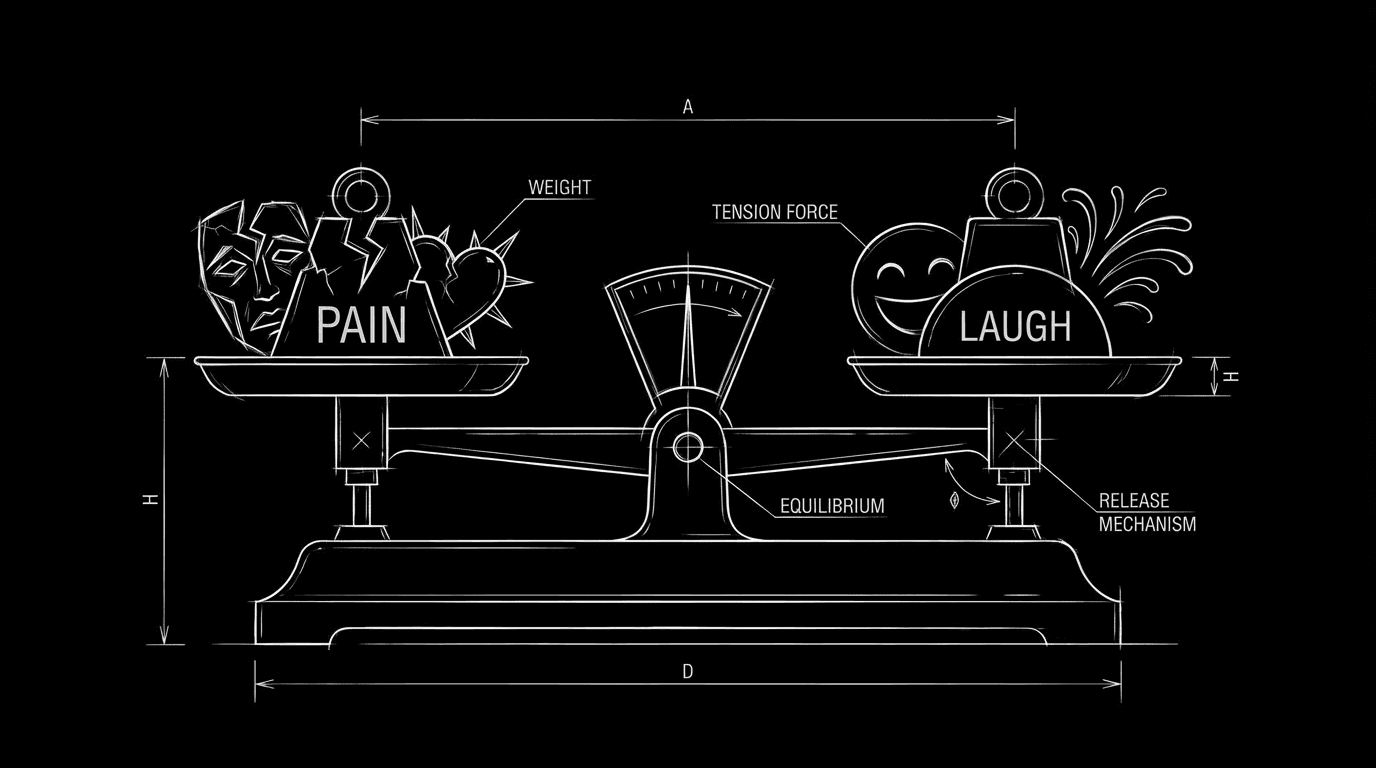
Dark comedy isn’t trauma plus jokes. It’s trauma taken seriously, with a character who finds a way through that sometimes looks like laughter. The audience has to trust that the writer sees the pain. Then they can laugh with the character, at the absurdity, at the deflection, at the wrong observation at the wrong time. When that trust is there, the genre works. When it’s not, it hurts in the wrong way.
Final Step
Build your next script with Screenweaver
Move from ideas to production-ready pages faster with timeline-native writing and AI-assisted story flow.
Try Screenweaver