

Cars. Speed. Cuts. A car chase on the page can easily become a blur of "they drive fast" and "the other car follows." The reader, and the stunt and second unit teams, need clear beats: who's where, what happens next, and what the outcome is. Here's how to write car chases so the action is followable without over-directing.
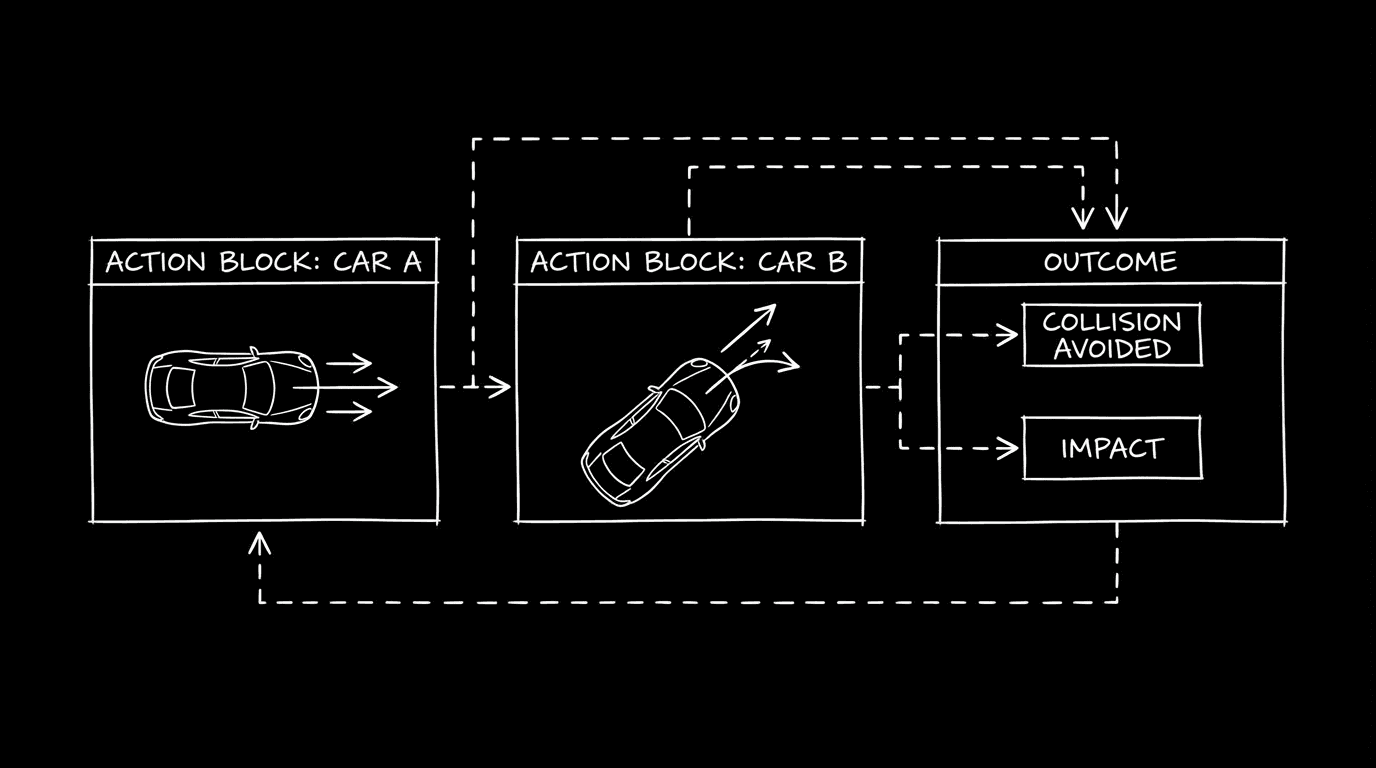
One clear beat per moment. Who's in the car. What they do. What the other car does. Then the next beat.
Think about it this way. The script doesn't choreograph every turn. It gives story beats: the turn that loses them, the near-miss, the crash. Each beat is one action or one result. Short blocks. Clear subject (which car, which character). Our guide on fight scenes covers the same idea, how much detail; car chases lean "big picture" with key beats. For action and pacing, see micro-pacing.
What to Include
Who: Which car (THE SEDAN, MARIA'S CAR, THE PURSUER). What: One action per beat (swerve, brake, hit). Where (if it changes): "The freeway." "Downtown." Outcome: Who gets away, who crashes, who's hit. For scene headings, see screenplay format.
Relatable Scenario: The Chase Through the City
Three beats: they're followed, they lose them in traffic, they're found again. Format: Short blocks. "Maria's car tears through the intersection. The sedan follows." "She cuts through an alley. The sedan misses the turn. Gone." "She hits the highway. Headlights in the mirror. The sedan again." For tension, see micro-pacing.
The Trench Warfare Section: What Beginners Get Wrong
One long paragraph. The whole chase is a block. Fix: Break into beats. One or two sentences per beat. For pacing, see micro-pacing.
Unclear which car. "They drive. The other car follows." Fix: Name the cars (or the drivers) so we always know who's doing what. For clarity, see screenplay format.
Over-choreographing. Every lane change. Fix: Key beats only, the turn that matters, the near-miss, the crash. For fight scenes, see fight scenes.
Try it free
Try Screenweaver for free on your script
It is free. Import your existing project, get a clearer view of your outline, and regain control of your story structure in minutes.
Start FreeCar Chase: What to Include
| Element | Include |
|---|---|
| Which car | Name or label (MARIA'S CAR, THE SEDAN) |
| Key beats | Swerve, near-miss, loss, catch, crash |
| Outcome | Who gets away, who's hit |
| Don't include | Every turn, every lane change |
Step-by-Step: Writing a Car Chase
First: Label the cars. Second: List the key beats (3–6). Third: Write each beat in one short block. Fourth: Outcome clear. For more, see fight scenes and series of shots.
[YOUTUBE VIDEO: Same chase as one block vs. clear beats, read and production use.]
The Perspective
Write car chases in clear beats: who's in which car, what happens (one action per beat), and the outcome. Short blocks. Named cars. When the reader and the stunt team can follow the sequence, the format works. So label the cars. Beat it out. And land the outcome.
Final Step
Build your next script with Screenweaver
Move from ideas to production-ready pages faster with timeline-native writing and AI-assisted story flow.
Try Screenweaver