

They fight. On the page you can go blow-by-blow (punch, block, kick, fall) or big picture (they fight; she gains the upper hand; he's down). Each approach has a use: blow-by-blow when the specific moves matter for story or character; big picture when the outcome and the feel matter more. Here's how to choose and format so the reader and the stunt team get what they need.
Blow-by-blow = we need to see each move. Big picture = we need to feel the fight and know who wins.
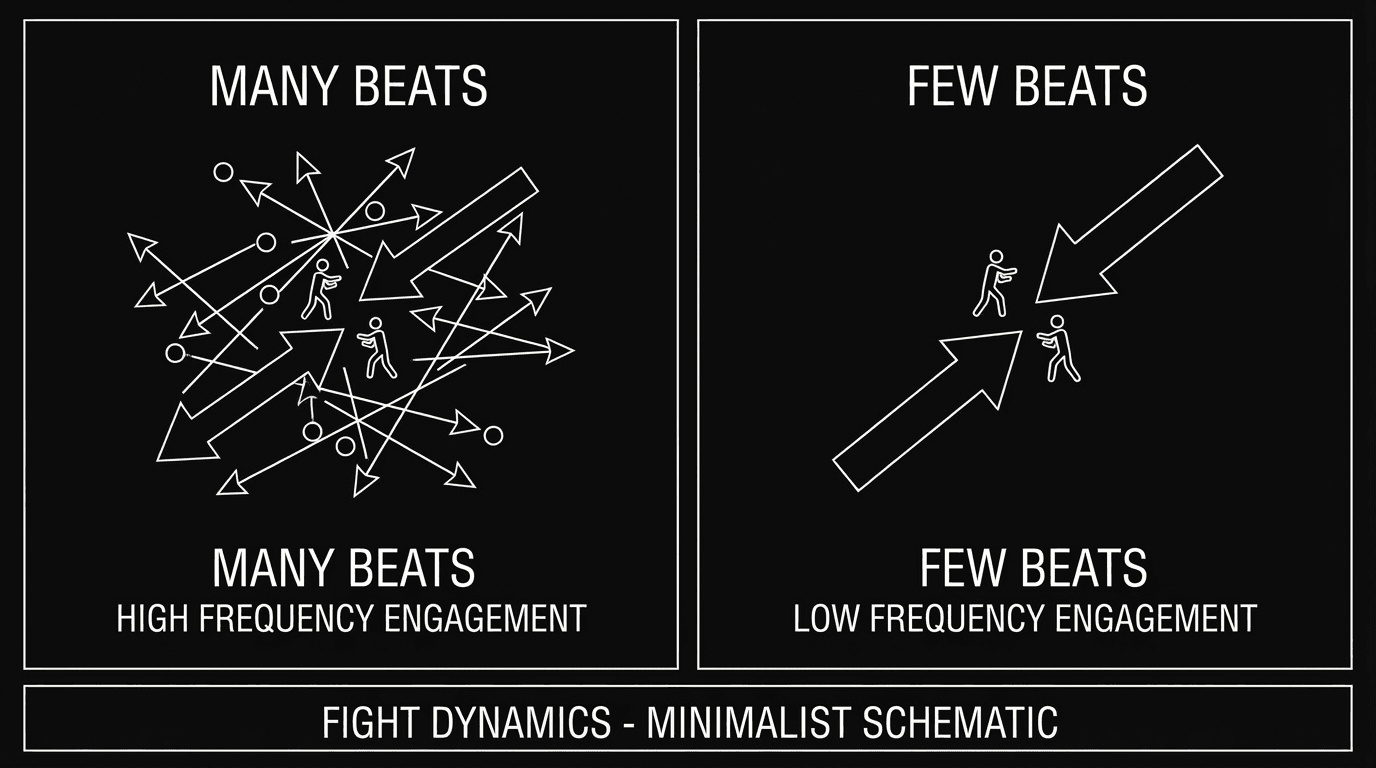
Think about it this way. Blow-by-blow gives the stunt coordinator and the director specific beats. It takes more space and can slow the read. Big picture gives result and tone, "they brawl; she's stronger; he ends up against the wall." Faster. Leaves more to design in prep. Our guide on car chases uses the same idea, key beats vs. every turn. For action and pacing, see micro-pacing.
When to Use Blow-by-Blow
Use when: A specific move matters (the twist, the reveal of skill, the moment they get the weapon). Or when the fight is short and every beat counts. Format: Short action lines. "She blocks. He kicks low. She grabs his leg. Throws him." Clear subject (she/he). One move per beat. For clarity, see screenplay format.
When to Use Big Picture
Use when: The outcome and the feel matter more than each hit. Or the fight is long and we don't need every punch. Format: "They fight. Fists. Grappling. She's stronger. He goes down." Or "The fight spills across the room. She wins." For economy, see micro-pacing.
Relatable Scenario: The Hero's First Win
We need to feel that they've grown. Use: A few key blows, the block that works, the hit that lands, the moment they take control. Blow-by-blow for the turning point; big picture for the rest. For character arc, see character arcs.
Relatable Scenario: The Bar Brawl
Chaos. Many people. Use: Big picture. "The place erupts. Fights everywhere. She pushes through. Finds him." For ensemble, see ensemble casts.
The Trench Warfare Section: What Beginners Get Wrong
Blow-by-blow for the whole fight. Five pages of punches. Fix: Key beats only, or big picture with one or two specific moments. For economy, see micro-pacing.
Big picture with no outcome. "They fight." Who wins? Fix: State the result, who's down, who has the upper hand. For clarity, see screenplay format.
Unclear who's doing what. "He hits. She blocks." Fix: Name or label (SHE, HE) every beat. For clarity, see screenplay format.
Try it free
Try Screenweaver for free on your script
It is free. Import your existing project, get a clearer view of your outline, and regain control of your story structure in minutes.
Start FreeBlow-by-Blow vs. Big Picture
| Blow-by-blow | Big picture | |
|---|---|---|
| Detail | Each move | Outcome and feel |
| Length | Longer | Shorter |
| Use | Key fight; specific moves matter | Tone and result matter |
| Production | Stunt team has beats | Stunt team designs from result |
Step-by-Step: Choosing and Formatting
First: Does a specific move matter? If yes, blow-by-blow for that moment. Second: Outcome, always clear (who wins, who's down). Third: Short blocks. Clear subject. Fourth: Mix if needed, big picture with one or two blow-by-blow beats. For more, see car chases and series of shots.
[YOUTUBE VIDEO: Same fight as blow-by-blow vs. big picture, read and production use.]
The Perspective
Choose blow-by-blow when specific moves matter; big picture when outcome and feel are enough. Always make the result clear. Short blocks. Clear subject. When the reader and the stunt team know what happens and who wins, the format works. So choose the level. Land the outcome. And keep it clear.
Final Step
Build your next script with Screenweaver
Move from ideas to production-ready pages faster with timeline-native writing and AI-assisted story flow.
Try Screenweaver