

Three acts. Setup, confrontation, resolution. The model is so old it feels like geology. It’s also the model that still underlies most of what gets made. The trick isn’t to reject it,it’s to understand what each act is actually for and how to see it while you write.
This guide revisits the three-act structure without the jargon. We’ll walk through what each act does, where the major turns sit, and how to keep the whole thing visible so you’re not writing in the dark. Whether you outline first or discover in the draft, having a clear sense of the three acts will make your script easier to control and easier to fix when the second act sags or the ending feels rushed.
Why Three Acts Still Work
The three-act structure isn’t arbitrary. It maps onto how we experience conflict: we meet a situation, we watch it escalate, we see it resolve. That rhythm is older than cinema. It’s in plays, novels, and oral stories. Screenwriting didn’t invent it; it codified it for a medium with a fixed runtime and a need for clear act breaks (for ads, for reels, for audience attention).
Act One answers: who is the protagonist, what do they want, and what disrupts their world? Act Two answers: what do they do about it, and what gets in the way? Act Three answers: how does it end? Each act has a job. When one of them is underfed or overstuffed, the script feels off. The audience may not say “Act Two was too long.” They’ll say “it dragged in the middle.”
Three acts aren’t a formula. They’re a map. You can deviate from the map, but you need to know where you’re deviating from.
Act One: Setup
Act One typically runs about 25% of the script. In a 110-page feature, that’s roughly pages 1–28. Its job is to establish the world, the protagonist, and the inciting incident that will drive the story. By the end of Act One, the audience should know who they’re following and what the central conflict is. The protagonist should have committed to the journey,or refused it in a way that forces the story to push back.
The key turn at the end of Act One is often called the “break into two” or “plot point one.” It’s the moment the protagonist leaves the ordinary world and enters the world of the story. In Star Wars, it’s when Luke leaves Tatooine. In The Matrix, it’s when Neo takes the red pill. Before that moment, they could still turn back. After it, they’re in the story. For more on what triggers that break, see our guide on the inciting incident.
A common mistake in Act One is overloading it with backstory or world-building. The audience needs enough to care. They don’t need the full history. Another mistake is delaying the inciting incident until page 30. By then, many readers and viewers have already checked out. The setup should be as long as it needs to be,and not a page more.
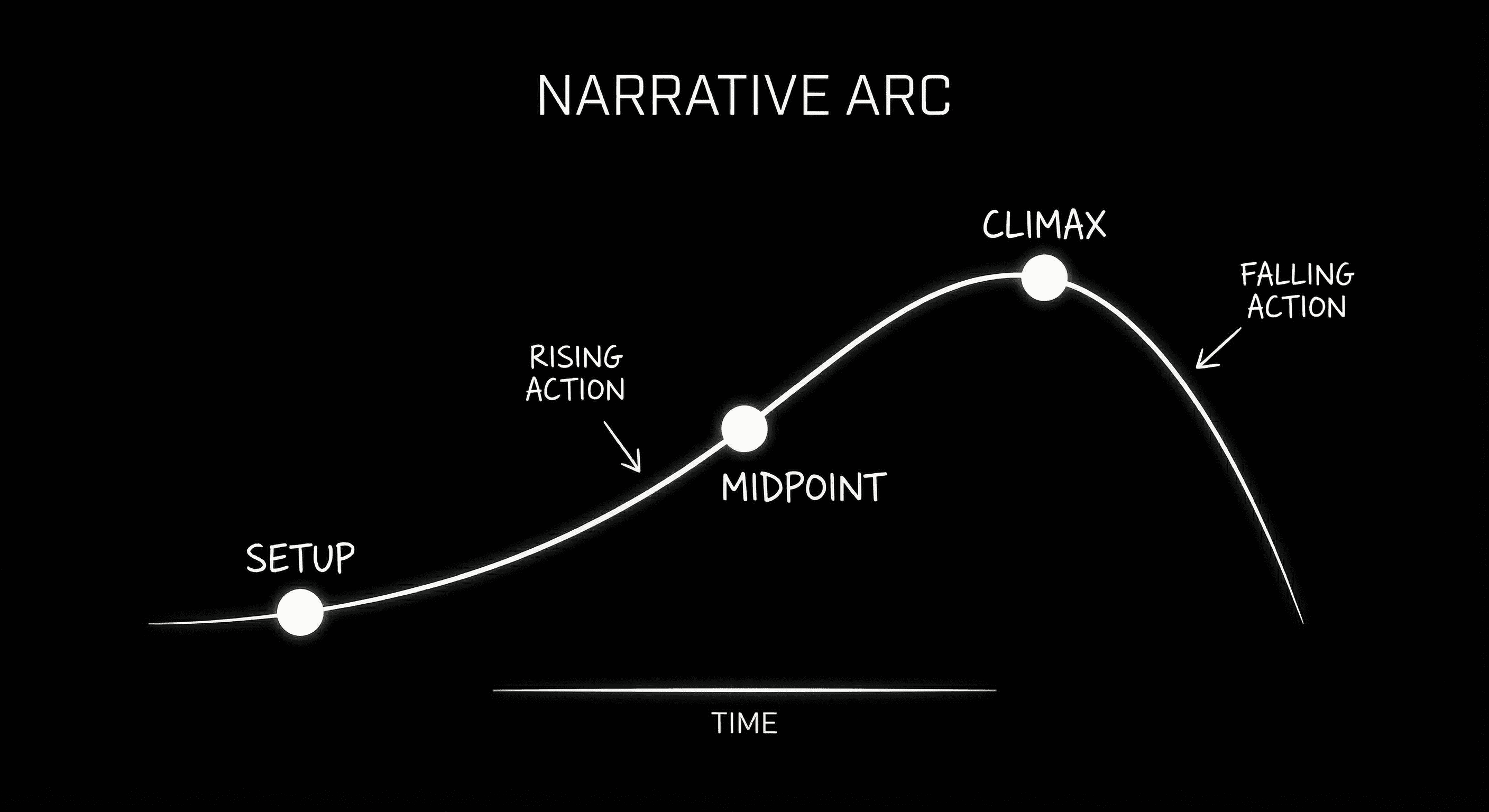
The classic proportion: short setup, long middle, short resolution.
Act Two: Confrontation
Act Two is the longest act,usually 50% of the script or more. In a 110-page feature, it might run from page 28 to around page 85. This is where the protagonist pursues the goal and faces obstacles. It’s also where scripts most often fail. The middle can feel repetitive or aimless if there’s no clear escalation and no midpoint turn.
The midpoint splits Act Two into 2A and 2B. In 2A, the protagonist is often reacting or building toward a first major clash. At the midpoint, something shifts: a false victory, a false defeat, or a revelation. In 2B, the stakes are higher and the path to the climax becomes clear. For a deeper look at that pivot, our piece on mastering the midpoint covers how to raise stakes without breaking the plot.
The end of Act Two is often called “plot point two” or the “all is lost” moment. The protagonist hits a low point. They’ve lost the thing they needed, or they’ve been betrayed, or they’ve realized they were wrong. That low point forces the choice or change that will drive Act Three. It’s the moment before the final push.
| Act | Approx. % | Main Job |
|---|---|---|
| Act 1 | 25% | Setup world, protagonist, inciting incident; break into two |
| Act 2 | 50% | Confrontation; midpoint turn; escalation to “all is lost” |
| Act 3 | 25% | Climax, resolution, new equilibrium |
Act Three: Resolution
Act Three is the shortest act. It usually runs about 25% of the script,pages 85–110 in a 110-page feature. Its job is to deliver the climax and the resolution. The protagonist makes the final choice or takes the final action. The conflict is resolved,or deliberately left unresolved, in the case of open endings. The audience is released.
A rushed Act Three is a common problem. The writer has spent so much time in Act Two that they squeeze the ending into ten pages. The climax feels abrupt; the resolution feels unearned. The fix is often to trim the middle, not to stretch the end. Act Three needs room to land. The climax should feel like the result of everything that’s come before, and the resolution should give the audience a moment to breathe.
Act Three doesn’t need to be happy. It needs to be complete. The audience should feel that the story has reached its endpoint, not that it was cut off.
Visualizing the Three Acts While You Write
When the script is a single long document, it’s easy to lose track of where you are. Are you still in Act One or already in Act Two? How much have you written since the midpoint? Writers who think in structure need to see it. A sidebar or timeline that shows the three acts,and the key beats within them,keeps the map in view. You’re not flipping between an outline doc and the script; the outline and the script are the same object. Move a beat, and the script reflows. That’s the idea behind tools that bind structure to the page.
In ScreenWeaver, the Story Map is built around this. You see Act 1, Act 2, and Act 3 on the timeline. You see where the inciting incident, midpoint, and climax sit. You write in the script while the map stays visible. So when you’re in the middle of Act Two, you’re not guessing,you’re looking at a spine that shows you how much middle you have left and where the next turn is. For more on why a single map beats a separate outline, our piece on the death of the static outline goes into the practical benefits.
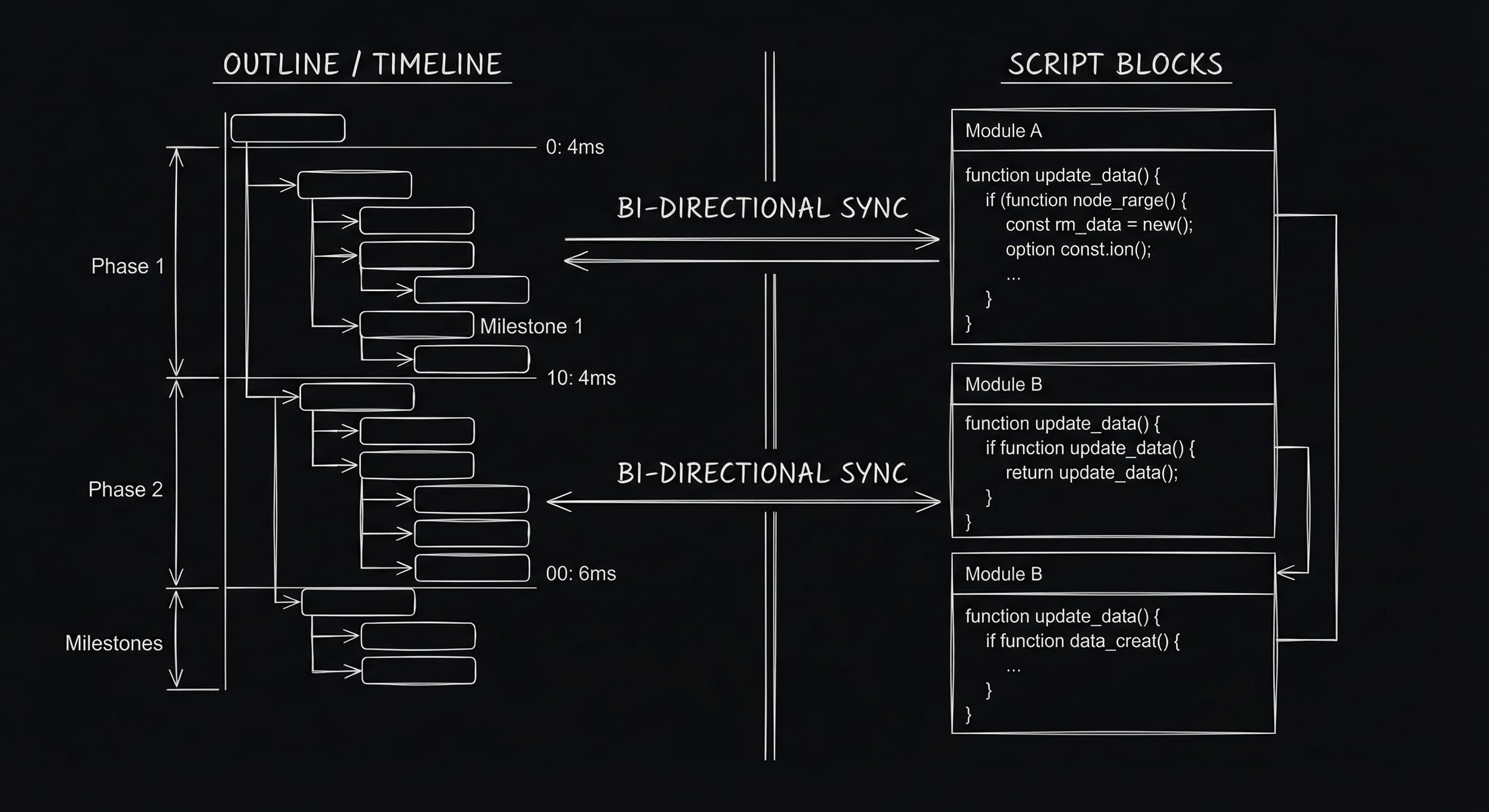
Seeing the three acts in the sidebar while you write keeps structure in view.
The Sidebar in Practice
What does it mean to “see” the three acts while you write? In a traditional setup, you have a script document and maybe a separate outline or beat sheet. When you’re on page 47, you might not know whether you’re still in Act 1 or already in Act 2 without scrolling back or opening another file. When the outline and the script are the same object,when the timeline is the spine and the script is the content of that spine,you always know. The sidebar shows Act 1, Act 2, Act 3. It shows where the break into two and the midpoint sit. You click a beat and you’re in that section of the script. You drag a sequence and the script reorders. The map isn’t a separate reference. It’s the thing you’re editing. That’s the practical benefit of a bi-directional story map. For more on why a single map beats a static outline, our piece on the death of the static outline goes into the workflow in detail.
When to Deviate
Not every story fits a neat 25–50–25 split. Some films have long first acts. Some have very short third acts. Some have multiple storylines that hit the turns at different times. The value of the three-act model isn’t that you must obey it. It’s that you have a default. When you deviate, you’re doing it on purpose. You know what you’re stretching or compressing, and you can check whether the result still holds. For a comparison of how different structural systems (Save the Cat, Hero’s Journey) map onto this, see our guide on Save the Cat vs. the Hero’s Journey.
The Sharp Takeaway
The three-act structure is setup, confrontation, resolution. Act One establishes the world and the inciting incident and ends with the break into two. Act Two is the long middle, with a midpoint turn and an “all is lost” beat before Act Three. Act Three is the climax and resolution. Knowing where you are in that map,and being able to see it while you write,makes the difference between a script that feels controlled and one that feels like it’s wandering. Use the map. Then decide where to step off it.
Final Step
Build your next script with Screenweaver
Move from ideas to production-ready pages faster with timeline-native writing and AI-assisted story flow.
Try Screenweaver