
A producer loves your script. They're not buying it yet. They want time to try to set it up, attach talent, find money, get a studio to say yes. So they offer you an option agreement. You've heard the words: option period, purchase price, reversion. You nod. Then you get the PDF and your eyes glaze. This guide breaks down the terms that actually matter so you can read an option like a writer who's done their homework, and know when to call a lawyer before you sign.
An option is not a sale. It's a lock. They're paying you (usually a small amount) for the exclusive right to try to sell your script for a defined period. If they don't, the rights come back to you.
Understanding these terms helps whether you're negotiating yourself or using an entertainment lawyer. It also sets you up to see how options differ from shopping agreements, which many producers prefer because they cost nothing, and why that can be risky for you.
What an Option Actually Is
In plain terms: the producer pays you money (the "option fee") for the exclusive right to shop your script and try to get it made. During the option period, they're the only one who can do that. They can pitch it, take meetings, attach a director or star, look for financing. You can't option or sell the same script to anyone else. If they get a greenlight (or close a purchase deal), they "exercise" the option and pay you the purchase price, the agreed amount for the full rights. If the option period ends and they haven't exercised, the rights revert to you. You're free to take the script elsewhere.
So the three pillars are: how long (option period), how much if they buy (purchase price), and what happens when it's over (reversion). Get those right and you're most of the way there.
Option Period (Term)
The option period is how long the producer has exclusivity. Common lengths: 12 months, 18 months, sometimes 24. There may be extension clauses: if they pay another fee, they get another 6 or 12 months. You want a defined end date. You don't want "until we exercise or abandon" with no calendar. Why? Because your script is tied up. You can't pitch it elsewhere. If the period is vague or too long, you're stuck.
What to watch for: Extension terms. How much do they pay to extend? How many times can they extend? Some deals allow one or two extensions at a set fee. Others let the producer string it out with small payments. Your leverage: shorter initial period, limited extensions, or higher extension fees so they only extend if they're serious.
Purchase Price
The purchase price is what the producer pays you when they exercise the option, i.e. when they actually buy the script. This is separate from the option fee. The option fee is usually modest (sometimes a few thousand dollars, sometimes a dollar, yes, a dollar, especially in shopping-style setups). The purchase price is the real payday. It's often expressed as a percentage of the production budget, with a floor and sometimes a ceiling. For example: 2% of the budget, with a minimum of $50,000 and a maximum of $250,000. Or a flat number: $75,000 against 2.5% of net profits.
What to watch for: Is there a guaranteed minimum? If the project never gets a greenlight, you've only had the option fee. So the purchase price matters when they do exercise. Also: are there "steps" (additional payments for rewrites, polishes) or is it one lump? WGA deals have minimums; even if you're not guild, knowing WGA minimums gives you a benchmark. Don't sign a purchase price that's a fraction of what the guild would require unless you're consciously making a low-budget or passion trade.
Reversion
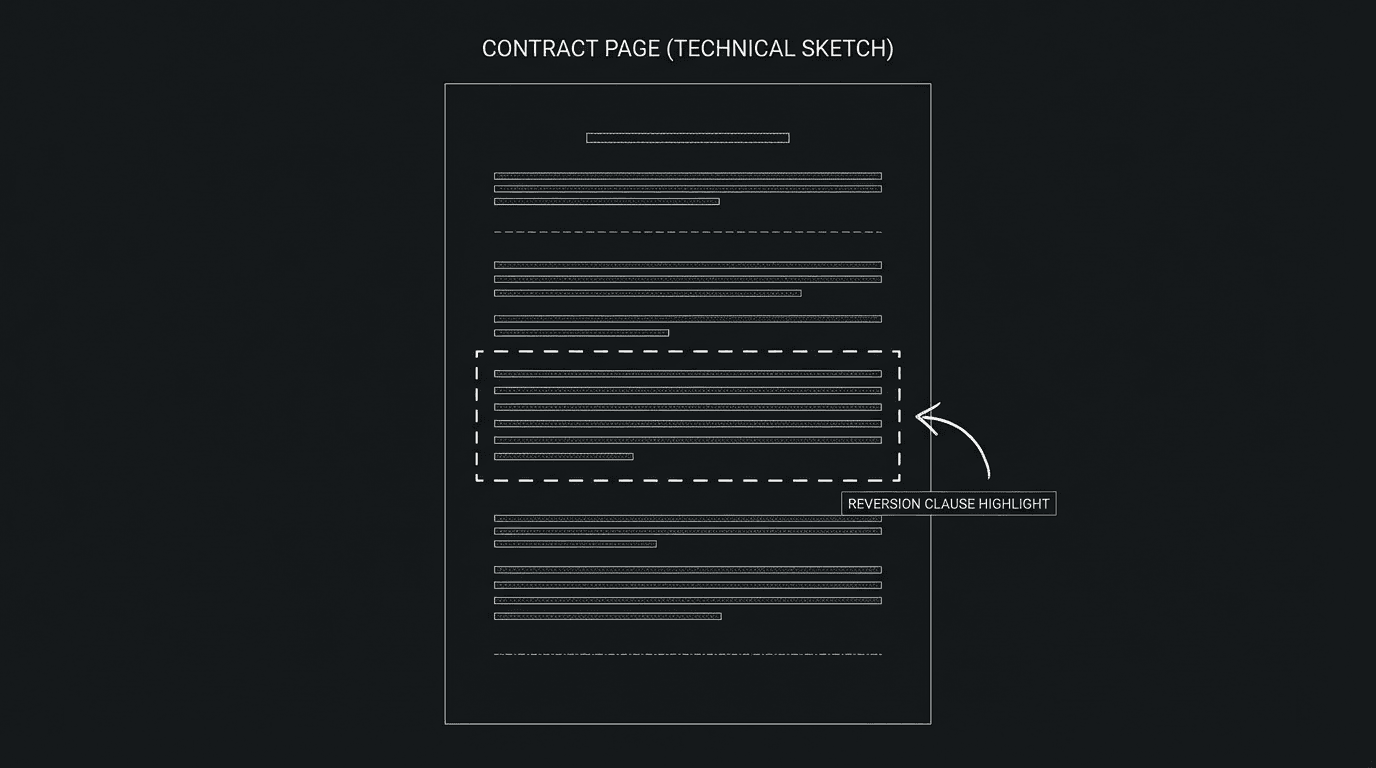
Reversion is the most important word for the writer. It means: if the option isn't exercised by the end of the option period (and any agreed extensions), or if the project is abandoned, all rights come back to you. The script is yours again. You can option it to someone else, sell it, or shoot it yourself. The contract should state reversion clearly: "Upon expiration or termination of the Option Period, all rights in and to the Work shall revert to Writer."
What to watch for: Automatic reversion on expiration. No "we keep the rights for another year after we stop paying" unless you've agreed to it. Also: reversion if the project is abandoned (e.g. no production start within X months after exercise). Sometimes the producer exercises the option (pays the purchase price) but the film never gets made. You want a reversion if not produced clause: if principal photography hasn't started within, say, 5 years, rights revert. Otherwise you can be paid once and never see the script again, and never get it back.
Other Terms That Show Up
Credit. The contract should guarantee you writing credit as per the WGA or as "Written by [Your Name]" if non-union. Don't leave credit to a handshake.
Sequels and spin-offs. Does the purchase include sequel and prequel rights? Often it does. Sometimes there's additional payment if a sequel gets made. Know what you're giving.
Approval rights. You typically don't get approval over cast, director, or final cut. You might get consultation or "meaningful consideration." Don't assume you have creative control unless it's in the contract.
Chain of title. They'll want a warranty that you own the script and didn't steal it. If you have a collaboration agreement with a co-writer, that needs to be cleared so you can grant rights.
Try it free
Try Screenweaver for free on your script
It is free. Import your existing project, get a clearer view of your outline, and regain control of your story structure in minutes.
Start FreeRelatable Scenario: The "Dollar Option"
A producer says: "We'll option it for a dollar and pay you the real money when we get the greenlight." A dollar option is legal. It's also a signal. They're not putting skin in the game. If they won't pay even a few thousand for the option period, ask yourself: how committed are they? Sometimes it's a small producer with no cash; sometimes it's a way to tie up your script for free. Negotiate a real option fee if you can. If you can't, shorten the option period and lock in a solid purchase price and clear reversion. And read our Shopping Agreements vs. Option Agreements piece, shopping deals are often "free" and even riskier than a dollar option if not handled carefully.
Relatable Scenario: They Want to Extend
The option is about to expire. The producer says they're "close" and want to extend. Check your contract. How many extensions? At what fee? If you've already given two extensions and they're asking for a third with no extra payment, you can say no. The script reverts. You can take it to someone else. Don't let guilt or hope keep you locked in forever. Reversion is your friend.
What Beginners Get Wrong
Signing without reading the reversion clause. If the contract doesn't say rights revert to you on expiration, or if it leaves reversion vague, you can end up in limbo. Get it in writing.
Ignoring "reversion if not produced." You get the purchase price. The project goes into turnaround and never gets made. Without a reversion-if-not-produced clause, they can sit on the rights for years. Insist on a time limit (e.g. 5–7 years) after which rights revert if principal photography hasn't started.
Accepting a purchase price with no floor. "We'll pay you 2% of the budget" with no minimum can mean 2% of a $500K budget, $10K, for a script that could have gotten WGA minimum or better elsewhere. Push for a floor.
Skipping a lawyer when real money is on the table. Option agreements are legal documents. An entertainment attorney can spot bad terms and negotiate for you. The cost is worth it when the purchase price is tens of thousands or more.
Option vs. Shopping (Quick Reference)
| Term | Option | Shopping (typical) |
|---|---|---|
| Payment to you | Option fee (even if small) | Often none |
| Exclusivity | Yes, for a set period | Yes, while they "shop" |
| Reversion | On expiration / if not produced | Often unclear or delayed |
| Your leverage | Contract with dates and price | Weak unless you have a short term |
Options give you a contract, a timeline, and usually some money. Shopping agreements often give the producer a free hold. Know the difference before you say yes.
The Perspective
An option agreement is a bet: the producer is betting they can set the project up; you're betting they'll either do it (and pay you the purchase price) or let it go (and you get reversion). The terms that protect you are clear option period, defined purchase price (with a floor), and reversion, on expiration and if not produced. Read those three before you sign. Get a lawyer when the numbers get real. And remember: reversion is what gives you your script back. Never sign it away without a fight.
[YOUTUBE VIDEO: Walk through a redacted option agreement paragraph by paragraph, highlighting option period, purchase price, reversion, and extension clauses.]
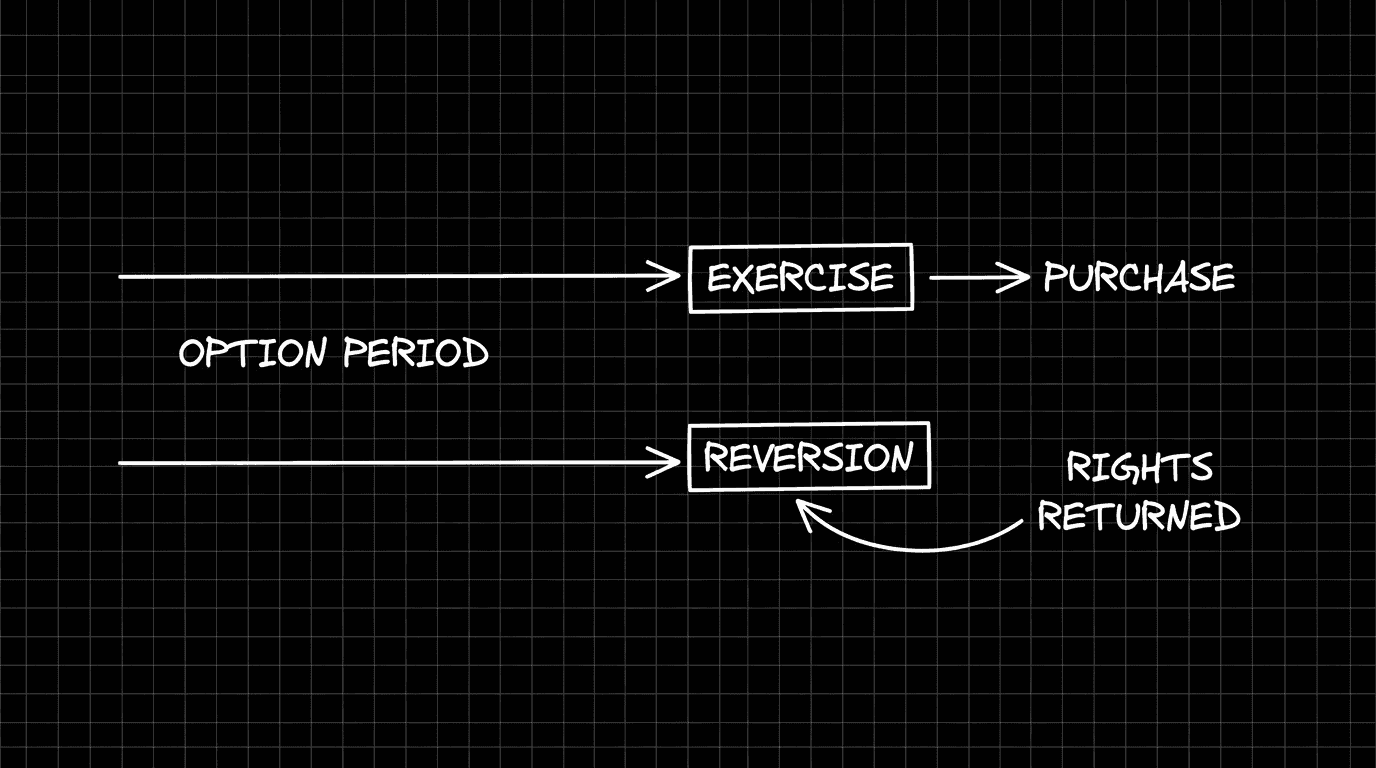
These two visuals work as a pair: the first shows Timeline: option period, exercise, reversion; dark mode technical sketch, and the second shifts to Contract page with reversion clause highlighted; dark mode technical sketch—compare them briefly, then move on.
Final Step
Build your next script with Screenweaver
Move from ideas to production-ready pages faster with timeline-native writing and AI-assisted story flow.
Try Screenweaver