
You used an AI to brainstorm beats. You rewrote every line yourself. You’re pretty sure the script is yours. Then you read that the Copyright Office has refused registration for works that are "too" AI-generated, and you wonder: will my script register? Will it be protected? The answer is in a gray area. The law hasn’t caught up to how writers actually work, with tools that suggest, draft, and polish. Here’s what the current landscape looks like and how to position yourself so your work stays on the right side of the line.
Copyright protects human authorship. The more your work is demonstrably yours, your choices, your rewrite, your final draft, the stronger your claim. The gray area is how much "assistance" is still "yours." When in doubt, document your process and rewrite everything the tool produced.
For the basics of protecting your script before any deal, see copyright and registration. For the ethics of using AI so you stay the author, ethics of AI in screenwriting sets the line.
What the Copyright Office Has Said
The U.S. Copyright Office (USCO) has stated that works created by a machine without sufficient human authorship are not copyrightable. They’ve refused or cancelled registration for images and text that were generated by AI with minimal human input. They’ve also said that human-authored material that includes AI-generated elements may be registerable, but the AI-generated parts may need to be disclaimed or the human contribution must be substantial. So the question isn’t "did I use AI?" It’s "is there enough human authorship in what I’m registering?" If you wrote the story, the structure, and the dialogue, and used AI only as a tool to brainstorm or draft material you then rewrote, you’re in a stronger position. If you’re registering a script that is mostly unchanged AI output, you’re in the gray area or worse. For the official policy, the USCO guidance on AI{rel="nofollow"} is the source; we’re summarizing, not giving legal advice.
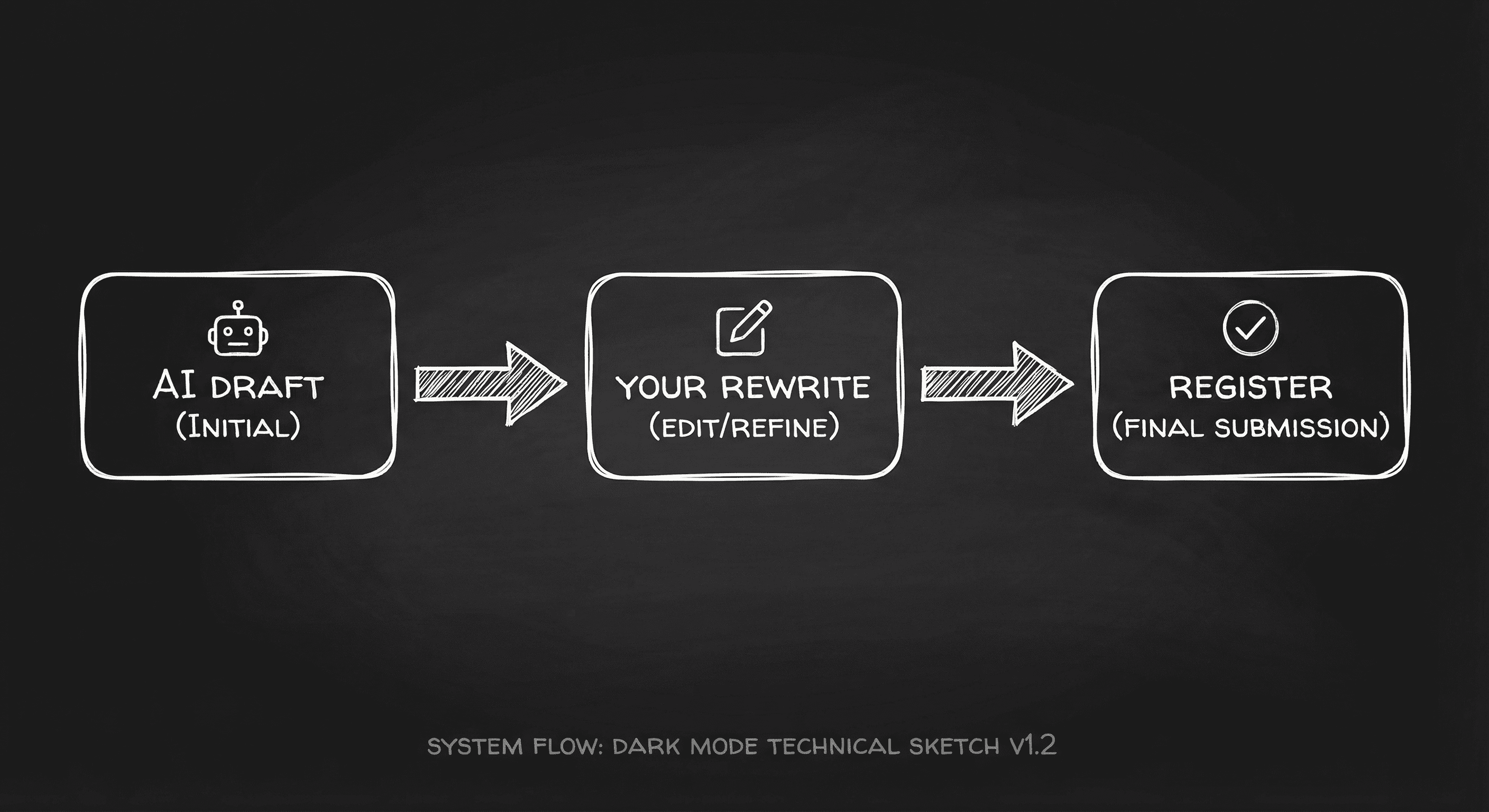
Think about it this way. If you use AI to generate a beat sheet and you rewrite every beat, the beat sheet you submit or register is yours. If you use AI to generate 90 pages and you change 10%, the script may still be mostly "machine" in the Office’s eyes. So the practice that protects you is: substantial human authorship. You outline, you draft, you rewrite. The tool assists; it doesn’t author. That’s consistent with what the guild expects too, you are the author; the tool is not.
What "Substantial Human Authorship" Means in Practice
There’s no bright-line test. The Office looks at the work and the circumstances. In practice, the safer position is: you can show that you made significant creative choices. You didn’t just accept the first output. You rewrote structure, dialogue, and story. You have drafts or notes that show your input. So document your process if you use AI. Keep a version history or notes that show "pre-rewrite" vs "my draft." If you’re ever asked, you can show that the registered work is the result of your revision, not the raw output. That doesn’t guarantee registration in every case, but it puts you in the best position under current policy. For how to protect the script before registration, copyright registration and WGA registration{rel="nofollow"} are the two pillars, and the WGA doesn’t replace copyright; it’s a separate record.
Relatable Scenario: Outline and Rewrite
You used an AI to generate a 12-beat outline. You changed 8 of the 12 beats, added two, and wrote the script from that outline. The script is 100% your prose and dialogue. You register the script. The outline was a tool output; the script is your authorship. You’re in a strong position. The Office is unlikely to care that you used AI for the outline, because what you’re registering is the screenplay, and that’s yours. The gray area would be if you tried to register the outline itself as a separate work and it was mostly unchanged from the AI. So: register the final human-authored work. Don’t register raw AI output.
Relatable Scenario: Dialogue Pass
You wrote a draft. You ran a few scenes through a dialogue tool to get alternate phrasings. You picked some lines, rewrote others, and merged the result into your script. The final script is your selection and your rewrite. Again, substantial human authorship. You’re not registering the tool’s output; you’re registering your script. Keep a draft from before the dialogue pass if you want to show the extent of your revision. That supports your position if anyone ever asks.
Relatable Scenario: The "AI First Draft" You Polished
You had an AI generate a full first draft. You did a heavy rewrite, changed plot points, cut characters, rewrote most of the dialogue. The question is: is the remaining work "substantially" yours? There’s no exact percentage. The Office has refused registration where the human contribution was minimal. So the safer move is to treat the script as yours only after you’ve done a full rewrite, scene by scene, line by line, and to keep evidence of that rewrite. If your "polish" was light (typos and a few line changes), the script may be too close to the AI output. When in doubt, rewrite more. And consider whether you want to disclose "AI-assisted" when you register; some writers do, some don’t. A lawyer can advise on your specific case. For when you need one, entertainment lawyers is a good next read.
What Beginners Get Wrong
Registering raw AI output. Don’t register a script or outline that is essentially unchanged from what the tool produced. That’s the case most likely to be refused or challenged. Register only work that you can show is substantially yours.
Assuming "I touched it" is enough. Light edits may not be enough. The Office is looking for meaningful creative contribution. So rewrite in substance, structure, character, dialogue, not just style. The more you can show that the final work reflects your choices, the better.
Ignoring documentation. If you use AI, keep drafts or notes that show your process. You may never need them. If you do, e.g. a dispute or a registration question, you’ll have evidence of substantial human authorship.
Mixing WGA and copyright. WGA registration is a separate record (proof of date and content). It doesn’t grant copyright. Copyright registration is with the U.S. Copyright Office. Do both when you’re serious about protecting your script. See copyright and registration for how they work together.
Panicking and not using any tools. The gray area doesn’t mean "don’t use AI." It means use it as a tool, rewrite substantially, and register the work that is clearly yours. That’s the practice that aligns with both the law and the guild.
Try it free
Try Screenweaver for free on your script
It is free. Import your existing project, get a clearer view of your outline, and regain control of your story structure in minutes.
Start FreeA Practical Table: Risk and Practice
| Situation | Registration risk | What to do |
|---|---|---|
| AI outline, you rewrote beats and wrote full script | Low | Register the script. The script is yours. |
| AI first draft, you did a full scene-by-scene rewrite | Low–medium | Register your draft. Keep pre-rewrite version to show substantial human authorship. |
| AI first draft, you did a light polish | High | Don’t register as-is. Do a full rewrite first, then register. |
| AI dialogue suggestions, you chose and rewrote into your script | Low | Register the script. Your selection and rewrite = your authorship. |
| You register raw AI output | Very high | Don’t. Rewrite first. |
None of this is legal advice. It’s a way to think about the gray area so you can work with AI and still protect your work. For official policy, see the U.S. Copyright Office{rel="nofollow"} and consider consulting a lawyer for your specific case.
The Perspective
The law is catching up to how writers work. Until it does, the safest position is: you are the author. You use AI as a tool. You rewrite substantially. You register the work that is clearly yours, and you keep evidence of your process. That’s how you stay in the gray area on the right side.
[YOUTUBE VIDEO: What "substantial human authorship" means in practice, comparing a raw AI draft to a fully rewritten draft and what to keep for your records.]
For the guild’s view on AI and authorship, ethics of AI in screenwriting. For protecting your script before you use any tool, copyright registration. For when to get a lawyer, entertainment lawyers.
The Perspective
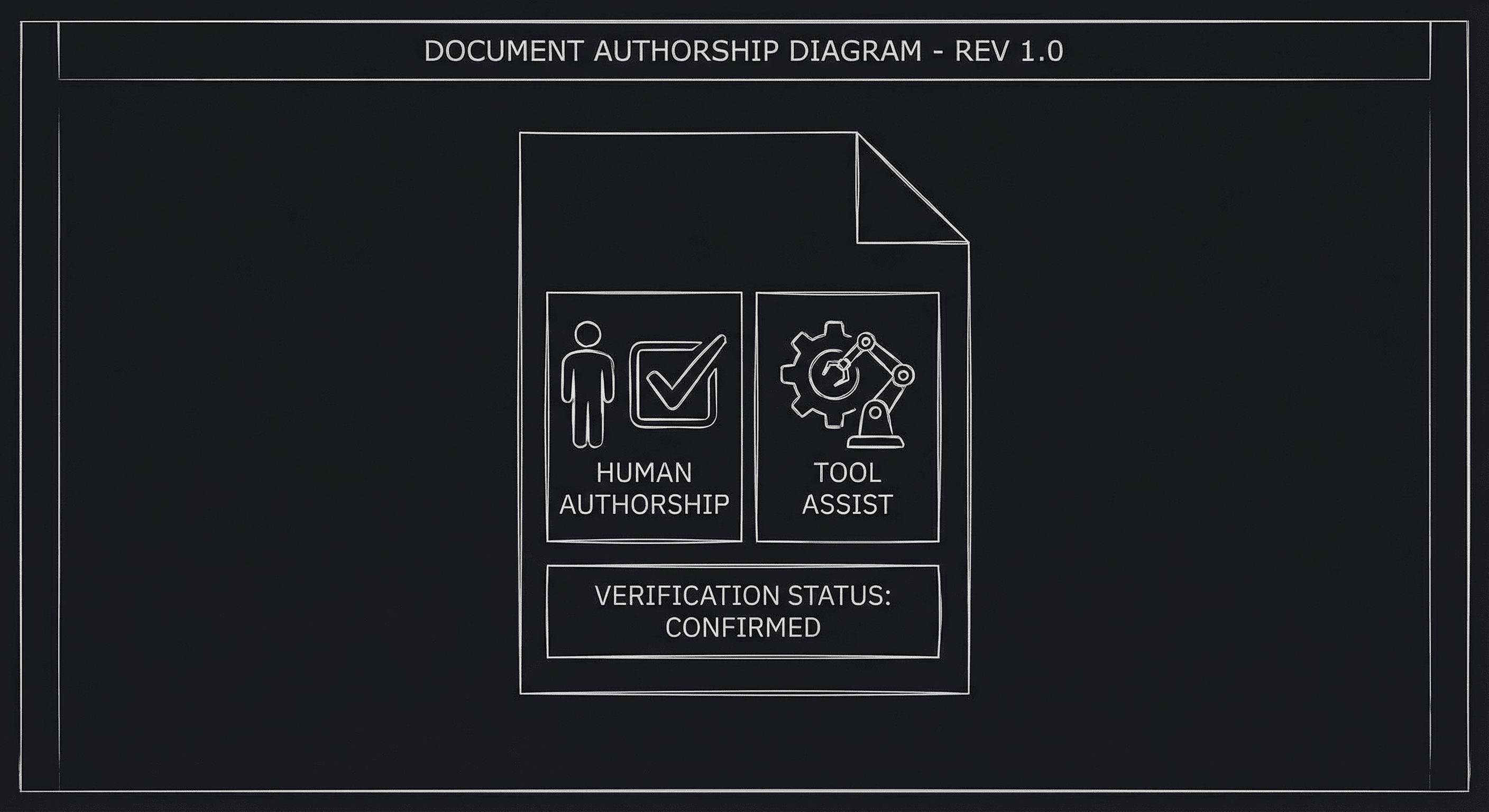
Copyright protects human authorship. Use AI to assist, outlines, drafts, options. Then rewrite. Own the final work. Document your process. Register what’s yours. The gray area shrinks when your contribution is obvious.
Final Step
Build your next script with Screenweaver
Move from ideas to production-ready pages faster with timeline-native writing and AI-assisted story flow.
Try Screenweaver