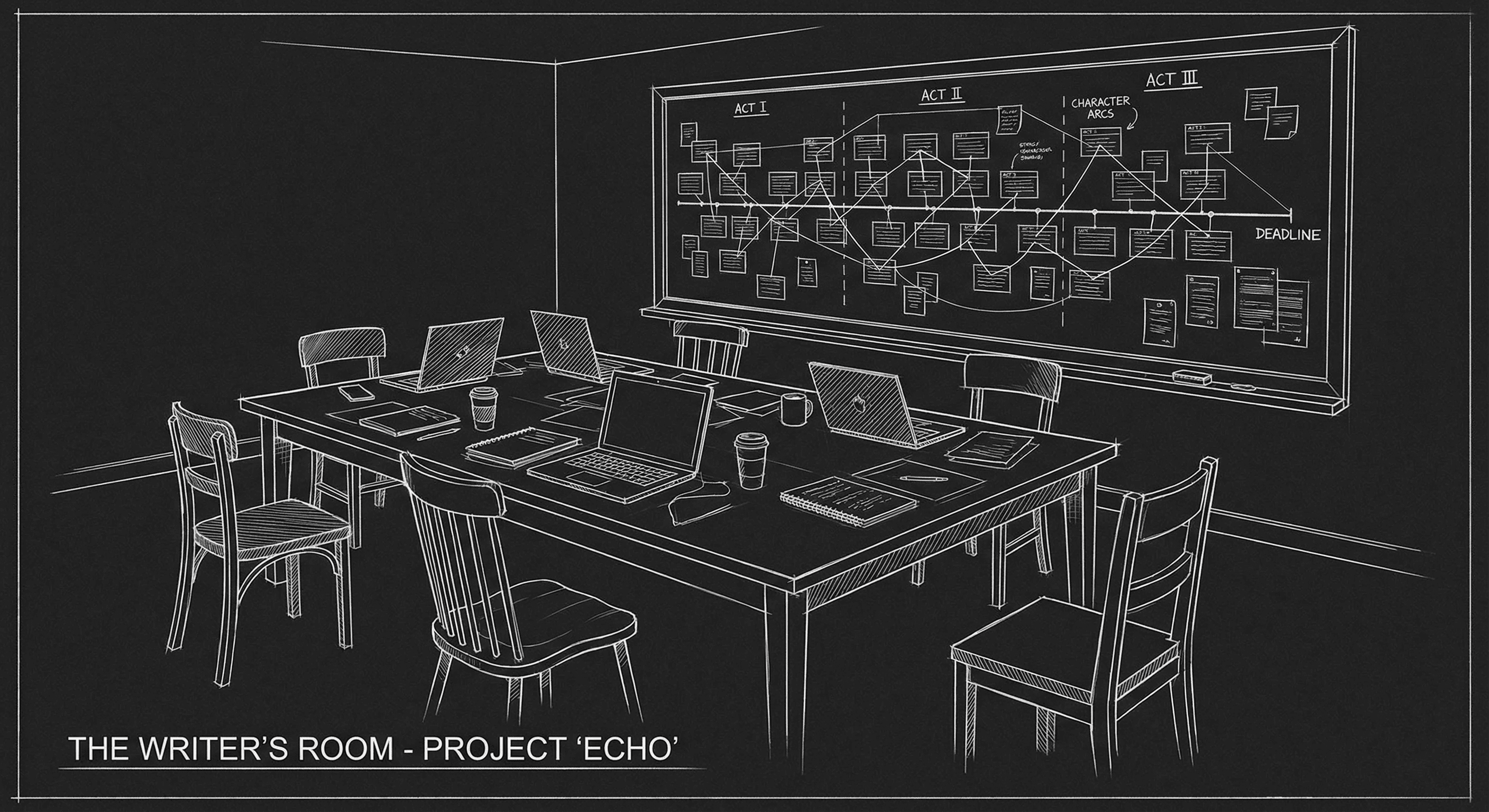

The assistant in the room takes notes, tracks story across episodes, and runs research. They don’t write the script. They make the room run. So when people ask whether AI will "replace" the writers’ room, the real question is: will it replace those jobs first? The answer is messy. Some tasks are already being augmented, continuity, research, scheduling. Others still need a human in the room. Here’s how the room might change, what’s likely to stay, and how to position yourself if you’re trying to break in.
The room runs on trust and taste. AI can handle more of the logistics and the first pass on research. It can’t read the room, defend a pitch, or know when to push back. So the jobs that are most at risk are the ones that are already task-heavy and least creative. The jobs that last are the ones that require judgment in the moment.
For the guild’s position on AI and the writer as author, see ethics of AI in screenwriting. For how tools can support structure without replacing you, augmented screenwriting. For breaking in when you’re not in a room yet, networking and breaking in and fellowships are the entry points.
What Assistants Actually Do
Writers’ assistants take notes in the room, keep the running document, track story and character across episodes, and often do research, fact-checking, legal or medical basics, period detail. They’re the memory of the room. They don’t get script credit for the episode; they enable the room to function. So when we talk about "AI replacing assistants," we’re talking about which of those tasks can be done or assisted by software. Note-taking can be augmented (transcription, summarization). Continuity can be assisted (databases, character and plot tracking). Research can be accelerated (models that summarize and suggest). What’s harder to automate is the judgment, knowing what note matters, when to flag a contradiction, how to phrase something so the showrunner hears it. That’s still human. So the shift is likely to be assistant plus tools, not assistant out, at least for a while. The assistant who can use AI to do the grunt work faster and still bring taste and judgment will be more valuable, not less.
Think about it this way. If the room has a tool that auto-transcribes and highlights "story beats" or "character mentions," the assistant’s job becomes curating that output, correcting mistakes, adding context, knowing what to surface in the doc. The assistant is still in the room. They’re still the one the showrunner asks "what did we say about X?" The tool is a lever. So the future is less "AI replaces the assistant" and more "the assistant’s role evolves." Entry-level jobs might get fewer or more competitive if one assistant can do more with tools. But the path from assistant to staff writer still runs through the room, and the room still needs someone who gets the show and can be trusted with the doc.
What’s Likely to Change
Continuity and tracking. Software can already track character appearances, plot threads, and timeline. AI can help summarize "what we know about X" across episodes. So the assistant may spend less time manually updating bibles and more time checking the output and filling in the gaps the tool misses. The responsibility for continuity still sits with a person, the showrunner will blame a human, not a bot, if something slips. So the job becomes "run the tools and own the result."
Research. First-pass research (fact-check, period detail, legal or medical basics) can be done or accelerated by AI. The assistant (or writer) still has to verify and decide what’s usable. So research gets faster; it doesn’t disappear. The assistant who can quickly get a model to draft a summary and then verify it is more useful than one who only does manual searches, or than a model alone with no human check.
Note-taking and the running document. Transcription is cheap. Summarizing a meeting into "decisions" and "open questions" is something models can do. So the running doc might be generated from a transcript and then edited by the assistant. Again: the assistant curates and owns the doc. They’re still the one in the room who knows what "we" decided.
Scheduling and logistics. Less creative, more administrative. These tasks are the most likely to be automated or centralized. So the "pure" assistant role might shrink, or get merged with a role that has more creative input (e.g. script coordinator who also does research and continuity). The path into the room might start with a hybrid job: part tool-runner, part taste and judgment.
What’s Likely to Stay
Trust and presence. The showrunner needs someone in the room they can point at and say "make sure that’s in the doc" or "go find out X." That person has to understand the show, know what matters, and be able to push back or clarify. AI doesn’t sit in the room. It doesn’t have a relationship with the showrunner. So the human assistant (or coordinator) is still the interface between the room and the record.
Taste and judgment. When the room is debating a story beat, the assistant isn’t usually pitching, but they’re listening. They know what’s been tried, what was dropped, what the network said. That institutional memory and the ability to say "we tried that in 204 and it didn’t work because…" is human. A tool can surface a note; it can’t know the politics of the room or when to speak up.
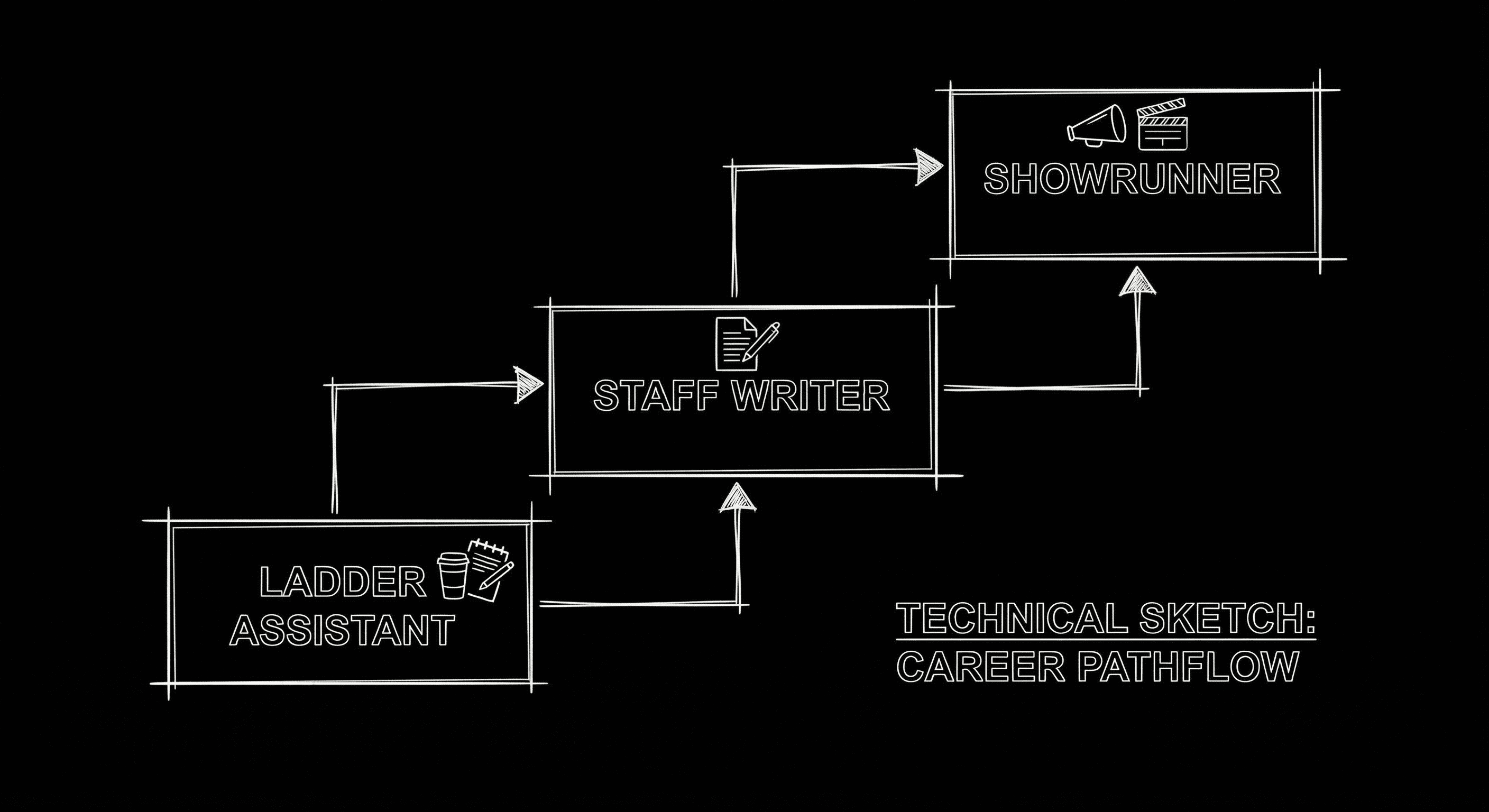
The ladder. Staff writer jobs are still filled from the pool of people who have been in the room, assistants, script coordinators, writers’ PAs. If those entry-level jobs get fewer (because one person can do more with tools), the competition gets stiffer. But the path doesn’t disappear. It just gets more selective. So the advice is: get in the room if you can. Use tools to be more useful when you’re there. And build the skills that can’t be automated, story sense, reliability, and the ability to read the room. For more on that path, networking and fellowships are the starting points.
Relatable Scenario: The Assistant Who Uses Tools
You’re the writers’ assistant. The showrunner asks for a one-pager on "what we’ve established about the sister across the first six episodes." You could re-read every script and compile it by hand. Or you could use a tool (or an AI) to pull every scene with the sister and summarize. You then read the summary, fix mistakes, add the beat the tool missed (the look in 104 that we said was important), and hand in the one-pager. You did it in an hour instead of four. The showrunner doesn’t care how. They care that it’s right. You’re more valuable because you delivered faster and accurately. That’s the future: assistant plus tools, not assistant vs tools.
Try it free
Try Screenweaver for free on your script
It is free. Import your existing project, get a clearer view of your outline, and regain control of your story structure in minutes.
Start FreeRelatable Scenario: The Room That "Tries" an AI Doc
The show decides to try an AI-generated running document from the transcript. After two days, the doc has wrong names, missed decisions, and a tone that doesn’t match how the room actually talks. The showrunner goes back to "someone in the room owns the doc." The experiment showed that the doc still needs a human who was there. So the role of the person who owns the doc doesn’t go away, it might even get more important, because they’re the one fixing what the tool got wrong.
What Beginners Get Wrong
Assuming "AI will replace the room." The room is a social and creative unit. AI can augment tasks. It can’t replace the showrunner, the staff writers, or the trust that the assistant has the show’s back. So the room evolves; it doesn’t vanish.
Ignoring tools because "I want to be a writer." If you’re trying to get in the room as an assistant, being good with tools (transcription, continuity, research) makes you more useful. It doesn’t make you less creative. It makes you the person who can do the job faster and still bring judgment. Learn the tools. Then use them to free up time to show your story sense.
Thinking the only path is assistant. There are other ways in, fellowships, specs, staffing off a sample. But for the path that goes through the room, assistant (or coordinator) is still the main entry point. So if you want that path, plan for a role that’s part task-running and part taste. For alternatives, fellowships and contests are options.
Underestimating the human part. The assistant who only runs the tool and doesn’t understand the show will be replaced, by an assistant who runs the tool and gets the show. So the bar goes up: you need to be good at both the task layer and the judgment layer. For more on what the room expects, taking feedback and notes is a good read.
The Perspective
The writers’ room of the next decade will use more AI for notes, continuity, and research. It will still need humans in the room, showrunner, staff, and someone who owns the doc and the details. The assistant role will evolve: less manual typing, more curating and judgment. If you’re trying to break in, be the person who can use the tools and still bring the taste. That’s the future: human plus tool, not human or tool.
[YOUTUBE VIDEO: A showrunner and a current assistant discuss how their room uses (or doesn’t use) AI for notes and continuity, what’s changed and what hasn’t.]
For the guild’s view on AI and the writer, ethics of AI in screenwriting. For how to get in the room, networking and fellowships. The WGA’s resources on the industry{rel="nofollow"} are the external source for guild-covered work and standards.
The Perspective
AI will augment the room before it replaces it. The assistant who can run the tools and still own the doc and the details will be the one who stays. The future of the room is human plus tool, and the human is still the one in the chair.
Final Step
Build your next script with Screenweaver
Move from ideas to production-ready pages faster with timeline-native writing and AI-assisted story flow.
Try Screenweaver