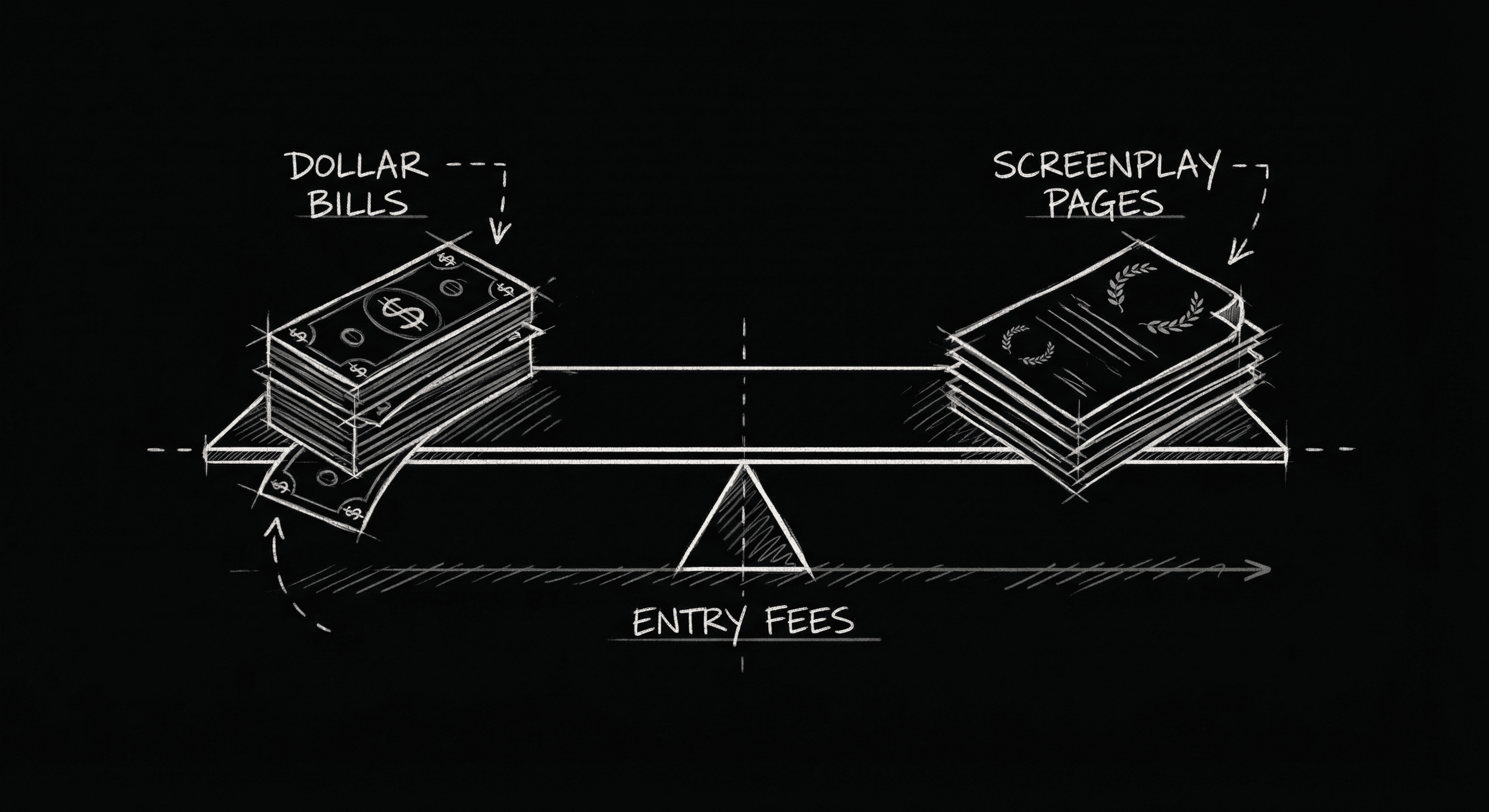

Are Screenwriting Contests Worth the Money? A Cost-Benefit Analysis
You've got the contest tab open. "Early bird deadline ends tonight." Entry fee: $55. Coverage upsell: another $90. Your chest tightens. You're not sure if you're buying a shot at a career or just paying for someone's marketing budget.
Here's the uncomfortable reality: some contests can help build a career. Many can't. If you're not deliberate, you'll burn through hundreds of dollars for little more than a PDF certificate and a dopamine spike. This article walks you through a cost–benefit breakdown so you can separate career accelerators from expensive distractions.
What "Career Contest" Actually Means
Not all contests are trying to do the same job. Some exist as lead generators for coverage services or revenue machines for a brand that trades on hope. A career contest has one core trait: it can put your script in front of people who can change your career, and has a track record of doing so.
Look for alumni who are now repped, staffed, sold, or produced; industry judges with actual credits; and clear benefits beyond "laurels" and "exposure."
When in doubt, look for names and jobs, not logos and adjectives.
How to Do the Actual Math
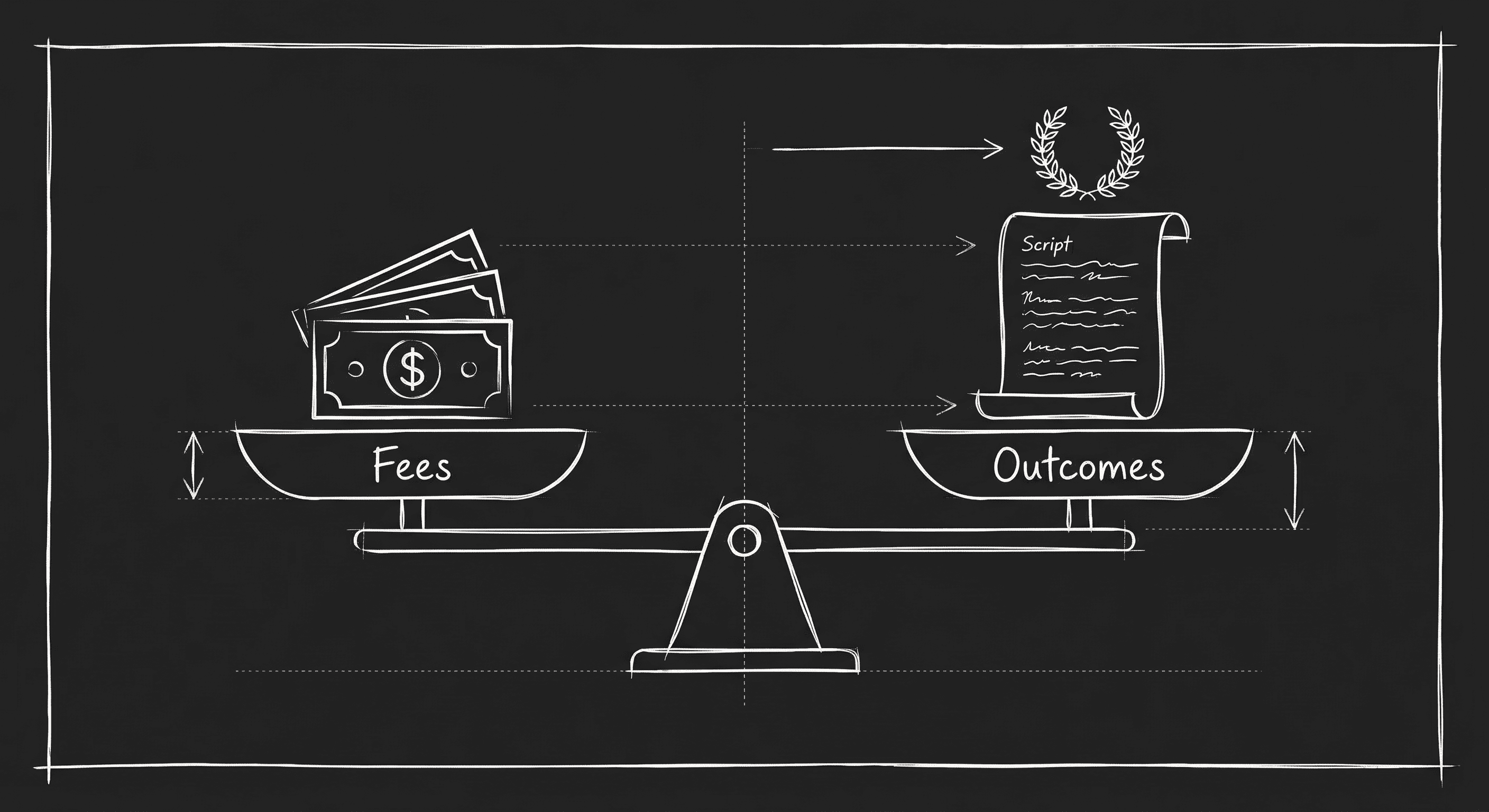
You need to think like a line producer budgeting a shoot. Start with three numbers: your annual budget for submissions, the average entry fee of serious contests ($50–$100), and the expected value of non-financial outcomes (rep intros, producer reads, festival exposure). Then ask: "If I spend $75 here, what exact doors could this open?"
Sometimes the answer is: spend the money. Sometimes it's: hold it for something with a real pipeline, like a short film festival or a discovery platform with verified rep activity. For more on when to pause spending and focus on rewriting, see our guide on feedback fatigue.
Career Contest vs Vanity Contest
A career contest has real judges with skin in the game, offers meetings or mentorships, and is known by people who work in the business. A vanity contest trades on laurel graphics and vague promises, often has no clear judging panel, and rarely leads to anything beyond a line in your bio that most reps politely ignore.
If you mention the contest to a working writer or rep and they squint and say "What's that?", you're probably looking at a vanity play.
| Contest type | What they emphasize | Red flags they dislike |
|---|---|---|
| Career-focused | Judges, alumni, clear prizes | No names, no track record |
| Vanity-style | Laurels, "exposure" | No pipeline, no industry recognition |
Try it free
Try Screenweaver for free on your script
It is free. Import your existing project, get a clearer view of your outline, and regain control of your story structure in minutes.
Start FreeThe Hidden Costs Beginners Ignore
The entry fee is only part of the bill. Emotional bandwidth: every "no" chips away at morale. Time spent formatting instead of rewriting: filling twenty forms takes hours. Opportunity cost: maybe the real play was to finish a short and aim at festivals. Our piece on short film festivals breaks down when that route beats another contest round.
Trench Warfare: What Beginners Get Wrong
Submitting the same flawed draft everywhere. Writers finish a draft and send it to ten contests with no outside reads. The fix: treat the first wave as a test, get notes, and rewrite before the next season.
Misreading "Quarterfinalist." It can be a useful signal or just mean your script wasn't in the bottom half. We cover how to use it in a query in handling rejection.
Chasing genre mismatch. Entering a grounded drama into a contest obsessed with high-concept genre (or the reverse) handicaps you. Match your script to contests that love its genre.

When the Answer Is Yes, or No
Contests are worth it when they offer clear, verifiable career upside, limit the pool to writers at your level, and fit a coherent plan. They're not worth it when you're submitting a first or second draft, applying only because of FOMO, or can't articulate what happens if you win.
For current norms on professional standards and pay, the Writers Guild of America{rel="nofollow"} resources are worth bookmarking.
[YOUTUBE VIDEO: A practical screen-share where a working writer breaks down their last three years of contest spending in a spreadsheet, showing total fees, placements, and what real outcomes emerged.]
Final Step
Build your next script with Screenweaver
Move from ideas to production-ready pages faster with timeline-native writing and AI-assisted story flow.
Try Screenweaver