
The term “augmented screenwriting” gets thrown around a lot. Sometimes it means “software that writes for you.” Sometimes it means “software that helps you see what you wrote.” Those are opposite things. One implies the machine is the author. The other implies the machine is a lens. This article defines augmented screenwriting the way it ought to be defined: as a practice where the writer remains the sole author and the tool adds clarity, structure, and consistency,without adding words to the page. It is about seeing your story clearly, not about cheating.
Why does the definition matter? Because the moment we let “augmented” mean “partially generated,” we lose the ability to talk honestly about what helps writers and what undermines them. Augmented screenwriting, rightly understood, is the future of storytelling in the sense that it makes the storyteller more capable. It does not replace the storyteller. It gives them a better view of the map, a better way to check the compass, and a better way to hand the finished script to the rest of the industry. No magic. No ghostwriter. Just clarity.
What Augmentation Is Not
Augmentation is not generation. When a tool takes a prompt or a logline and produces dialogue, action lines, or scenes, it is generating. The writer may edit the output. They may like some of it. But the origin of the text is the system. That is not augmentation; it is delegation. It blurs authorship. It also tends to produce prose that feels generic, because such systems are trained on large corpora and optimize for the average. Writers who care about voice and specificity should be wary of any tool that writes the scene for them. The line is simple: if the tool outputs words that go directly into your script without you having chosen every one, you are no longer the sole author of that stretch of text.
Augmentation is also not about doing less work so that you can “write” more scripts in less time. The goal is not volume. The goal is quality and control. A tool that helps you spot a plot hole in act two is augmenting your judgment. A tool that fills in the hole with suggested text is replacing your judgment. The first makes you a better writer. The second makes you an editor of machine output. We are defining augmentation as the first.
Augmentation is not generation. If the tool outputs words that go directly into your script without you having chosen every one, you are no longer the sole author of that stretch of text.
What Augmentation Is
Augmented screenwriting is the use of software to make the writer’s own work more visible, consistent, and structurally sound. The writer writes. The tool illuminates. It might show you a timeline so you can see act lengths and beat placement at a glance. It might track characters so you know when someone drops out of the story or when their behavior contradicts an earlier beat. It might flag pacing,a sequence that feels rushed, a midpoint that lands late. It might hold a project Bible so that when you introduce a new location or a new rule of the world, you are prompted to add it to the canon, or warned when you contradict it. In every case, the tool is working on your material. It is not adding new material. It is making your material easier to see and to fix.
Think of it as a cockpit again. The pilot flies. The instruments show altitude, speed, position. The pilot does not ask the instruments to fly the plane. The instruments help the pilot fly better. Augmented screenwriting is the same. You are the pilot. The timeline, the character tracker, the consistency checker,these are instruments. They give you information. You make the creative decisions. That is why it is not cheating. Cheating would be letting the machine make the creative decisions. Augmentation is giving yourself better data so that your creative decisions are informed.
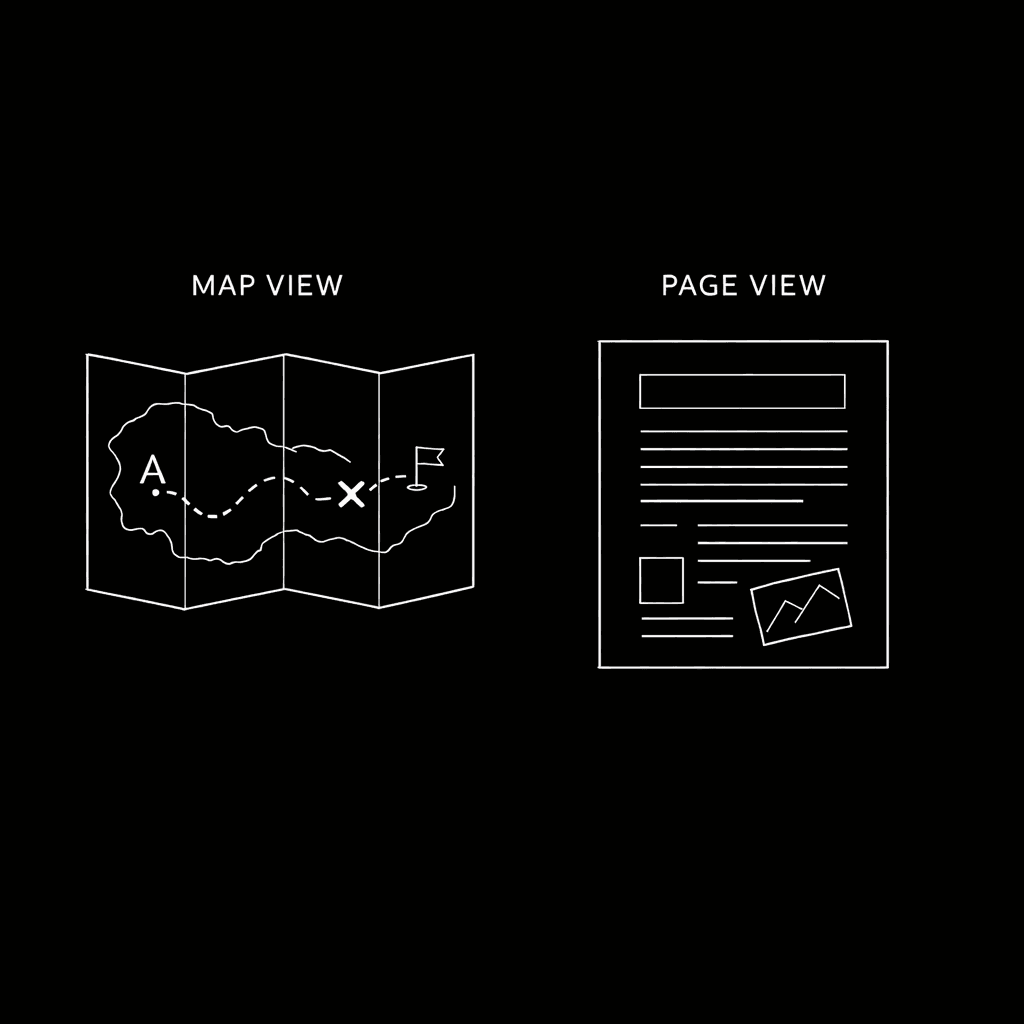
BODY IMAGE 1 PROMPT: Dark mode technical sketch. Solid black background. One horizontal timeline with three acts and labeled blocks. Below, a script page with the same blocks indicated by thin vertical lines. No dialogue or text in the script,just the suggestion of structure. Thin white hand-drawn lines, minimalist, high-contrast.
Clarity as the Goal
The central benefit of augmented screenwriting, rightly understood, is clarity. Most writers have had the experience of being deep in a scene and losing the thread of the whole. Is the midpoint in the right place? Did the B-story get a payoff? Is that character’s motivation still consistent with what they did in act one? In a traditional workflow, answering those questions means stepping out of the scene, opening an outline or a beat sheet, and holding two documents in your head at once. The outline might be out of date. The script might have drifted. The cognitive load is high, and the chance of error is real.
Augmentation reduces that load by making the outline and the script one object. When the timeline is bound to the script,when every block on the map corresponds to a span of pages,you do not have two sources of truth. You have one. You look at the map and you see the story. You look at the script and you see the prose. They are two views of the same thing. That is clarity. You spend less time reconciling and more time writing. You also catch structural problems earlier, because they are visible. A sagging middle is no longer a feeling; it is a stretch of the timeline that is longer than the others. A missing beat is a gap. Clarity does not write the fix. It shows you where the fix is needed.
| Approach | What the tool does | Result |
|---|---|---|
| Generation | Produces dialogue, action, scenes from prompts | Blurred authorship; generic voice; writer as editor |
| Augmentation | Surfaces structure, consistency, pacing on your draft | Clear authorship; your voice; writer as pilot with better instruments |
How Tools Deliver Clarity
Different tools deliver clarity in different ways. A simple outliner gives you a list of beats. That is better than nothing, but the list is static. If you change the script, you have to remember to change the list. A bi-directional setup,where the timeline and the script are the same object,means you never have to sync. You move a block, the script moves. You add a scene, the timeline updates. ScreenWeaver is built on that principle. The Living Story Map is not a separate document. It is the spine of the script. For more on why that matters, our guide on the death of the static outline walks through the cost of maintaining two documents and the benefit of one.
Character tracking is another form of clarity. When you have a large cast or a long script, it is easy to lose track of who appeared where and whether their behavior is consistent. An augmented environment can hold character profiles and link them to the timeline. When a character appears in a scene, the system knows. When something they do or say contradicts their established want or wound, you can get a nudge. Again, the tool does not fix the contradiction. It flags it. You decide whether to change the scene or to change the profile because you have decided the character has evolved. That is augmentation: visibility, not substitution.
The Documentalist and the Spectator
Two specialized roles show up in advanced augmented environments: one that holds the “Bible” (facts, characters, world rules) and one that reacts to the experience of reading (rhythm, pacing, clarity). The Documentalist is about consistency. Did you introduce a new character without adding them to the project? Did you give a location a detail that contradicts an earlier scene? The Documentalist surfaces those issues. The Spectator is about feel. Does this sequence drag? Does this beat land too late? Is the tone shifting in a way that might confuse the reader? The Spectator does not rewrite. It reflects. You take the reflection and you decide what to do. Both are clarity tools. They make the writer more aware of what they have written, so the writer can improve it with intention.
BODY IMAGE 2 PROMPT: Dark mode technical sketch. Solid black background. A central “writer” or script icon. Around it: a timeline, a short list of character names, a small “book” icon (Bible), a small “eye” icon (spectator). Thin connecting lines suggest “feeds into.” Hand-drawn, thin white lines, minimalist, high-contrast.
That is the difference between “the machine helps me see” and “the machine helps me write.” Seeing is augmentation. Writing is generation. We are defining the future of storytelling as the former. For a practical application,how to use structural feedback to break writer’s block without losing your voice,see our piece on using tools to break writer’s block. The same principle applies: the tool suggests where the problem is; you solve it in your words.
The Future of Storytelling
The future of storytelling is not the machine telling the story. It is the human telling the story with better tools. Writers will still need to conceive the idea, hear the voices, feel the rhythm, and make every choice that makes a script distinct. What will change is how much of the story they can see at once, how quickly they can check consistency, and how little time they waste on tasks that do not require creativity,like manually syncing an outline to a draft, or searching the document for the last time a character appeared. Augmented screenwriting, defined as clarity and control rather than generation, is the future because it respects the writer. It says: you are the author; we are here to make your job easier. That is a future worth building. And it is one that has nothing to do with cheating.
Final Step
Build your next script with Screenweaver
Move from ideas to production-ready pages faster with timeline-native writing and AI-assisted story flow.
Try Screenweaver