

They're speaking another language. The audience reads subtitles. On the page you have to give the original (or a transliteration) and the translation so the reader and the subtitling team know what's said. Too much on-screen translation bogs down the read; too little and we're lost. Here's how to format foreign language and subtitles so the script stays clear.
Give the translation. Don't make the reader guess. Use one consistent convention so we always know what's being said.
Think about it this way. The audience will hear the language and read subtitles. The reader of the script doesn't hear, they need the meaning. So you either write the line in English with a note (IN SPANISH) or you give the foreign line and the translation in parentheses. The goal is readability: the reader should never be stuck. Our guide on chyrons covers on-screen text; subtitles are a special case, they're the translation of dialogue. For dialogue format, see screenplay format.
Option A: English With (IN [LANGUAGE])
Format: CHARACTER (IN SPANISH): "I will never forget you." We read the meaning in English; the note tells production and the actor what language is used. When to use: When the content matters more than the exact words. Most scripts use this for readability. For dialogue, see distinct voices.
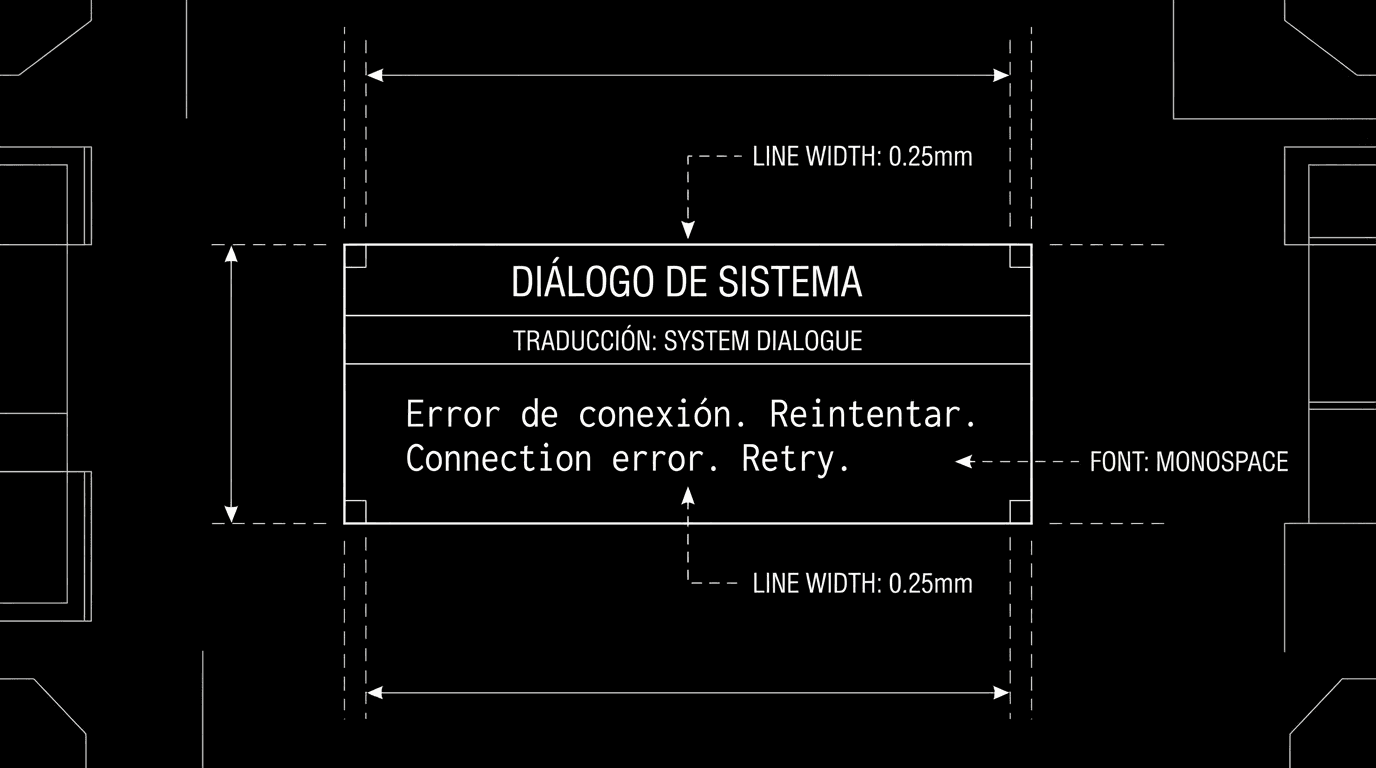
Option B: Foreign Line + Translation
Format: CHARACTER (IN SPANISH): "Nunca te olvidaré." (I will never forget you.) Or the translation in parentheses on the next line. When to use: When the exact phrase or the sound of the language matters, or when the script will be used for subtitling and they need the original. For production, see exporting for production.
Option C: Subtitle as On-Screen Text
When we see the subtitle on screen (e.g. in a film within the film): "SUBTITLE: 'I will never forget you.'" Or "On screen, the subtitle reads: I will never forget you." For chyrons and on-screen text, see chyrons.
Relatable Scenario: A Scene Mostly in Another Language
Five lines in Spanish. Format: (IN SPANISH) for each, with the English in the dialogue block so the reader can follow. Or one note at the top: "The following exchange is in Spanish. Translations below." Then dialogue with translation in parens. For clarity, see screenplay format.
Relatable Scenario: One Word or Phrase We Don't Translate
The character says something we're not supposed to understand yet. Format: "CHARACTER (IN RUSSIAN): [untranslated]." Or the foreign phrase with no translation, and an action line: "We don't understand." For subtext and revelation, see subtext.
The Trench Warfare Section: What Beginners Get Wrong
No translation. The dialogue is in another language and the script doesn't give the meaning. Fix: Always give the reader the meaning, in English with (IN X) or as translation in parens. For readability, see micro-pacing.
Translating everything in action. "He says something in Spanish that means 'I hate you.'" Fix: Put the line in the dialogue block (in English with (IN SPANISH) or foreign + translation). For dialogue format, see screenplay format.
Inconsistent convention. Sometimes (IN SPANISH), sometimes italic, sometimes a footnote. Fix: One convention for the script. For format, see screenplay format.
Too much on the page. Every line has the foreign and the translation and a note. Fix: Simplify. (IN SPANISH): "English line." is usually enough. For economy, see micro-pacing.
Try it free
Try Screenweaver for free on your script
It is free. Import your existing project, get a clearer view of your outline, and regain control of your story structure in minutes.
Start FreeForeign Language Format at a Glance
| Approach | Format |
|---|---|
| English + language note | CHARACTER (IN SPANISH): "English line." |
| Foreign + translation | CHARACTER (IN SPANISH): "Foreign line." (English translation.) |
| Subtitle on screen | SUBTITLE: "Text." or action: "Subtitle reads: ..." |
Step-by-Step: Formatting Foreign Dialogue
First: Decide, English with (IN X) or foreign + translation. Second: Apply the same convention every time. Third: Never leave the reader without the meaning. Fourth: If we're not meant to understand, say so in action. For more on dialogue and format, see screenplay format and chyrons.
[YOUTUBE VIDEO: Same exchange in English-only vs. foreign + translation, read comparison.]
The Perspective
Format foreign language so the reader always has the meaning, (IN LANGUAGE) with English dialogue, or foreign line plus translation. Be consistent. Don't bury the translation in action. When the reader and the subtitling team know what's said, the format works. So give the meaning. Pick one convention. And keep it clear.
Final Step
Build your next script with Screenweaver
Move from ideas to production-ready pages faster with timeline-native writing and AI-assisted story flow.
Try Screenweaver