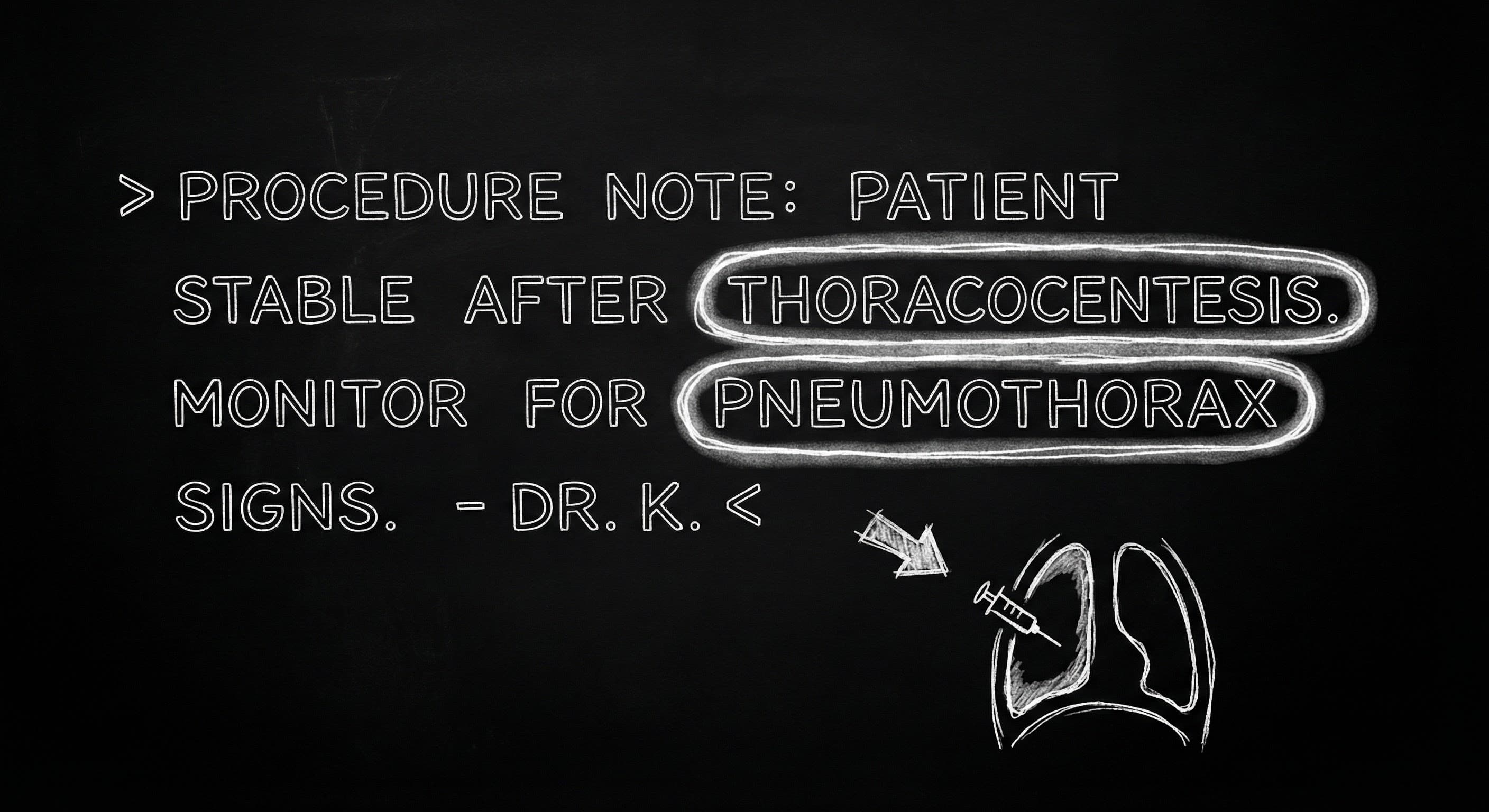

The cop says something that sounds like it came from a real briefing. The doctor rattles off a phrase that makes the nurse nod. The reader believes it. They don't have to understand every word. They have to feel that the person speaking belongs in that world. That's the job of jargon in a screenplay. Not to show off. Not to drown the audience in terms. To create authenticity in a few strokes. Get it wrong and the scene feels fake. Someone will know,a doctor, a cop, a viewer who's been there,and the spell breaks. Get it right and the scene locks in. The audience may not know what "tension pneumothorax" means. They know the person saying it does.
The trap is two-sided. Too little jargon and the dialogue sounds generic. Too much and the scene becomes a lecture or a wall of noise. The goal is the minimum dose: enough to convince, not so much that we lose the story. And the jargon has to be accurate. One wrong term and the experts (and the curious) will call it out.
Why Jargon Works
Jargon does two things. It signals that we're in a specific world. The characters don't talk like everyone else. They have a shorthand. They have a vocabulary. That shorthand also does story work. It can exclude the outsider,the civilian, the family member,and we feel their alienation. It can create urgency: the terms come fast because the situation is fast. It can establish hierarchy: the resident defers to the attending; the patrol officer defers to the detective. The words themselves carry information. The rhythm and the choice of words carry the rest.
You're not writing for experts. You're writing so that experts wouldn't flinch. A real paramedic might not use every term you use. But they wouldn't hear one and say "that's wrong." Accuracy is the floor. Rhythm and story are the ceiling.
The best jargon is felt, not studied. The audience doesn't need to look it up. They need to feel that the character would say it.
Medical Jargon: Principles
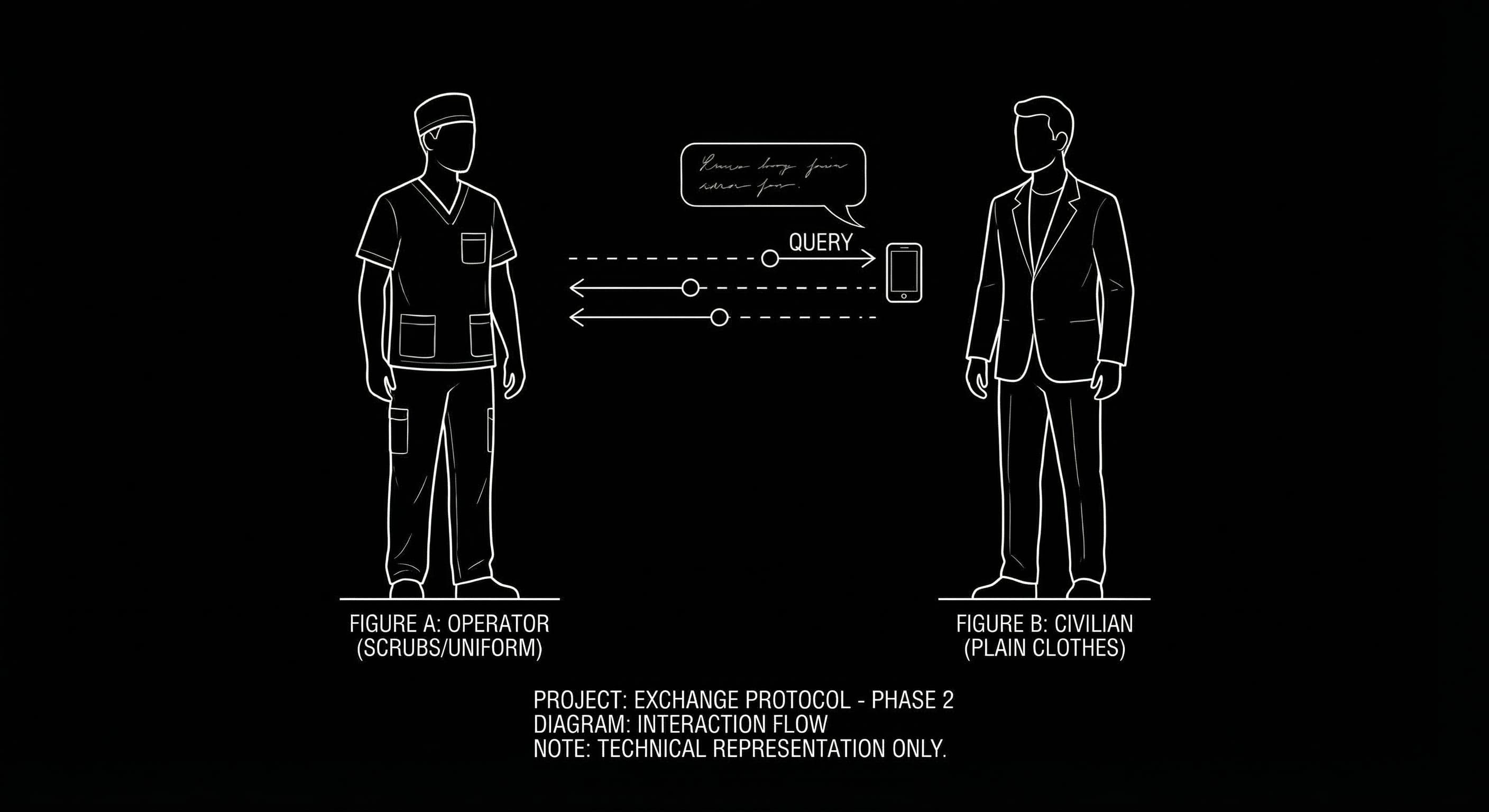
Medical dialogue has to pass the "would a professional say this?" test. That means correct terms for body parts, procedures, and conditions. It also means the right level. An ER doc might say "tension pneumo" to a colleague,shorthand. They might say "collapsed lung with pressure building" to a family member. Context matters. So does rank. A resident might name the condition; the attending might confirm with a single word. The nurse might be the one explaining to the family in plainer language. Use that hierarchy. It does character work.
Don't over-explain in dialogue. The character wouldn't say "We need to do a thoracostomy,that's where we insert a tube to relieve the pressure in the chest." They'd say "We need a chest tube. Now." The explanation, if you need it, can come from another character ("What's that?") or from the action (we see them do it). Let the jargon stand when the scene doesn't require translation. The audience will get that something serious is happening. For more on how to handle technical content without exposition dumps, see creating a magic system for fantasy screenplays,different world, same principle: show the system in use, don't lecture.
Police Jargon: Principles
Cops have their own shorthand. Codes (10-4, 10-20), unit designations (Adam-12, Central), and procedural terms (Mirandize, probable cause, in custody, warrant, APB). The terms vary by department and by country. A little research goes a long way. So does consistency. If you use "10-4" once, don't switch to "copy" or "understood" in the next scene unless a different character is speaking. Match the tone. A veteran might use more codes. A rookie might use fewer. A detective might speak in full sentences; patrol might be clipped. The jargon should fit the character and the moment.
Avoid the myths. "Book 'em, Danno" is a line, not a procedure. Real booking has steps. Real interrogations have rules. If you're writing a key scene,an arrest, a read of rights, a use-of-force moment,get the sequence right. One consultant or one deep dive can save you from a scene that breaks the trust of anyone who knows the job.
Relatable Scenario: The ER Scene
Your character is brought in. The medical team is working. You need five lines of dialogue. You don't need a medical degree. You need three or four terms that are correct and that fit the situation. "BP's dropping." "Get me a line." "We need a type and cross." "Call the OR,we're taking him up." The rhythm is fast. The terms are real. The audience doesn't need to know what "type and cross" means. They know it's urgent. If you're not sure, look it up. "Type and cross" is blood typing and cross-matching for transfusion. One search. Now you can write it with confidence. Do that for every term you use. One wrong word and the scene deflates for anyone who knows.
Relatable Scenario: The Arrest
Two officers make an arrest. One is on the suspect. One is on the radio. "Central, we're 10-98, need a wagon." Or "We're code 4, show us clear." The dialogue should be short. The action should show the rest,cuffing, search, read of rights if you're showing it. You don't need to explain every code. You need to use codes that are real (or close enough) and that fit the department you're depicting. Different cities use different codes. Pick one and stick with it. Or use generic terms: "We need transport." "Scene is secure." That's still accurate. That's still believable.
What Beginners Get Wrong (The Trench Warfare Section)
Using jargon as decoration. They sprinkle terms to sound smart. The dialogue doesn't serve the scene. It serves the writer's ego. Cut it. Every term should do work,establish character, create tension, or move the story. If a line could be in plain English and the scene would work the same, consider plain English. Jargon is for when the plain version would feel false.
Getting the terms wrong. "Stat" is real (immediately). "Code blue" is real (cardiac arrest in many hospitals). "We need a full lumbar puncture" in the middle of a trauma,maybe not. The doc might be thinking it; they might not say it in that moment. Research. When in doubt, use a term you've verified. One mistake and the scene loses credibility. For research, use official sources, textbooks, or consultants. Don't rely on other films. They get it wrong too.
Explaining everything. The character says "We have a tension pneumothorax,that's when air gets trapped in the chest and pushes on the heart." Nobody in an ER talks like that to a colleague. They might say it to a student. They might say "tension pneumo" and move on. Let the audience sit in the unknown when the POV character is also in the unknown. Explain only when the story demands it,when a character needs to understand, or when the audience needs to understand for a payoff.
Wrong rhythm. Real medical and police dialogue is often fragmented. Short. Overlapping. "BP?" "Eighty over forty." "Get the crash cart." Not "I need you to get the crash cart because his blood pressure is dangerously low." Match the rhythm. Read it aloud. If it sounds like a textbook, trim it. If it sounds like people under pressure, you're close.
Mixing jurisdictions. Police codes differ. Medical protocols differ by country and hospital. If your story is set in LA, don't use NYPD codes unless you mean to. Pick a reference and stay consistent. A quick search,"LAPD radio codes" or "ER trauma dialogue",gives you a baseline. Use it.
Try it free
Try Screenweaver for free on your script
It is free. Import your existing project, get a clearer view of your outline, and regain control of your story structure in minutes.
Start FreeA Simple Table: When to Use What
| Situation | Jargon level | Example |
|---|---|---|
| Professional to professional, under pressure | High; minimal explanation | "Tension pneumo. Get me a chest tube." |
| Professional to colleague, teaching | Medium; some explanation | "That's a tension pneumo,air's building, we need to release it." |
| Professional to civilian/family | Low; plain language with one or two terms | "His lung has collapsed and it's putting pressure on his heart. We have to relieve it." |
| Establishing character or place | Medium; terms that signal world | "Central, show me 10-6 at the scene." |
[YOUTUBE VIDEO: A consultant (paramedic, nurse, or officer) reviewing dialogue from a film or show,what rings true, what doesn't, and how to fix it.]
Research Without Falling Down the Rabbit Hole
You don't need to get a degree. You need to get the scene right. So focus. What is the scene? An arrest? A surgery? A death pronouncement? Find the correct terms for that scenario. One article, one expert, one thread. Write the scene. Then verify every term you used. Replace anything you're unsure about. That's it. You're not building a manual. You're building one scene. For more on making technical choices that serve the read, see the spec script vs. the shooting script,the same idea: enough detail to be credible, not so much that you're writing for experts only.
The Perspective
Medical and police jargon in a screenplay is there to convince. Use the right terms. Use the right amount. Match the rhythm of real speech. Don't explain everything. Don't make it up. Do the minimum research so that one wrong word doesn't break the scene. When you do that, the audience stays in the world,and the people who live that world won't wince when they hear it.
Final Step
Build your next script with Screenweaver
Move from ideas to production-ready pages faster with timeline-native writing and AI-assisted story flow.
Try Screenweaver