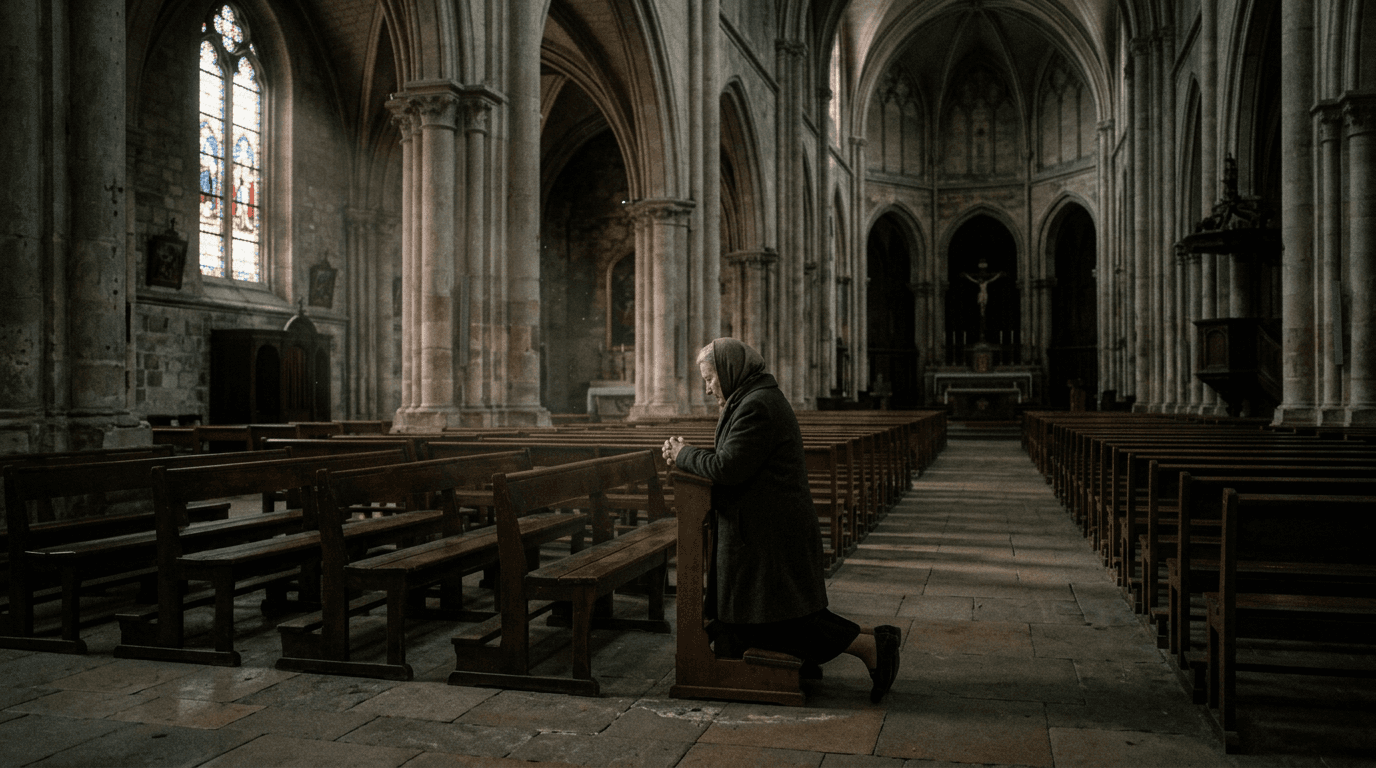

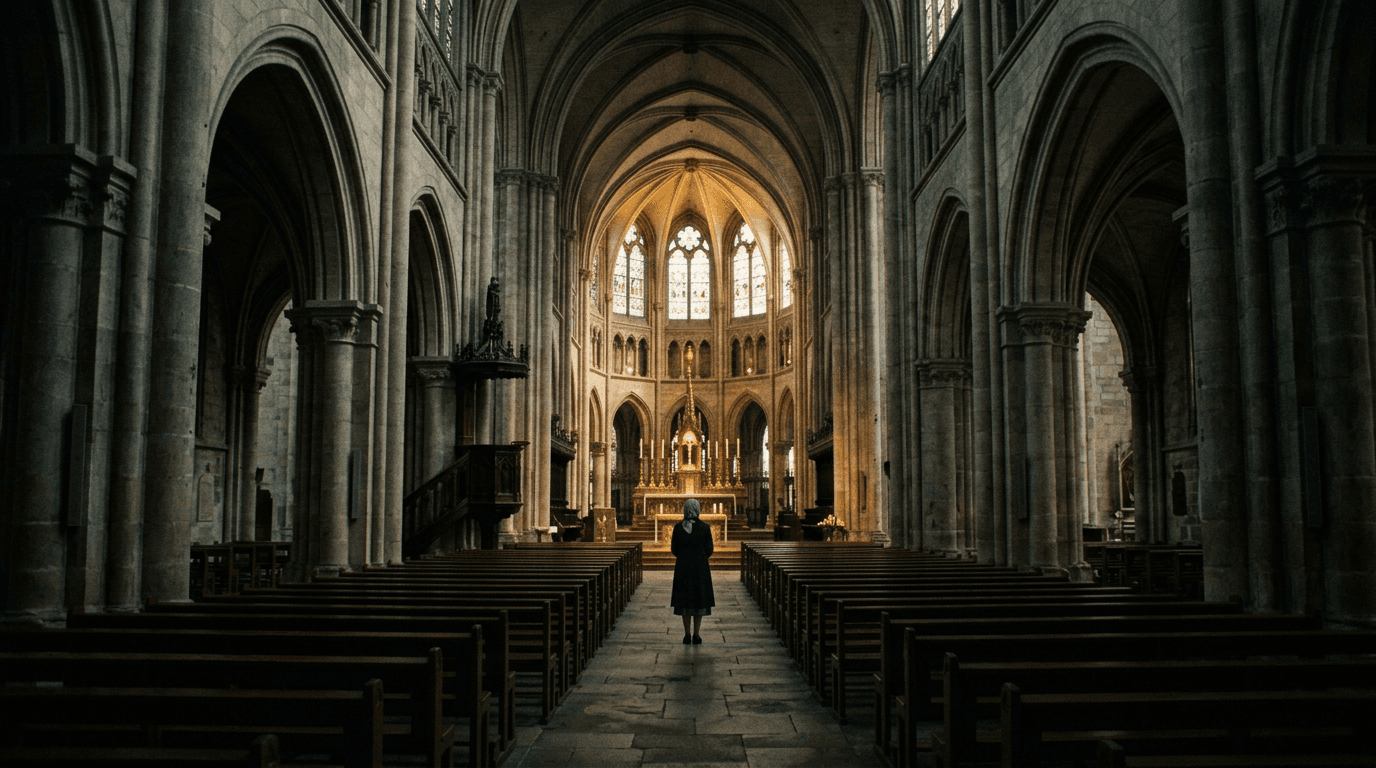
A character kneels in a hospital chapel at 3 a.m.
No one else is there.
They start with certainty, then stumble, then stop asking for miracles and ask for courage instead.
That shift can be one of the most powerful beats in a screenplay.
Or it can feel like an obligatory “faith moment” that stalls momentum and flattens character complexity.
Prayer scenes are hard because they live at the intersection of intimacy, worldview, vulnerability, and narrative consequence. If written vaguely, they become generic. If written didactically, they feel like speeches with spiritual vocabulary. If written cynically, they can feel dismissive or hollow.
Here’s why that matters: prayer scenes often appear at pressure points in the story - grief, guilt, desperation, confession, moral fracture, surrender, gratitude, or terror. When they work, they reveal character at a depth dialogue with other people cannot reach.
Think about it this way: prayer in cinema is not information transfer. It is relationship transfer - between character and belief, character and self, character and silence.
This guide gives you a practical way to write prayer scenes that are specific, dramatic, and structurally alive.
Cinematic workflow frames
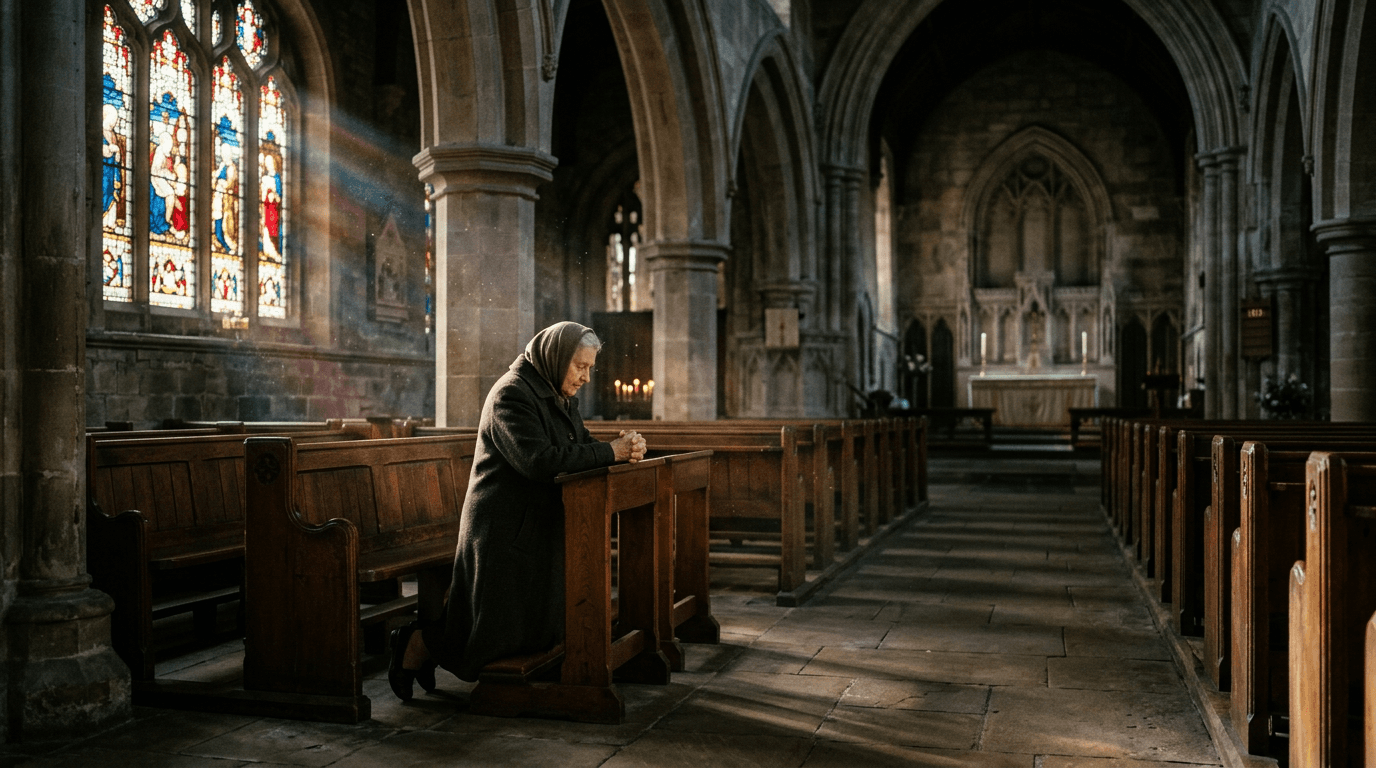
These two visuals work as a pair: the first shows Cinematic workflow still, first angle, 35mm film grain, and the second shifts to Cinematic workflow still, second angle, 35mm film grain - compare them briefly, then move on.
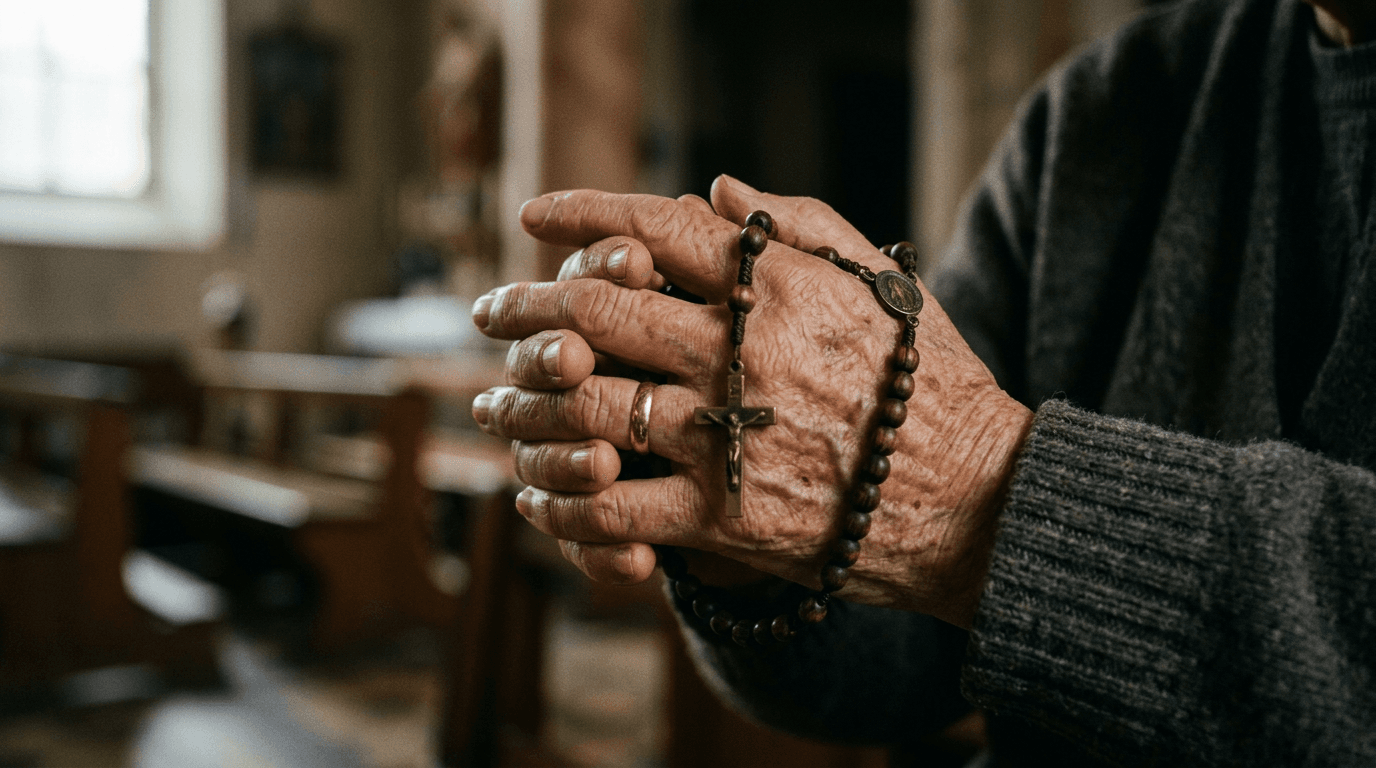
What a Prayer Scene Is Doing Dramatically
Many writers treat prayer as thematic decoration. It is better used as decision architecture.
A strong prayer scene can do at least five important jobs:
clarify inner conflict,
reveal worldview under stress,
force value-based choice,
reframe stakes,
mark transformation threshold.
If the scene does none of these, it probably does not need to exist.
The best prayer scenes do not tell us what to believe. They show us what the character can no longer avoid believing about themselves.
Core Formatting Patterns That Work
No one mandatory format exists, but clarity and tonal precision do.
Pattern 1: Standard Dialogue Cue in Private Prayer
MARA
Please... just let him wake up.
Works when spoken prayer is audible and scene is intimate.
Pattern 2: Action-Led Silent Prayer
Use action lines to stage posture, breath, ritual gesture, and emotional shift without spoken lines.
Strong when prayer is internal or withheld.
Pattern 3: Layered Prayer Over Parallel Action
Prayer voice can intercut with active external events if consequence alignment is intentional.
Use sparingly to avoid manipulative over-scoring on page.
Pattern 4: Communal Prayer Formatting
For group scenes, clearly identify leader and congregation responses if call-and-response is relevant.
Comparison Table: Prayer Scene Modes
| Mode | Best Use Case | Strength | Risk |
|---|---|---|---|
| Spoken private prayer | Character confession or plea | Immediate emotional clarity | Can become monologue-heavy |
| Silent embodied prayer | Internal conflict under restraint | Subtle and cinematic | Ambiguity if objective is unclear |
| Intercut prayer + action | Fate/tension contrast moments | High thematic resonance | Feels manipulative if overdone |
| Communal liturgical scene | Social and cultural worldbuilding | Collective stakes and identity | Generic if ritual detail is vague |
Three Beginner Scenarios That Commonly Fail
Scenario 1: The Generic Hospital Chapel Monologue
Writer uses broad lines (“Please help me”) without character-specific language, stakes, or turning point.
Result: emotional vagueness.
Fix: tie prayer language to character voice, concrete fear, and immediate decision pressure.
Scenario 2: The Didactic Sermon Disguised as Prayer
Character delivers thematic essay in prayer form.
Result: scene feels author-insert rather than character truth.
Fix: keep prayer relational, vulnerable, and imperfect. Let contradiction show.
Scenario 3: The Ritual Scene Detached From Plot
Communal prayer appears as atmosphere with no effect on what happens next.
Result: pacing drag.
Fix: connect ritual beat to character action shift or conflict escalation.
Step-by-Step Workflow for Writing Prayer Scenes
Step 1: Define Prayer Function in Scene Engine
What changes because this prayer occurs now?
If nothing changes, scene likely ornamental.
Step 2: Identify Character Belief Position
Before writing, define whether character is devout, doubtful, performative, lapsed, angry, bargaining, or resistant.
Prayer language should reflect this position authentically.
Step 3: Choose Mode (Spoken, Silent, Communal)
Mode determines formatting and pacing.
Do not default to spoken prayer if silent behavior would land harder.
Step 4: Write Prayer in Beat Units
Start position.
Pressure phrase.
Contradiction or confession.
Turning line (or silent pivot).
Resolve into action.
This keeps scene from becoming static monologue.
Step 5: Anchor Physical Specificity
Hands, posture, breath, ritual objects, eye focus, interruptions.
Physical detail grounds emotion and avoids abstraction.
Step 6: Pair Prayer With Consequence
What does character do immediately after?
Forgive?
Confess?
Lie?
Call someone?
Return to danger?
Consequence is where scene earns its place.
Step 7: Run a Sincerity Pass
Read aloud and remove lines that sound like thesis statements.
Keep language that feels personal, imperfect, and motivated by immediate stakes.
Body Image: Prayer Turning-Point Map
The Trench Warfare Section: What Beginners Get Wrong and Exact Fixes
This is where prayer scenes most often fail.
Failure 1: Generic Spiritual Language
Lines could belong to any character.
Fix: use character-specific diction and concrete stakes.
Failure 2: No Structural Turn
Prayer starts and ends in same emotional position.
Fix: build a clear internal shift or external decision pivot.
Failure 3: Expository Prayer
Character explains plot details to a higher power.
Fix: prioritize emotional truth and decision pressure, not recap.
Failure 4: Overwritten Reverence Cues
Heavy poetic language obscures action readability.
Fix: keep prose lean and behavior-focused.
Failure 5: Ritual Detail Without Meaning
Objects and gestures appear decorative.
Fix: tie each ritual detail to character state or conflict.
Failure 6: Tone Break from Surrounding Scenes
Prayer scene feels imported from another movie.
Fix: maintain tonal continuity while adjusting intensity.
Failure 7: No Conflict During Prayer
Scene treats prayer as calm pause only.
Fix: include interruption, doubt, resistance, or internal contradiction.
Failure 8: Moral Certainty Too Early
Character resolves complex tension instantly through prayer.
Fix: allow partial resolution and lingering ambiguity.
Failure 9: Secondary Characters Frozen in Communal Scenes
Only lead matters; others become props.
Fix: give crowd/participants micro-behavioral specificity.
Failure 10: No Aftermath Trace
Prayer scene ends with no lasting effect.
Fix: carry residue into next action beat.
A prayer scene should alter trajectory, not just atmosphere.
Advanced Craft: Writing Faith, Doubt, and Silence as Action
The strongest prayer scenes often contain contradiction.
A believer prays with anger.
A skeptic prays “just in case.”
A guilty person prays for mercy but cannot forgive themselves.
A proud character prays without asking for help at all.
These contradictions create dramatic texture because they reveal competing values in one body.
You can also use silence as answer structure.
Not every prayer scene needs verbal response, symbolic sign, or immediate event. Sometimes the dramatic answer is the character choosing action without certainty.
That can be more powerful than overt confirmation.
Another advanced move is counterpointing prayer intent with external sound or interruption: hospital monitor alarm, distant siren, phone vibration, child laughter, crowd chant outside, train passing. This keeps scene in world reality while preserving intimacy.
Try it free
Try Screenweaver for free on your script
It is free. Import your existing project, get a clearer view of your outline, and regain control of your story structure in minutes.
Start FreeWorkflow and Revision Discipline
Prayer scenes often drift in rewrites toward either verbosity or vagueness.
Use a prayer-scene ledger:
belief position,
scene objective,
turning beat,
immediate action consequence,
residue in next scene.
During final pass, search for abstract language clusters and replace with concrete behavior where possible.
Read only entry line, turning line, and exit action of each prayer scene. If you cannot see transformation in those three beats, tighten structure.
For comparative reading of emotionally restrained scripts, the <a href="https://www.simplyscripts.com/" rel="nofollow">SimplyScripts archive</a> can offer broad examples of scene pacing, but your character-specific belief logic should drive final wording and form.
As discussed in our guide on [how to write a screenplay with no dialogue], internal truth often lands strongest through behavior before speech.
If your prayer scene intercuts with crowd or social pressure sequences, pair with [how to write chanting crowds in a screenplay] to preserve tonal control.
And when prayer moments coexist with mediated testimony or confession framing, [how to format a documentary interview inside a narrative film script] helps keep source perspective clear.
Body Image: Faith-Doubt Contradiction Grid
YouTube Placeholder
[YOUTUBE VIDEO: A practical rewrite of a cliche prayer monologue into a scene with character-specific language, embodied conflict, and clear post-prayer action consequence.]
Before-and-After Micro Example
Before:
“INT. CHAPEL - NIGHT
Jon kneels.
JON Please help me. I need strength. I don’t know what to do.
He cries.”
Emotion exists, specificity does not.
After:
“INT. HOSPITAL CHAPEL - NIGHT
Jon kneels but keeps his coat on, ready to run.
JON (whisper) I told her I was fine.
He grips the pew until his knuckles pale.
JON If she wakes up, I’ll tell the truth before sunrise.
His phone vibrates: ICU CALLING.
Jon stands before the second buzz.”
Same core intention.
Now it has character voice, turning line, and immediate consequence.
Ending Perspective: Write Prayer as Decision Pressure
Prayer scenes are not required in every script.
But when they appear, they can reveal character with unusual force.
The craft key is simple:
specific voice,
clear turn,
embodied behavior,
real consequence.
Avoid generic spiritual filler.
Avoid didactic speeches.
Let contradiction breathe.
Then force action.
Do this, and prayer scenes stop feeling like symbolic pauses.
They become live dramatic thresholds where belief, fear, and choice collide in full view of the audience.
There is another layer that can transform these scenes from sincere to unforgettable: unanswered prayer design.
Many beginner drafts assume a prayer scene needs an immediate answer, whether through miracle, sign, or abrupt emotional certainty. That can work in specific genres, but overuse makes scenes predictable and reduces moral tension.
Often the stronger choice is delayed answer or ambiguous answer.
Character prays for rescue and receives responsibility.
Character prays for certainty and receives silence.
Character prays for punishment and receives mercy they cannot accept.
These outcomes create dramatic complexity because they force action under unresolved belief tension.
Another advanced strategy is theological specificity without exclusionary exposition.
You do not need to explain doctrine in scene. You do need to respect ritual logic and language texture. A prayer scene grounded in specific tradition details - posture, cadence, object handling, address form, communal response rhythm - feels lived-in quickly, even when audience does not share that tradition.
Specificity creates dignity. Generic spirituality creates blur.
You can also design prayer as conflict with silence.
A character starts speaking and cannot continue.
They repeat one line and fail to finish it.
They attempt formal words then switch to plain speech.
They begin in anger and end in surrender, or the reverse.
These micro-failures are dramatically rich because prayer becomes an action attempt that can succeed, fail, or mutate.
Practical Drill: Prayer Function Audit
For each prayer scene, complete this sentence:
“After this prayer, the character is now willing to ____.”
If you cannot answer concretely, scene likely lacks structural consequence.
Practical Drill: Voice Integrity Pass
Rewrite one prayer speech in two versions:
Version A in elevated poetic language.
Version B in character’s everyday spoken rhythm.
Then blend selectively. Keep only elevated lines that feel earned by context. This prevents accidental sermon voice.
Practical Drill: Silence Substitution Test
Take one spoken-prayer scene and rewrite it as fully silent behavior.
Compare emotional clarity.
If silent version is stronger, consider reducing spoken lines and letting embodiment lead.
Practical Drill: Contradiction Ladder
Map internal contradiction across scene beats:
faith vs fear, trust vs control, confession vs self-protection, hope vs resignation.
Escalate at least one axis visibly. Without contradiction movement, scene can feel static.
One more high-value technique is prayer-object dramaturgy.
Objects in prayer scenes are not props by default. They are relational anchors.
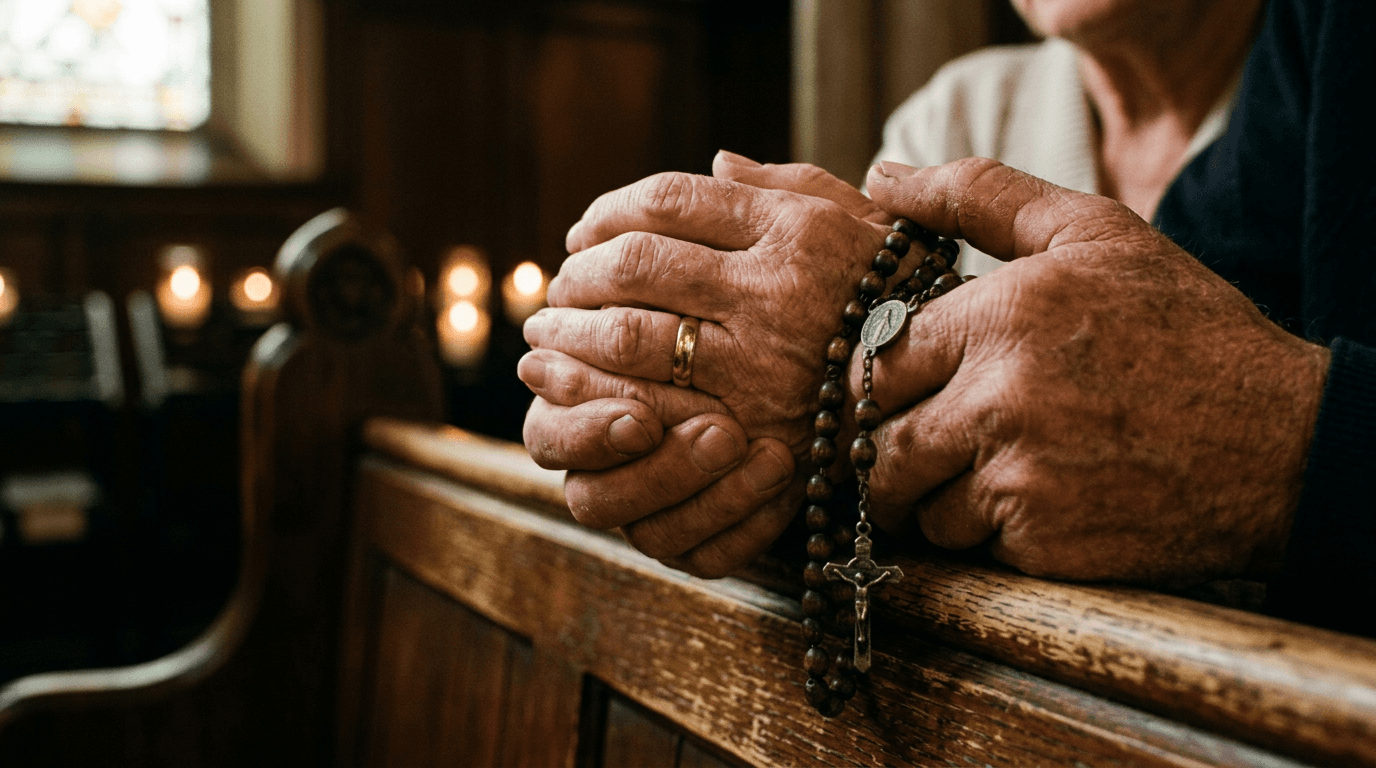
Rosary, prayer rug, candle, folded hands, scripture card, bench, scarf, water bowl, notebook, doorway threshold. If an object appears, decide what function it serves at that moment: grounding, avoidance, memory trigger, bargaining token, identity claim, or surrender marker.
Then track if object meaning shifts by scene end. That shift can carry emotional turn with minimal text.
Operationally, maintain a belief-state ledger in revision:
character belief position before scene, scene pressure trigger, prayer mode, turning beat, post-scene action.
When notes alter structure, update this ledger so prayer beats do not become redundant or contradictory across acts.
A common late-draft problem is stacking multiple prayer scenes with identical emotional shape. Ledger visibility helps diversify function: one scene may be plea, another confrontation, another gratitude, another refusal.
From an audience perspective, what matters most is authenticity of human struggle. People can disagree about faith frameworks and still recognize truth in a character wrestling honestly with need, shame, grief, love, and responsibility.
If your scene honors that struggle with specificity and consequence, it will land beyond ideology.
And that is the real craft target: not proving a worldview, but revealing a person at the edge of their own certainty.
One final practical framework helps prayer scenes stay dynamic across an entire script: response taxonomy.
After prayer, characters usually respond in one of four ways:
immediate obedience (act now),
delayed obedience (wait then act),
deflection (avoid action),
reversal (act opposite to prayer intention).
If multiple prayer scenes in your script all produce the same response type, emotional pattern can become predictable. Varying response type by act keeps development alive and prevents repetitive “prayer then tears” rhythms.
You can also stage social risk around prayer visibility.
Private prayer carries one kind of vulnerability.
Public prayer in front of peers, rivals, or family carries another.
A character who performs confidence in public may fracture only in private prayer. A character who hides belief may risk status by praying openly. Those stakes are scene fuel. They turn prayer from introspection into relational action.
Practical Drill: Response Diversity Check
List all prayer scenes and assign each one response type (obedience, delay, deflection, reversal).
If distribution is narrow, redesign one scene to force a different response path.
Practical Drill: Visibility Flip Test
Rewrite one private prayer scene as public, and one public prayer scene as private.
Observe how stakes and behavior change.
This test quickly reveals whether your scene’s emotional power comes from true conflict or from easy atmosphere.
Practical Drill: Post-Prayer Action Timer
Set an action timer rule in revision:
major prayer beat must trigger observable action within the next scene or two.
If action consequence arrives too late or never, prayer risks feeling disconnected from main narrative engine.
In long-form storytelling, prayer scenes are often remembered not for words but for what characters did immediately after. A promise made in prayer and broken in action can be as revealing as any confession. A vow resisted then honored late can become arc spine. Use this deliberately.
From a craft standpoint, prayer writing is less about eloquence and more about alignment between belief language and behavioral courage. When those two diverge, drama appears. When they converge under pressure, transformation appears.
That is why these scenes matter when written with rigor.
They are not pauses from story.
They are story deciding what kind of person your character will become when no one else can answer for them.
Final Step
Build your next script with Screenweaver
Move from ideas to production-ready pages faster with timeline-native writing and AI-assisted story flow.
Try Screenweaver