
The Black List: How to Use It Effectively in 2026
You've heard the whispers. "Just get an 8 on the Black List and managers will start emailing you." So you click over, see the evaluation prices, and freeze. Used badly, the Black List will drain your wallet and your confidence. Used well, it becomes a targeted testing lab and calling card for the right script at the right time.
This guide walks you through how to use the Black List strategically in 2026: which scripts to host, when to pay for evaluations, how to read the numbers, and how to fold it into a larger strategy alongside contests and fellowships like those in our fellowships guide.
What the Black List Actually Is (and Isn't)
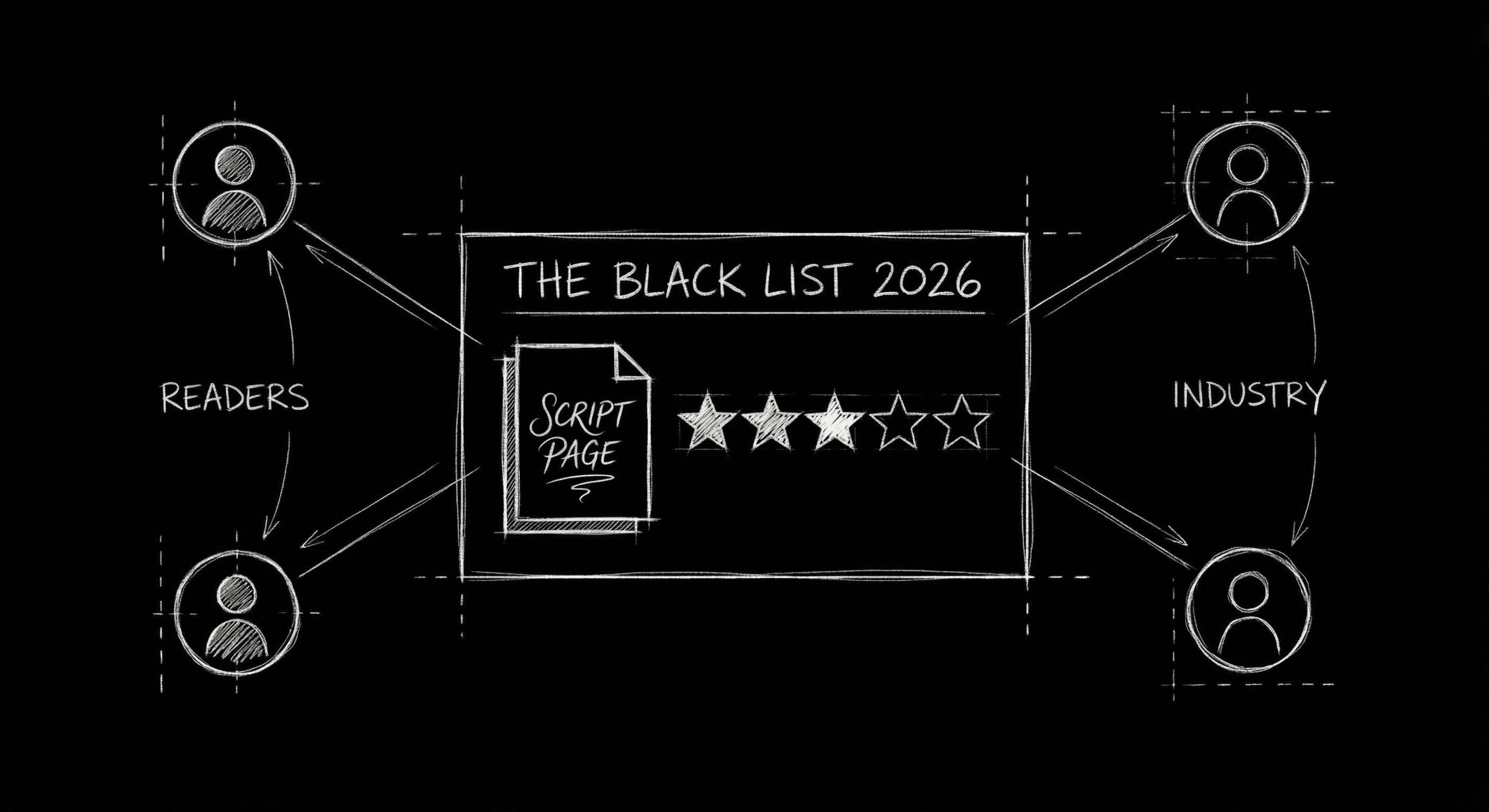
The site is a hosting platform, a paid evaluation service with numerical scores and reader comments, and a discovery tool used by some reps and producers. It is not a guarantee of reads from top-tier managers or a replacement for craft and rewriting.
Think of it like a high-traffic, curated script library. Your job is to decide whether this library is a good home for this script, right now, and how you'll use whatever comes back, numbers, comments, or silence.
Scenario 1: Hosting a Grounded Feature With Strong Coverage
Imagine you've received coverage from a trusted service: "consider" for script and writer, praise for dialogue and emotional core, and one structural note you've since addressed. The Black List can play three roles: third-party signal (an 8+ is something you can mention in queries), discovery hook (some reps filter by score and genre), and development tool (reader comments can confirm or challenge other notes).
In this scenario, hosting plus a carefully timed evaluation can be a smart move.
Scenario 2: An Early Draft With No Outside Reads
You just hammered out a pilot. No one else has read it. Buying an evaluation now is often a bad idea: Black List readers are fast and blunt, low scores live on your dashboard, and you'll pay to hear what a writers' group could have told you for less. Get peer reads and at least one serious rewrite before you expose the script to a standardized scoring system.
Try it free
Try Screenweaver for free on your script
It is free. Import your existing project, get a clearer view of your outline, and regain control of your story structure in minutes.
Start FreeThe Mechanics: Hosting, Evaluations, and Scores
Hosting keeps your script on the site and discoverable; your logline and tags need to be sharp. Evaluations cost extra and give you numerical scores and written comments. An 8 or above overall is often the "signal" threshold. Reading the numbers: a single 6 doesn't mean "you're bad." Multiple 6s usually mean "promising but not yet exceptional." Treat the platform like a lab, numbers are data, not destiny.
Trench Warfare: Mistakes That Drain Bank Accounts
Buying evaluations before you're ready. Do not purchase until at least one outside reader has confirmed the script is ready for that level of scrutiny. Start with one evaluation; only buy a second if the first is solid and you want to see if the pattern holds.
Misusing loglines and tags. If your logline is vague, you disappear in search. It needs to be specific enough that a producer can tell in one glance if it's their thing. Our logline guide applies here.
Treating scores as moral judgments. A 6 might mean you're on the right track but not yet at the top of the heap. Use comments and scores as diagnostics, not pronouncements.

When the Black List Is Not the Right Tool
Hold off if your script is micro-budget experimental with a very narrow audience, your voice is still in early formation, or your budget is low and you'd be choosing between the Black List and a targeted genre contest that fits your script perfectly.
[YOUTUBE VIDEO: Screen-capture tour of the 2026 Black List dashboard, walking through uploading a script, ordering an evaluation, and interpreting a sample evaluation line by line.]
Final Step
Build your next script with Screenweaver
Move from ideas to production-ready pages faster with timeline-native writing and AI-assisted story flow.
Try Screenweaver