
Feedback Fatigue: When to Stop Submitting and Start Rewriting
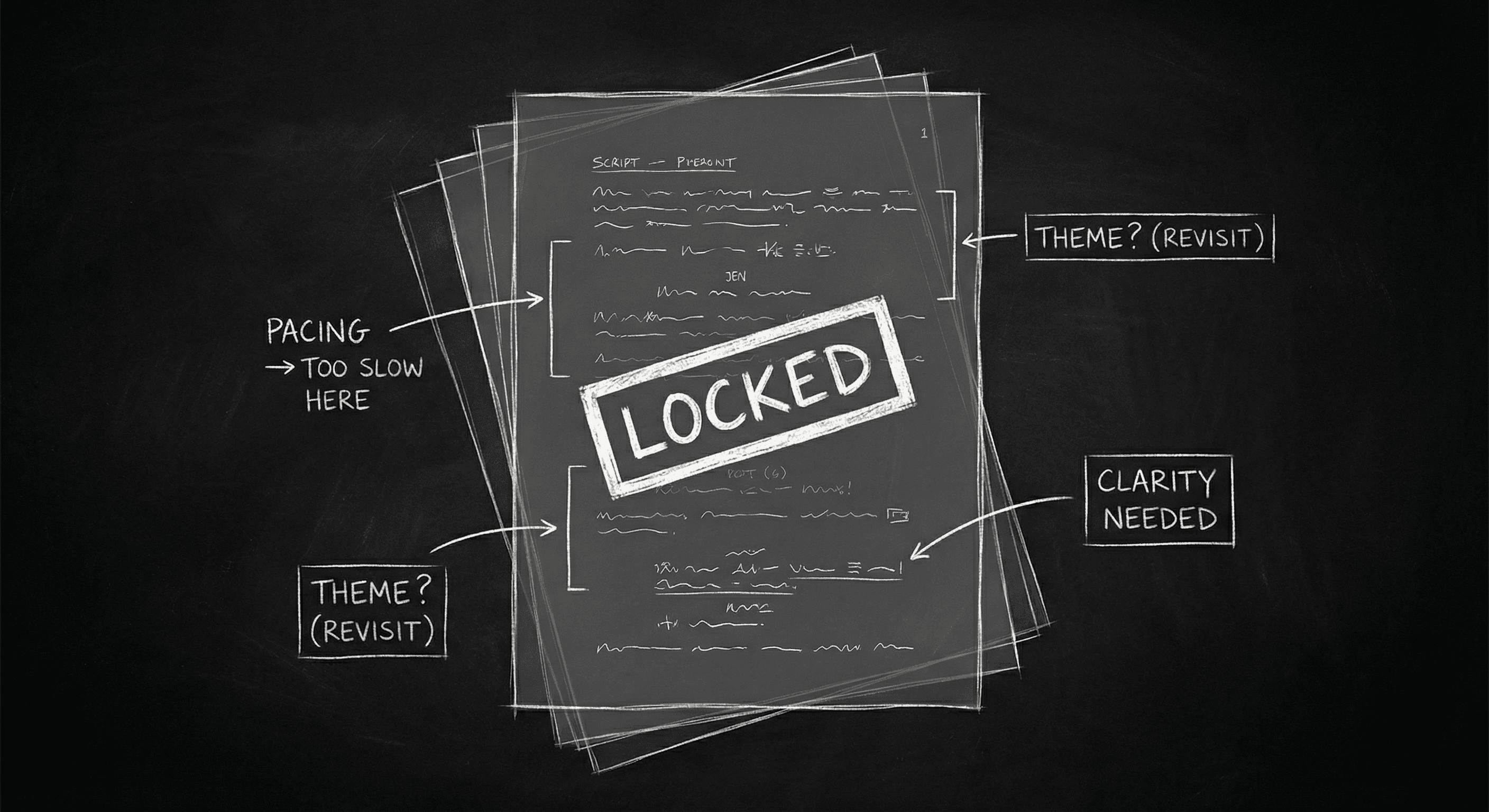
There's a specific kind of exhaustion that doesn't come from writing. It comes from reading about your writing. You've paid for coverage, entered contests that offered notes, workshopped pages, sent drafts to friends and mentors. Your script is now ringed with opinions like an old workprint hung with tape and scribbles. Part of you wants to keep submitting as is, hoping someone will finally "get it." Another part wants to tear the whole thing apart. A third part is just tired. This is feedback fatigue, and managing it is as much a professional skill as structure or dialogue. The question is not "Should I ignore notes?" or "Should I obey everything?" It's: When have I reached the point where more submissions of this draft are pointless, and what do I do next?
Why Feedback Fatigue Happens
Think about it like old-school film editing. You shoot a scene, you start cutting. At first, every change is big. After a while, you're shaving frames. If you keep making micro-edits forever, you miss the point where the cut is good enough to show. Feedback cycles are the same. Early on, notes reveal gaping holes and major confusions. Later, they tend to contradict each other, focus on personal taste, or ask you to zig and zag simultaneously. If you never distinguish between those phases, you burn out.
Scenario 1: The Script Stuck in Perpetual Contest Season
You have a feature you've been sending out for three years. It's hit quarterfinals several times, once made a semifinal, received "consider" coverage but never "recommend." Every year you make small tweaks and submit again. At some point, you're not testing the script. You're testing your tolerance for frustration. That pattern tells you the script is solid, maybe quite good, but not explosive; it's found its rough level. Further tiny fixes may not bump it over the line. The fatigue is your creative brain saying: "We've learned what we can from this. It's time to write something else, or rethink this from a deeper foundation." For how to use those quarterfinalist placements in the meantime, see handling rejection.
Scenario 2: Coverage That Keeps Saying the Same Thing
You've paid for coverage from a reputable service, a contest that includes notes, and a consultant you trust. Across those reads, you see the same comments: "Second act sags." "Protagonist's goal gets muddy in the middle." "Theme introduced early, then dropped." Different readers, same diagnosis. In that case, the answer isn't to shop the script harder. It's to rewrite at a structural level. Submissions without substantial change are like re-projecting the same rough cut and expecting the audience to react differently.
Trench Warfare: The Most Common Feedback Traps
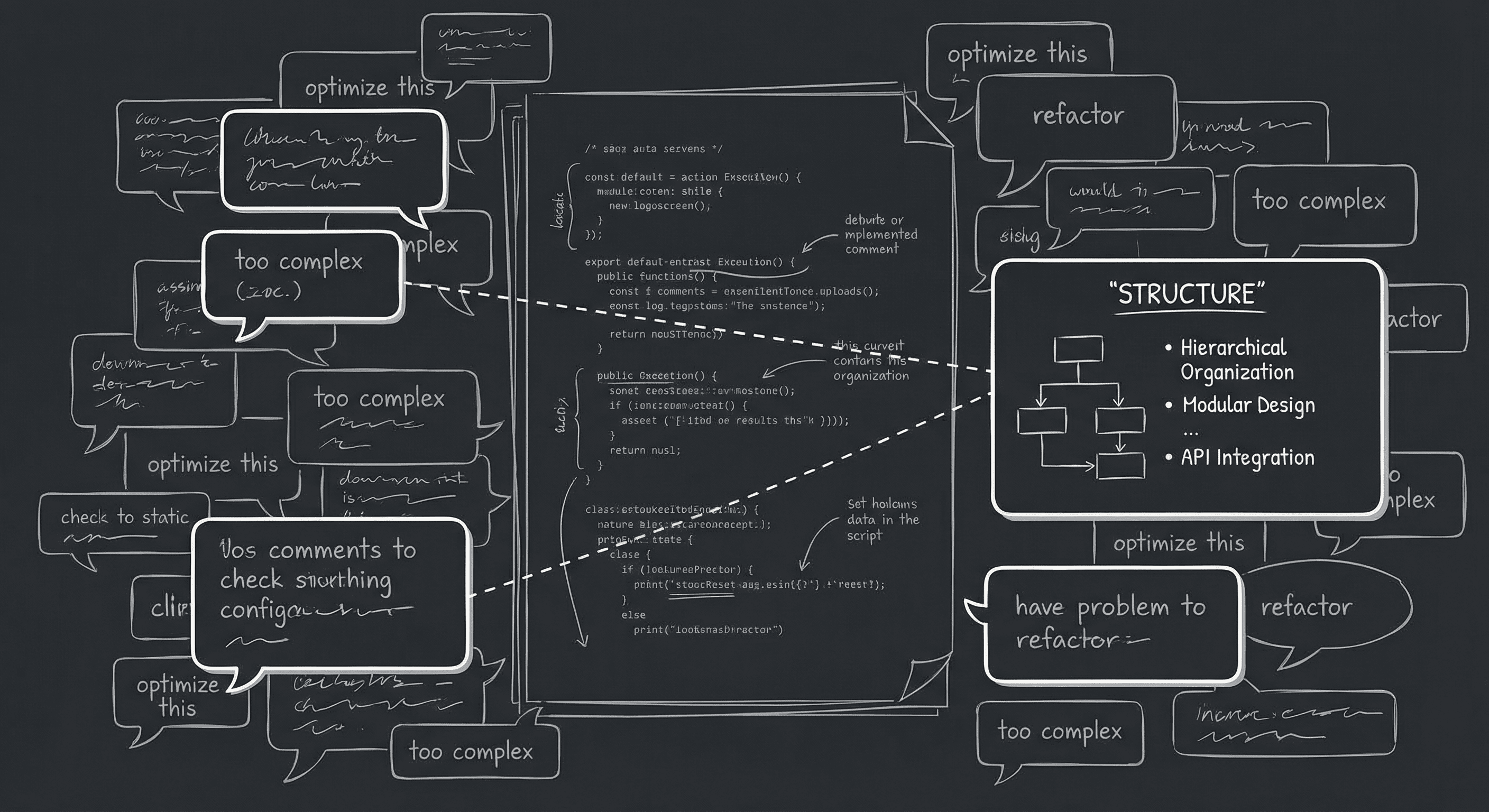
Chasing every note. You try to honor Reader A (more backstory), Reader B (cut half the backstory), and Reader C (different genre). You twist the script out of shape until it loses its spine and doesn't feel like your work. The professional move is discernment: look for patterns (what three smart people say in different words), weigh notes against your core intention, and let some feedback go.
Using feedback as a delay tactic. Sometimes you're scared of the next phase, querying, making a short, starting a new script. So you keep sending out for "just one more opinion." Endless feedback becomes an excuse not to be seen. At some point, the bravest thing is to lock the draft and move forward, or move on.
Confusing hurt with helpfulness. The most useful note might hurt. "Your protagonist is passive." "I didn't believe the central relationship." Pain isn't a reliable indicator that the note is wrong. Often it's a sign someone poked the exact place that needs work. Separate wounding delivery from accurate diagnosis.
Try it free
Try Screenweaver for free on your script
It is free. Import your existing project, get a clearer view of your outline, and regain control of your story structure in minutes.
Start FreeSubmit, Rewrite, or Retire?
| Question | Implication |
|---|---|
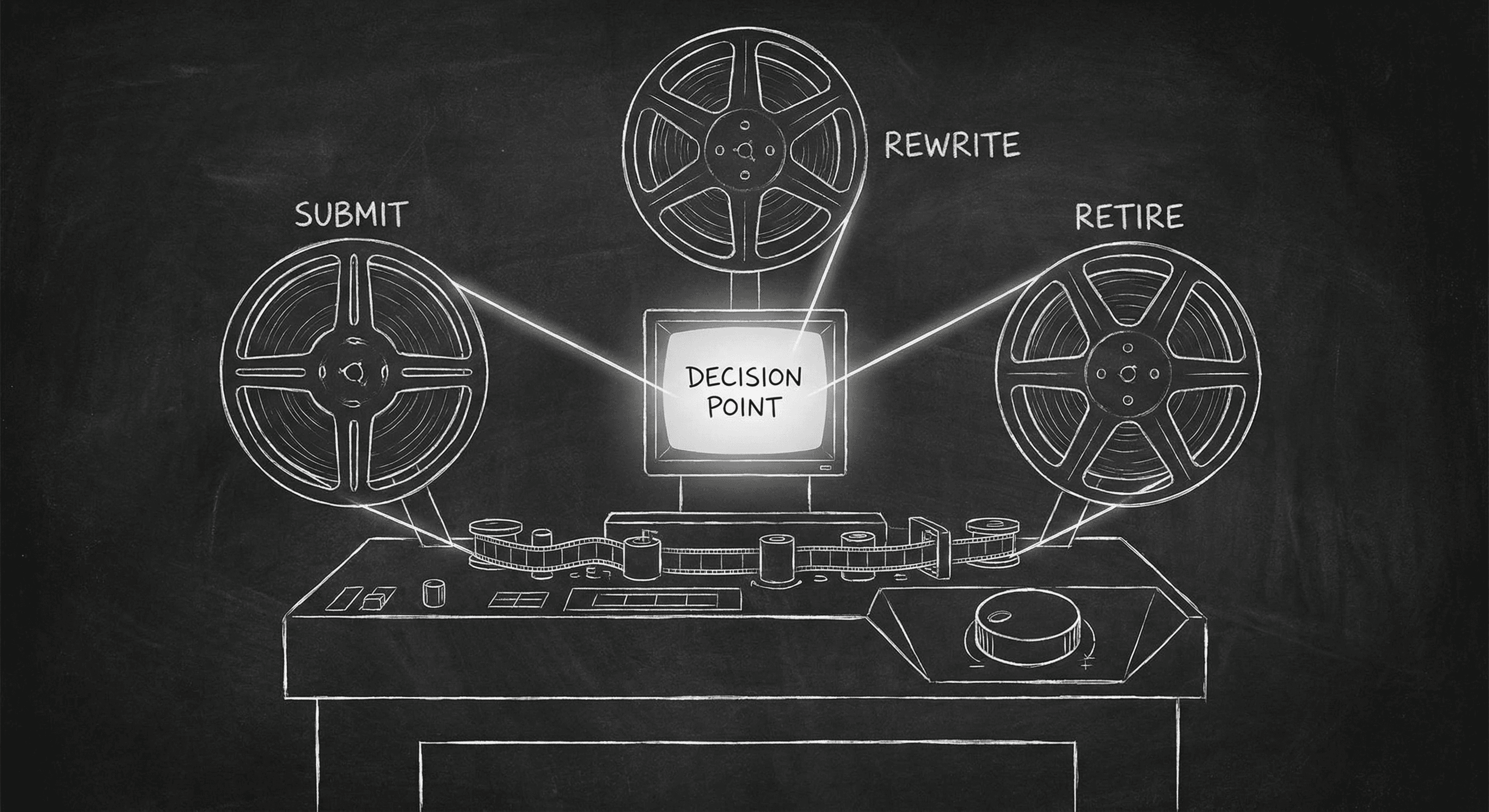
| Have 3+ independent readers agreed on core issues? | If yes, rewrite at structure level |
| Has the script's contest performance plateaued? | If yes, more submissions may be waste |
| Do new notes mostly repeat old ones? | If yes, you've learned this draft's lessons |
| Do you still feel excited by this story? | If no, consider retiring or rebooting |
When to stop submitting this draft: You're getting no new information; your emotional response is disproportionate; you're starting to resent the script. Stopping doesn't mean the script is bad. It means you've extracted its lessons and your energy is better spent elsewhere.
When to commit to a deep rewrite: You still love the core idea and multiple sharp readers agree what is wrong. That might mean re-outlining from scratch, changing the protagonist, or shifting the narrative frame. You're re-building, not polishing.
When to write the next script: The current draft is good enough to show as a sample; you feel your craft improving but are bored with this story; new ideas keep interrupting. Careers are built on a body of work and the ability to recover by making something new.
For a rotation of samples and when to pivot, writers' organizations often echo: you need multiple scripts, not a single "forever script." See WGA resources{rel="nofollow"} for industry context.
[YOUTUBE VIDEO: A writer opens a folder of old coverage PDFs, summarizes each major note received on a single feature over several years, and explains the exact moment they stopped rewriting and began the script that eventually sold.]
Final Step
Build your next script with Screenweaver
Move from ideas to production-ready pages faster with timeline-native writing and AI-assisted story flow.
Try Screenweaver