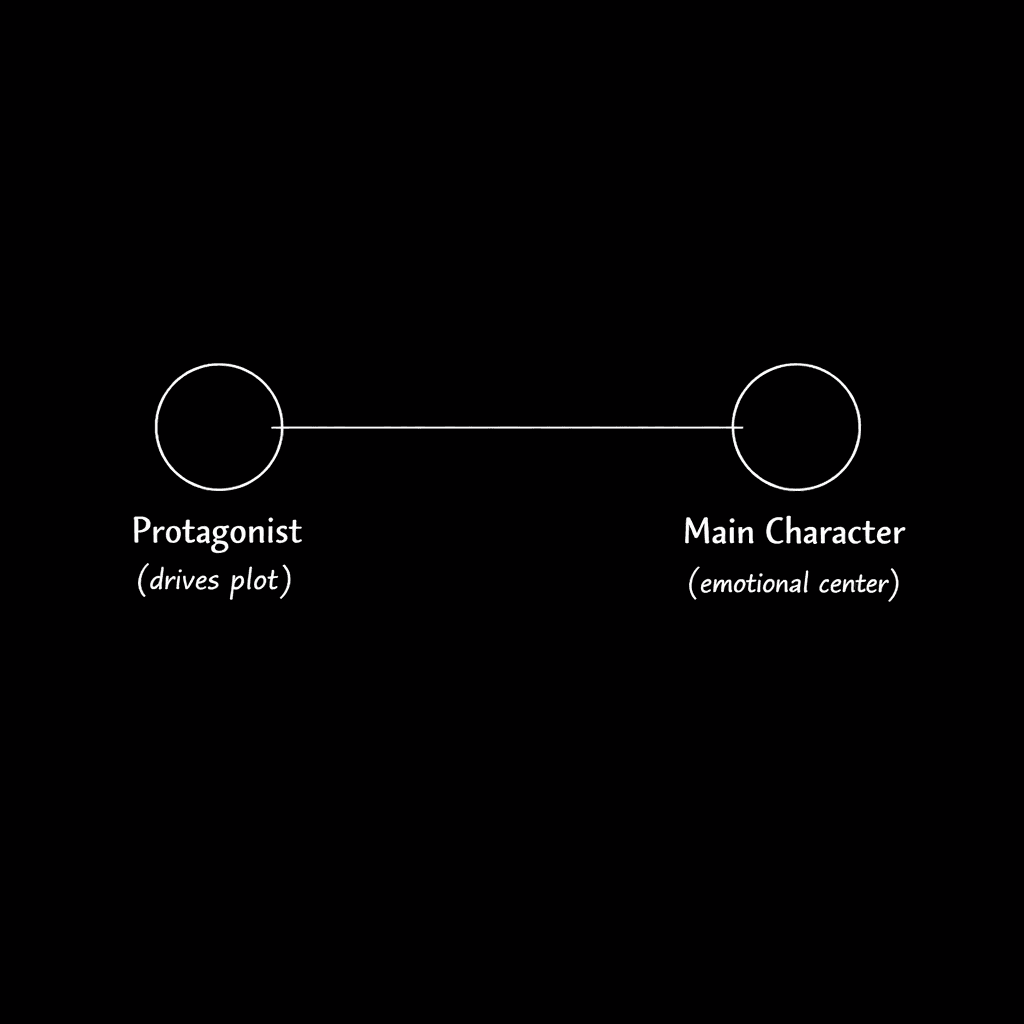

They're not always the same person. The protagonist is the one whose choices drive the plot. The main character is the one we're with,the one whose eyes we see through, whose change (or refusal to change) we care about. In most stories they're the same. In some of the best stories they're not. The Great Gatsby: Nick is the main character. Gatsby is the protagonist. Nick watches. Gatsby acts. We feel the story through Nick. We're invested in what happens to Gatsby. Splitting the roles gives the writer two levers. Who does the story happen to? Who do we become for the duration of the read? Get that wrong and the script feels muddled. Get it right and the audience knows exactly where to put their attention.
Beginners often use "protagonist" and "main character" interchangeably. That's fine until you're writing a script where the person making the big moves isn't the person we're closest to. Then you need the distinction. The protagonist has the goal. The main character has the arc,or the lack of one. Sometimes the main character doesn't change. Sometimes they're the one who does. The point is to know who is who.
Definitions That Hold Up
Protagonist: The character whose pursuit of a goal (or whose central conflict) drives the plot. If you took them out, the story would collapse or become a different story. They make the key decisions. They face the main obstacle. The plot is built around their journey.
Main character: The character through whom we experience the story. We're in their POV,their perspective, their emotional reaction, their moral frame. They may or may not drive the plot. They're the one we're aligned with. The one whose inner life we care about.
When they're the same person, you have a straightforward hero story. When they're different, you have a narrator or a witness,someone who is close to the action but not always the one taking the action. That distance can create irony, tension, or a specific kind of empathy. We care about the protagonist because the main character cares. We see the protagonist through the main character's eyes. The main character's judgment (or lack of it) colors everything.
The protagonist does. The main character sees,and feels.
Why the Split Matters
When the protagonist and main character are different, you get tools that a single-hero story doesn't have. The main character can be wrong about the protagonist. They can idealize them (Nick and Gatsby). They can fear them. They can learn from them or be destroyed by them. The gap between what the main character believes and what the audience comes to understand is where irony and tragedy live. If the main character and protagonist were the same, we'd be inside the protagonist's head. We'd know their secrets. With a separate main character, we're one step removed. We see the protagonist as the main character sees them,and we may see more or less than the main character does. That's craft.
It also solves practical problems. Sometimes the most interesting character in the story is not the one who should be in every scene. The detective is the protagonist,they're solving the case. But the victim's spouse might be the main character,we feel the loss through them. The story is "the detective solves the case." The emotional throughline is "the spouse learns the truth." Two roles. One story.
Relatable Scenario: The Biopic
You're writing about a famous figure. The famous figure does everything,they're the protagonist. But they're also opaque. Their inner life is hard to access. So you put a main character next to them. A spouse. A friend. A journalist. We see the famous figure through that person's eyes. We feel their admiration, their disappointment, their confusion. The protagonist is the famous figure. The main character is the one we're with. The script has a clear POV and a clear plot. Without the distinction, you might try to get inside the famous figure's head in every scene,and the script can feel flat or fake. With a main character who witnesses, you have a way in.
Relatable Scenario: The Crime Story
The cop is the protagonist. They're working the case. But the person most affected by the crime,the survivor, the parent of the victim,might be the main character. We open with them. We return to them. We feel the cost of the crime through them. The cop's job is to solve it. The main character's arc might be acceptance, revenge, or collapse. The plot is the cop's. The heart is the main character's. When you sit down to outline, you need to know: whose story is the plot? Whose story is the feeling? Then you assign the scenes accordingly. For structure that holds both, see how to outline a 60-minute TV drama pilot,the same clarity about who carries the hour applies.
What Beginners Get Wrong (The Trench Warfare Section)
Assuming they're always the same. They're not. In Sherlock, Watson is often the main character,we're with him, we're surprised by Sherlock. Sherlock is the protagonist,the mysteries turn on his actions. If you're writing a story where the "hero" is someone we observe rather than become, name that. Who drives the plot? Who do we feel with? You might have two answers.
Making the main character passive. The main character doesn't have to drive the plot. They do have to do something. They react. They make small choices. They have a perspective. If the main character is a total bystander with no arc and no agency, the audience will drift. Give them a want, a flaw, or a question. Even Nick Carraway has a journey,he goes from observer to participant to someone who has to decide what to do with what he's seen.
Muddy POV. If you've split protagonist and main character, the script should consistently favor the main character's POV. We see what they see. We don't slip into the protagonist's head unless you've made a deliberate choice (e.g., one scene from the protagonist's POV for a twist). Inconsistent POV feels like the writer couldn't decide whose story it was.
The main character who doesn't care about the protagonist. If we're with the main character, we need a reason to care about what happens to the protagonist. The main character's investment is our investment. If the main character is indifferent, we'll be indifferent. Give the main character a stake. They love the protagonist. They need something from them. They're afraid of them. Something. The link between them is what makes the split work.
Calling everyone the protagonist. In an ensemble, you might have multiple plot drivers. But you usually have one character who is the spine,the one whose fate we're most invested in. Clarify that. "Protagonist" doesn't mean "everyone who matters." It means the one whose goal and conflict define the plot. If you have two, you might have two storylines. That's fine. Just don't call four people the protagonist. One spine. Maybe two. Not a committee.
Try it free
Try Screenweaver for free on your script
It is free. Import your existing project, get a clearer view of your outline, and regain control of your story structure in minutes.
Start FreeWhen They're the Same (The Default)
Most scripts have one character who is both protagonist and main character. They want something. They pursue it. We're with them. They change (or don't). That's the standard. You don't need to split the roles to write a good script. You need to know when the split would serve the story. If the most interesting character is the one we should watch rather than become,or if the one driving the plot is someone we need distance from,then split. Otherwise, keep it simple. For stories that play with structure in other ways, see writing non-linear narratives; the question of who we follow becomes even more important when time is fractured.
A Simple Table
| Role | Function | Example (Gatsby) |
|---|---|---|
| Protagonist | Drives plot; has the goal; faces main obstacle | Gatsby (wants Daisy; pursues it) |
| Main character | Our POV; emotional throughline; often the one who changes or refuses to | Nick (observes; is changed by what he sees) |
When they're the same character, the table has one row. When they're different, you have two columns to fill. That exercise alone can clarify a muddy script.
[YOUTUBE VIDEO: A breakdown of a film or series where protagonist and main character are clearly different,e.g., Gatsby, Sherlock, To Kill a Mockingbird,showing how POV and plot are assigned.]
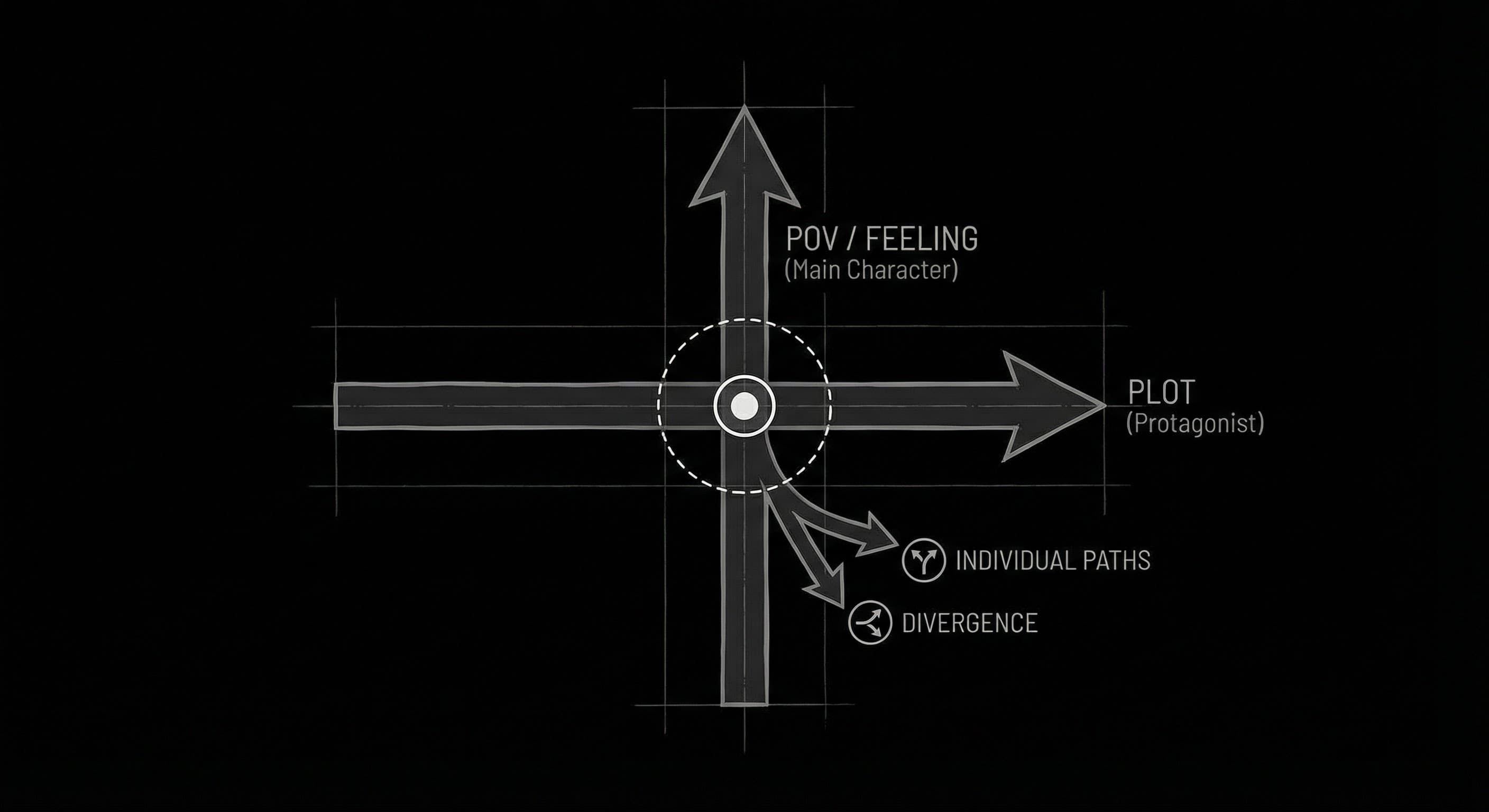
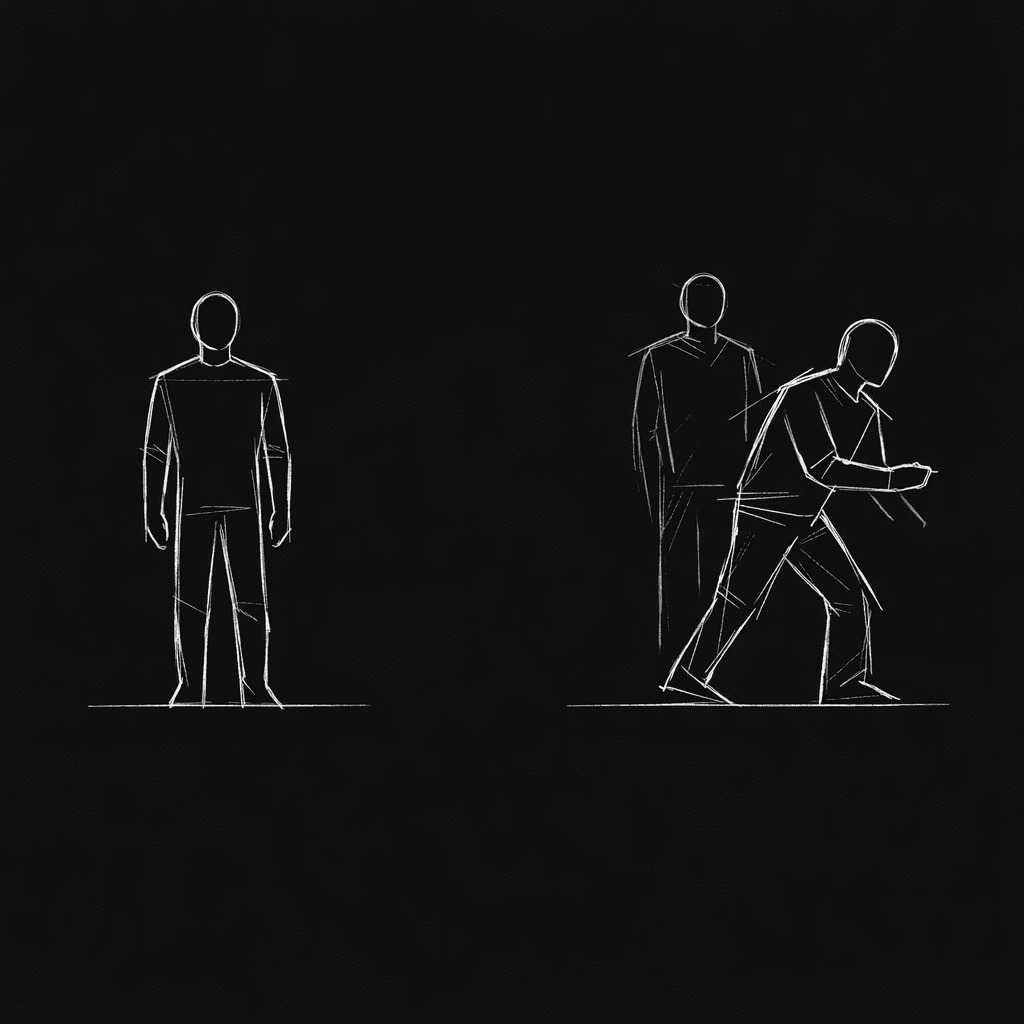
These two visuals work as a pair: the first shows POV and plot alignment, and the second shifts to One character vs two: same or split—compare them briefly, then move on.
The Perspective
The protagonist is who the story happens to in terms of action. The main character is who we're with in terms of experience. Sometimes that's one person. Sometimes it's two. Know which you're writing. When you do, your POV stays clear and your audience knows where to put their loyalty. That's not jargon. That's the difference between a script that feels focused and one that feels like it's looking for a hero.
Final Step
Build your next script with Screenweaver
Move from ideas to production-ready pages faster with timeline-native writing and AI-assisted story flow.
Try Screenweaver