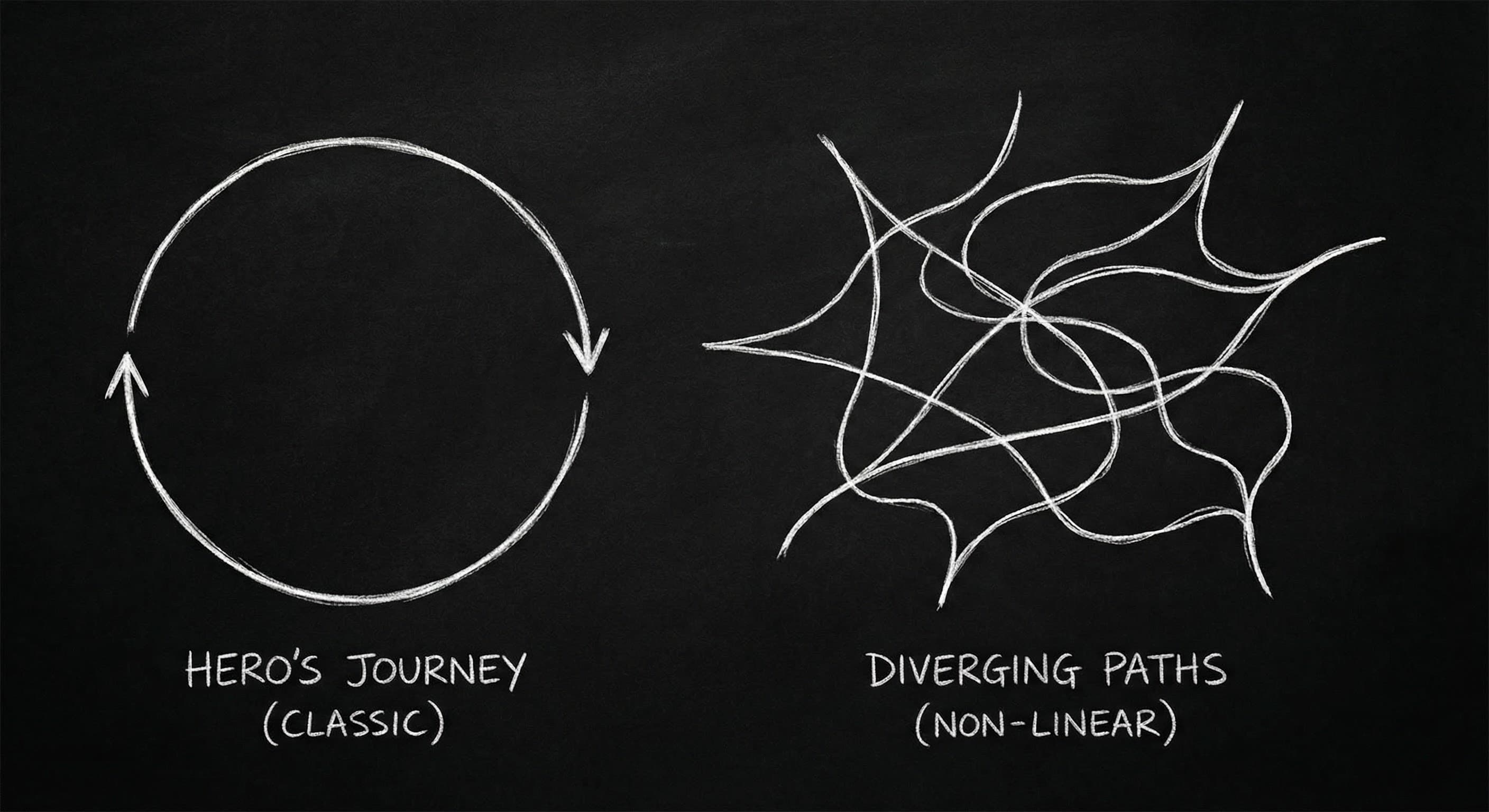

The hero leaves the ordinary world. They cross the threshold. They face trials, meet a mentor, endure the ordeal, seize the elixir, and return transformed. You've heard it a thousand times. Joseph Campbell's monomyth gave Hollywood a template,and for decades it worked. But sit in a theater or scroll a feed today and you'll feel the restlessness. The same arc, again. The chosen one. The return with the boon. Audiences aren't stupid. They've seen the pattern. When every blockbuster follows the same cycle, the cycle stops feeling like myth and starts feeling like a formula. That doesn't mean the Hero's Journey is dead. It means it's no longer enough. Modern audiences have been raised on variety. They want stories that reflect different worldviews, different kinds of change, and sometimes no "journey" at all,just consequence, ambiguity, or collective fate. Writers who only reach for Campbell are leaving money and meaning on the table.
Here's the tension. The Hero's Journey is psychologically resonant. Departure, initiation, return,it maps onto real rites of passage. But it also assumes a single hero, a clear threshold, a transformative return. Many of the best films and series of the last twenty years don't fit. They're ensemble. They're tragic. They're about systems, not individuals. They end in doubt. If you force those stories into the monomyth, you flatten them. So the job isn't to throw away the Hero's Journey. It's to know when to use it,and when to reach for something else.
What the Hero's Journey Actually Assumes
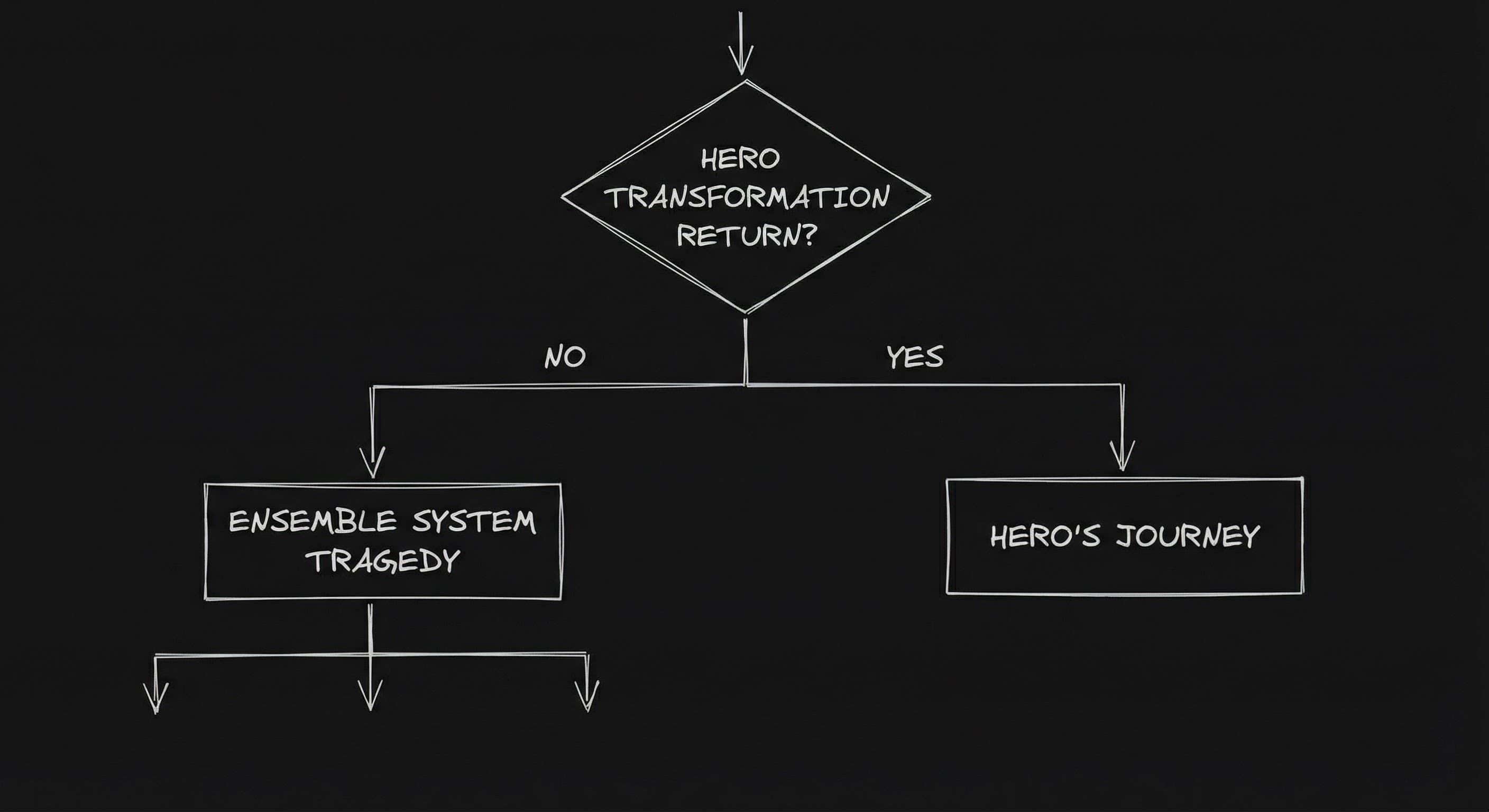
Campbell's cycle assumes a protagonist who changes. They leave home, are tested, and come back different. It assumes a clear threshold: a door, a border, a point of no return. It assumes the story is about that one character's transformation. It assumes a return that matters,the hero brings something back to the ordinary world. Those assumptions work for Star Wars, The Matrix, The Lion King. They work less well for No Country for Old Men, Parasite, or The White Lotus. In the first, the "hero" doesn't win and doesn't transform in a tidy way. In the second, the story is about a family and a system, not one person's arc. In the third, we're watching a group of people orbit each other; there's no single threshold, no single elixir. Modern audiences have learned to love all of these. They don't need a hero. They need a reason to care,and that can come from structure that isn't circular.
The monomyth is one lens. When the story you're telling is about collective fate, moral ambiguity, or the failure of the individual to change the world, a different lens will serve you better.
| Paradigm | Best when the story is about… | Typical ending |
|---|---|---|
| Hero's Journey | One person's transformation; leaving and returning | Return with change; order restored or renewed |
| Tragic / decline | Consequence; no escape | Loss, death, or irreversible fall |
| Ensemble / multi-protagonist | Group, family, or system under stress | Multiple outcomes; no single "winner" |
| Flat arc | Protagonist who changes the world, not themselves | World or others change; protagonist steady |
| Non-linear / modular | Meaning from order and contrast | Assembly; revelation by structure |
Relatable Scenario: The Ensemble Drama
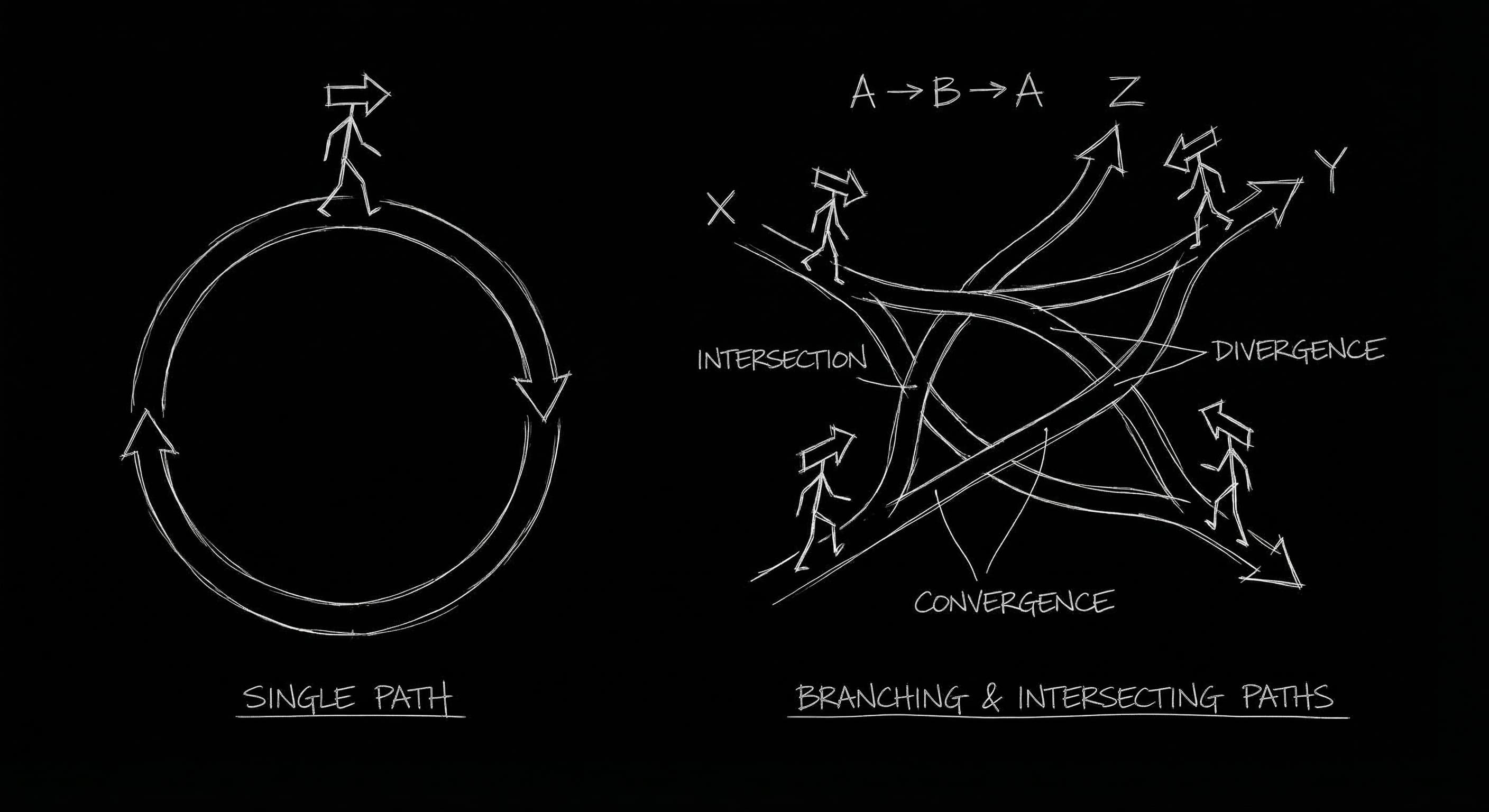
You're developing a series about a family business. Three siblings, the patriarch's death, a power struggle. You try to force it into the Hero's Journey: one sibling as "the hero," the will as "the call," the company as "the special world." It feels wrong. The other two siblings aren't just obstacles,they're co-leads. Each has a journey. No one "returns" with an elixir; the ending is messy, some win, some lose, the family is changed but not "saved." The story isn't about one hero. It's about a system,the family,under stress. So you drop the single-hero frame. You think in terms of multiple arcs that intersect. You might use a 5-act structure for limited series to map the season, and you let the "journey" be distributed. One character has a classic rise; another has a fall; a third has a flat arc (they change the world around them but don't change much themselves). The audience gets variety and depth. You're not betraying structure,you're choosing the right one.
Relatable Scenario: The Anti-Hero Film
Your protagonist is a mid-level criminal. They don't want to "cross a threshold" into a special world,they're already in the underworld. They don't seek transformation; they seek survival. By the end they're maybe worse, or dead, or unchanged. The Hero's Journey would have you send them on a redemptive arc. But the story you want to tell is about consequence, not redemption. If you force a "return with the elixir," the ending feels false. So you structure around decline or stasis. The Fichtean curve or a tragedy shape might fit: crisis after crisis, no safe return. Or you borrow from Eastern structures that don't require a central conflict in the Western sense,stories built on contrast and twist rather than hero vs. antagonist. Our guide on Kishōtenketsu is useful here. The point is: the paradigm you choose should match the story. When the story is dark or ambiguous, a paradigm that allows for no return,or a return that doesn't fix anything,will feel more honest.
What Modern Audiences Are Used To
They've seen the Hero's Journey in school, in TED talks, in every franchise. They've also seen The Sopranos, Breaking Bad, Succession. They've seen films where the protagonist doesn't win, where the villain has a point, where the ending is open. They've seen stories that prioritize atmosphere, theme, or structure (e.g. non-linear, anthology) over a single character's transformation. That doesn't mean they reject the monomyth. It means they recognize it as one option. When you use it well,when the hero's transformation feels earned and the return matters,they still respond. When you use it by default, they feel the formula. The demand isn't "no structure." It's "the right structure for this story." Sometimes that's the Hero's Journey. Sometimes it's something else entirely.
Try it free
Try Screenweaver for free on your script
It is free. Import your existing project, get a clearer view of your outline, and regain control of your story structure in minutes.
Start FreeAlternatives: What to Reach For Instead
When the story isn't about one person's transformation, you have other options. Ensemble or multi-protagonist structure: several leads, each with a mini-arc; the story is the sum of their intersections. Tragic or decline structure: the protagonist falls; the "return" is death or defeat. Flat-arc protagonist: the protagonist stays largely the same; the world (or the people around them) changes. System or theme-first structure: the story is about a place, a family, or an idea; characters serve the theme rather than the theme serving one hero. Non-linear or modular structure: time or POV is fragmented; the audience assembles meaning from the order and contrast of pieces. Each of these has its own pacing and payoff. The Fichtean curve vs. Freytag's pyramid comparison is useful for thrillers and stories that build through repeated crises rather than one central climax. The point is to name the paradigm you're using. Once you name it, you can execute it with intention instead of defaulting to the monomyth and then bending your story to fit.
The Trench Warfare Section: What Beginners Get Wrong
Defaulting to the Hero's Journey for every script. Not every protagonist is a hero. Not every story has a threshold or a return. If your logline is "everyone loses" or "the system wins," the monomyth is the wrong frame. Choose a structure that matches the emotional and moral shape of your story.
Confusing "no hero's journey" with "no structure." Rejecting the monomyth doesn't mean writing a shapeless script. It means choosing a different shape,multi-protagonist, tragic, Fichtean, etc. The audience still needs rhythm, escalation, and payoff. Structure is how you deliver that. Paradigm is which kind of structure.
Forcing a redemptive beat. You've written a dark story. The protagonist is morally compromised. Someone in the room says "can they have a moment of redemption?" Sometimes the answer is no. A tacked-on good deed at the end can undercut the whole film. If the story is about consequence, let the consequence land. Not every character needs to be likable or to change for the better.
Ignoring genre expectations. Some genres are still deeply tied to the Hero's Journey,fantasy, adventure, certain kinds of sci-fi. If you're writing in those spaces, the audience may expect a version of the cycle. The move isn't to discard it but to refresh it: same skeleton, different flesh. Subvert a beat. Make the return bitter. Give the "mentor" a selfish motive. Modern audiences want the paradigm acknowledged and then used with intention, not abandoned without thought.
Under-serving the ensemble. You've decided on multiple protagonists. But one character still gets 60% of the screen time and the others feel like satellites. If you're going beyond the single hero, commit. Give each major thread a clear arc and a clear payoff. The audience should remember what happened to each of them, not just the "main" one.
[YOUTUBE VIDEO: Side-by-side comparison of a classic Hero's Journey film (e.g. Star Wars) and a film that deliberately subverts or avoids it (e.g. No Country for Old Men or Parasite),key structural differences highlighted.]
When the Hero's Journey Still Fits
It still fits when the story is about one person's transformation and that transformation is the point. Coming-of-age. Redemption. The reluctant hero who answers the call. When the protagonist leaves home, is tested, and returns changed,and the audience is there for that arc,the monomyth works. The trick is to execute it well: clear threshold, earned trials, a return that matters. When you do that, no one complains that it's "the Hero's Journey." They're too busy feeling it. The problem is only when the story wants to be something else and you force it into the circle anyway.
The Perspective
The Hero's Journey is a tool. So are tragic structure, ensemble structure, and non-linear design. Modern audiences don't demand that you abandon myth. They demand that you match the paradigm to the story. If your script is about one person's transformation and a return that changes the world, use the monomyth,and use it with craft. If your script is about a family, a system, or a character who doesn't change or doesn't return, pick a different paradigm. The writers who thrive are the ones who can name more than one structure and choose the right one. That's what "beyond the Hero's Journey" means: not rejection, but range.
Final Step
Build your next script with Screenweaver
Move from ideas to production-ready pages faster with timeline-native writing and AI-assisted story flow.
Try Screenweaver