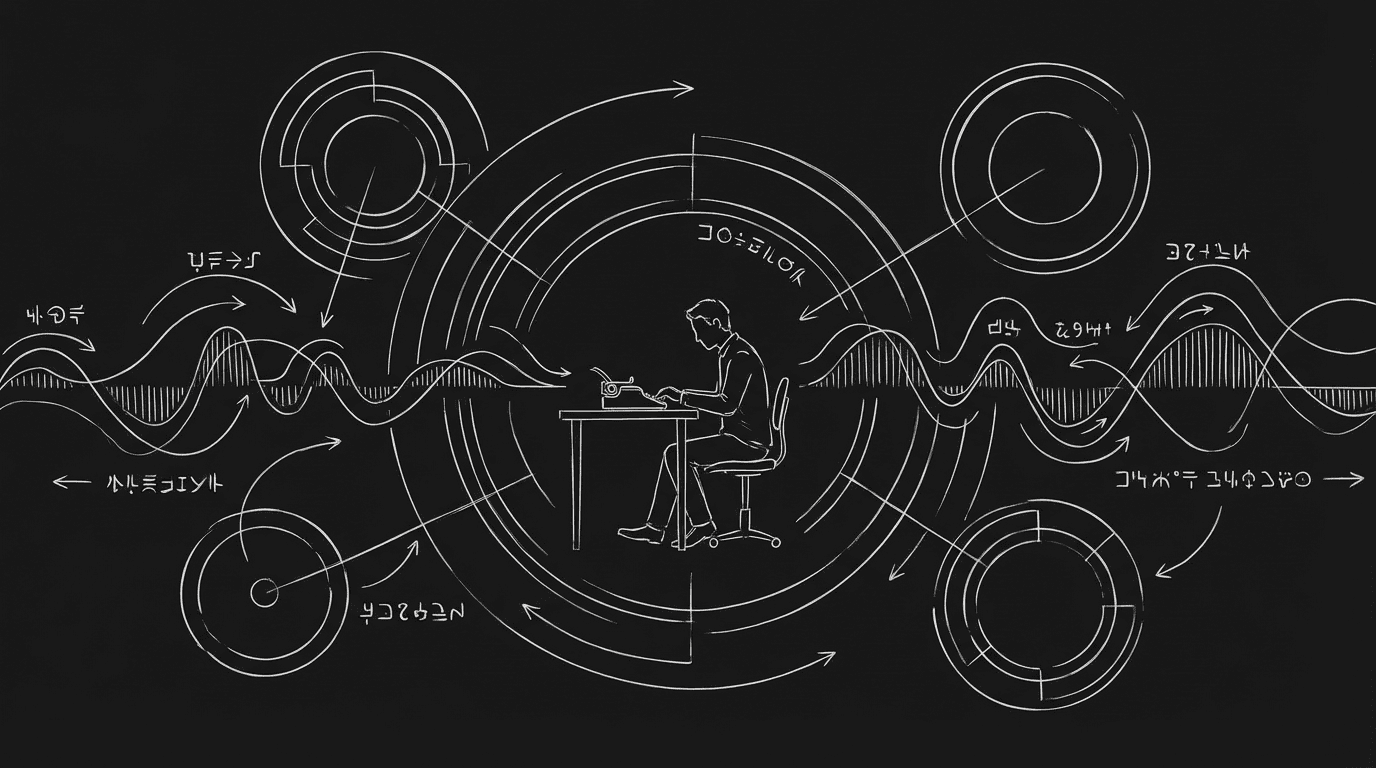

writing-elevated-sci-fi-arrival
Writing the Elevated Sci‑Fi: How to Build Your Own Arrival-Level Story
You’re on page 82 of your “big sci‑fi idea” and something feels wrong.
The spaceships are there. The future tech is there. The explosions are definitely there. But when you picture an audience actually watching this thing, you don’t feel anything in your chest. No ache. No sense of awe. Just noise.
That gap – between spectacle and feeling – is exactly where elevated sci‑fi lives.
Not “smarter for the sake of being smart.” Not an excuse to be obscure or slow. Elevated sci‑fi is what happens when the genre finally grows up and asks: What does this do to a human being? Denis Villeneuve’s Arrival is the go‑to example because it’s not about aliens teaching us a cool party trick with time. It’s about grief, choice, motherhood, and the weight of knowing your own future.
Think about it this way: most sci‑fi scripts chase answers. Elevated sci‑fi chases consequences.
This guide is about how to write that kind of script on purpose. Not by accident. Not by slapping a “philosophical” scene on page 90. You’re going to treat theme, structure, and visuals as one integrated machine that bends around a human core – the way Arrival, Annihilation, Her, or Ex Machina do.
And yes, that means throwing away a lot of beginner instincts.
What Elevated Sci‑Fi Actually Is (And What It Isn’t)
Let’s clear the marketing noise.
“Elevated” has become a lazy label. People throw it at anything slow, quiet, or vaguely sad. That’s not useful to you as a writer. You need a craft‑level definition you can design around.
Here’s a simple one:
Elevated sci‑fi is science fiction where the primary dramatic engine is emotional or philosophical stakes, not the mechanics of the premise.
The spaceship is a pressure cooker for a marriage. The time‑loop is a metaphor for grief. The AI isn’t a puzzle to solve; it’s a mirror held up to human desire.
Look at Arrival.
The logline on a bad day might read: “A linguist must communicate with aliens who perceive time non‑linearly before global war breaks out.” But the movie you feel is: “A woman who has already experienced the entire lifespan of her daughter chooses to live it anyway.”
Same plot. Different engine.
That’s the move.
And here’s why it matters for you:
- You stop writing scenes that only exist to explain the world.
- You start writing scenes that only exist to hurt, heal, tempt, or transform your protagonist.
- The worldbuilding, science, and “cool ideas” have to justify themselves emotionally or they don’t get screen time.
When you hold yourself to that standard, your script stops reading like “Episode 3 of a mid‑budget streaming show” and starts to feel like a feature people argue about in the car afterwards.
Scenario 1: The “Cool Premise, Hollow Core” Draft
Let’s walk through a real‑world pattern, because this is where most writers quietly sabotage themselves.
You’re an emerging writer named Lena. You love Interstellar, Arrival, and Annihilation. You’ve read a few structure books, you know your Save the Cat beats, and you finally get an idea:
A near‑future physics lab discovers a way to send short messages back in time, but each message scrambles someone’s memory in the present.
You feel the spark. You outline a bit. There are paradoxes. There are nosebleeds. There are boards covered in red string. It feels smart.
You start drafting.
By page 30, Lena has:
- Three exposition scenes in conference rooms.
- One “mind‑blowing” act break where a character disappears from existence.
- Zero specific, personal reasons for why the protagonist cares beyond “this could change the world.”
On Lena’s laptop, it feels like elevated sci‑fi. On the page, it feels like a puzzle movie with no emotional cost.
Here’s the quiet truth: you can’t fix that with one “deep” monologue on page 90. The problem was baked into the premise at the moment you decided what the story is really about.
Fixing Lena’s Draft: Re‑centering the Human Cost
Take the same idea and do the elevated move early, at the premise level.
Instead of:
“Scientists test time messages and things go wrong.”
You reframe:
“A physicist uses time messages to stop her sister’s death, knowing each change will cost her another shared memory.”
Same device. But now every use of the tech has a personal price tag you can dramatize: the injoke they lose, the holiday they forget, the fight they never resolve. The external stakes (government, weapons, paradox) are still there, but the spine is one woman’s relationship to grief and control.
This is what Arrival does with language and time.
Learning Heptapod isn’t just a plot requirement. It is literally the process by which Louise experiences, accepts, and chooses her future. Form and content weld together. Structure becomes worldview.
If you’re already halfway through a “cool premise, hollow core” draft, don’t panic. You don’t need to bin the whole thing. But you do need to anchor the premise to one specific human wound and one impossible choice.
Ask yourself three uncomfortable questions:
- Who gets hurt by this technology or phenomenon in a way that has nothing to do with saving the world?
- What are they already ashamed of, guilty about, or in denial of before page 1?
- How does interacting with the sci‑fi element force them to confront that thing on the worst possible terms?
If you can’t answer those, your script will drift toward “concept with set pieces” no matter how striking your imagery is.
The Structural Spine of Elevated Sci‑Fi
There’s a myth that “elevated” means “structureless.” That these movies float, resist clear acts, or break rules as a badge of honor.
Watch Arrival again with a pen.
The thing is built like a tank.
Clear inciting incident (ships appear). Clear Act One decision (Louise goes to the site). Clear midpoint (we realize the aliens perceive time non‑linearly and the “flashbacks” are something else). Clear All Is Lost beat (global misinterpretation, attack on the ship). Clear final choice (Louise uses her future knowledge to avert war and to accept her daughter’s fate).
The difference is not that the structure is weird. The difference is that the structure is aligned with the theme. The twists in understanding are also twists in meaning.
Here’s a high‑level comparison of how a generic high‑concept sci‑fi and an elevated sci‑fi tend to handle key beats:
| Beat | Generic High‑Concept Sci‑Fi | Elevated Sci‑Fi (e.g., Arrival) |
|---|---|---|
| Inciting Incident | World‑scale disruption: invasion, outbreak, tech revealed | Same disruption, but filtered through protagonist’s personal fracture |
| Midpoint | Big info dump or new rule of the premise | Revelation that redefines protagonist’s understanding of self/time |
| All Is Lost | External failure: weapon launch, system crash | Moral or emotional failure: choice that seems to betray inner truth |
| Climax | Physical victory over threat | Acceptance of cost, choice that fuses plot resolution with theme |
| Final Image | Status‑quo restored or changed visually | New emotional state made visible in an intimate, specific moment |
Notice the pattern: elevated sci‑fi doesn’t abandon genre structure. It hijacks it for interior conflict.
If you want to go deeper on structural beats, you can cross‑reference how your acts are sequenced with your worldbuilding from something like your own “universe bible” – very similar to what we outline in our guide on Worldbuilding 101 for Spec Scripts.
Scenario 2: The “Theme Blob” Problem
Different writer. Different trap.
Raj wants to write something “about time and memory and identity and free will and capitalism and social media.” He’s drawn to Arrival, Solaris, Black Mirror, anything moody and existential.
He sketches a premise:
In a near future where people can back up their consciousness into a corporate cloud, a customer service rep starts receiving glitchy calls from his own future self.
Great seed. But Raj falls into a common hole: he tries to say everything at once.
Scenes argue about free will, then pivot to consumerism, then jump to romance, then hint at climate anxiety. None of it lands because the script never picks one main question to weaponize the premise around.
Elevated sci‑fi isn’t about juggling more ideas. It’s about committing more intensely to fewer ones.
Narrowing Theme the Way Arrival Does
Look at Arrival’s thematic focus.
It touches geopolitics, military paranoia, media panic, and academic ego. But its core question is narrow and savage:
If you knew your life’s joys and losses in advance, would you still choose to live it?
Every major beat orients around that.
The “flashbacks” of Hannah aren’t decorative. They’re slices of a choice pre‑lived. Louise’s professional skill (language) is also her path to that knowledge. Her romantic relationship is not a B‑plot; it’s the vector through which the choice gains weight.
If Raj wants to elevate his premise, he has to make a similarly sharp cut.
From his cloud‑backup idea, he might lock onto:
Is a life still meaningful if someone else can rerun it?
Suddenly, every story decision has a compass.
Which subplots survive? The ones where someone tries to edit, replay, or monetize identity. What does the corporate setting look like? Not generically cyberpunk, but designed around the mundanity of afterlife customer churn. What’s the final image? Not a city skyline, but one intimate gesture that either affirms or rejects being “on repeat.”
You can feel how much more specific the movie becomes once the theme is forced through a keyhole.
So before you fall in love with another haunting shot of a character staring at stars, ask:
What one question am I brutal enough to commit this entire movie to?
When you answer honestly, you stop writing mood and start writing narrative.
The Trench Warfare: What Beginners Get Wrong About Elevated Sci‑Fi
Time to step into the mud.
Here are the most common failure modes I see in early drafts that are trying to do elevated sci‑fi – and what to do, in painstakingly practical terms, to fix them.
1. “Mystery” Used as a Smokescreen for Vagueness
You’ve probably seen this note from readers:
“I don’t understand, but I feel like I’m supposed to…”
That’s not intrigue. That’s incoherence.
Beginner drafts often hide a lack of decision‑making under layers of ambiguity. They copy the visual language of elliptical films – fragmented timelines, whispered lines, cryptic images – without the underlying clarity of intent.
In Arrival, the non‑linear structure is meticulously controlled. On a craft level, Villeneuve and screenwriter Eric Heisserer know exactly what you know and don’t know in each scene. The ambiguity is deliberate, not a consequence of mushy thinking.
Fix it technically:
Open your script in whatever you’re using – maybe a Living Story Map style tool, maybe plain old Final Draft. Create a separate track or column labeled “Audience Knowledge.”
For each scene, write one brutally clear line:
- “Audience believes the daughter is in the past.”
- “Audience does not yet know Heptapod changes perception of time.”
- “Audience now understands that the visions are future memories.”
If you can’t summarise what the audience is supposed to know emotionally and factually, you don’t have controlled mystery. You have fog.
Once you map this, you’ll often see clusters where three or four scenes in a row don’t change the audience’s understanding. That’s dead air. Cut or combine them until each scene either:
- Adds a new piece of information,
- Reframes an old piece of information, or
- Raises a sharper, more painful version of the central question.
2. Theme Only Appears in Dialogue
Another trench mistake: believing you can “add depth” by pasting thematic monologues over an otherwise mechanical plot.
Characters announce the themes like TED Talk speakers:
“Maybe time isn’t a straight line. Maybe grief is circular.”
You see the problem. The line might sound pretty, but if the story itself isn’t built to prove or disprove that idea, the speech feels hollow.
In elevated sci‑fi, theme sits in structure and visual choices before it ever reaches anyone’s mouth.
Think about Arrival’s visual motifs: circles, loops, non‑linear paths. The Heptapod language isn’t a random design flourish; it’s a literalization of the film’s worldview. The decision to open on a montage that feels like “backstory” but is actually “futurestory” is a structural embodiment of that same worldview.
Fix it technically:
Open your outline, not your draft.
For each act, force yourself to name:
- One visual motif that echoes the core question.
- One decision your protagonist makes that only makes sense through the lens of that question.
If your theme is “every choice is a trade‑off,” you might:
- Use scales, balances, or paired images in production design.
- Engineer beats where the protagonist can’t “win,” only “choose what to lose.”
Once those are in place, your dialogue can get simpler, sharper, and less preachy because the movie around it is doing the heavy lifting.
3. Worldbuilding That Outgrows the Human Scale
Hard truth: a dense wiki is not a movie.
Genre fans, especially sci‑fi nerds, love worldbuilding. Maps, timelines, fake textbooks, you name it. None of that is inherently bad. The problem starts when the joy of designing a universe eclipses the discipline of telling a story.
Arrival’s world is enormous. Twelve ships around the globe, multiple governments, a whole new language. But the movie you watch is shockingly small: a mother, a scientist, a soldier, a husband. A daughter.
The camera keeps coming back to the human scale.
Fix it technically:
If you’ve already built a deep universe doc (and if you haven’t, it’s worth reading something like our breakdown on Worldbuilding Bibles for Sci‑Fi Features), put it in a separate file. Close it while you’re drafting scenes.
Then give yourself a strange but effective constraint:
Every piece of worldbuilding that hits the page must either (a) change a character’s decision in that scene, or (b) make the emotional cost of that decision clearer.
No tourist lines. No “and also this is how the currency works” digressions. If a detail doesn’t bend the scene, it’s not part of the movie yet.
4. Protagonists With Vague Jobs and Vague Skills
Louise is not “a smart woman who figures things out.” She’s a linguist. The story weaponizes that specificity.
Beginner scripts often center generic geniuses: “brilliant scientist,” “hacker,” “soldier.” Their skills are whatever the plot needs them to be that day. That’s death for elevated sci‑fi, which thrives on seeing a mind collide with a problem in a particular way.
Fix it technically:
Write a mini one‑page document titled “How My Protagonist Thinks.”
Include:
- Their field or skill set as it would appear on a CV.
- One mental model they over‑rely on (e.g., everything is a negotiation, everything is a pattern, everything is a threat).
- One blind spot that this mental model creates.
In Arrival, Louise’s mental model is “everything is language, everything can be decoded and negotiated through symbols.” Her blind spot is that some meanings can’t be translated without transforming the self who understands them.
Now go scene by scene and ask: “How would this kind of brain try to solve this problem?” Let them be wrong in ways that are true to their mindset. That’s where character emerges from plot instead of feeling taped on.
5. Third Acts That Default to Bomb‑Disposal Mode
You know this ending.
Elevated, moody, intimate first hour. Poetic reflections on time and consciousness. Then, around page 85, someone in the room panics:
“We need a big ending.”
Cut to: a race against the clock, a bomb in the core, a chase down a collapsing corridor. The emotional question that powered the first two acts gets shoved aside so the movie can finish on something “cinematic.”
Arrival walks right up to this cliff (soldiers planting explosives on the ship) and then swerves. The tension isn’t “can they defuse the bomb,” it’s “will Louise find a way to communicate the right thing, in time, in a language that doesn’t experience time.”
The climax isn’t about muscles or marksmanship. It’s about whether her internal transformation can manifest as an external action.
Fix it technically:
In your outline, write the final image first.
Make it small. Make it human. Make it the single frame that proves your core question has been answered one way or another.
For an Arrival‑style story, that’s Louise holding Hannah, fully aware of what’s coming, choosing to love anyway. The endpoint is not the ship leaving; it’s a mother staying.
Once you’ve locked that frame, build your third act backwards from it. Every external event (riots, chases, explosions) has to be either:
- A direct consequence of the protagonist’s emotional arc, or
- An obstacle to them completing that arc.
If you can swap your third act set piece into five other movies and it still works, it’s not specific enough.
Try it free
Try Screenweaver for free on your script
It is free. Import your existing project, get a clearer view of your outline, and regain control of your story structure in minutes.
Start FreeA Practical Workflow for Designing Elevated Sci‑Fi
Let’s get concrete. You’re not here for vibes; you’re here for process.
Here’s a step‑by‑step workflow you can follow, including how to use your writing software or story map tool so you don’t get lost in the fog of “thinking”.
Step 1: Write Two Loglines – One External, One Internal
Start with the external premise logline. Get it out of your system:
“When X happens, Y must do Z before A or B will happen.”
Then write an internal logline:
“It’s actually about a person who [emotional journey] when they’re forced to confront [wound/belief] and decide whether they’ll [impossible choice].”
Both should be specific enough that you can imagine scenes arising from them.
If you’re working in a tool that lets you attach metadata to cards or beats, literally paste both loglines into the project overview. You want them visible every time you open the file.
Step 2: Build a Timeline Where Structure and Theme Share a Track
Whether you’re in ScreenWeaver, a corkboard app, or simple index cards, create parallel tracks:
- One for Plot Beats (inciting incident, midpoint, etc.).
- One for Thematic Movement (ignorance → awareness → denial → acceptance, for example).
On the thematic track, you’re not writing events. You’re writing shifts in your protagonist’s relationship to the core question.
For an Arrival‑like arc:
- Early: “Believes life is a sequence of choices made in ignorance.”
- Midpoint: “Glimpses what it means to remember the future.”
- End: “Chooses a path knowing both joy and loss.”
When you align these with your plot beats, you can immediately spot places where the plot is busy but the emotional arc is static. That’s where elevated scripts live or die.
Step 3: Assign Visual Motifs to Each Phase
Now you fold in the director brain.
Pick 2–3 visual motifs tied to your core question. In Arrival, circles and fog are doing a lot of this work. In your script, it might be reflections, recordings, or duplicated bodies. Whatever speaks to your theme.
In your outlining tool, tag scenes with which motifs appear where.
Early on, maybe your “reflection” motif only appears as literal mirrors. Later, it shows up as children imitating adults. By the end, it’s the protagonist watching a future version of themselves with recognition, not horror.
This is not artsy frosting. It’s narrative reinforcement. A director or production designer reading your script should feel invited into a coherent visual language, not left to improvise one.
Step 4: Design One Non‑Negotiable Moral Choice
Elevated sci‑fi lives and dies on one thing: the choice the protagonist makes when they finally understand the rules.
That choice has to be:
- Personally costly,
- Logically consistent with the premise, and
- Irreversible within the world’s rules.
In your notes doc, write a paragraph titled “The Choice.” Be explicit:
“When she fully understands that learning the aliens’ language will let her experience her daughter’s entire future, including her death, Louise chooses to keep learning anyway – and to have the child.”
Then, in your beat map, plant foreshadowing:
- Early scenes where she avoids risk or loss.
- Midway scenes where she glimpses a smaller version of the same trade‑off.
- A false victory where it looks like she might escape the cost.
This isn’t just tidy structure. It’s also what makes the ending feel earned instead of randomly “deep.”
Step 5: Draft With a “Human Check” Pass Every 10 Pages
While drafting, pause roughly every 10 pages and do a fast check with three questions:
- Did I just write a scene because the world is cool, or because the character needed to make a decision?
- If I stripped out the sci‑fi element, would this scene still have emotional conflict? If not, fix it or cut it.
- Did anything in these pages escalate or complicate the protagonist’s relationship to the core question?
If all three answers are “no” for a section, you’re drifting into lore dump or spectacle. Course‑correct now, not at the rewrite stage.
Scenario 3: Translating Elevated Sci‑Fi to the Page (Not Just the Screen)
One last battlefield beginners underestimate: the gap between how the movie will feel and how the script actually reads.
You can picture the fog, the music, the lingering shot on a hand brushing tall grass. The reader? They see Courier 12pt and a stack of PDFs to get through before lunch.
Your job is to make elevated sci‑fi legible and affecting on the page, not just in your head.
Controlling Pacing Without Losing Density
Elevated sci‑fi often has fewer cuts, longer takes, and more meditative rhythms than, say, a Marvel movie. But on the page, long dense paragraphs of description are a fast way to get skimmed.
The move is contrast.
You alternate between:
- Compact, high‑impact action lines during turns.
- Slightly more descriptive, image‑rich blocks as you set up a mood.
Think of it as breathing.
When Louise first walks into the Heptapods’ chamber, the script doesn’t need a full scientific breakdown of every panel and surface. It needs two or three ultra‑specific details that tell us how she processes the moment.
Is the chamber colder than she expects? Is the sound wrong – like a room that should echo but doesn’t? Does her breath fog in a way that makes the barrier’s shape visible for the first time?
One or two details like that will do more to sell elevated tone than a page of art‑directing.
Using White Space to Stage Revelations
On the page, where you place your line breaks is storytelling.
Arrival’s central twist – that the daughter scenes are from the future, not the past – is a pure editing move on film. In a script, you don’t have score or color grading to support you, but you do have control over when the reader’s eyes drop to the next line.
When you reveal something, don’t bury it mid‑paragraph. Give it the room it deserves. That might mean:
- Ending a page on a charged line.
- Isolating one sentence into its own paragraph.
- Hard‑cutting from one timeline to another with a slug that echoes the previous image.
You don’t need to overdo it. But a well‑placed piece of white space can create the micro “gasp” moment on the page that the edit will later create on screen.
Where Elevated Sci‑Fi Meets the Market
Let’s be blunt: elevated sci‑fi is harder to pitch than “Die Hard on a spaceship.”
It lives in a weird in‑between zone:
- It asks for real budgets (visual effects, production design).
- It doesn’t promise easily merchandised heroes.
- It tends to be cerebral, melancholic, or morally ambiguous.
And yet, when it lands, it travels.
Scripts like Arrival’s underlying short story (“Story of Your Life”), Source Code, Looper, Ex Machina, and more find their way through because they offer something executives can actually sell: a hook and a feeling.
If you’re thinking in terms of query letters, contest submissions, or building a portfolio, elevated sci‑fi can be a sharp positioning move. You’re not just “a sci‑fi writer.” You’re the person who can deliver genre that holds up to re‑watch and discussion.
When you pair that with a visual‑first outlining process – something akin to the beat‑mapping approaches we break down in our piece on Non‑Linear Narratives – you’re not just writing for readers; you’re building a filmable document.
If you want to see how some of these ideas are treated from a physics and philosophy perspective, it’s worth reading pieces like the Stanford Encyclopedia’s entry on Time{: rel="nofollow" } to remind yourself how deep these questions really go beyond “movie logic.”
What a YouTube Companion Piece Would Do Here
[YOUTUBE VIDEO: A 15–20 minute breakdown comparing Arrival with a generic alien‑invasion movie, using side‑by‑side beat sheets and visual diagrams to show how both use the same broad structure but assign very different functions to each act, stressing how the emotional question reshapes the entire spine of the film.]
The Perspective: Why This Level of Ambition Is Worth It
You can absolutely build a career writing clean, efficient, down‑the‑middle sci‑fi thrillers. There’s nothing wrong with that lane.
But if you’re still reading, you’re probably chasing something else. You want the kind of script that haunts the reader two days later while they’re doing dishes. The kind that makes them re‑evaluate a memory, a choice, a relationship. The kind that says, quietly but firmly, “this couldn’t have been any other story in any other genre.”
That’s what elevated sci‑fi, at its best, does.
It doesn’t apologize for being genre. It doesn’t bolt a sad monologue onto the third act to feign depth. It uses every tool – structure, theme, image, pacing, even grammar – to drag one human question into the light and hold it there until someone has to answer.
You don’t need Villeneuve’s budget to do that. You need his discipline.
Start on the page you’re on. Tighten the question. Sharpen the choice. Trim the lore. Pick a motif. Draw a rough story map. Make your protagonist’s skill set weirdly specific. Then write toward the moment where they know the cost and walk into it anyway.
If you get that right, the ships, the fog, the alien symbols – they’re not the point. They’re just the echo.
Final Step
Build your next script with Screenweaver
Move from ideas to production-ready pages faster with timeline-native writing and AI-assisted story flow.
Try Screenweaver