

The villain walks in. We know what they want: to stop the hero, to get the thing, to win. But in the best scripts, we also know why,and that why isn’t “because they’re evil.” It’s because they’re the hero of their own story. They have a wound. They have a goal. They have a logic. When that logic is visible, the conflict stops being a chess match and starts being a collision between two people who believe they’re right. Building a complex villain isn’t about making them likable. It’s about making them coherent. So the audience can fear them, disagree with them, and still understand them.
This piece is about the antagonist’s journey: how to give your villain a throughline that runs scene by scene, why “the villain is the hero of their own story” is more than a writing-room cliché, and how to track that throughline so it doesn’t get lost in the draft. We’ll look at what makes an antagonist feel like a person with a past and a future, not just an obstacle with a plan. And we’ll touch on how to keep their motivation consistent,and visible,across the script so that when they make choices, the audience feels the weight of those choices instead of shrugging and waiting for the hero to win.
Why “Hero of Their Own Story” Actually Means Something
The phrase gets thrown around until it sounds like a workshop mantra. But it points at something concrete. From the villain’s point of view, they are not the villain. They are the protagonist. They have a want. They have a need (often unacknowledged). They face obstacles. They make sacrifices. They believe their actions are justified. When you write them as “the bad guy,” you write them as a function: they exist to oppose. When you write them as a character with a goal and a worldview, they exist to pursue. The opposition to the hero is a consequence of that pursuit, not the sole reason they’re in the script.
Think of it this way. If you could lift the villain out of the story and drop them into their own movie, would they have a movie? Would they have a journey,a beginning, a middle, a point of change or refusal to change? If the answer is no, they’re probably a plot device. If the answer is yes, you’re on the right track. The antagonist’s journey doesn’t have to mirror the hero’s beat for beat. But it has to exist. They had a life before page one. They have a desired end state. The script is the stretch where their path and the hero’s path cross. For more on how change (or its absence) shapes both hero and antagonist, our guide on character arcs applies to both sides of the conflict.
The audience doesn’t have to root for the villain. They have to believe the villain would do what they do,for reasons that feel real, not script-convenient.
Motivation and Wound
A complex villain has a **want** (what they’re going after in the plot) and usually a **wound** or **need** (what’s driving them underneath). The want is visible: take the throne, destroy the evidence, get the girl, win the war. The wound is the old hurt or belief that makes that want feel necessary. Maybe they were betrayed and now trust no one. Maybe they were powerless once and will never be powerless again. Maybe they believe the world is corrupt and only they can fix it,by any means. The wound doesn’t excuse them. It explains them. When the villain’s choices flow from that wound, the audience can disagree and still find them credible.
The trap is making the wound too neat. “He’s evil because his mother didn’t love him” can work if it’s rendered with specificity and consequence. It can feel like a checkbox if it’s a single line of backstory. The best villains often have a wound that’s recognizable,something the audience can imagine feeling,but they’ve responded to it in a way the audience wouldn’t. Sympathy isn’t the goal. Recognition is. We recognize the desire for power, for safety, for revenge. We don’t follow them into the extreme. That tension,recognizable motive, unacceptable action,is where complexity lives.
Tracking the Antagonist Across Scenes
In a long script, the villain might appear in a dozen scenes spread across two acts. It’s easy for their motivation to drift. In one scene they’re cold and calculating; in another they’re ranting; in another they’re almost tender. Unless those shifts are intentional (and motivated), the character can feel inconsistent. Readers notice. They might not say “the villain’s motivation drifted.” They’ll say “the villain felt flat” or “I didn’t buy the third act.” Often what’s wrong is that the antagonist’s throughline wasn’t tracked. Their want or wound got lost between appearances.
One way to fix that is to give the villain their own spine on paper. What do they want, in one sentence? What do they believe (about themselves, about the world)? What’s the one thing they won’t do,or will do,that shows who they are? If you can answer those for every scene they’re in, you have a checklist. If you can’t, the scene might be using the villain as a function (delivering a threat, losing a battle) instead of as a character making a choice. Tools that let you attach a profile to a character and see where they appear in the story can make this visible. In ScreenWeaver, **Active Characters** profiles let you track each character,including the antagonist,across the timeline. You can see every scene they’re in, what they want in that scene, and whether their stated motivation holds from beat to beat. When the villain’s logic slips, you see it. You don’t have to hold it all in your head.
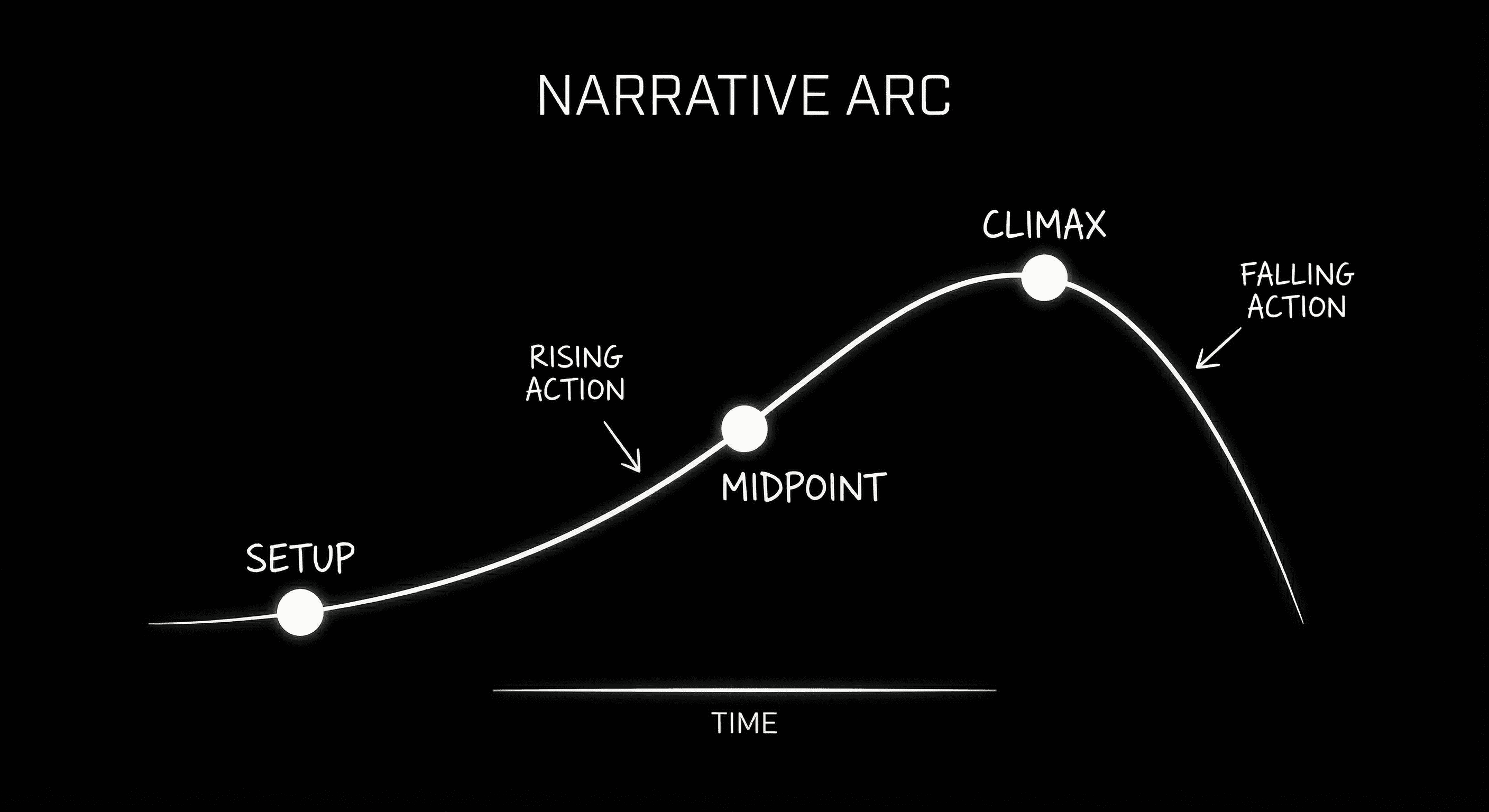
Two journeys on one map: the antagonist’s path tracked alongside the hero’s.
Does the Villain Have to Change?
Not necessarily. Many great villains don’t have a positive arc. They double down. They refuse the lesson. They go down with the ship. What they need is consistency. If they’re static, we need to see that stasis as a choice,or at least as a coherent refusal to change. The villain who never wavers can be just as compelling as the one who has a moment of doubt. What fails is the villain who seems to change off-screen or whose priorities shift because the plot needed them to. So the question isn’t “does the villain have an arc?” It’s “does the villain have a throughline?” Do their choices add up? Does their end feel like a consequence of who they are and what they want? For more on the difference between positive, negative, and flat arcs, our piece on character arcs applies to antagonists too: a negative arc (they get worse, they refuse the call to change) is still an arc.
| Element | Hero | Villain (Complex) |
|---|---|---|
| Want | External goal that drives the plot | Their own goal; conflict arises when it clashes with hero’s |
| Wound / Need | Internal lack or hurt that shapes choices | Same; their response to the wound is the dark path |
| Belief | Worldview that is tested by the story | Worldview that justifies their actions; often twisted mirror of hero’s |
| Arc | Often positive (change) or flat (hold the line) | Often negative (double down) or flat; must be consistent |
Mirror and Foil
The strongest antagonists often mirror the hero in some way. Same wound, different response. Same desire, different method. Same temptation, one gives in and one resists. The mirror doesn’t have to be literal. It can be thematic. The hero believes in redemption; the villain believes people don’t change. The hero sacrifices for others; the villain sacrifices others for themselves. When the antagonist is a dark reflection, every confrontation is also a question: could the hero become this? The villain isn’t random. They’re the road not taken,or the road the hero is still in danger of taking. That’s why their journey matters. When they make a choice, we’re not just watching “the bad guy.” We’re watching what happens when someone with a similar starting point goes the other way. For more on how the midpoint tests both hero and antagonist, see our guide on mastering the midpoint: the middle of the script is often where the mirror is held up most clearly.
The villain doesn’t need more screen time. They need a clear throughline. Every scene they’re in should reinforce who they are and what they want,or show the cost of that want.
When the Villain Isn’t On Screen
In some stories, the antagonist is present in almost every sequence. In others, they appear in a handful of scenes and the rest of the time we feel their influence through minions, obstacles, or consequences. Either way, their motivation has to hold. When they’re off screen, the choices made by their agents or the obstacles they’ve set in motion should still feel like extensions of their want and wound. If the villain is “win at any cost,” then the cost we see,the collateral damage, the betrayal of an ally,should fit. When they return on screen, their next move should feel like the next step in their journey, not a new idea the writer had for the set piece.
Keeping a profile for the antagonist,what they want, what they believe, what they’ve done so far,helps. When you write a scene where they’re absent, you can still ask: does this obstacle or this minion’s choice align with the villain’s logic? If you use a story map or timeline that shows where each character appears, you can see at a glance how much space the antagonist has and whether their throughline is dense enough. You can also spot gaps: long stretches where the villain doesn’t appear and might need a beat (a message, a consequence, a rumor) to keep their presence felt.
The Third-Act Villain
The climax is where the hero and antagonist collide in full. For that collision to land, the villain’s end state has to feel earned. They don’t have to lose because they “made a mistake” in a generic sense. They lose (or win, in a tragedy) because of who they are. Their flaw or their commitment leads them there. If the villain’s defeat comes from a random slip or a twist that wasn’t set up, the audience feels cheated. If it comes from the same logic we’ve seen all along,their arrogance, their need for control, their inability to trust,the ending feels inevitable. So the antagonist’s journey doesn’t stop at act two. It culminates in the climax. What they do in the final confrontation should be the fullest expression of their want and wound. Track that throughline to the last page.
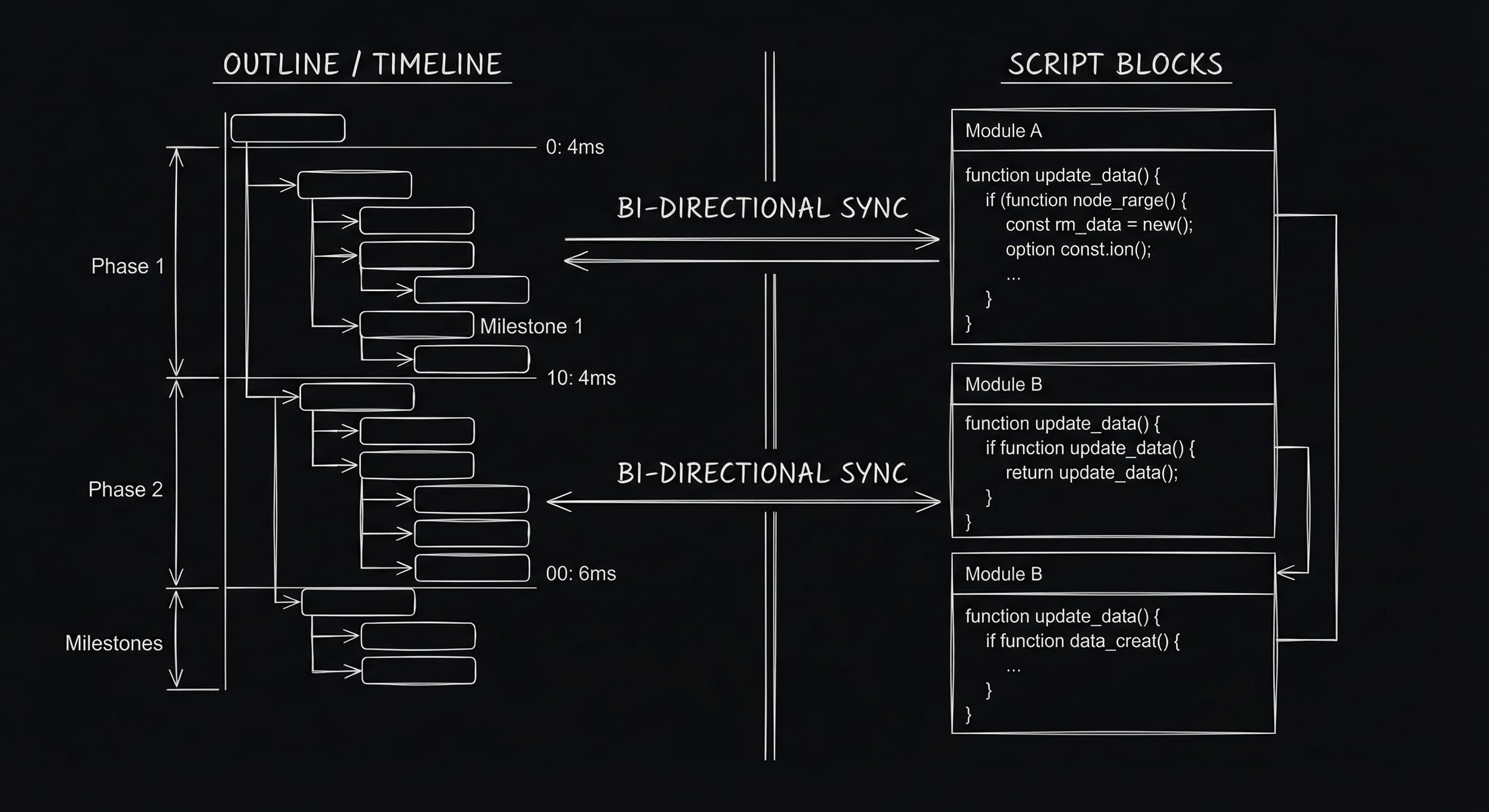
Want, wound, belief: the three anchors of the antagonist’s journey.
The Takeaway
A complex villain is the hero of their own story. They have a want, a wound, and a belief system. Their opposition to the hero is a consequence of their pursuit, not their only function. Track that pursuit across every scene they’re in,and in the consequences of their actions when they’re off screen. Use a profile or a timeline to keep their motivation consistent. Let them mirror the hero where it deepens the theme. They don’t have to change; they have to be coherent. When the audience can fear them, disagree with them, and still understand them, the conflict stops being a chess match and starts being a collision between two people who believe they’re right. That’s the antagonist’s journey. Build it. Track it. Land it in the climax.
Final Step
Build your next script with Screenweaver
Move from ideas to production-ready pages faster with timeline-native writing and AI-assisted story flow.
Try Screenweaver