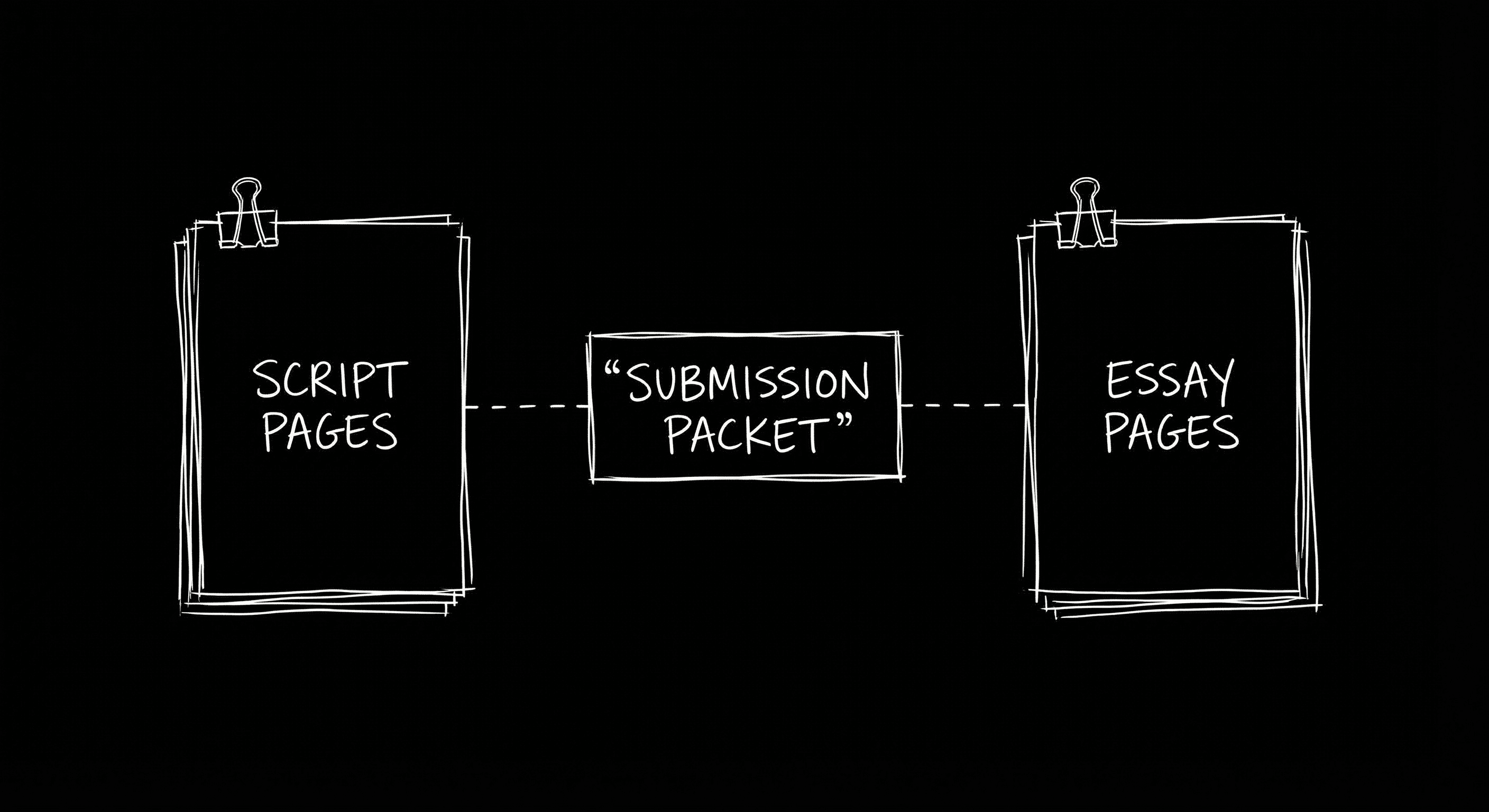

Preparing Your Submission Packet: Essays and Personal Statements
The script wasn't the problem. The notes said "Strong voice." "Compelling sample." Then you hit the fellowship result: passed over. Buried in the notes: "Essays felt generic." For most writers, the personal statement is an afterthought. To readers, your essays are the dailies of you as a collaborator, proof of how you think and whether they can stand sitting across from you in a room.
A bio narrative isn't just "where you're from and what you've done." It's a coherent story about why you write the way you write, told in the same concrete, visual language you'd use in a scene.
What Readers Are Really Looking For
When a fellowship asks "Why do you write?" or "Tell us about a time you failed," they're asking: Can you tell a story in prose? Do you understand yourself? Are you someone they can invest in? They're exhausted by vague ambition. "I've always loved movies." "I want to tell important stories." They're hungry for specificity, an essay that reads like a short film.
The strongest bio narratives read like a contained character piece: one protagonist (you), a concrete setting, a clear conflict, and a shift in perspective by the end.
Anatomy of a Strong Bio Narrative
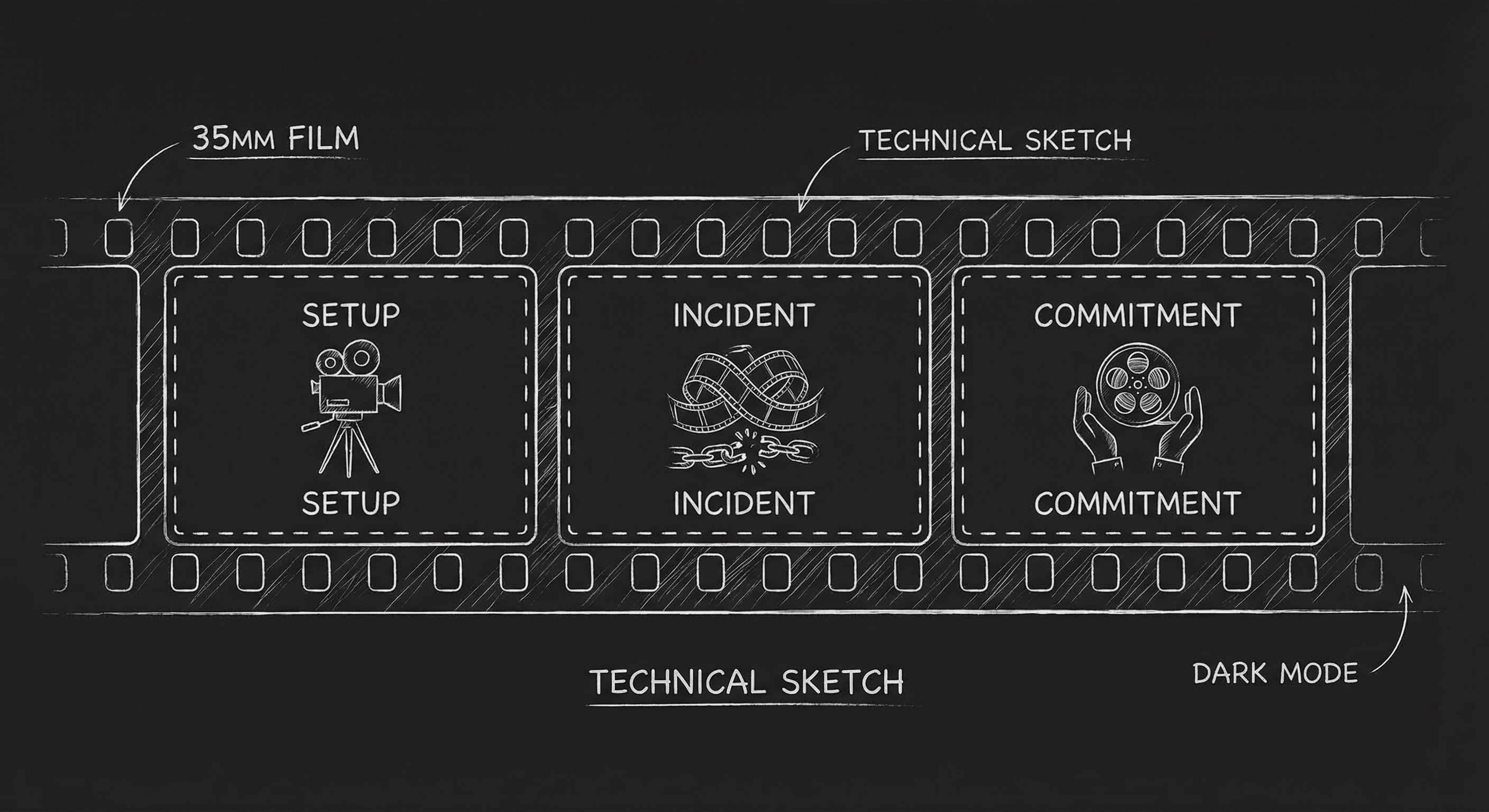
You want three movements: The setup (the world that made you), the incident (the fracture that pushed you toward writing), and the commitment (the choice to keep going). Map that out before you write. Then draft the essay like you're shooting a scene sequence.
| Weak move | Strong move |
|---|---|
| "I've always loved movies." | "At eight, I watched VHS tapes so often the tracking broke; I'd fix them with a butter knife while my parents worked the night shift." |
| "I care about representation." | "My grandmother would mute TV dramas and ask me to 'translate the feelings,' because the characters never spoke her language." |
Try it free
Try Screenweaver for free on your script
It is free. Import your existing project, get a clearer view of your outline, and regain control of your story structure in minutes.
Start FreeThe Big Three Essay Prompts
"Why do you write?" Stage one day or one night that crystallized it. Describe it like a scene, then pull one clear sentence: "I write to give close-ups to the people I grew up watching from the edge of the frame."
"Tell us about a time you failed." Pick something concrete, a script that bombed in a writers' group, a short that fell apart. Show the embarrassment, then what you did next. Readers respect: "I missed a deadline, I owned it, I rebuilt my approach."
"How does your background inform your writing?" Connect your life to your material. Use one or two examples from your scripts. You're proving you're not picking topics at random.
Trench Warfare: What Beginners Get Wrong
Abstract values, no scenes. If you care about resilience, give us the night you almost quit. Never state a value without anchoring it in a moment.
Trauma without reflection. Readers need to see how lived experience has transformed into craft, how it shapes your choice of genre, the way you stage conflict, the specific kindness or ruthlessness in your writing.
Over-branding yourself. Don't declare your "voice" like a marketing deck. Show your obsessions, the scene types you keep returning to, the films that feel like your cinematic family, and let readers infer the brand.
Shaping the Packet as a Whole
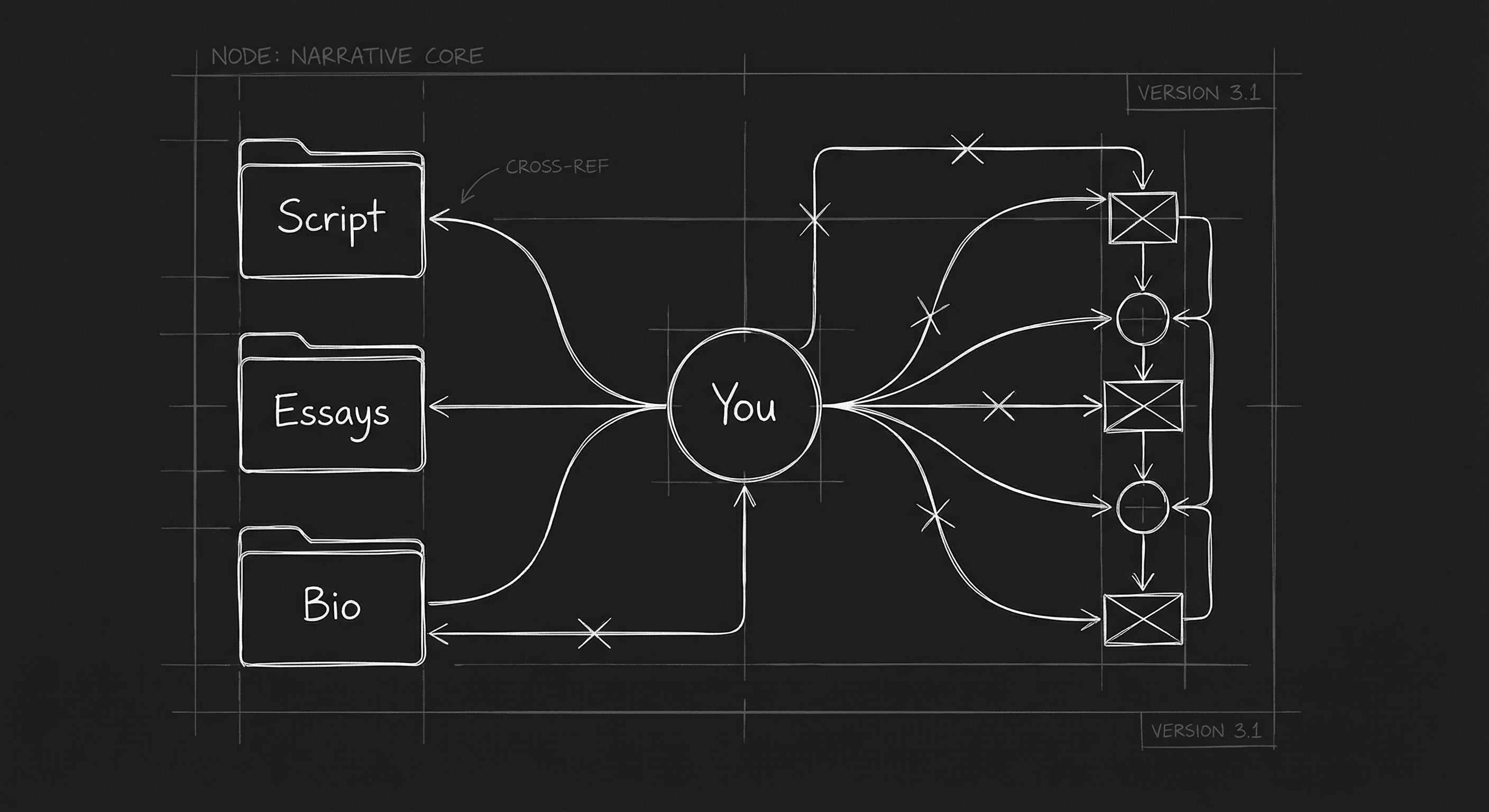
Your submission packet isn't a pile of disconnected pages. Each element should echo the others. If your script is about a union battle in a factory town, your essays should give us the personal angle and show how you learned to write about power, without repeating the plot.
For more on how fellowship readers evaluate you, see analyzing Nicholl winners and the Writers Guild Foundation{rel="nofollow"} for program context.
[YOUTUBE VIDEO: A working TV writer reads three anonymized personal statements, one weak, one decent, one strong, annotating where the story turns and where generic language kills impact.]
Final Step
Build your next script with Screenweaver
Move from ideas to production-ready pages faster with timeline-native writing and AI-assisted story flow.
Try Screenweaver