
The "Interrogation Scene": Power Dynamics
The detective smiles like this is friendly.
The suspect knows it is not.
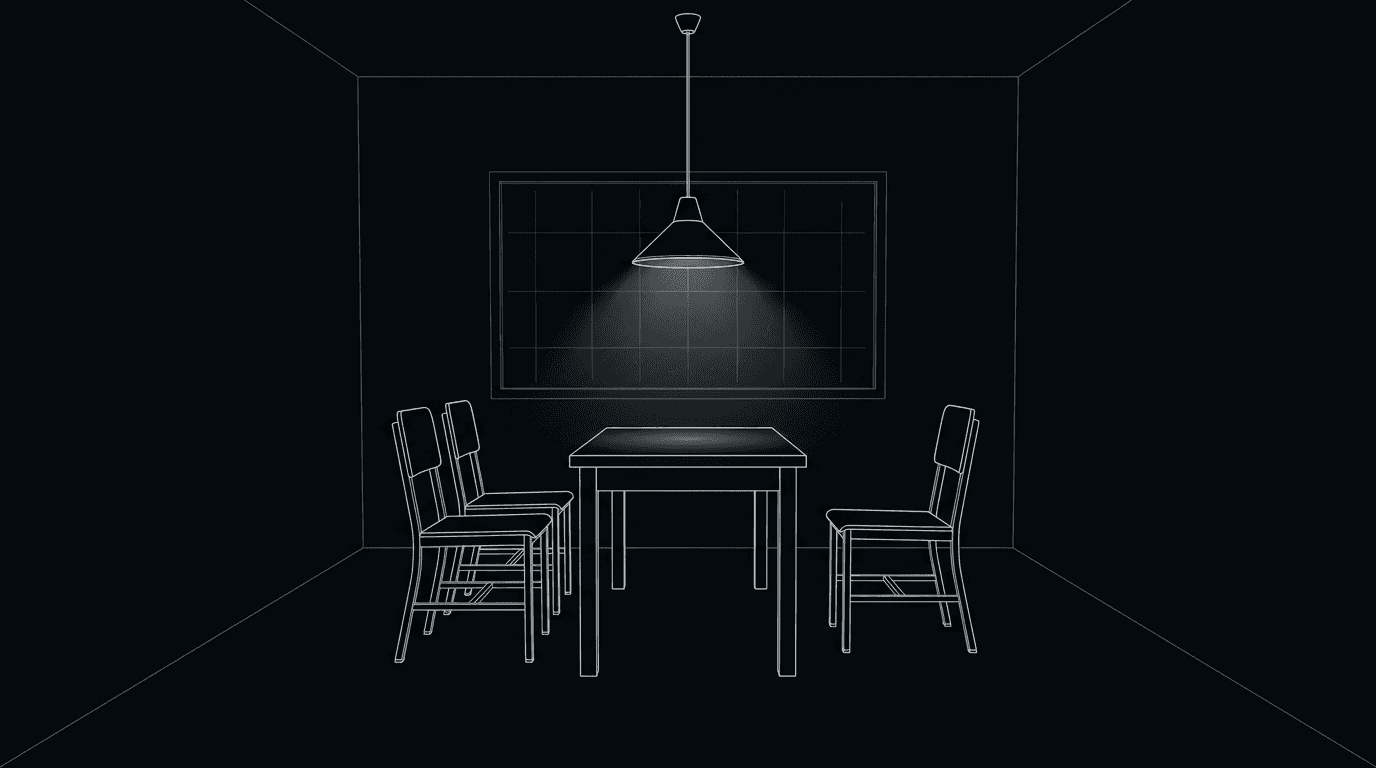
One table. Three chairs. A door that might as well be a brick wall. On the page, it looks simple: two people talk in a room. On screen, it decides whether your thriller feels like it has teeth or just another episode of people explaining the plot to each other.
Interrogation scenes live or die on power.
Not clever one-liners. Not who “wins” the argument. Not how many twists you stack into the last page. Power: who has it, who thinks they have it, and how that balance shifts beat by beat.
Think about the last flat interrogation scene you read. Chances are it looked like this: cop asks questions, suspect answers or stonewalls, tension spikes when someone raises their voice, then, somehow, the truth drops out of the sky because the script needs to move on. You felt the writer pulling the strings instead of feeling the room squeeze.
That’s the failure state we’re going to kill.
Here’s the deeper truth: a good interrogation scene is less like a Q&A and more like a wrestling match. One person goes for a hold, the other counters, they burn energy, they change tactics. If nobody is trying to control the other person, you don’t have an interrogation. You have small talk with fluorescent lighting.
Scenario 1: The Rookie Writer’s “Confession Machine”
Picture Mia, a new writer hammering out her first crime pilot.
She’s done the research. She’s watched the classics. She knows an interrogation scene is “where the detective breaks the suspect.” She outlines it like a mechanical step in the plot: Detectives bring in the guy, they push him, he cracks, he confesses, we move on to the next big twist.
On the page, her scene looks competent. The slugline is clean. The dialogue is formatted correctly. The detectives have names, the suspect has attitude. The problem is under the hood.
Her detectives: , Ask direct questions. , Repeat the same accusation three different ways. , Threaten vaguely when the suspect resists.
Her suspect: , Denies. , Denies louder. , Suddenly blurts out the truth when Mia needs him to.
Nothing in that scene forces the suspect to move from silence to confession. The detectives never change strategy. The suspect never misleads them. The balance of power never truly shifts. The confession is not earned; it’s delivered.
Readers feel that cheat in their bones.
The first fix for Mia is structural: she has to stop treating the interrogation as a button you press to get a confession and start treating it as a battle for control of the narrative. The goal of each side is not “answer questions” or “refuse to answer.” The goal is to control what story will exist in the official record when they walk out of that room.
Once she reframes it that way, tiny choices start to matter:
The detective sliding over a glass of water without asking. The suspect choosing when to drink. Who touches the case file. Who uses first names. Who references past history that isn’t in the report. These are all power moves, not filler business.
Power Is the Real Subject of the Scene
On paper, an interrogation is about facts: where were you last night, how do you know the victim, why did you lie. Underneath, it’s about leverage.
The interrogator is trying to constrict the suspect’s options until the path of least resistance is the one that serves their case. The suspect is trying to expand options: stall, confuse, redirect, appeal to sympathy, fracture the interrogator’s certainty.
If your scene isn’t tracking those two forces, constriction and expansion, you’re just swapping lines.
A great interrogation scene doesn’t ask, “What do they say?” It asks, “What can they still afford not to say?”
That’s where power sits: in what remains unsaid and who controls the pace at which the silence gets filled.
So before you write a single line of dialogue, answer three blunt questions for each side:
What do they want from this room that isn’t just “the truth”?
The detective might want a clean case that will stick with a jury, a win in front of their new partner, or proof they were right about their intuition. The suspect might want a deal, time to think, a chance to protect someone else, or simply to walk out without incriminating themselves.
What can they actually do to influence the other person?
Can the detective legally lie about evidence? Do they control when breaks happen? Can they bring in a new interrogator as a “bad cop”? Does the suspect know something personal about the detective? Do they have a lawyer they can demand? Are they intoxicated, exhausted, under-age?
What is each person terrified of that the other can lean on?
Fear of prison is obvious and boring. Fear of losing a child. Fear of deportation. Fear of a secret affair going public. Fear of looking weak in front of a partner. That’s the emotional fuel you light under the room.
Once you have those three answers on both sides, your power map starts to emerge. You can chart which beats give power to whom, and you can avoid the lazy version where one side is in control for six straight pages.
Scenario 2: The “Two Talking Heads” Problem
Now imagine Luis, an experienced writer who knows better than to treat an interrogation like a checklist. He puts character work into it. His detective is sarcastic. His suspect is slippery. The banter is sharp. The scene still feels like a slog.
Why?
Because for four pages, nothing changes.
Luis’s detective begins in control and stays in control. The suspect snarks but never lands a real hit. The detective reveals damning evidence halfway through, but the suspect doesn’t adjust. The tone doesn’t shift. The room never breathes differently.
What Luis has done is mistake color for movement. The dialogue is fun, but the power dynamic is static.
The fix is ruthless: he needs to mark, line by line, where the control of the room flips, or at least wobbles.
On a practical level, that means things like:
The suspect calls out a procedural violation that could get the case thrown out. Suddenly, the detective’s power isn’t absolute; internal affairs is in the ghost seat.
The detective brings in a photo the suspect didn’t know existed, shattering their sense of security. The suspect’s strategy of cool denial collapses; they scramble for a new story.
The suspect mentions the detective’s divorce, information that should be sealed in personnel files. Now the detective is off-balance; their personal life is in play.
None of this is “banter.” Each move re-weights the room.
When you read a great interrogation scene, you can almost draw a graph of control: it oscillates. That wave is the feeling of tension. Flat line equals boredom.
Mapping the Power Shifts: A Practical Workflow
This is where you stop thinking like a novelist and start thinking like someone blocking a fight.
Before you write the polished dialogue, build a beat outline that only tracks power. No great lines. No camera angles. Just “who holds the room” and “what changes that.”
Here’s a simple workflow that works brutally well:
Start with the end state. Is the suspect walking out free but with a seed of doubt planted? Are they charged but the confession is coerced and morally rotten? Does the detective leave having lost the suspect but gained a new theory of the crime?
Then, for each step backward, ask: “What had to shift in this room to make that outcome possible?”
If the suspect gave up a name, what fear or leverage made that name more attractive than silence? If the detective realized they had the wrong person, what detail cracked their certainty? If the suspect lawyered up, what specific pressure point finally convinced them they needed protection?
Only once that spine is solid do you plug in dialogue.
Writers skip this step because it feels abstract. It isn’t. It’s the difference between a scene that feels inevitable and one that feels arbitrary.
To make this concrete, imagine planning the power beats as if you were sketching a timeline in a tool like ScreenWeaver: each beat is a node, colored by who holds power. Your job in the writing pass is to make sure the scene actually honors that sequence instead of drifting into polite back-and-forth.
What You’re Really Directing: Body, Space, Silence
Interrogations are verbal, but the power isn’t just in the words.
You are directing space.
Who sits where. Who stands. Who paces. Who can leave. Whether the suspect is handcuffed. Whether the chair is bolted to the floor. Whether the detective blocks the door or deliberately moves aside to show it’s “just a conversation.”
You are directing body language.
The detective’s stillness when the suspect blusters. The suspect’s twitch when a certain name is mentioned. The way both look at the mirror, knowing someone else is watching.
You are directing silence.
The choice to let a question hang. The moment the detective starts to gather their files like they’re giving up, then pauses. The beat before the suspect says “Wait.”
Power in an interrogation scene isn’t the loudest line in the script. It’s who can live longest in the silence without blinking.
Spend time describing those physical and temporal shifts on the page. Not purple prose, just clear, precise action lines that tell us who owns the room right now.
Visualizing the Pressure Cooker
The Ethics Layer: Power as a Moral Question
Any time you write a scene built on power imbalance, you’re not just staging drama. You’re making an argument about what is acceptable.
Are your detectives allowed to lie? Threaten families? Deprive sleep? Suggest violence from other inmates? You don’t have to turn every procedural into a law review article, but you should be aware of how your depiction lands in 2026, not in a fantasy cop-show vacuum.
If you’re drawing from real-world interrogation tactics, at least skim something like the <a href="https://www.apa.org/topics/interrogations" rel="nofollow">American Psychological Association’s discussions on interrogation and false confessions</a>. You don’t need to quote doctrine on the page, but you should know how easy it is for a powerless subject to say anything just to stop the pressure.
That ethical awareness gives you more interesting choices.
Maybe your detective refuses to cross certain lines and loses the confession, but gains the audience’s respect. Maybe they cross all the lines and “win” the scene in the moment, but the fallout in court or the media haunts them later. Either way, you’re using power not just as a plot engine but as a moral one.
This is where your interrogation scene can dovetail with larger arcs, the detective’s own “want vs need” engine you might explore more deeply in a piece like Want vs Need: The Engine of a Character Arc.
Try it free
Try Screenweaver for free on your script
It is free. Import your existing project, get a clearer view of your outline, and regain control of your story structure in minutes.
Start FreeThe Trench Warfare Section: What Beginners Get Wrong
Let’s be blunt. Most interrogation scenes in amateur scripts fail in the same five or six ways. They’re fixable, but only if you recognize the pattern and are willing to rebuild, not just tweak dialogue.
Mistake 1: Treating the Scene as a Dump Truck of Exposition
The most common sin: using the interrogation as the place where the audience learns the entire backstory. The suspect explains the crime, the motive, the twist, the emotional wound, because the writer hasn’t found ways to dramatize any of it elsewhere.
The result is a character pinned in a chair delivering a recap.
The fix is to separate information from revelation.
Information is the raw data: dates, times, alibis, who was where. Revelation is when someone’s understanding changes. Your interrogation should be built around revelations, not data transfer.
That means cutting any line that doesn’t alter someone’s belief, leverage, or risk. If both people walk out of the room believing the same things they believed walking in, about the case or each other, nothing happened, no matter how many facts were exchanged.
Mistake 2: Power That Never Moves
We touched on this with Luis, but it deserves its own scarlet letter.
If one person is winning from the first line to the last, your scene reads like a lecture. Maybe an entertaining lecture, but still a lecture. The detective may be smarter. The suspect may be out of their depth. Fine. But if you don’t give the weaker side moments of power, knowledge, moral high ground, the ability to walk, you have flattened the drama.
Here’s a simple table to check yourself:
| Beat Range | Who Holds Apparent Power? | What Gives It to Them? | Does It Change by the End of That Range? |
|---|---|---|---|
| Pages 1–2 | Detective | Evidence, room control | Suspect lands a personal jab, shifts tone |
| Pages 3–4 | Suspect | Hidden knowledge | New photo appears, detective regains edge |
| Pages 5–6 | Neither (stalemate) | Exhaustion, time | Clock or legal threat forces a choice |
If you can’t fill that table honestly for your own scene, you probably have a flat power line.
Mistake 3: Ignoring the Invisible Audience
In almost every modern interrogation room, someone else is watching: partners behind the glass, a supervisor, a prosecutor, a camera feeding storage that a defense attorney will pick apart later.
Beginners write the scene as if it’s just two people in a box. They forget that both characters are performing for someone else.
The detective is building a case they know will be scrutinized: they might soften their language when they look at the mirror, or deliberately repeat a key question so it’s clean on tape. The suspect may angle for public sympathy, knowing the footage could leak.
Power shifts when that invisible audience enters the conversation.
The suspect might threaten to expose a racist remark made off-camera. The detective might hint that the DA watching behind the glass likes “cooperative” defendants. These moves change what the room means, not just what’s said in it.
Mistake 4: No Physical Stakes Inside the Room
Many beginning writers get told, “A good scene can be compelling with two people talking in a room.” True. They mis-hear it as, “Nothing physical needs to happen.”
Physical doesn’t mean a fistfight. It means embodied stakes.
The suspect’s leg is bouncing from caffeine and nerves. The detective taps a pen until it drives the suspect crazy. The air conditioning fails; sweat starts to show. A clock on the wall ticks toward a deadline, arraignment, press conference, the end of shift when the suspect must be released or charged.
Each of those details can be weaponized. The detective can pretend not to notice the suspect’s discomfort. The suspect can weaponize the ticking clock with lines like, “You’ve got thirty minutes before your boss wants a result. How’s that feel?”
Power isn’t abstract. It lives in chairs that are too low, lights that are too bright, rooms that are too cold.
Mistake 5: Forgetting the Interrogator Is Also Vulnerable
Another rookie habit: writing the detective as if they were an uncrackable wall. They push, they prod, they never bleed.
That’s not how people work, and it’s not how great scenes work.
Your interrogator is under pressure, sometimes more than the suspect. They have bosses. They have past mistakes. They have personal stakes in this case: a similar victim, a past failure, a mentor who burned out. They can lose promotions, cases, relationships.
Let the suspect weaponize that.
When the suspect calls the detective “a guy who needs this to be simple because otherwise you have to admit you missed something ten years ago,” and the detective flinches, we feel the power flicker.
That flicker is gold.
It also protects you from stale archetypes and lets you write more nuanced dynamics like the “toxic relationship” interrogation, where the detective and suspect are entangled in ways that echo patterns you might explore more deeply in something like Writing Toxic Relationships with Nuance.
Mistake 6: Time That Feels Fake
Amateur interrogation scenes often feel like they happen in a vacuum. No one gets hungry. No one needs a bathroom. No shift changes. No lawyer knocking at the door. No sense that this room exists in a building that has its own clock.
Without time pressure, power becomes theoretical.
Add a ticking element and the entire scene reorients: the DA is only allowing one more hour; the media is circling; the judge is about to throw out the suspect’s prior statement. Suddenly, delays are tactics, not just dead air.
Use time as a scalpel, not just a backdrop. Let it hurt.
Writing Drunk, High, or Panicked Subjects Without Cartooning Them
Interrogations don’t always involve sober, calm people. Sometimes the subject is drunk, high, sleep-deprived, or in full-blown panic.
Handled badly, those scenes become caricatures: slurred speech, random outbursts, comic relief. Handled well, they become case studies in how power preys on compromised cognition.
When you write a drunk or panicked subject, resist the urge to throw out structure. They still have wants. They still have a distorted but coherent sense of self-preservation. Their power is diminished, not erased.
Show how the interrogator’s tactics shift. Maybe they speak softer, not louder. Maybe they simplify questions. Maybe they deliberately prolong the conversation because a tired subject is easier to break. All of those choices tell the audience what kind of person this interrogator is.
You can go even deeper with craft if you study dialogue rhythms for altered states, something you might be tackling more systematically in a separate deep dive on writing intoxicated characters. But in the interrogation room, your main concern is how altered states change the power math.
A YouTube Slot That Would Actually Help
[YOUTUBE VIDEO: Side-by-side breakdown of three famous interrogation scenes, one where power is static and dull, one where power flips but feels manipulative, and one where power shifts are organic and inevitable, with on-screen annotations mapping who holds the room at each beat.]
Contextual Image: The Three-Way Power Struggle
Building an Interrogation Scene from Scratch: A Concrete Walkthrough
Let’s build one.
We’ll keep it simple: one detective, one suspect, one supervisor behind the glass. The case: a warehouse fire that killed two night-shift workers. The suspect, RILEY, was seen near the building. The detective, KIM, believes Riley knows who set the fire even if they didn’t strike the match.
First pass: stakes and leverage.
Riley is undocumented, working off the books. Deportation is their nightmare. They also lost a cousin in the fire, so grief and guilt are present. Kim is under pressure from the city, this case is in the news. Her last high-profile case collapsed from a botched interrogation, so she’s on thin ice.
Now, the beat-level power map:
Kim starts with institutional power: room, badge, file, time. Riley has hidden power: knowledge Kim doesn’t yet have, plus the moral anger of someone whose community is always blamed but rarely helped. Behind the glass, the supervisor holds career power over Kim and political power over how this case will be presented.
Beat 1: Kim plays “soft,” offering water and condolences. She controls the space but pretends not to.
Beat 2: Riley resists small talk, demands a lawyer. Power spikes their way briefly; they know their rights.
Beat 3: Kim reveals that a lawyer means being formally charged, which could trigger an immigration hold. She doesn’t say it as a threat; she says it as fact. Institutional power reasserts itself.
Beat 4: Riley cracks a little, shifts from “I want a lawyer” to “I just want to go home.” That’s a change: they’ve moved from rights to plea.
Beat 5: Kim introduces a new piece of evidence: CCTV stills showing Riley pulling a friend away from the fire door. It looks bad. Riley’s moral power is threatened; their grief now looks like guilt.
Beat 6: Riley pushes back, revealing something Kim didn’t know: the fire exits were chained from the outside, a code violation that points to the warehouse owner. Suddenly, Riley holds moral and informational power, Kim’s case theory is threatened, and the supervisor behind the glass doesn’t like where this is going.
Beat 7: The supervisor signals Kim to shut it down; they don’t want to go after the owner. Kim chooses to ignore the signal and leans into Riley’s version. She risks her career to pursue the truth. The power shifts toward the alliance between Kim and Riley against the institution.
Notice how the room’s meaning has changed, even if the chairs haven’t moved. At no point did we need a melodramatic confession to create drama. The power shifts did that.
If you write your own scene with that level of explicit beat planning, your dialogue almost can’t help but feel sharper. You’ll know when to let Kim go quiet. You’ll know when Riley should lash out. You’ll know which silence hurts more: the one before Riley speaks, or the one after.
Before You Send the Draft
Run one last test on your interrogation scenes.
Strip the dialogue. Leave only action lines and the occasional fragment like “He has the power” or “She loses the room here.” Read it like you’re watching a silent film.
If you can still tell when the power shifts, you’re in good shape. If you can’t, you’ve probably been relying on clever lines to paper over structural emptiness.
Then look at your script as a whole. If you’re also exploring high-stakes tension elsewhere, jump scares, confrontations, scenes where a character’s secret almost detonates, you’ll see a pattern. The same skills that make an interrogation scene sing are at work in those moments too. How you manage information, power, and silence in a windowless room will bleed into how you manage them in a crowded party, a courtroom, or a late-night phone call.
That’s the quiet advantage of mastering this one scene type: it forces you to get honest about who has power, who only thinks they do, and how your story decides between the two.
And once you’ve stared at that table long enough, you’ll never write two people “just talking” in a room again.
Final Step
Build your next script with Screenweaver
Move from ideas to production-ready pages faster with timeline-native writing and AI-assisted story flow.
Try Screenweaver