
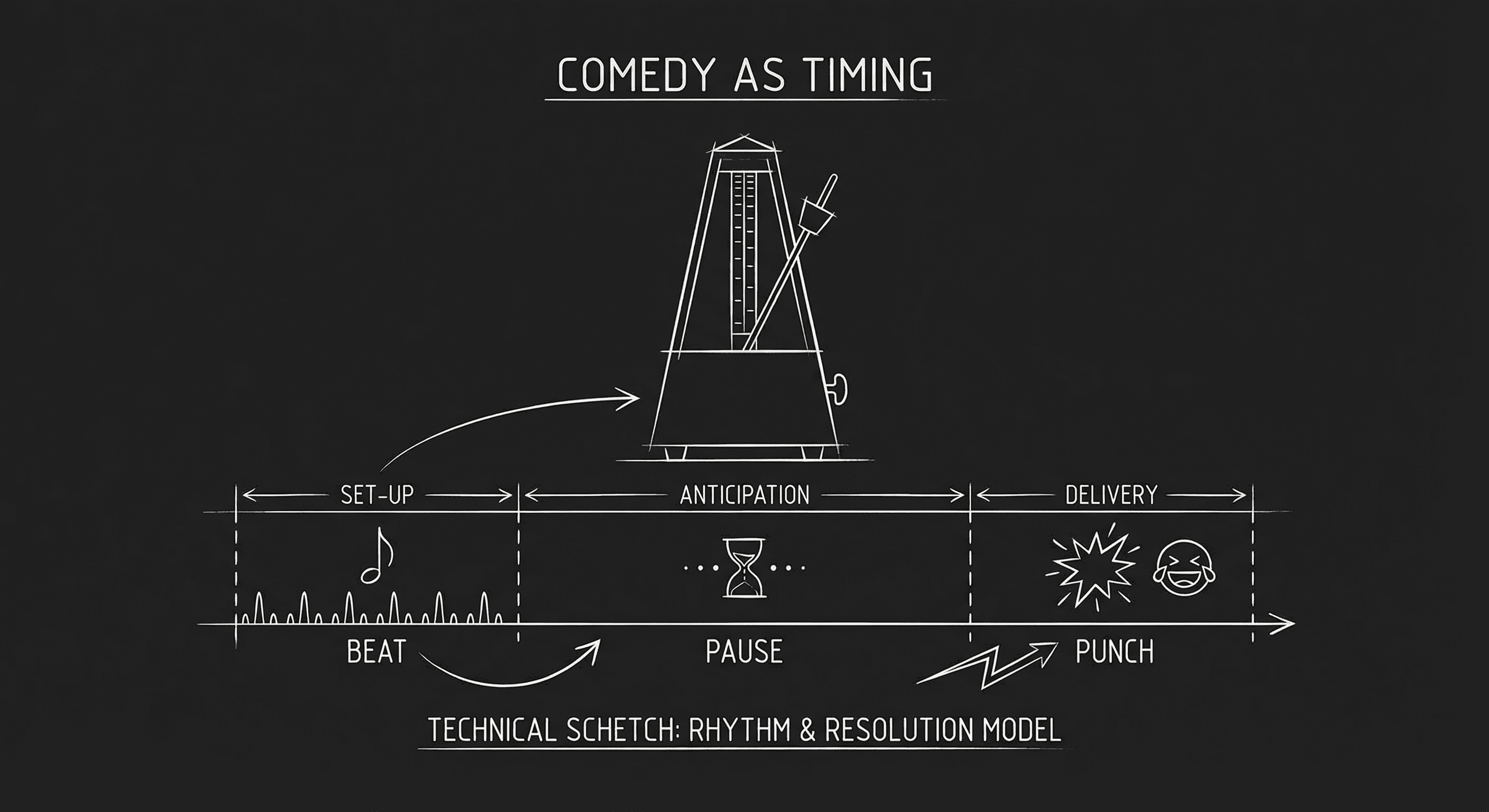
Comedy is timing. Everyone knows that. But what does it mean when you're writing,when there's no performer yet, no audience, just you and the page? The writer controls something else: the architecture of the joke. The setup. The space. The twist. The rhythm encoded in the words. Writing comedy for the page is the art of implied timing. You can create the conditions for a pause. You can structure the setup so the punch lands. You can leave space,(beat),where the laugh would go.
What "Timing" Means in Prose and Format
On the page, timing is suggested. It lives in punctuation. In line breaks. In what you don't write. A well-placed "(beat)" tells the actor,and the reader,where to breathe. A run-on sentence with no commas creates a different rhythm than a series of short, choppy lines. The writer is composing.
Setup and Payoff: The Structure of the Joke
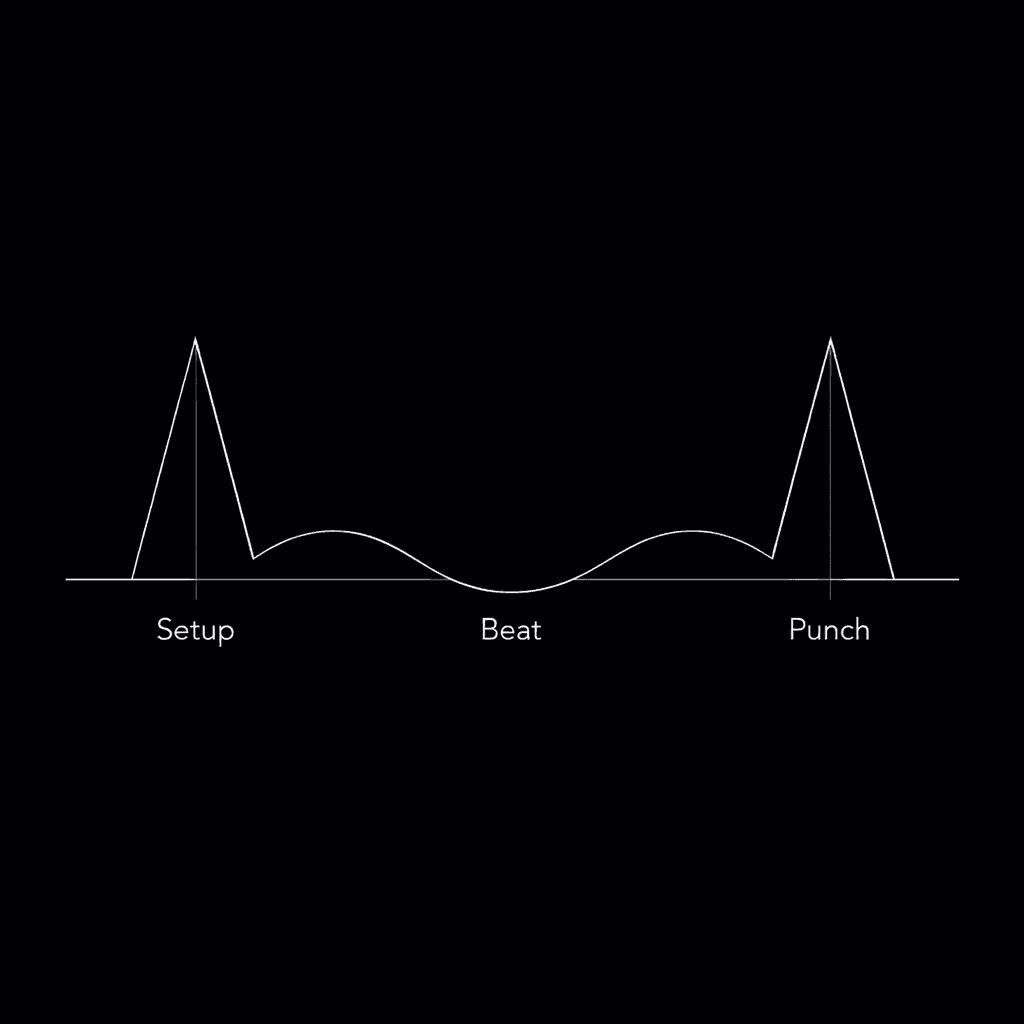
Every joke has a setup and a payoff. The setup creates an expectation. The payoff subverts it. The timing lives in the distance between them,and in the precision of the subversion. On the page, that means: don't bury the punch. End the beat with it. Give it its own line. Its own moment.
The Rule of Three (and When to Break It)
Classic comic structure: two beats that establish a pattern, a third that breaks it. "I came for the food, the music, and to tell you your fly is open." The first two set up the rhythm. The third disrupts. The disruption is the laugh. But rules are for breaking. Sometimes two is enough. Sometimes four.
Silence and the Beat
Some of the biggest laughs come from what isn't said. The character expects a response. They get nothing. Or they get something completely unrelated. The (beat) and the (pause) are the writer's tools. They create space. In that space, the audience fills in the reaction.
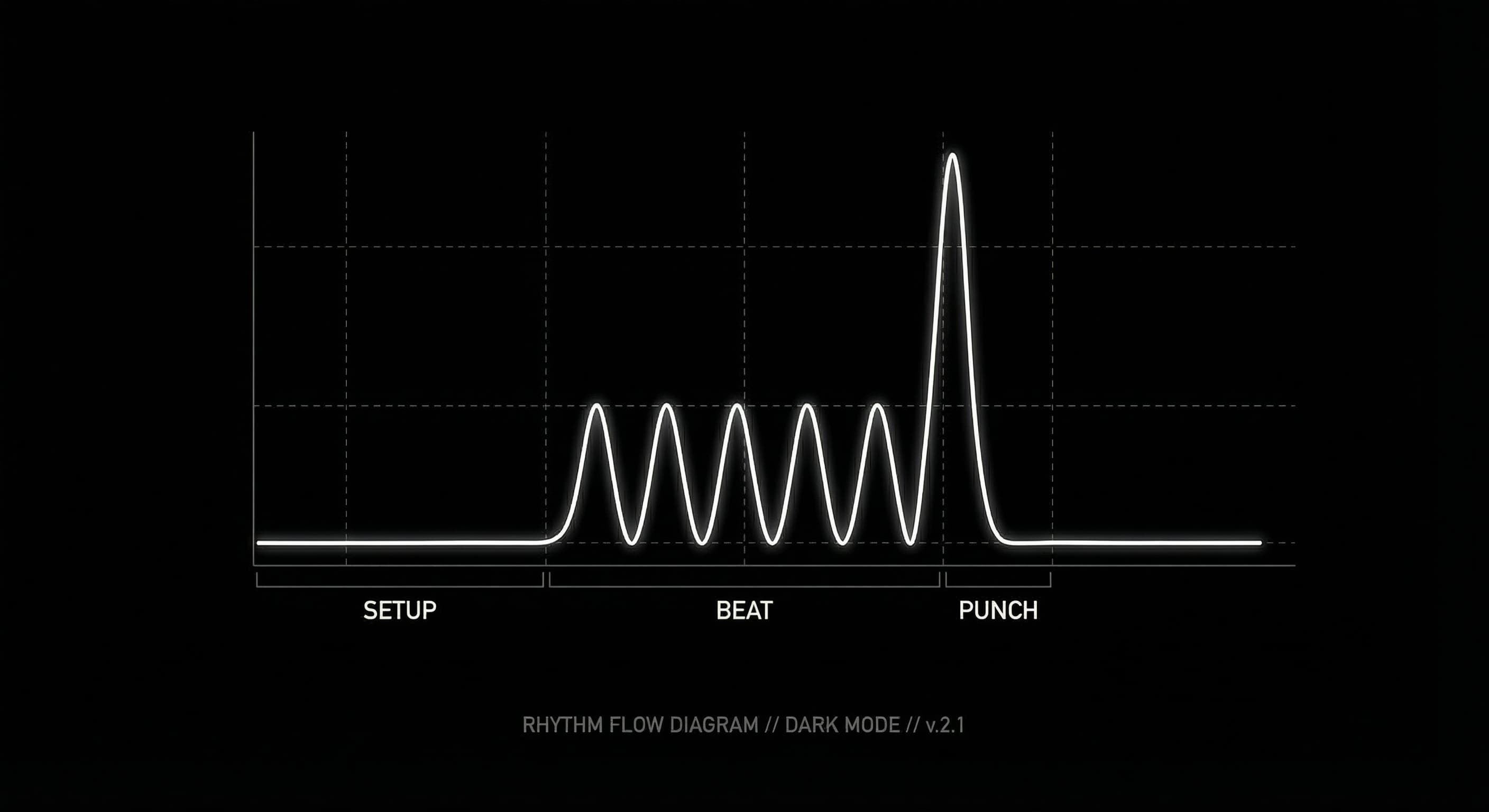
The best test for comic timing on the page: read it aloud. Where do you naturally pause? Where does the punch land? For writers moving between animation and live action, our guide on writing for animation vs. live action touches on how timing shifts when the performance is drawn rather than performed. Comedy on the page is a blueprint for laughter. The writer sets the rhythm. The actor executes it. The audience receives it. Timing isn't magic. It's craft.
Final Step
Build your next script with Screenweaver
Move from ideas to production-ready pages faster with timeline-native writing and AI-assisted story flow.
Try Screenweaver