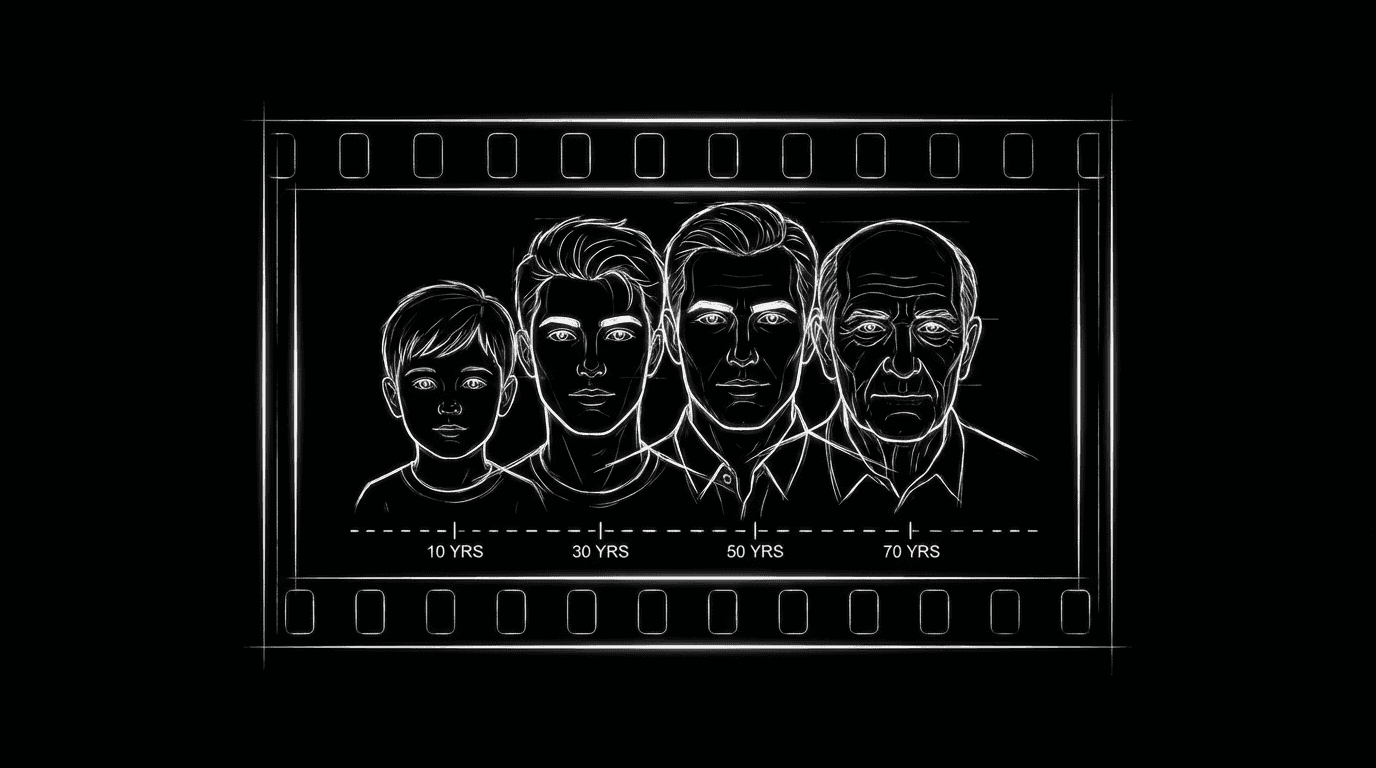

biopic-condense-life-two-hours
The Biopic: How to Condense a Life into Two Hours Without Lying
The first time you try to write a biopic, you drown.
You start with a real life that sprawls: childhood, parents, failures, lovers, addictions, kids, comebacks, interviews, late‑night talk shows, awards, scandals, that one infamous quote, and the way it all ended. Every article you read adds another “essential” moment. Every documentary adds three more.
Pretty soon your outline looks like a Wikipedia page stapled to a police report.
You feel a quiet panic: How am I supposed to squeeze all of this into 110 pages without butchering the truth? So you do what almost every beginner does. You try to be fair. You try to be complete. You try to show “the whole person.”
And the script dies.
Here’s the harsh reality: a biopic is not “a life.” It’s an argument about a life.
The movie isn’t your subject’s birth certificate. It’s your verdict. You are choosing which two hours of emotional experience will stand in for decades of existence. Whether you admit that or not, the compression will make a statement: this is what mattered, this is what didn’t.
The pros know that. They lean into it. They throw away entire marriages, whole albums, full terms in office, entire wars, if those pages don’t serve the very specific story they’re telling about this person.
You need that same ruthlessness, or your biopic will read like a book report with lighting cues.
What a Biopic Really Is (And What It Isn’t)
Let’s define this in a way that actually helps you work.
A biopic is a feature‑length story in which one person’s real life is used to dramatize a single central question over time.
That’s it.
Not a greatest‑hits reel. Not a museum tour. A thesis, dramatized.
Think of Steve Jobs (the Sorkin/Boyle film). They didn’t show childhood, founding Apple, the garage days, the iPhone, the iPad, the cancer. The movie is three product launches and the same handful of relationships hitting the same nerve from different angles.
The question? Can a man who treats people as components in his vision ever accept that his daughter is not a product he can iterate?
Everything else burns to feed that fire.
Or take Walk the Line. Yes, it’s about Johnny Cash. But structurally it’s a love story and an addiction story, not a discography. The question is less “what songs did he write?” and more “how far will this man try to outrun his own pain, and will June let him burn out or pull him back?”
Once you accept that a biopic is an argument, you get your power back. You’re not a clerk cataloging facts. You’re a dramatist deciding which facts are ammunition.
The Compression Problem: Why Beginners Drown in “Important Moments”
Here’s the pattern I see when newer writers tackle biopics.
They read every book. They fill a document with dates. They outline chronologically. Birth. School. Early talent. First job. Breakthrough. Scandal. Comeback. Death.
Their outline cards say things like:
- “1963: First album released.”
- “1968: Marries X.”
- “1972: Drug arrest.”
- “1975: Rehab.”
- “1984: Career comeback concert.”
It looks respectful. It feels balanced. It is almost impossible to turn into a good screenplay.
Because time in a film is not neutral. A minute on your timeline is not just sixty seconds of biography. It is a vote.
Every scene you choose says: This is what defined this person’s life.
When you allocate your pages like a historian, you end up with a movie that treats everything as equally vital. The effect on the audience is the same as listening to someone tell a story who can’t stop digressing: they forget what they’re supposed to care about.
The way out is brutal but freeing: you pick one axis.
Choosing Your Axis: The One Question This Life Will Answer
Before you decide which years to show, you decide which question this person’s life will interrogate for the audience.
Some examples:
- “Can a woman born in a world that hates her brilliance hold onto her talent without losing herself?”
- “What happens when your private compromises become your country’s history?”
- “Is greatness worth being a terrible parent?”
- “Can someone who lied for a living ever tell the truth about themselves?”
Notice something: these are not trivia questions. They’re not “did he really love X?” or “how many medals did she win?” They’re moral and existential questions. Questions the viewer can argue about after the credits.
Once you have that axis, your entire life‑in‑two‑hours problem gets simpler.
You ask, ruthlessly, of every potential scene:
“Does this moment move my answer to that question forward, backward, or sideways?”
If the answer is “sideways”, if the event is fascinating but doesn’t tilt the axis, you cut it. Or you compress it into a single image, a single line, a single news clip in the background.
A Quick Comparison: Chronology vs Axis‑Driven Design
Here’s how that shift looks in practice:
| Approach | Scene Choice Logic | Audience Experience |
|---|---|---|
| Chronological | “This happened, then this, then this…” | Feels factual, drifts; hard to track what matters |
| Axis‑driven biopic | “This changed the way they answered the core question.” | Feels focused; story has a spine beyond the dates |
You’re not erasing what “really” happened. You’re ordering it around a thematic spine so a viewer can actually feel the life instead of skimming a résumé.
Scenario 1: The “Wikipedia Movie” That Feels Respectful but Empty
Let’s get concrete.
You’ve chosen a real subject: a famous investigative journalist, now dead, known for taking down corrupt politicians and for one ruinous mistake late in her career.
You read everything. You have 120 pages of notes. You outline faithfully. Childhood poverty. Early internship. First big scoop. Awards. Love affairs. That bad story she rushed. The fallout. The lonely final years.
On paper, it’s all there. On the page, it’s dead weight.
Why? Because you never decided what this life is about.
You treated “biographical centrality” as “dramatic centrality.” You assumed that because an event was huge in real life (winning a Pulitzer, say), it had to take up space in your story. But awards don’t automatically equal turning points in a soul.
What if, instead, you decide:
“This is a movie about the cost of being addicted to being right.”
Now your axis is obsession vs humility. Every scene must pick a side.
Suddenly:
- The childhood poverty scene isn’t there for sympathy; it’s there to show the first time she survives by out‑arguing an adult with facts.
- The Pulitzer night isn’t just pride; it’s the moment her identity fully fuses with “I’m the person who sees what no one else does.”
- The ruinous mistake isn’t “she didn’t fact‑check enough.” It’s “she saw what she wanted to see because she needed the high of being first.”
Notice how that axis recasts the same events.
You didn’t change the biography. You changed the meaning of what time you spent on.
When you do that cleanly enough, you earn the right to skip entire years without the audience feeling cheated. They’re not here to audit a life. They’re here to wrestle with the question you promised.
The Trench Warfare: Where Biopic Drafts Go Wrong
Let’s talk about the failure modes that coverage readers see again and again when writers take on real lives.
1. The Childhood Swamp
There’s a strange belief that you must start a biopic with your subject as a child, often in a grim house, often looking out a window.
Sometimes that’s justified. Plenty of lives are haunted by one moment at six years old.
But far too many drafts sink twenty pages into childhood that could have been captured in one precise present‑day behavior.
If your subject is a comedian who uses cruelty as armor, you don’t necessarily need an entire bullied‑at‑school sequence. You can convey that wound in how they react when a late‑night host interrupts them. In the way they weaponize their own trauma on stage before anyone else can.
Technical fix: make a childhood list and then ask of each event:
- Can this be embedded as a choice in adulthood instead of a flashback?
- Is there one iconic childhood beat that genuinely reframes the third act?
Keep that one if you must. Murder the rest.
2. The Montage of Headlines That Says Nothing
At some point, many biopics resort to a “rise” montage: newspapers spinning, TV clips, crowds, award podiums.
Used well, it’s compression. Used lazily, it’s noise.
Montage should compress only what the audience can fill in without losing nuance. If your subject’s shift from obscure to famous fundamentally changes how they treat people, or how people treat them, that shift needs scenes, not just headlines.
If you’re dropping in a montage because “a lot happened here,” you’re probably dodging a difficult decision: which of those happenings actually changed the axis?
3. Polishing Away the Worst Truths
If you are too in love with your subject, you will write propaganda.
Audiences can feel it. So can executives.
The strongest biopics are often written from a place of compassionate skepticism, not worship. I, Tonya doesn’t excuse Tonya Harding’s actions, but it contextualizes them in class, abuse, and media spectacle. Lincoln doesn’t pretend the 16th president was a saint; it shows him as a politician who will twist arms and bargain hard to move a moral line forward.
If you find yourself hiding your subject’s ugliest traits off screen, ask why. Are you afraid the audience will turn on them? Good. That tension is exactly where drama lives.
A biopic is not a legal defense. It’s cross‑examination.
4. Over‑Explaining What the Audience Already Knows
Famous lives carry baggage. If you’re writing about someone like Freddie Mercury, Ruth Bader Ginsburg, Diego Maradona, or Princess Diana, your audience walks in with pre‑loaded images and headlines.
Beginners often waste time replaying what we all know exactly as it appeared in the real footage, with no added interpretation.
If your reenactment of a famous moment doesn’t change how we feel about it, why is it here?
Ask:
- Can I come at this event from behind the curtain instead of recreating the TV angle?
- Can I show the moment right before or right after the iconic image?
- Can I cross‑cut the public spectacle with a private disaster?
You don’t win points for accuracy alone. You win them for perspective.
5. The Last‑Minute Voiceover Patch
When a biopic draft isn’t working, writers are often tempted to slap on voiceover late in the process to “tie it all together.”
Voiceover can work, Goodfellas and I, Tonya prove that, but it has to be baked into your structural concept, not plastered on to clarify a rambling story.
If your first instinct is “I’ll just have older‑them explain what it all meant,” what you’re really saying is “my scenes don’t currently carry meaning on their own.”
Voiceover shouldn’t do the job your axis and your scenes ducked.
Try it free
Try Screenweaver for free on your script
It is free. Import your existing project, get a clearer view of your outline, and regain control of your story structure in minutes.
Start FreeScenario 2: Three Structural Lenses for the Same Life
Let’s say you’re writing about a real, semi‑obscure figure: an influential but controversial film director who made only four features, disappeared for a decade, and then returned with a final, devastating movie before dying.
You could attack this life at least three different ways, structurally, each producing a different biopic.
Version A: The “Framing Device” Biopic
You decide the axis is:
“Can an artist stop using people as material?”
You frame the entire story around the making of that final movie.
The present‑day thread is the shoot: casting, conflicts, breakdowns. Past sequences are triggered not by dates, but by echoes, a shot mirrored from their first student film, an argument with a producer that rhymes with a fight with their father.
The audience lives mostly in “now,” dipping into “then” only when the axis demands it.
By the end, we’ve seen enough of the past to understand the cost of this last work, and whether the director changes how they treat those around them or doubles down.
Version B: The “Three Nights” Biopic
You decide to compress time even harder.
Your structure: three nights in three different decades where the director made a choice that altered their trajectory.
Night one: they choose to betray a collaborator to secure their first feature.
Night two: they choose to ignore an actor’s breakdown to preserve a shooting day.
Night three: they have to choose whether to tell a brutal truth in that final film that will destroy a relationship.
Each night becomes a contained arena, with flash‑of‑memory glimpses as needed. We never “meet” the entire life. We meet three fractures in one soul.
Same biography. Radically different compression, radically different statement.
Version C: The “Witness” Biopic
You decide this story isn’t really about the director at all. It’s about the editor who worked with them across decades and finally walked away.
Now your axis might be:
“How long do you stay loyal to genius when it collides with your ethics?”
We see the director only through the eyes of the editor. The life events we include are the ones that splashed onto that editor’s conscience.
Is any version “right”? No. But each is honest, because each admits: this is the part of the life I care about, and this is the question I’m asking with it.
That honesty protects you from the mush of “trying to cover everything.”
A Practical Workflow: From Messy Research to a Tight Biopic Outline
You’re probably not short on facts. You’re short on a process to crush them into story.
Here’s a workflow you can actually run, step by step, in any outlining tool or script app.
Step 1: Do a Ruthless Research Pass
Yes, you read. Yes, you take notes. But you don’t just hoard information. You’re looking for pattern sentences.
Things like:
- “Everyone who knew her mentions how she…”
- “He kept returning to the idea that…”
- “This was the first time he ever…”
You’re not hunting trivia. You’re hunting repetition. What keeps coming up in interviews and memoirs? People’s offhand remarks often hide your axis.
When three different sources say “she always had to win every room she walked into,” that’s a theme, not a footnote.
Step 2: Write the Eulogy Paragraph
Before you outline, write one paragraph as if you were giving a eulogy at the subject’s funeral.
Not as a fan. As a brutally clear observer.
One or two sentences on:
- What they did in the world.
- What they did to the people close to them.
- What they did to themselves.
You don’t show this to anyone. It’s your private summation. But it will force you to articulate the judgment your film will quietly make.
If that paragraph feels bland, you need a stronger take. If it feels harsh, good, that heat will give the movie something to push against.
Step 3: Pick Your Axis Question and Write It Above Your Outline
Now formalize the axis:
“This is a movie about whether __________.”
Write it at the top of your board. In big letters. Every card you add will live or die by that sentence.
Step 4: Build a Life Timeline, Then Strip It
Make a simple life timeline with every “must include” event you currently believe in. Birth, major jobs, moves, marriages, scandals, awards, hospitalizations, deaths.
Then do something painful: color‑code each event.
- Green: directly bends the axis.
- Yellow: could support the axis with the right framing.
- Red: interesting but mostly orthogonal to the axis.
If your timeline is mostly red, you didn’t pick your axis honestly. You picked a slogan. Go back and tighten it.
Once you’re done, commit to a rule: only green and a handful of yellow events can get full scenes.
Reds can be alluded to, implied, or dropped.
Step 5: Choose a Container Structure
Biopics get a lot easier once you choose their container:
- Linear cradle‑to‑grave (rarely the strongest choice).
- Framing device (trial, interview, last concert, last day on set).
- Multiple nights / events.
- Witness perspective (spouse, assistant, rival).
- Parallel timelines (young and old versions in conversation).
Your container is not decoration. It’s the delivery system for your axis.
If your axis is about memory vs reality, a trial or deposition framing might be perfect: sworn testimony vs what we show. If your axis is about whether someone ever grows, the three‑nights structure practically hands you act breaks.
Pick one. Commit. Let it throw out half your research for you.
Step 6: Outline in Emotional Beats, Not Just Events
When you finally start outlining in your tool of choice, don’t write:
- “1979: wins award.”
- “1985: divorces second spouse.”
Write:
- “Decides the work matters more than not hurting her partner (Emotional beat: first big betrayal in the name of art).”
- “Realizes the institution she fought for will never reciprocate (Emotional beat: disillusionment).”
Dates can sit in the corner of the card. The center of the card is the shift.
If a scene doesn’t produce a shift, if your subject walks in and out emotionally unchanged, why are you including it in a two‑hour argument about their life?
Biopics, Adaptation, and Ethics
Some of the most useful habits for biopics overlap with adaptation craft in general. You’re essentially adapting the “source text” of a life into a new medium that cares about cause and effect, not completeness.
If you’ve looked at workflows for turning novels into scripts, finding the spine, externalizing interiority, compressing subplots, you’ll recognize similar muscles here, just applied to interviews and letters instead of chapters. (You can cross‑reference this with a more general adaptation breakdown like our guide on translating prose into screenplay structure.)
But biopics have one more landmine: the people are real, or were.
There are legal issues, you’ll want to research life rights, defamation, and fair use, starting with sources like the Writers Guild’s own primers on legal basics{: rel="nofollow" }, but there’s also the question of what you owe the dead.
Here’s a blunt guideline:
Be harder on your subject’s public persona than their private pain.
In other words: don’t sand off the sharp edges of the way they moved through the world. Show the arrogance, the cruelty, the cowardice when it mattered in public life. At the same time, handle their most private wounds with specificity instead of voyeurism.
The more precise you are, the less your script will feel like exploitation.
What a YouTube Companion Would Do Here
[YOUTUBE VIDEO: A 20–25 minute craft essay that compares Steve Jobs, Walk the Line, and I, Tonya on a whiteboard. The host draws three lifelines and then shows how each film picks only a narrow slice and a clear axis question, using color‑coded markers to identify which real events got full scenes, which became montage, and which disappeared. The video ends with a live “axis pass” on a viewer‑submitted biopic idea, demonstrating how to strip a messy life down to a focused two‑hour story.]
The Perspective: You’re Not Shrinking a Life, You’re Sharpening It
If you approach a biopic as “how do I fit everything in,” you’ve already lost.
You will either write a bloated epic no one wants to shoot, or a polite summary that doesn’t justify its existence. The answer isn’t more pages. It’s more courage.
Courage to pick a fight: to decide what this life means in your hands. Courage to leave some beloved anecdotes in the research folder. Courage to let the subject be unflattering when the truth demands it, and tender when the tabloids never were.
Two hours is not an insult to a person’s decades on earth. It’s a lens.
If you grind through the research, choose your axis with intent, pick a container that serves it, and build scenes around emotional shifts instead of date stamps, you’re not reducing your subject. You’re giving an audience the one thing no Wikipedia entry ever will:
The feeling of what it might have been like to be this person, at the exact moments when their choices carved their name into history, or quietly erased it.
Final Step
Build your next script with Screenweaver
Move from ideas to production-ready pages faster with timeline-native writing and AI-assisted story flow.
Try Screenweaver