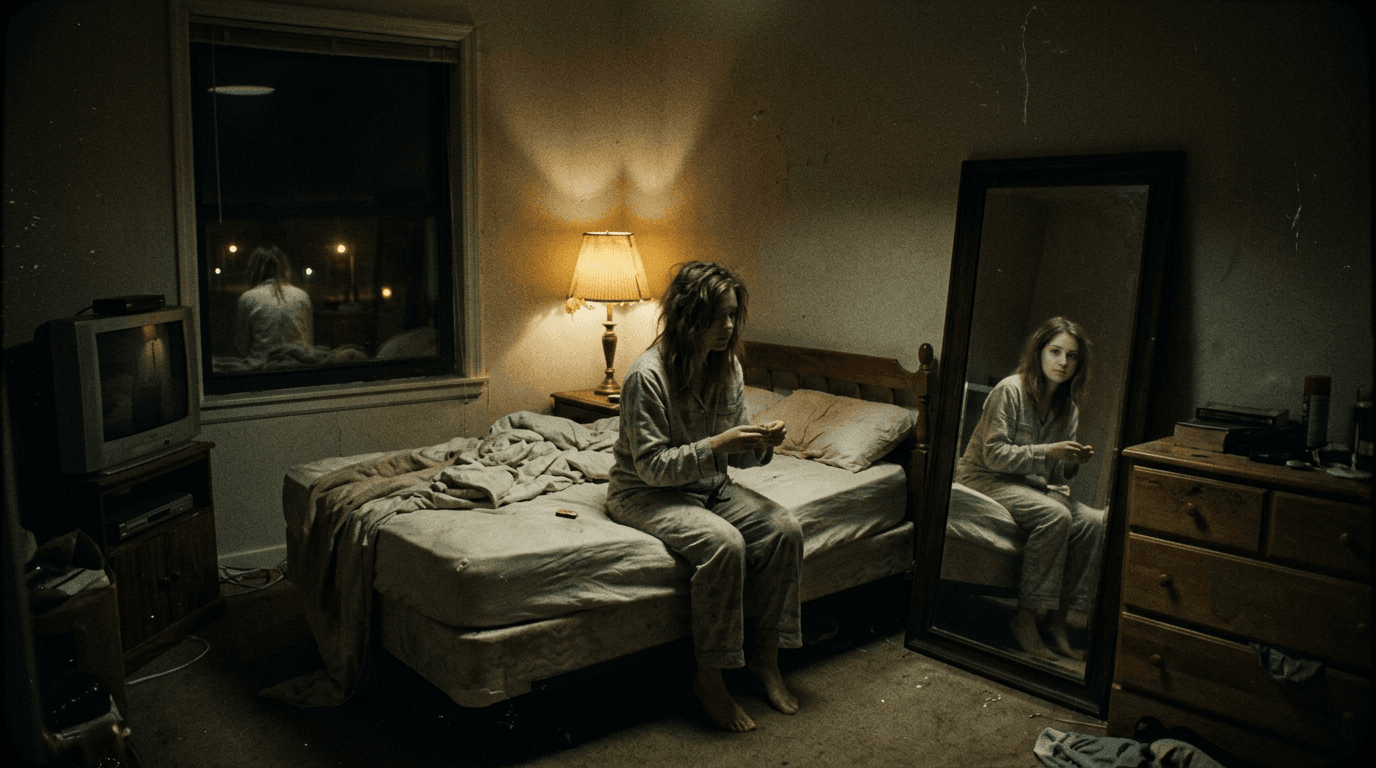

Your protagonist wakes up screaming.
Relief.
Then she checks the mirror and sees her reflection blink half a second late.
Not awake.
That second reveal is where dream-within-dream scenes either become unforgettable or unreadable.
Writers love nested dream structures because they create dread, irony, and identity instability fast. Readers fear them because weak formatting turns those same scenes into timeline fog. If the page does not clearly signal layer transitions, people stop feeling tension and start doing bookkeeping.
Here’s why that matters: dream logic can be surreal, but screenplay logic cannot be sloppy. The reader must always know what kind of uncertainty they are experiencing.
In other words, confusion can be thematic. Orientation failure cannot.
A dream within a dream is not just a trick.
It is a nested reality contract with your audience.
Break that contract and your scene looks clever but plays hollow.
Keep it clean and you get one of the strongest tools for psychological suspense on the page.
Cinematic workflow frames
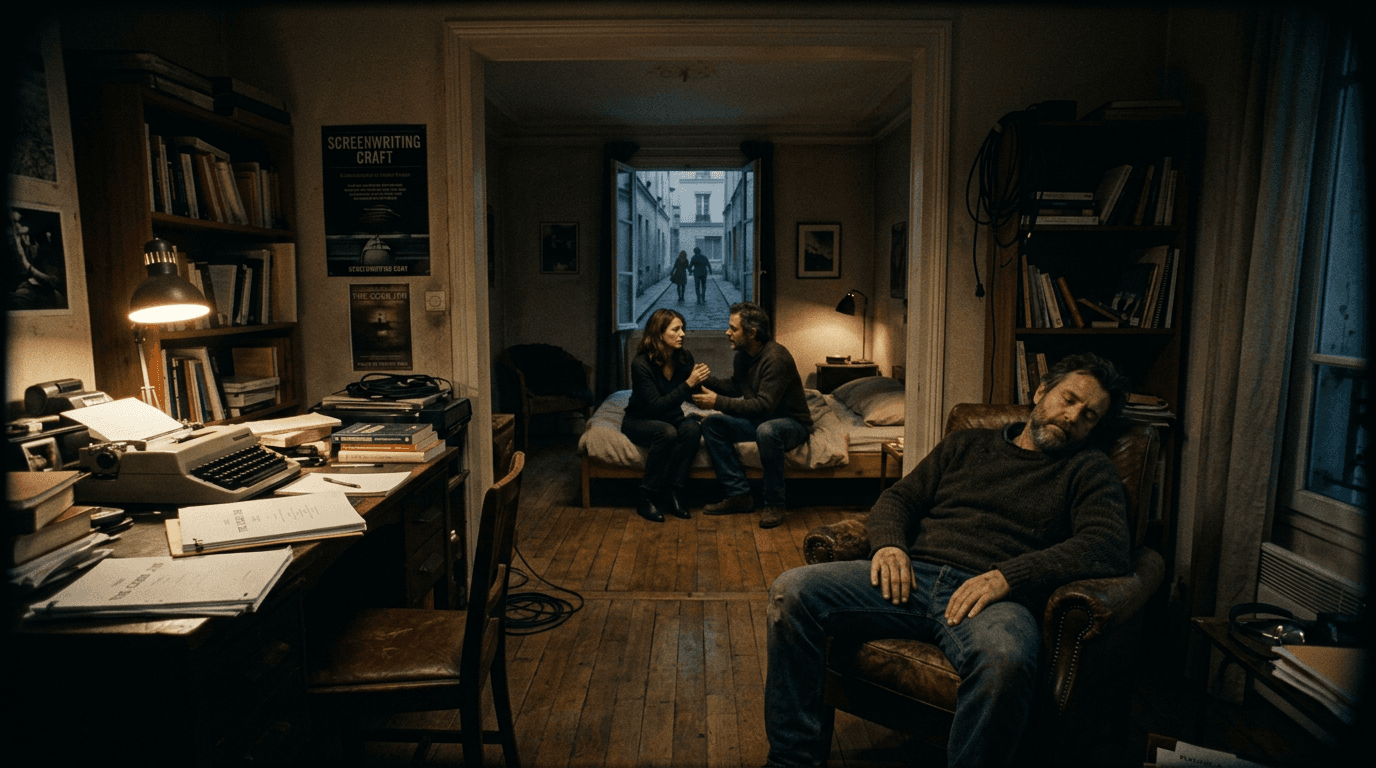
These two visuals work as a pair: the first shows Cinematic workflow still, first angle, 35mm film grain, and the second shifts to Cinematic workflow still, second angle, 35mm film grain - compare them briefly, then move on.

What Nested Dream Scenes Change Structurally
A single dream already introduces unstable causality and symbolic compression. A dream within a dream multiplies both while adding layer hierarchy.
Now the reader must track:
Current layer identity.
Entry and exit points.
Carry-over details between layers.
Rules that persist or break across layers.
Character awareness at each level.
This is not merely formatting decoration. It is narrative architecture.
If you do not design this architecture before drafting lines, scenes drift into random weirdness.
The audience can be unsure what is real, but they should never be unsure what level they are in.
Core Formatting Patterns That Keep Layers Legible
There is no one mandatory style, but consistency and explicit signaling are non-negotiable.
Pattern 1: Layer Tags in Scene Headings
Use direct layer markers:
INT. BEDROOM - NIGHT - DREAM LEVEL 1
INT. SCHOOL HALLWAY - NIGHT - DREAM LEVEL 2
Fast and clear, especially in scripts with repeated nested returns.
Pattern 2: Entry/Exit Action Anchors
Mark transitions with short explicit action lines:
“Her eyes snap open in bed. Too fast.”
Then reveal dream residue quickly if still inside a dream.
Pattern 3: Distinct Rule Signals Per Layer
Assign each layer one or two recurring anomalies: delayed reflections, missing shadows, frozen clocks, audio lag.
These signals help readers identify level even before tags appear.
Pattern 4: Wake Stack Formatting for Rapid Collapses
In nested collapse sequences, isolate each wake beat on its own action line to prevent transition blur.
Comparison Table: Common Approaches
| Approach | Best Use Case | Strength | Risk |
|---|---|---|---|
| Scene-heading layer tags | Complex multi-return structures | Maximum orientation clarity | Can look heavy if overlong labels |
| Symbol-only layer cues | Art-house ambiguity | Atmospheric elegance | High reader confusion risk |
| Explicit wake anchors | Thriller/horror pacing | Strong transition readability | Feels repetitive if mechanically repeated |
| Layer-specific anomaly motifs | Psychological drama | Subtle identification support | Weak if motifs are inconsistent |
Three Beginner Scenarios That Usually Break
Scenario 1: The Triple Wake-Up Sequence With No Labels
Writer stages three wake-ups in two pages, all in same bedroom set, relying only on prose mood to distinguish layers.
Result: reader cannot tell where real world begins.
Fix: add concise layer markers and one distinct anomaly per layer. Keep wake beats isolated.
Scenario 2: The Symbolic Dream Scene That Forgets Stakes
Nested dream imagery is vivid, but no decision pressure carries across levels.
Result: sequence feels ornamental.
Fix: attach each layer to a concrete story question. Every descent or wake should alter character choice pressure.
Scenario 3: The Twist Reveal That Feels Cheating
Writer hides all layer clues, then declares “still dreaming” at climax.
Result: audience feels tricked, not thrilled.
Fix: plant fair signals early. Surprise should come from reinterpretation, not withheld grammar.
Step-by-Step Workflow for Writing Dream-Within-Dream Sequences
Step 1: Define Layer Count and Purpose
How many nested levels actually serve story function?
If two levels do the job, avoid adding a third for novelty.
Each layer needs a clear dramatic purpose: fear escalation, memory distortion, identity fracture, false safety, or confession pressure.
Step 2: Create a Layer Rule Card
For each level, write a mini card in notes:
Entry trigger.
Visual/audio anomaly.
What can and cannot happen.
Exit condition.
This prevents random surrealism and continuity drift.
Step 3: Lock Labeling Syntax
Choose your naming convention once:
DREAM LEVEL 1
DREAM LEVEL 2
WAKE STATE (only when true wake confirmed)
Use this syntax consistently in headings and transition lines.
Step 4: Write Transitions as Consequences, Not Decorations
Every wake or drop should change objective pressure.
If transition only says “it was a dream,” scene loses momentum.
If transition changes what character believes, fears, or decides, scene gains force.
Step 5: Build Carry-Over Echoes
Use one carry-over element across levels: phrase fragment, object, wound, sound loop.
This creates cohesion and rewards attentive reading.
Step 6: Run Layer Clarity Pass
Read sequence stripping dialogue content.
Can you still identify level changes from headings/actions alone?
If not, fix architecture before polishing prose.
Step 7: Stress-Test Final Reveal Fairness
Ask: could a careful reader detect hints without guessing twist?
If answer is no, add fair breadcrumbs.
A strong reveal reframes signals already present.
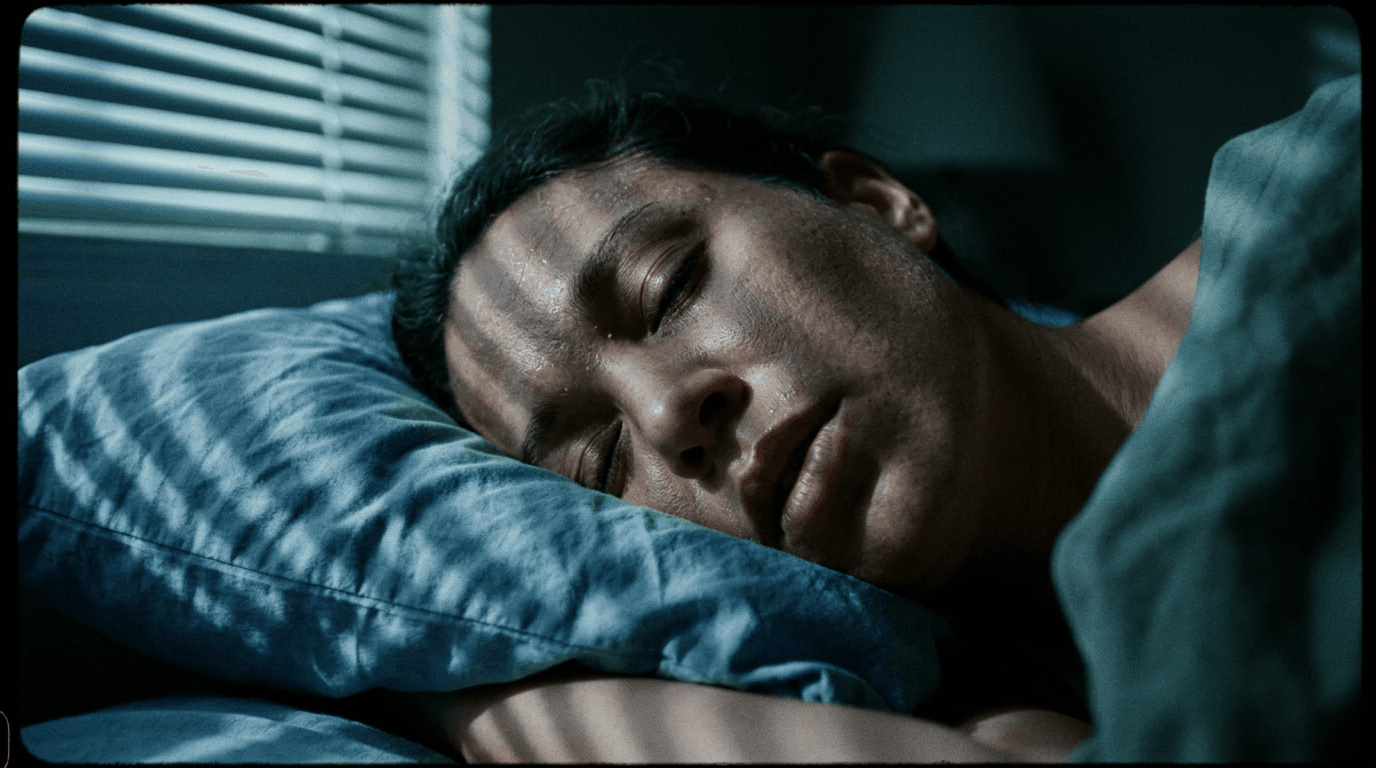
Body Image: Nested Layer Architecture
The Trench Warfare Section: What Beginners Get Wrong and Exact Fixes
This is where nested dream sequences usually fail.
Failure 1: Ambiguity Without Orientation
Writer mistakes unclear layer identity for sophistication.
Fix: maintain explicit level anchors while preserving thematic uncertainty.
Failure 2: Overloading Scene Headings With Novelty Labels
Every heading uses different dream phrasing.
Fix: standardize layer tags and keep them short.
Failure 3: Random Surreal Elements With No Rule System
Anything can happen anytime, so nothing feels meaningful.
Fix: define per-layer anomaly rules and enforce them.
Failure 4: No Behavioral Consequences After Wakes
Character wakes repeatedly but choices do not shift.
Fix: each transition must alter objective, trust, or threat calculus.
Failure 5: Repetitive Wake Rhythm
Same scare beat repeated with no escalation.
Fix: vary transition function: false relief, deeper threat, memory corruption, moral reveal.
Failure 6: Twist Withholding Instead of Craft Setup
Final “still dreaming” reveal has no prior breadcrumbs.
Fix: seed subtle fair clues early and pay them off.
Failure 7: Layer Drift in Rewrites
Added scenes break entry/exit logic.
Fix: keep a layer ledger updated each revision pass.
Failure 8: Explanatory Dialogue Kills Mystery
Characters explain dream mechanics explicitly in scene.
Fix: prioritize visual/action cues over lecture lines.
Failure 9: No Distinction Between Nightmare Tone and Story Tone
Dream texture feels detached from film’s emotional core.
Fix: align layer anomalies with protagonist’s central fear/conflict.
Failure 10: Ending Collapses Without Cost
Character wakes “for real” and nothing irreversible remains.
Fix: ensure nested sequence leaves concrete narrative cost.
Dream layers should destabilize certainty, not suspend consequence.
Try it free
Try Screenweaver for free on your script
It is free. Import your existing project, get a clearer view of your outline, and regain control of your story structure in minutes.
Start FreeAdvanced Craft: Nested Dreams as Moral Pressure
The strongest dream-within-dream writing is not about visual weirdness.
It is about forcing a character to confront values when reality guarantees are removed.
At deeper layers, social masks thin out. Fear patterns repeat. Suppressed guilt takes procedural form. Authority figures distort into symbolic judges. Safe places become traps.
If you design nested layers around this moral pressure, scenes gain thematic weight and stop feeling like genre ornament.
You can also use layer descent to invert power dynamics.
In waking life, your protagonist controls the room.
At dream level one, they lose language precision.
At dream level two, they lose time order.
That progression externalizes psychological collapse without exposition.
Conversely, ascent can represent regained agency if wake transitions correspond to clearer, harder decisions.
This framing keeps structure emotionally meaningful.
Software Workflow and Revision Discipline
Nested dream sequences degrade quickly during rewrites unless you track labels and transitions deliberately.
Create a small style key in notes:
layer tag syntax
entry/exit marker phrasing
anomaly motifs by layer
wake confirmation criteria
Then run search for DREAM LEVEL, WAKE, and transition verbs to detect drift.
Do a skim pass on scene headings only. Layer order should remain intelligible without full prose.
For reference pacing in produced psychological scripts, the <a href="https://www.scriptreaderpro.com/screenplays/" rel="nofollow">Script Reader Pro screenplay collection</a> can be useful for comparative rhythm study, but internal rule consistency in your own sequence matters more than copying any one style.
As discussed in our guide on [screenplay formatting for surveillance camera footage], high-information scenes collapse when source context is vague; dream layers behave the same way.
If your nested dream includes media interruptions, pair with [how to write a news anchor scene in screenplay format] so layered realities and mediated realities stay distinct.
And when dream transitions parallel action in another location, [how to show simultaneous action in two locations in a script] helps prevent chronology fog.
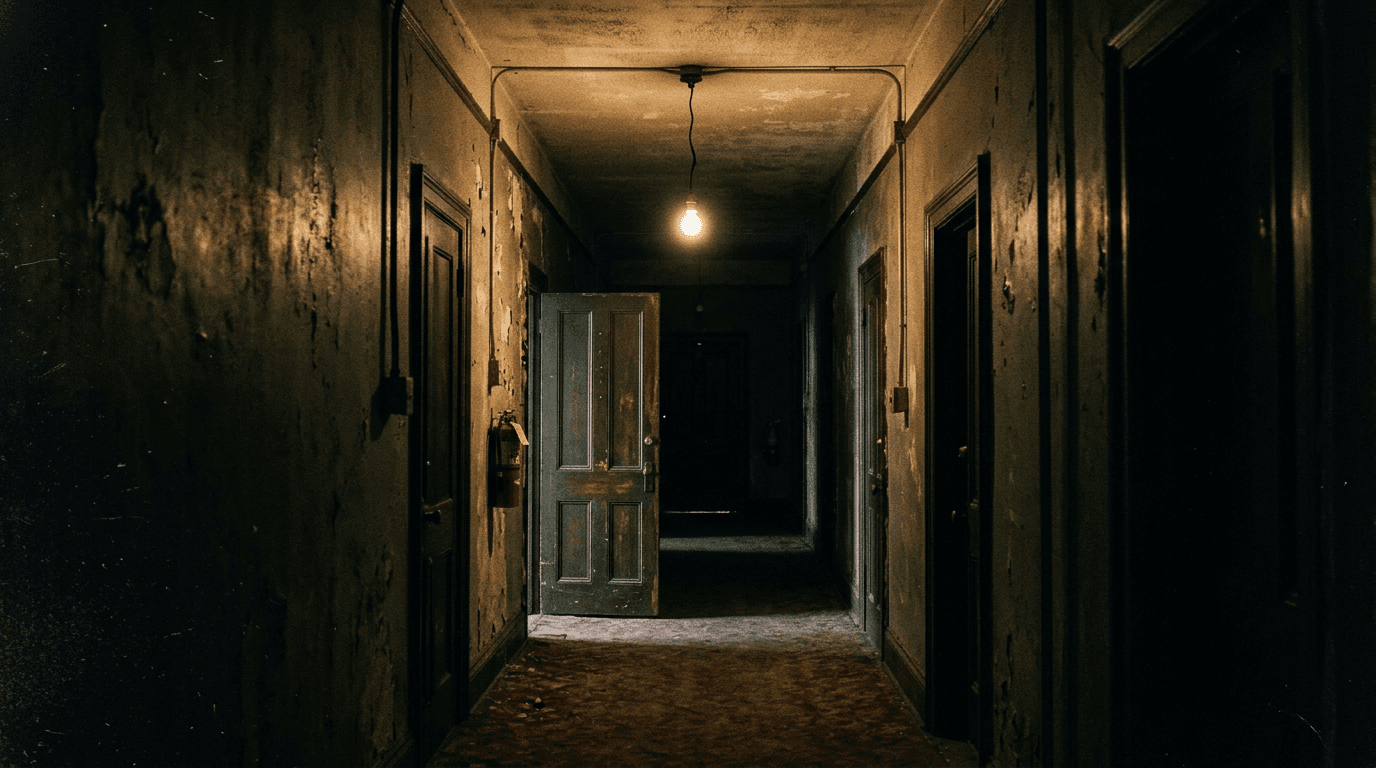
Body Image: Wake Cascade Timing Strip
YouTube Placeholder
[YOUTUBE VIDEO: A practical writing session building a dream-within-dream sequence from outline to final formatted pages, including layer tagging, transition beats, and fair-clue placement.]
Before-and-After Micro Example
Before:
“INT. BEDROOM - NIGHT
Mara wakes up. She breathes. She hears a knock. She opens the door and it’s empty. She wakes up again in bed. Then she wakes up for real.”
Concept is there. Structure is mush.
After:
“INT. BEDROOM - NIGHT - DREAM LEVEL 1
Mara jolts awake, gasping.
The bedside clock blinks 3:33 and never changes.
A knock at the door.
She opens it to an empty hall.
MATCH CUT TO:
INT. BEDROOM - NIGHT - DREAM LEVEL 2
Mara bolts upright again. Same room, but no mirror reflection.
Another knock, now from inside the closet.
She reaches for the handle --
SMASH TO:
INT. BEDROOM - DAWN - WAKE STATE
Mara wakes in silence. Clock reads 6:14 and starts moving.
She checks the mirror. Perfect sync.
Then notices dirt under her fingernails from the closet handle.”
Same idea.
Now it has layer clarity, escalation, and consequence residue.
Ending Perspective: Orient the Reader, Unsettle the Soul
Nested dream scenes are risky because they ask your audience to surrender certainty repeatedly.
If you provide no map, they disengage.
If you over-explain every rule, mystery dies.
The craft sweet spot is precise orientation with emotional destabilization.
Label layers clearly.
Design anomalies intentionally.
Make transitions consequential.
Seed fair clues.
Leave residue in wake state.
Do this, and dream-within-dream sequences stop feeling like gimmicks.
They become controlled narrative descent -- and that is where psychological screenplay writing gets dangerous in the best possible way.
There is an additional craft axis that separates competent nested dream scenes from truly durable ones in rewrite and production discussions: memory integrity.
Most beginner drafts treat each level as an isolated set piece. Stronger drafts let memory bleed with rules. A phrase heard in level two reappears corrupted in level one. A wound incurred in level one appears as a symbolic stain in level two. An object impossible in waking life appears in both dream levels with altered function.
This continuity makes nested structures feel authored rather than improvised.
You can formalize this with a simple matrix before writing pages:
Which sensory motif repeats across levels?
What changes each repetition?
What interpretation does the protagonist make at each stage?
What is the final waking-world consequence of misreading that motif?
When those answers are clear, your nested dream sequence gains thematic momentum and avoids “cool image collage” syndrome.
Another advanced pressure test is point-of-view reliability.
Who confirms wake state?
Only the protagonist?
A second character?
An external physical test?
If only one unstable viewpoint confirms reality, your script should treat that as provisional, not final. That lets you maintain tension honestly rather than relying on arbitrary shock reversals.
You can write this elegantly with tiny physical validators: moving clock seconds, mirrored latency, repeated stain, phone date mismatch, missing ambient sound. One or two is enough. More than that becomes gimmick inventory.
Practical Drill: Layer Compression Pass
Take your nested dream sequence and force a compression experiment.
Draft A: keep all layers and all anomalies.
Draft B: remove one full layer and preserve only core emotional beats.
Draft C: keep all layers but cut anomaly count in half.
Now compare readability and dread.
Most writers discover they can achieve more impact with fewer explicit signals if layer transitions are architecturally clear. This helps you remove decorative surrealism while preserving psychological force.
Practical Drill: Fairness Audit for the Final Reveal
Print only scene headings, transition lines, and first action line of each dream beat.
Give that stripped version to a reader and ask three questions:
Can they track level progression?
Can they spot at least one clue that waking status might still be unstable?
Can they explain why the final reveal feels earned rather than random?
If they cannot answer yes to all three, your reveal mechanics need repair.
The fix is usually not more dialogue. It is better placement of clues and cleaner transition syntax.
Practical Drill: Consequence Lock
Before finalizing, write one sentence answering this: “What irreversible story cost remains after true wake?” If you cannot answer quickly, your nested sequence may be atmospheric but narratively optional.
Irreversible cost can be relational rupture, legal exposure, missed deadline, false accusation, physical evidence, or moral commitment made under wrong assumptions. Without cost, nested dream scenes often feel like detours.
With cost, they feel like engines.
One last professional habit: keep a layer ledger in revision week.
Each row should track scene, layer, anomaly, transition trigger, and consequence outcome.
When notes force scene moves, update ledger immediately. This prevents late-draft contradictions that are hard to catch by intuition alone.
Nested dream writing rewards this discipline because it compresses structural risk into short page ranges. Small continuity errors create huge reader distrust in these sequences. A ledger is boring and extremely effective.
If you maintain clarity at this level, you gain the best of both worlds: readers stay oriented and still feel destabilized.
That is the craft line worth defending.
And in production conversations, that discipline pays off immediately because directors, editors, and actors can debate intention instead of arguing basic layer logistics.
Final Step
Build your next script with Screenweaver
Move from ideas to production-ready pages faster with timeline-native writing and AI-assisted story flow.
Try Screenweaver