The ScreenWeaver Blog
Deep dives into modern screenwriting, visual storytelling, and how AI is reshaping the creative process.
Categories

The 'Before/After' Scene: Showing a Character's Status Change Without Dialogue
We last saw her in a penthouse suite. Now she sits in a welfare office. Nothing is said. Everything is understood. How to write transformation through pure visual contrast.
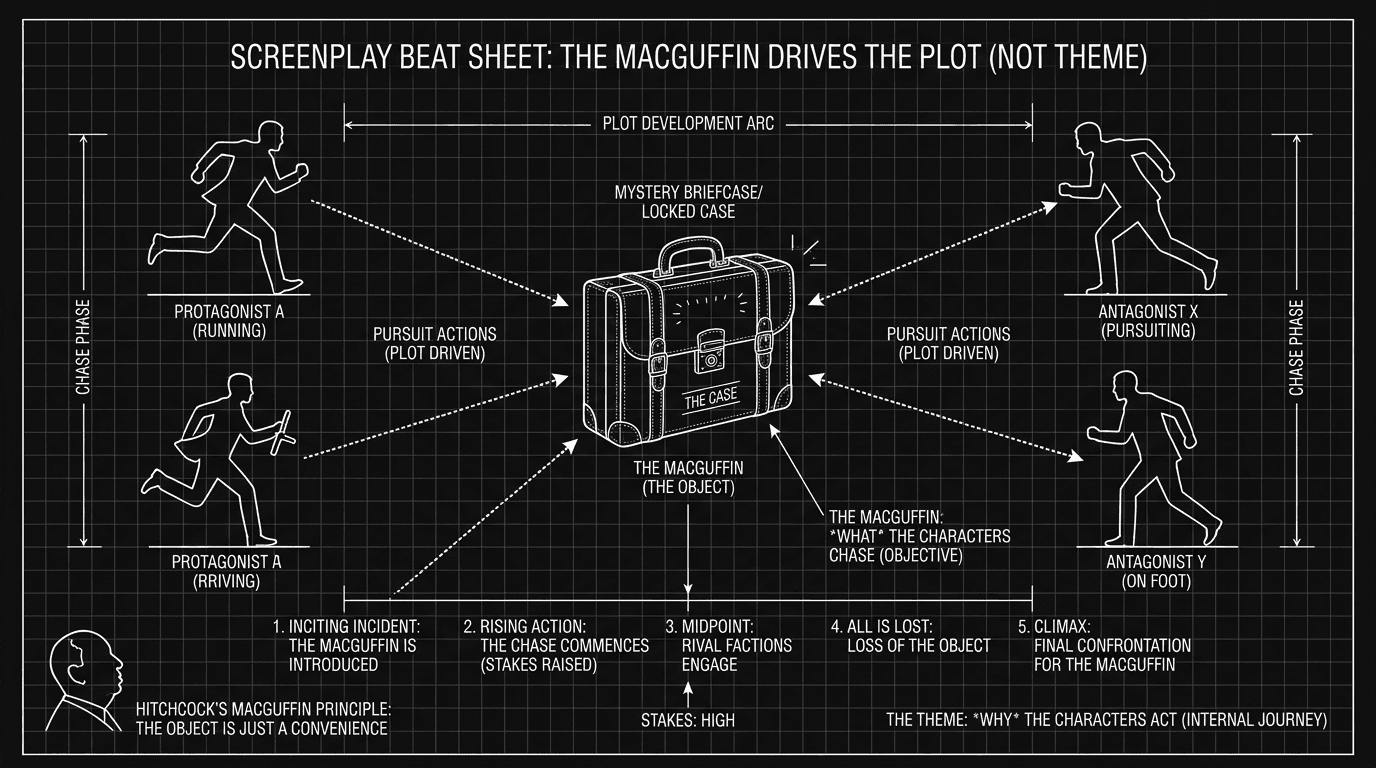
Writing the Perfect 'MacGuffin': What Hitchcock Teaches Us About Quest Objects
The briefcase. The microfilm. The glowing orb. The thing characters chase but the audience doesn't care about, except they do. How to write objects that drive plot without distracting from character.
The Ending Monologue (Voice-Over): How to Avoid the 'Moral of the Story' Effect
'I learned that the real treasure was the friends we made along the way.' No. How to write ending voice-overs that resonate without reducing your story to a greeting card.

The Match Cut: Indicating a Brilliant Visual or Audio Transition on the Page
A bone spins through prehistoric sky. Cut, a space station orbits Earth. How to write match cuts that connect scenes through visual and auditory poetry.
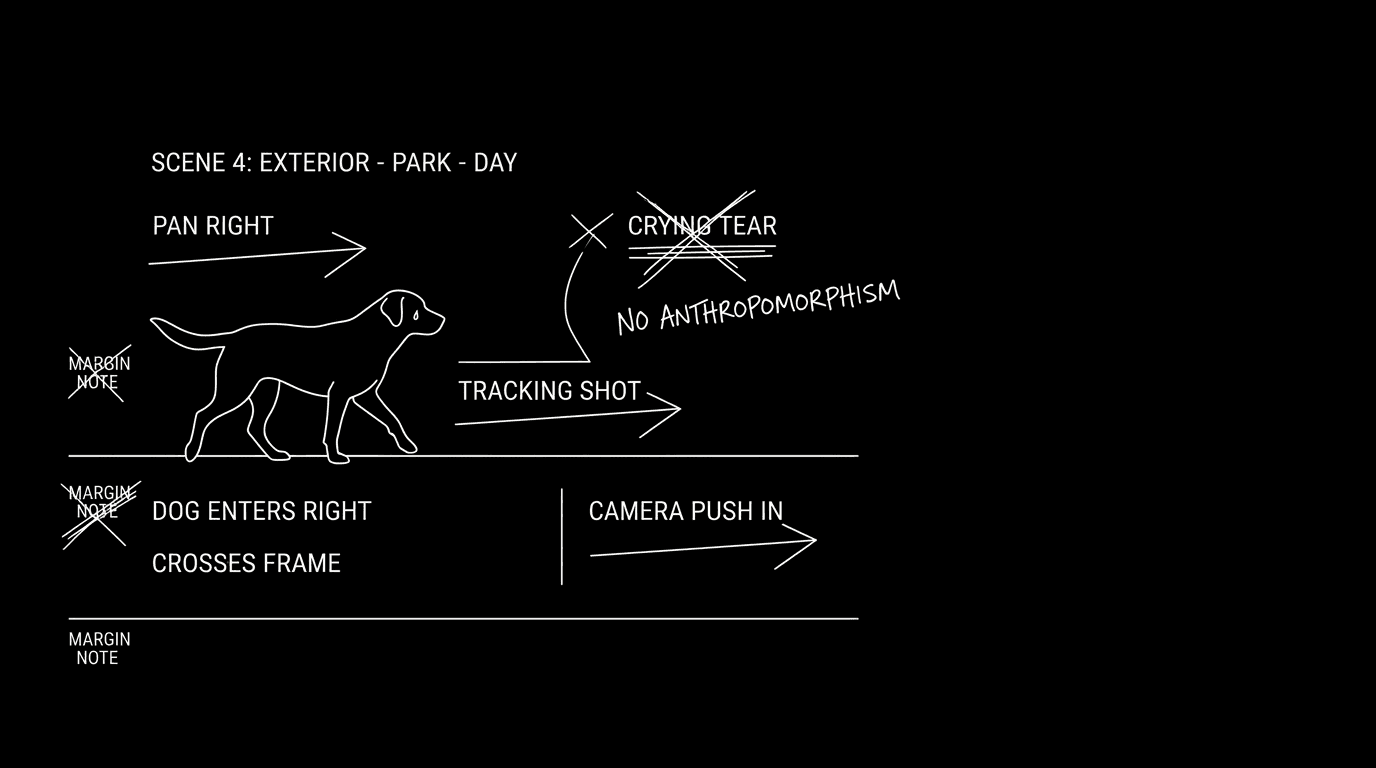
Writing Animals: How to Script the Action of an Unpredictable Performer
Max the dog looks up with understanding. A tear rolls down his cheek. Dogs don't cry. How to write animal action that's actually filmable.
Split-Screen: Modern Formatting for Frantic Thrillers
The phone rings. We see both sides at once, Sarah in the van, Marcus under attack. How to format simultaneous action that doubles the tension.

Playing Drunk: How to Direct a Drunk Character Through Subtle Stage Directions
He's had four drinks. Maybe five. 'He's drunk' tells the actor nothing. How to write intoxication with specificity, guiding performance without dictating it.

The Unfilmable Action Line: When Are You Allowed to Write What Can't Be Seen on Screen?
'She realizes she's been wrong about everything.' How do you film 'realizes'? When to use, and when to avoid, action lines that describe the invisible.