
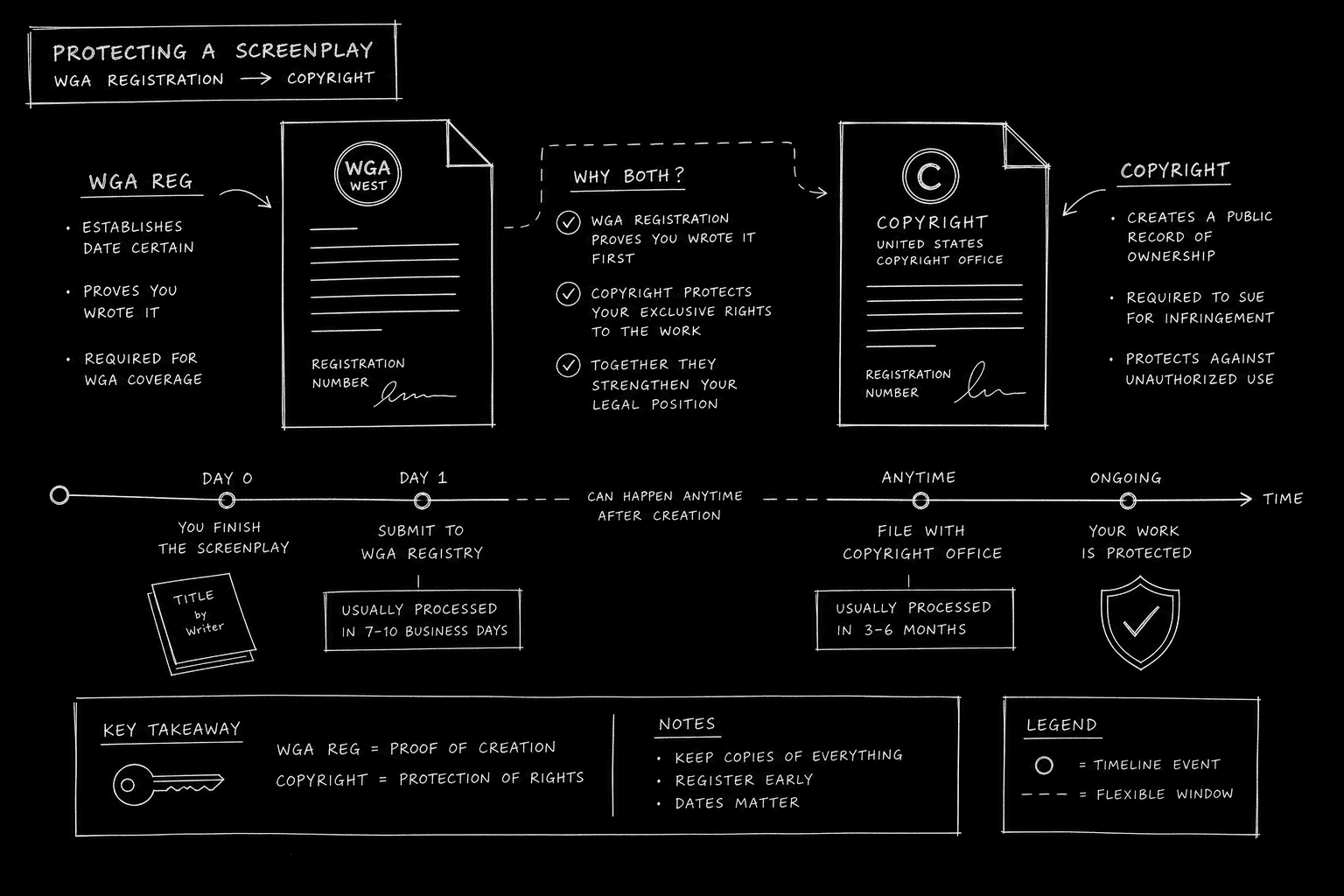
New writers hear two phrases in the same breath: register your script, copyright your script. They sound interchangeable. They are not. WGA script registration vs copyright is a comparison of two different systems solving overlapping but distinct problems. One is a guild workflow tool with industry recognition. The other is a legal protection rooted in federal law.
Confusing them will not destroy your career, but it can waste money, create false confidence, or delay action when you actually need legal standing.
Registration is often about industry practice. Copyright is about legal rights. You may need both, but for different reasons.
How It Works: Two Systems, Two Timelines
WGA Script Registration (through the Writers Guild of America West registry or equivalent guild mechanisms where applicable) creates a dated record that you deposited a script. Industry professionals use it as evidence of authorship timing in disputes within the Hollywood ecosystem. It is fast, relatively inexpensive, and widely recognized in guild contexts.
Copyright registration (in the United States, through the U.S. Copyright Office) establishes a public record of your copyright claim in the work. Copyright exists when you create a fixed work, but registration matters greatly if you ever sue for infringement and seek certain remedies.
Neither replaces the other. Neither is a substitute for good contracts when you sell or option material.
Platform and Use-Case Sections
Spec Writers Sending Scripts Cold
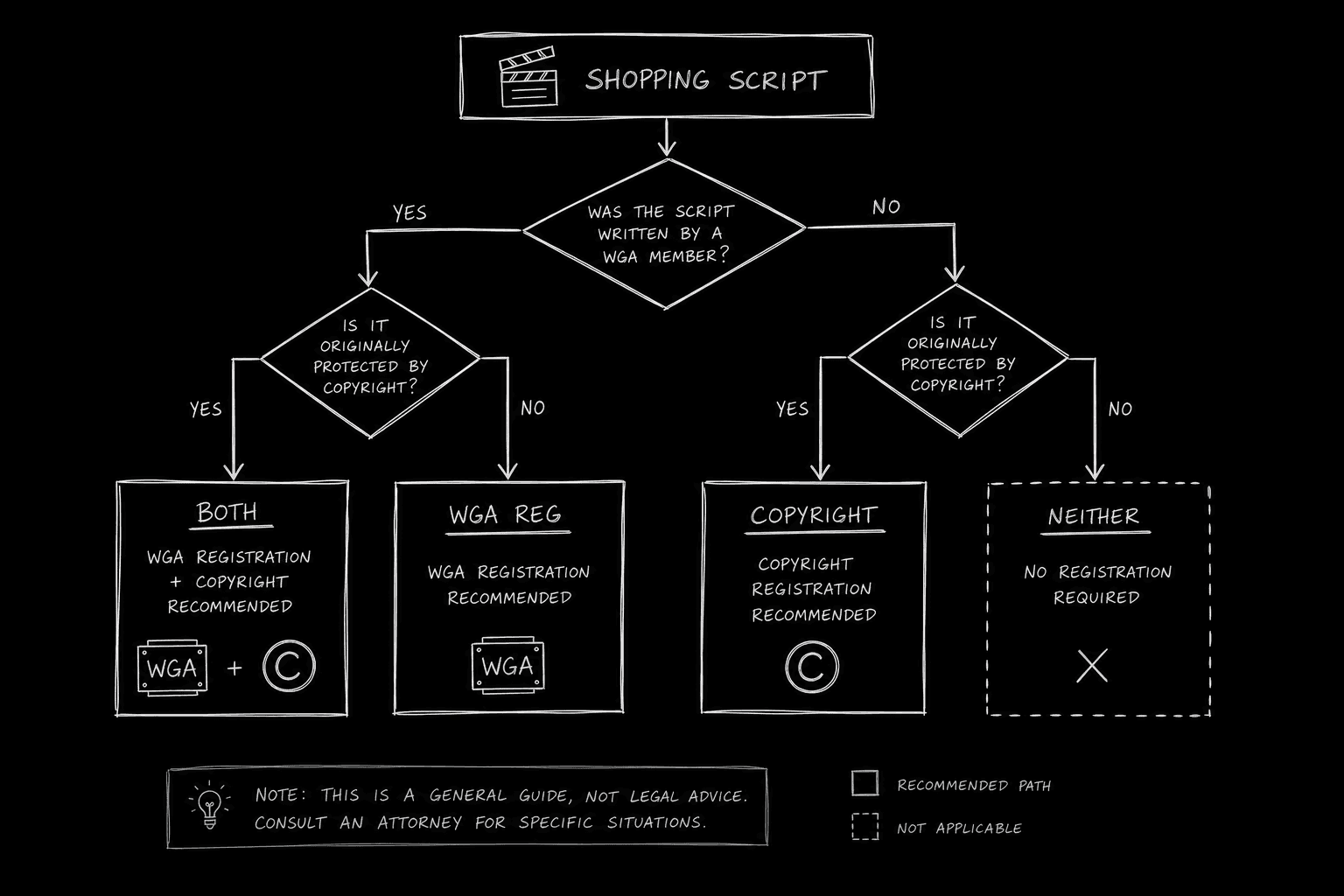
If you are sending specs to contests, managers, or producers, WGA registration is a common comfort step. It shows you understand industry hygiene. It does not automatically give you lawsuit power in the way federal copyright registration can.
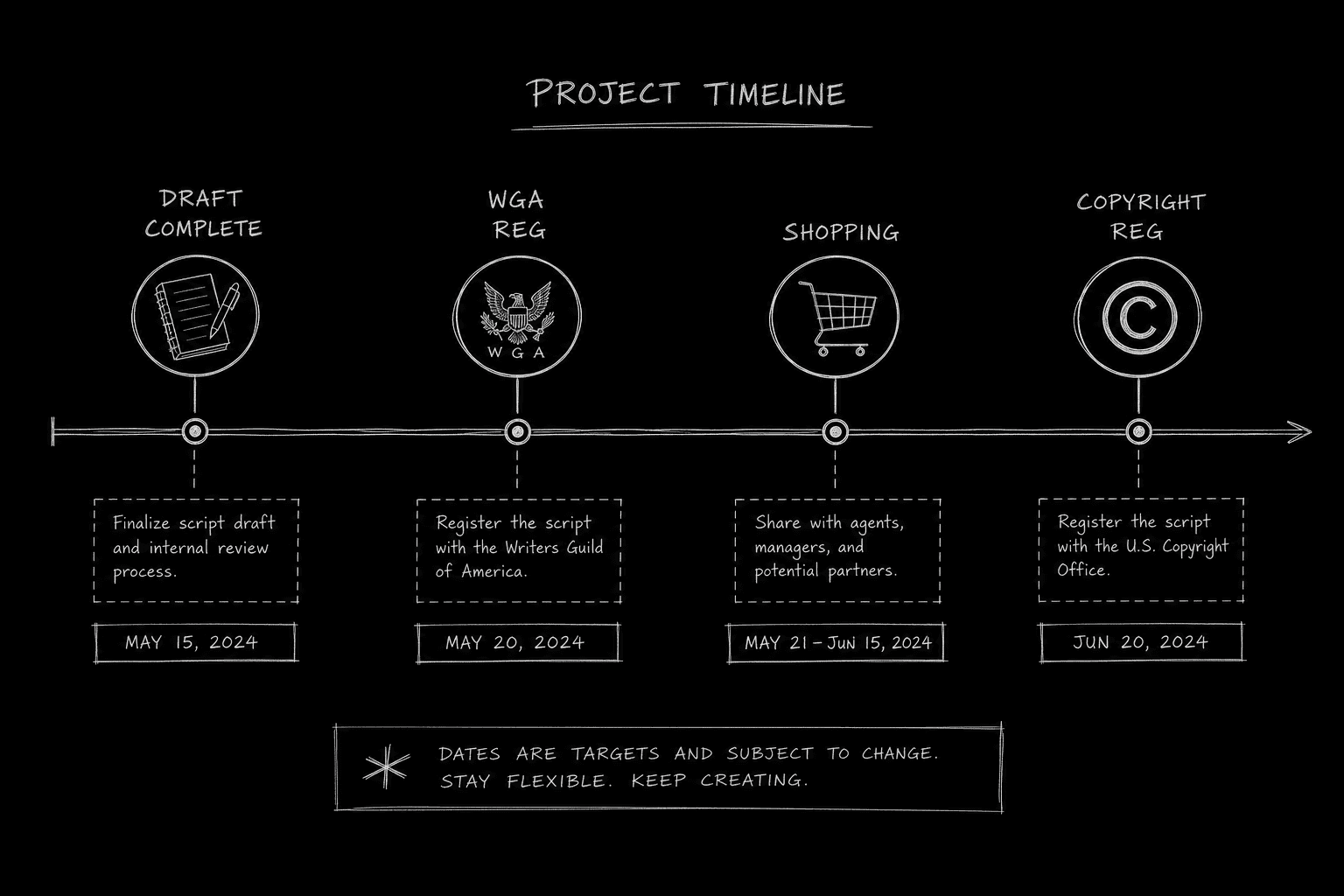
Before wide circulation, many writers register with the WGA and later pursue copyright registration if the project gains traction or enters active development.
Development and Production Paths
When a project moves toward production, legal teams care about chain of title. Copyright records, assignments, and work-for-hire language dominate. WGA registration alone does not replace contracts that transfer or license rights.
Pair chain-of-title thinking with spec vs shooting script discipline so version control stays clear as rewrites accumulate.
International Writers
Copyright treaties exist, but procedures differ by country. WGA registration is US-guild-centric in industry recognition. If you live outside the US, consult local copyright office guidance and consider US registration if the project targets US distribution.
Step-by-Step: Choosing What to Do and When
Step 1: Finish a fixed draft. Registration records a version. Registering a half-outline helps less than registering a complete screenplay you are actually shopping.
Step 2: Decide your near-term goal. Industry circulation soon? WGA registration is a practical first step for many LA-facing writers. Preparing for commercial release or concerned about infringement risk? prioritize copyright registration planning.
Step 3: Register WGA if it matches your path. Follow current WGA site instructions for electronic upload, fee, and term. Save receipt and registration number in your project folder.
Step 4: Register copyright when strategically sound. Many writers copyright after polishing a draft they will shop widely, or when entering option agreements. The Copyright Office process takes longer than WGA registry turnaround.
Step 5: Track versions. Draft 1 registered in March, Draft 4 in July creates confusion if you dispute timing. Note which draft each filing references.
Step 6: Keep professional counsel for deals. Registration does not replace reviewing option agreements, shopping agreements, or collaboration contracts.
Operational Section: Requirements, Costs, and Practical Details
What WGA registration typically provides:
- Dated deposit of script text
- Guild-recognized record for many industry disputes
- Psychological and professional signal that you treat the work seriously
What WGA registration does not automatically provide:
- Federal copyright protections and statutory damages framework by itself
- Contract enforcement when someone options your work
- Proof you wrote every underlying idea element if ideas are generic
What copyright registration typically provides:
- Public record of your copyright claim
- Prerequisites for certain infringement lawsuits in US practice
- Potential access to statutory damages and attorney fees if registration timing requirements are met
What copyright registration does not automatically provide:
- Industry acceptance that your script is good
- Protection against similar but independently created works
- Replacement for WGA membership rules in guild-covered employment
Title page interaction. Some writers add registration numbers to title pages on private submissions. Keep title page format clean for contests that forbid extra identifiers.
Collaborations. Register the version all writers agree represents the collaborative work. Split credit on title page must match registration metadata and contracts.
| Question | WGA registration | Copyright registration |
|---|---|---|
| Primary audience | Industry practice | Legal system |
| Speed | Usually fast | Often slower |
| Cost | Guild fee schedule | Government fee schedule |
| Replaces contracts | No | No |
| Proves great writing | No | No |
[YOUTUBE VIDEO: Entertainment lawyer and WGA representative explain, in plain language, when they advise WGA registry first, when they file copyright, and what mistakes new writers make after their first option offer.]
Try it free
Try Screenweaver for free on your script
It is free. Import your existing project, get a clearer view of your outline, and regain control of your story structure in minutes.
Start FreeOutcome and Results: What Success Looks Like
Handled well, you get:
- Clear paper trail for the draft you actually sent to producers.
- Appropriate legal footing if infringement or authorship disputes arise later.
- Cleaner negotiations because you already practice version discipline.
- Less anxiety that is based on accurate understanding, not myths.
Poor outcomes look like: registering once and never updating; assuming registration blocks all theft; refusing to share scripts because of fear without using standard industry protections; or signing deals without counsel because "I already copyrighted it."
Use table reads and revision cycles as natural moments to reassess whether your registered version still matches the script you are performing for the room.
Relatable Scenario: The Option Call
You registered with the WGA in January. In May, a producer options the script. In August, they ask for a rewrite that borrows a set piece from your older unproduced draft. The old way assumes "I am protected" without checking which draft was registered, which draft was optioned, and whether your collaboration agreement covers the borrowed material.
The new way uses registration dates as a project diary: January registration matches the circulated spec; new copyright filing or counsel review enters when the option agreement defines which work is being developed. Registration did its job as a timestamp. The deal now needs contract language, not another registry click alone.
This is also when you update your title page draft label so everyone references the same version in emails and attachments.
Why It Matters: Old Way vs New Way
The old way: Writers repeated myths at coffee shops. "Mail the script to yourself." "Copyright is all you need." "WGA registration means they cannot steal it." Fear drove behavior without a map.
The new way: Writers treat protection as a layered plan: guild registry for industry timing, copyright for legal claims, contracts for deals, and clean drafts for credibility. Less magic, more process.
The old way also treated legal hygiene as separate from craft. The new way integrates them. Your title page, draft labels, and registration dates should tell one coherent story about which script entered the market when.
Final CTA and Conclusion
If you are sitting on a finished spec, decide this week: what is the next real step, circulation or private polish? If circulating, register appropriately, label the draft, and send from a professional PDF.
If a producer asks for option terms, move from registration thinking to contract thinking. Call a lawyer or agent, not a forum thread.
Write great scripts, yes. Also build a paper trail that matches reality. WGA registration and copyright are tools, not talismans. Use each for what it actually does.
Final Step
Build your next script with Screenweaver
Move from ideas to production-ready pages faster with timeline-native writing and AI-assisted story flow.
Try Screenweaver